
The next major sports infrastructure test in the United States may not come from baseball, basketball, or soccer. It may come from two sports that are moving quickly from niche participation to national planning conversations: cricket and flag football. With cricket returning to the Olympic program at Los Angeles 2028 and flag football making its Olympic debut, cities, leagues, schools, and investors are facing a practical question: can emerging sports scale without a real infrastructure base beneath them?
The answer will depend less on temporary attention and more on whether communities can build the fields, venues, coaching systems, and access models needed to turn Olympic visibility into long-term participation.
Olympic Momentum Is Changing The Infrastructure Equation
Cricket and flag football are very different sports, but they now share a similar growth window. Both are tied to the 2028 Olympic Games in Los Angeles, both have major institutional backers, and both are being positioned as accessible formats with youth development potential.
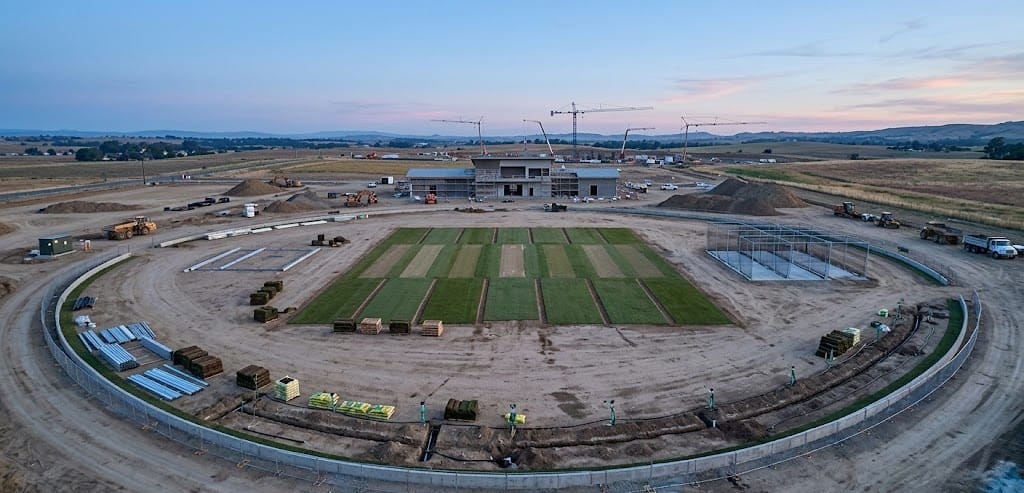
For cricket, the clearest infrastructure signal came in Pomona, California. In April 2026, construction began on a 10,000-plus capacity cricket stadium at the Fairplex fairgrounds, a venue connected to the Los Angeles Knight Riders of Major League Cricket and the sport’s Olympic return. The project matters because cricket has long had passionate communities in the United States, especially among South Asian, Caribbean, British, Australian, and African diaspora populations, but has lacked enough dedicated venue infrastructure to match that demand. The AP report on Pomona’s cricket stadium framed the project as a major step toward giving the sport a stronger American footprint.
Flag football’s challenge is different. It does not require stadium-scale investment in the same way cricket does, but it does require field access, league organization, coaching standards, safe playing surfaces, and school integration. USA Football, now central to the Olympic pathway, has positioned the sport’s LA28 debut as a national growth opportunity.
Cricket Needs Venues, Not Just Interest
Cricket’s U.S. growth has often been constrained by geography and facility design. A full cricket oval requires a different footprint than a soccer or football field, and high-quality wickets require specialized construction and maintenance. That makes cricket harder to scale through ordinary park systems unless municipalities intentionally plan for it.
Major League Cricket’s 2026 footprint shows both progress and limits. The league lists Grand Prairie Stadium in Texas, Oakland Coliseum in California, and the Knight Riders Cricket Ground in Pomona among its U.S. venues, giving the professional game a more visible platform. But three venues do not create a national participation system. They create a starting point.
The deeper infrastructure question is whether cities outside these professional nodes can support youth cricket at lower cost. That may require smaller-format cricket spaces, shared-use fields, modular pitch systems, and partnerships with schools and immigrant community organizations.
| Sport | Core Infrastructure Need | Scaling Challenge | Community Opportunity |
|---|---|---|---|
| Cricket | Dedicated pitches, ovals, training nets, lighting | Larger land footprint and specialized surfaces | Strong diaspora participation and Olympic visibility |
| Flag Football | Multi-use rectangular fields, safe turf, coaching networks | Scheduling competition with soccer, football, lacrosse, and recreation leagues | Lower equipment costs and broad school adoption potential |
For cricket, the path forward likely depends on a tiered system: professional stadiums for elite events, regional hubs for tournaments, and smaller community facilities for youth participation.
Flag Football Has A Lower Facility Barrier But A Bigger Governance Test
Flag football’s infrastructure advantage is obvious. It can be played on existing football, soccer, or multi-use fields, and it does not require the collision-heavy equipment model associated with tackle football. That makes it attractive for schools, parks departments, and youth organizations looking for a lower-contact sport with broad appeal.
But low facility barriers can create a false sense of readiness. If every sport competes for the same field inventory, flag football growth can strain already crowded public systems. The issue is not whether flag football can fit onto existing fields. It is whether those fields are available, safe, lighted, affordable, and equitably scheduled.
USA Football’s role will be important because Olympic growth requires more than casual participation. The sport needs coaching education, athlete identification, referee training, tournament structures, and safety standards. The official USA Football Olympic flag football pathway gives the sport national legitimacy, but local infrastructure will determine whether that legitimacy reaches everyday communities.
This is where flag football becomes a planning issue. If cities treat it as another seasonal add-on, access will remain uneven. If they treat it as a flexible youth sports platform, it can become a cost-effective way to expand participation across gender, age, and income lines.
Emerging Sports Can Help Cities Use Land More Efficiently
The strongest case for cricket and flag football is not only cultural growth. It is land-use efficiency. Both sports can fit into broader multi-use infrastructure strategies if cities design deliberately.
Cricket can anchor regional tournament hubs that serve large immigrant communities while attracting visitors for weekend events. Flag football can activate existing rectangular fields during underused time slots and expand school-based sports access without requiring high equipment costs.
That gives planners a practical framework: emerging sports should not be treated as isolated facilities, but as part of a broader recreation ecosystem. A cricket venue can share parking, concessions, transit access, and public space with other community assets. Flag football can share field lighting, locker rooms, and maintenance systems with soccer, lacrosse, and youth football.
Lessons from youth soccer infrastructure planning show that participation growth becomes sustainable only when facilities, programming, transportation, and maintenance are treated as one connected system rather than separate decisions.
The Economics Depend On More Than Olympic Attention
Olympic inclusion creates visibility, but visibility is not a business model. Cities and investors must ask whether cricket and flag football can generate enough repeat usage to justify infrastructure investment after LA28.

For cricket, the economics may be strongest in regions with large existing participation communities, such as Southern California, Texas, New Jersey, New York, Georgia, and parts of the Bay Area. Professional events can create attention, but youth leagues, adult recreational competitions, training academies, and regional tournaments will determine long-term facility value.
For flag football, the economics are more decentralized. The sport may scale through schools, municipal leagues, NFL-supported programs, and tournament operators rather than large dedicated venues. Its value may come from participation volume rather than ticketed spectator events.
According to the broader U.S. Travel Association sports tourism research, youth and amateur sports travel has become a major economic segment for communities that can host repeat tournaments. That matters because both cricket and flag football could become tournament-driven sports if facility networks mature.
The risk is overbuilding before demand is proven. A stadium can become a civic asset if it is used regularly; it can become a liability if it depends on a few headline events. Emerging sports infrastructure must therefore be phased, demand-tested, and tied to local participation data.
Access And Inclusion Will Define Long-Term Success
Cricket and flag football have strong inclusion potential, but only if access is built into the system. Cricket can connect U.S. sports infrastructure with immigrant communities that have often created their own informal playing networks. Flag football can expand opportunities for girls and young athletes who want a lower-contact football pathway.
But both sports could also reproduce existing inequities. Private academies, travel tournaments, and elite development models can quickly raise costs. Facility scarcity can push access toward families with transportation, money, and schedule flexibility.
Cities should treat emerging sports as public access opportunities, not just Olympic branding opportunities. That means protecting community hours at new venues, building low-cost local leagues, supporting school partnerships, and locating facilities near transit where possible.
Sustainability Must Be Built Into New Facilities
Infrastructure for emerging sports should not repeat the mistakes of older facility development. Large venues and tournament complexes require water, energy, parking, lighting, maintenance, and long-term capital planning.
Cricket facilities, in particular, need careful environmental design because ovals and turf systems can have significant land and water demands. Flag football fields may rely heavily on synthetic turf or high-use grass surfaces, each with its own maintenance and heat-management issues.
The most resilient projects will include:
- Water-conscious field systems
- Shade and heat mitigation
- Shared-use buildings
- Solar-ready lighting infrastructure
- Stormwater planning
- Flexible layouts that serve multiple sports
Guidance from the U.S. Green Building Council reinforces the importance of lifecycle cost, resource efficiency, and environmental performance in public-facing development. For cities with limited budgets, sustainable design is not cosmetic. It is a way to reduce long-term operating risk.
Schools And Parks Departments Will Decide The Participation Base
Professional leagues can create visibility, but youth systems are built through schools, parks departments, and local nonprofit organizations. That is especially true for emerging sports.
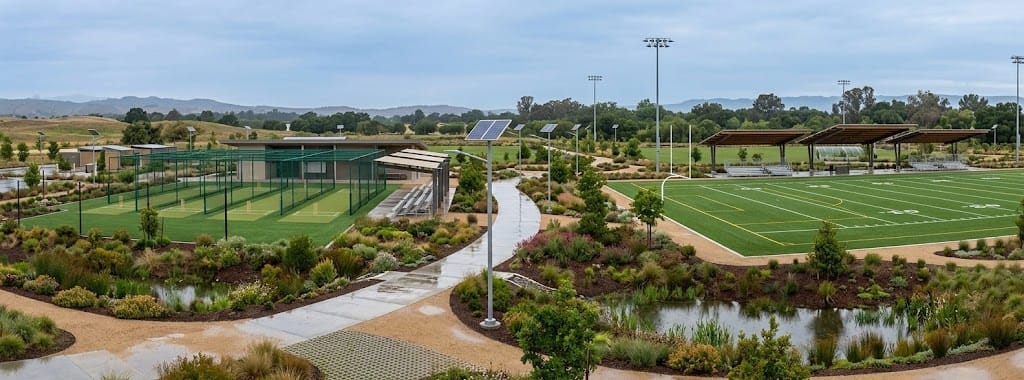
For cricket, school adoption remains a major question. The sport can grow if physical education programs, after-school clubs, and community leagues gain access to simplified formats and affordable equipment. For flag football, school adoption is already more intuitive because it fits within the broader American football ecosystem while reducing contact risk.
The most important infrastructure may not be a stadium. It may be a shared municipal field with lights, a school district that opens facilities after hours, or a recreation department that creates affordable leagues.
This is where emerging sports can reshape community planning. They give cities a reason to reexamine who gets field time, which neighborhoods lack safe play spaces, and whether public sports infrastructure reflects the diversity of local demand.
Can Cricket And Flag Football Truly Scale?
Cricket and flag football can scale in the United States, but not through Olympic attention alone. Cricket needs dedicated venue investment, community-level facilities, and stronger youth pathways. Flag football needs governance, coaching, safe field access, and equitable scheduling. Both need infrastructure strategies that connect elite visibility with local participation.
The strongest opportunities will come in cities that resist the temptation to build only for the spotlight. A Pomona cricket stadium matters, but so does the local park where a first-generation American child learns the game. Olympic flag football matters, but so does the school field where girls and boys can play without high equipment costs or travel barriers.
The future of these sports will be shaped by whether infrastructure grows from the ground up as well as from the top down.
Building Emerging Sports Systems That Outlast LA28
The 2028 Olympics will create a powerful moment for cricket and flag football, but the true test begins afterward. Cities, leagues, and schools must decide whether these sports become temporary Olympic curiosities or permanent parts of the American sports landscape.
That decision will be made through infrastructure: where facilities are built, who gets access, how fields are maintained, how programs are funded, and whether communities see themselves reflected in the sports being promoted.
If cricket and flag football are planned as complete systems, they can expand participation, strengthen community identity, and diversify the country’s youth sports ecosystem. If they are treated as short-term event products, the momentum may fade quickly.
The opportunity is real. The infrastructure challenge is just as real.