
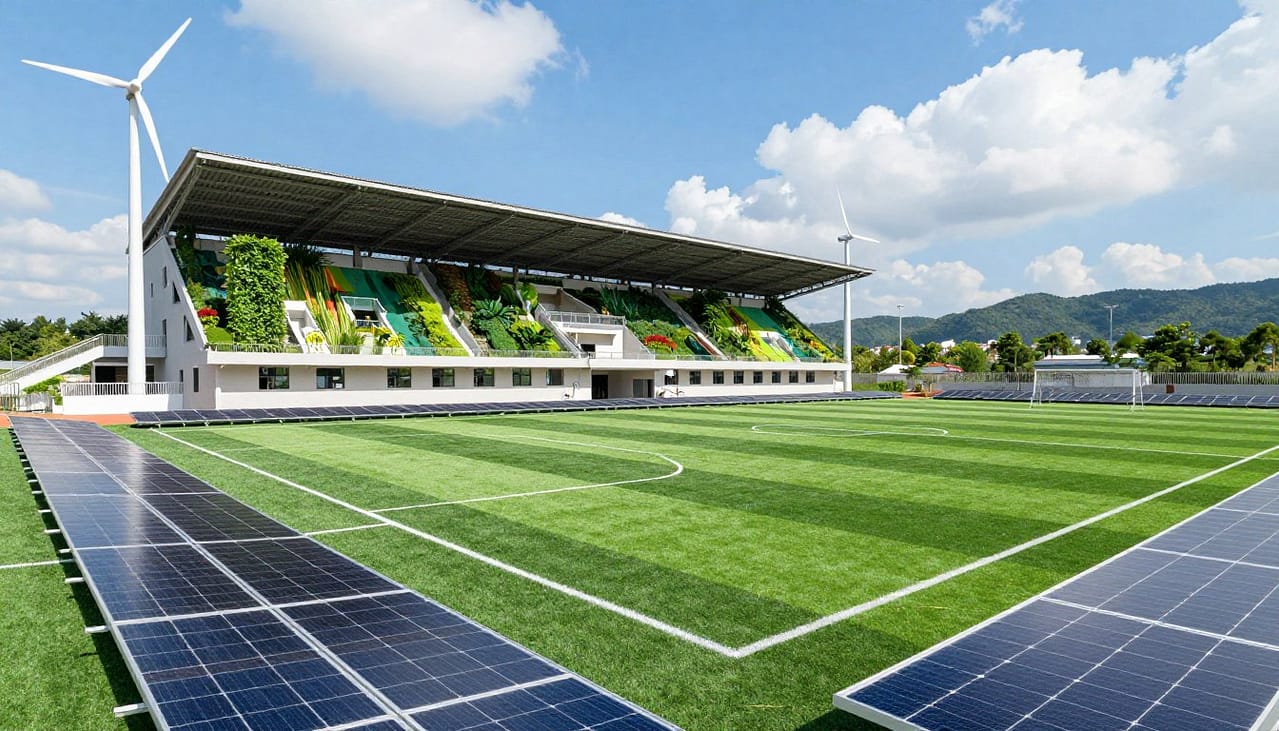
What do you think of when you hear “modern facilities”? For many, it’s just recycling bins at games. But there’s so much more to it. Mary Helen Sprecher points out that most people don’t really get what sustainability means in these places.
Take the Mercedes-Benz Stadium in Atlanta. It’s a LEED Platinum certified gem with 4,000 solar panels. The Georgia Sports Park Pavilion is another example, running as a net-positive energy building. These show we can make venues that give back energy, not just take it.
The German Federal Institute of Sport Science tells us outdoor facilities need lots of resources and special materials. Going green is not just good for the planet; it’s also smart for our wallets. We’ve moved from just talking about recycling to creating facilities that make more energy than they use. This is a big change, not just a trend.
So, what tools do we have to make this happen? They’re easy to find and use. It’s time to change how we build and keep these important places.
The Case for Sustainability
Imagine a world where sports facilities entertain and sustain. The talk about sustainable sports infra is not just a trend; it’s essential. The German Federal Institute of Sport Science says the design phase is key. This is when we can manage costs well, avoiding financial pitfalls.
No one wants to see their investment in sports facilities go up in flames. Picture a city spending millions on a complex, only to see maintenance costs soar. The irrigation system might end up watering the bleachers instead of the turf. This is why eco-sports are so important.
The urban heat island effect makes athletes feel like they’re training on a hot griddle. Sustainable practices during planning can help. For example, using LED lighting can cut energy use by 60% or more. This saves money and helps the environment.
Choosing sustainable sports infra is a smart financial move. The decisions made early on can save money in the long run. It’s time to go green for our planet and our wallets.
Green Building Material Guides
In eco-sports, choosing the right materials is like picking the perfect outfit for a first date. You want something that looks good, feels right, and makes a statement. For green facilities, the right materials can make your project stand out.
Reclaimed wood is popular in offices but not for gym floors. But don’t worry, there are other great options. Bird-safe glass with UV-reflective coatings is now available. It keeps birds safe and adds a sleek look to your facility.
REGUPOL’s AktivPro Roll system is another exciting choice. It’s 24mm-thick rubber flooring with customizable underlayments for shock absorption. Walking on it feels great, knowing it’s eco-friendly.
Action Floors specializes in maple flooring, a unique hardwood product. Its cellular structure offers the perfect balance of shock absorption and ball bounce. This makes basketball and volleyball enjoyable to watch and play.
Shaw Sports Turf’s NXTPlay Performance Shock Pad is also noteworthy. It’s made from reclaimed and recycled turf fields. This approach ensures that even synthetic turf fields can be recycled, with materials reused.
The irony in sustainable materials is clear. The most eco-friendly options often outperform others. So, when you visit a new sports facility, appreciate the amazing material science. Being green can truly feel good.
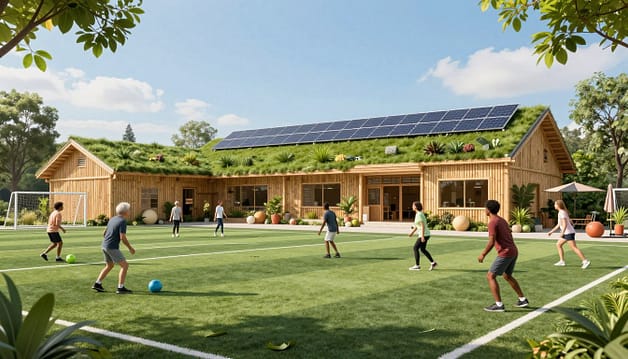
For more insights on building greener sports facilities, check out this comprehensive guide.
Water and Energy Efficiency Solutions
Water and energy efficiency are not just buzzwords; they are the lifeblood of sustainable sports facilities. In eco-sports, these elements work together to create a thriving environment. The Mercedes-Benz Stadium is a great example. It has 4,000 solar panels that power nine Atlanta Falcons games. This shows what sustainable sports infrastructure can do.
The stadium also has a 2.1 million-gallon vault for stormwater management. This system captures rainwater for cooling towers and irrigation. It reduces domestic water use by 47%. That’s a big splash in water conservation!
The Georgia Sports Park Pavilion also focuses on sustainability. It has 70 flat 340-watt photovoltaic panels that produce more than double its energy needs. This power is sent back to the grid, helping the environment.
HVLS fans are another example of efficiency. These slow-moving fans can make you feel up to 7 degrees cooler. This allows for 3-5 degree thermostat adjustments and saves up to 15% on energy bills. Who knew moving air could be so efficient?
Low-flow fixtures and greywater reuse systems are also key. They help avoid wasting water on unnecessary irrigation. LED lighting systems are becoming more popular, replacing older, less efficient lights. They’re not just a trend; they’re essential for sustainability.

Partnerships for Funding
Imagine this: cities spend money on sports facilities, but clubs and schools get the most benefits. It’s like a song with a wrong tune. The problem is, who pays the piper doesn’t always call the tune. This creates a big challenge in making sustainable sports infra.
In Germany, this issue is clear. Cities build and keep these places, but they don’t use them. This makes it hard to fund things like solar panels. The solution is to find creative ways to work together.
Performance contracts with energy companies can be a win-win. They cover the costs upfront with future savings. Or, green bonds let cities borrow money for energy savings. These new ways to fund things can lead to a greener future.
Sponsorships are also key. For example, a solar company could name a sports pavilion. It’s a smart way to share costs and interests. The American Sports Builders Association says it’s important to work with good contractors. This way, your money won’t be wasted.
To wrap it up, finding sustainable ways to fund green facilities is key. The tech is there; we just need to figure out how to pay for it. Here’s a quick look at some funding options:
| Funding Model | Description | Benefits |
|---|---|---|
| Performance Contracts | Agreements with energy service companies to finance upgrades. | Reduces upfront costs, guarantees savings. |
| Green Bonds | Debt securities issued to fund environmentally friendly projects. | Access to capital, lower interest rates. |
| Sponsorships | Partnerships with local businesses for funding. | Community engagement, shared financial responsibility. |
In conclusion, making sustainable sports facilities is about more than just new tech. It’s also about finding creative ways to pay for it. When everyone works together, green facilities can become a reality.
Examples from Leading Cities
Let’s look at cities that are truly leading in eco-sports. Atlanta boasts the Mercedes-Benz Stadium, the world’s first LEED Platinum sports venue. This huge 2 million-square-foot building shows that big and green can go hand in hand. The design by HOK and BuroHappold Engineering sets a new standard for green facilities.
Next to Atlanta, the Georgia Sports Park Pavilion shows that even small projects can be big on sustainability. It makes twice as much energy as it uses, proving small can be mighty.
In Dallas, the Telos Fitness Center shows innovation can happen in old buildings. It uses special fans to keep air fresh in a 30-year-old building. Oakland’s La Escuelita Education Center has reached net-zero, thanks to natural ventilation and smart design.
Ann Arbor’s University of Michigan has the Oosterbaan Field House with eco-friendly flooring. This flooring is made with sustainable practices, blending performance with environmental care.
These examples show green facilities and top sports performance can go together. They pave the way for a greener sports future. For more on climate action in sports facilities, check out this resource.