
The NFL’s 2026 international schedule is often described as evidence of football’s global growth. The more important infrastructure story is what happens after a fan decides to attend. With nine regular-season games spread across four continents, seven countries and eight stadiums, the 2026 NFL International Games increasingly depend on ticketing systems, hotels, airports, trains, local transportation, mobile access, venue operations and citywide fan planning working together.
The scale is unprecedented. The international schedule begins with the San Francisco 49ers facing the Los Angeles Rams at the Melbourne Cricket Ground on September 11 local time, followed by the Baltimore Ravens and Dallas Cowboys at Maracanã Stadium in Rio de Janeiro on September 27. London gets three consecutive games in October, followed by the NFL’s first regular-season game in Paris, another game in Madrid, a return to Munich and a November 22 finale in Mexico City.
That makes 2026 more than a test of whether fans in different countries will watch American football.
It is a test of whether the NFL can create a repeatable global travel product.
For aplevante.org’s Fan Planning category, the international expansion connects naturally to the NFL’s growing domestic fan systems. The league has already turned training camp into a coordinated national platform through Back Together Weekend fan infrastructure. The international schedule takes the same idea much further: instead of helping fans navigate a local training facility, the league has to help them navigate countries, transportation networks, unfamiliar stadiums and multi-day travel.
Why Nine International Games Change The Planning Equation
International NFL games are no longer isolated experiments.
Heading into the 2026 season, 62 NFL regular-season games had already been played outside the United States. London, Mexico City, Munich, Frankfurt, São Paulo, Madrid, Dublin, Berlin and Toronto had all hosted games. The 2026 calendar pushes the model further by adding Melbourne, Rio de Janeiro and Paris as new regular-season host cities while returning to established markets.

Nine games create a different operational problem than one or two showcase events.
The NFL now has to think across multiple currencies, languages, ticketing rules, transportation systems, stadium configurations, time zones, hospitality markets and local event cultures.
A supporter traveling from California to Melbourne experiences a fundamentally different trip from a Jaguars fan traveling to London or a Mexican fan taking transit across Mexico City.
Yet each event still has to feel recognizably NFL.
That balance between local adaptation and consistent league standards is what makes global games an infrastructure challenge.
The football field may look familiar everywhere. The journey to the field does not.
How Melbourne Turns One Game Into A Long-Distance Travel Product
Australia provides perhaps the clearest example.
The Rams and 49ers will play the NFL’s first regular-season game in Australia at the Melbourne Cricket Ground. The game is scheduled for Friday, September 11 at 10:35 a.m. local time, corresponding to Thursday night in the United States.
For American fans, that is not a weekend road trip.
It is a trans-Pacific journey involving long-haul flights, hotel nights, local transportation, mobile ticket access and significant advance planning. The NFL’s Australian ticket operation reflects that reality. Official information has included ticket-and-hotel packages through Sportsnet Holidays, hospitality products for international travelers and accessible ticket options through Ticketmaster. Tickets are digital, adding another technology requirement once fans arrive.
That is important because international sports tourism begins well before stadium gates open.
Fans need confidence that their ticket is legitimate. They need lodging near workable transportation. They need to understand local kickoff time, entry policies and mobile ticket procedures. International visitors may also need help understanding public transportation, local payment systems and event-day schedules.
The Melbourne game therefore tests whether the NFL can convert global curiosity into a manageable travel experience.
Why Rio Is A Different Infrastructure Test
Rio de Janeiro creates another model entirely.
The Baltimore Ravens will face the Dallas Cowboys at Maracanã Stadium on September 27, making Rio a new NFL regular-season market after the league’s previous Brazilian games were held in São Paulo.
Moving into a new Brazilian city means the NFL cannot simply copy its previous event plan.
Maracanã has its own transportation environment, surrounding neighborhoods, pedestrian patterns and major-event history. Local fans will approach the game differently from international visitors. Cowboys and Ravens supporters arriving from the United States will need a travel framework different from fans already living in Rio.
This is where global expansion becomes city planning.
A successful game requires coordination between the league, stadium management, local authorities, transportation providers, security personnel, hotels and commercial partners.
NFL international growth therefore depends increasingly on the host city’s ability to absorb the event.
A famous stadium is not enough.
The surrounding infrastructure has to function too.
How London Shows What A Mature NFL Travel Market Looks Like
London remains the league’s most developed international market.
The city will host three consecutive NFL weekends in October 2026. The Indianapolis Colts face the Washington Commanders at Tottenham Hotspur Stadium on October 4. The Philadelphia Eagles play the Jacksonville Jaguars there on October 11. Jacksonville then plays the Houston Texans at Wembley Stadium on October 18.
That schedule shows what international infrastructure looks like after years of repetition.
London is no longer preparing for an unfamiliar American football experiment. It has recurring venues, established ticket channels, experienced hotels, regular fan events and a transportation network accustomed to major sports crowds.
The Jaguars are an especially important part of that ecosystem. Their Wembley appearance will be the franchise’s 16th regular-season game in London, and 2026 marks another season in which Jacksonville plays consecutive games in the city.
Repeat use creates institutional knowledge.
Stadium staff understand the event. Local transit operators know crowd patterns. Hotels understand the audience. Returning fans know which neighborhoods work for their trips.
That accumulated knowledge is itself infrastructure.
Why Ticket Accounts Are Part Of Global Fan Planning
Ticketing is one of the less visible pieces of international expansion.
For the NFL’s 2026 European games, fans need an NFL ticket account connected to the league’s ticketing process. London, Madrid, Munich and Paris are organized through that system, although Jacksonville manages its Wembley ticketing separately.
That creates a standardized digital entry point across multiple markets.
The NFL has also introduced all-in pricing for its 2026 International Games in Europe. Fans see the mandatory fees included in the displayed ticket cost rather than discovering additional charges later in checkout.
That may look like a small consumer change, but it matters for international travelers.
A fan planning airfare and lodging needs greater cost certainty than someone buying a ticket for a local Sunday game. The actual football ticket may represent only one portion of the trip.
Ticket transparency therefore becomes part of travel infrastructure.
So does communication.
Fans must know when accounts need to be created, when tickets go on sale, which sellers are official and what happens if they need accessible seating.
Why Paris Shows The NFL Is Packaging Games As Trips
Paris offers one of the clearest examples of the shift.
The Pittsburgh Steelers and New Orleans Saints will play the NFL’s first regular-season game in France at Stade de France on October 25. General admission went on sale July 16 after hospitality sales began in June. The NFL also made ticket-and-hotel packages available through an official travel partner.
That hotel component is important.
The product is no longer merely “come watch Steelers-Saints.”
For many visitors, it becomes “plan several days in Paris around Steelers-Saints.”
That changes the league’s relationship with tourism.
International football can create hotel stays, restaurant visits, public transportation usage, tourist activity and fan gatherings spread over several days.
The city becomes part of the event.
The strongest international games will therefore be those where the NFL experience integrates smoothly with the host destination rather than competing with it.
How Madrid And Munich Extend The European Network
Madrid and Munich show how quickly the NFL’s European footprint is becoming interconnected.
The Cincinnati Bengals face the Atlanta Falcons at Madrid’s Bernabéu Stadium on November 8. The New England Patriots play the Detroit Lions in Munich one week later on November 15.
Madrid ticketing includes general admission, hospitality and ticket-and-hotel packages through official partners. Munich also offers hotel packages alongside its ticketing process.
That matters because Europe is increasingly capable of supporting NFL-specific travel.
A fan could theoretically build a vacation around one game rather than flying in solely for football. International supporters can also travel between countries more easily than many U.S. fans can travel between distant NFL markets.
The infrastructure opportunity is therefore bigger than stadium attendance.
Teams can build fan communities through events, merchandise, youth programs and commercial partnerships during the week surrounding the game.
The actual four quarters become the anchor for a larger market-development operation.
Why Mexico City Shows Returning Markets Still Need Infrastructure
The final international game of the 2026 slate sends the Minnesota Vikings and San Francisco 49ers to Mexico City on November 22.
It will mark the NFL’s first regular-season game in Mexico since 2022.
Mexico is not a new NFL market.
That does not make the logistics automatic.
Stadium operations change. Transportation systems evolve. Ticket technology changes. Security procedures are updated. Fan expectations rise.
Returning to a familiar city can therefore be just as important an infrastructure test as entering a new one.
The NFL has years of history in Mexico, including the October 2, 2005 game between the Arizona Cardinals and San Francisco 49ers that drew 103,467 fans at Estadio Azteca, still the league’s largest regular-season attendance.
The challenge in 2026 is turning that history into a modern fan system.
Why Hotels Are Becoming Part Of Sports Infrastructure
Hotel packages may sound like tourism marketing, but they solve a genuine infrastructure problem.
International games create concentrated demand among visitors who do not necessarily understand the host city.
A package can connect the ticket to accommodation and reduce uncertainty for travelers. It may also help distribute visitors toward areas with useful transportation connections.
That makes lodging part of event planning.
Hotels can become informal fan hubs where supporters meet before traveling to the stadium. They may host team events or organized gatherings. Their staff can become part of the information network around the game.
For major global sporting events, hotel capacity has always mattered.
The NFL’s expansion simply makes that connection more visible during the regular season.
How Public Transportation Becomes Part Of The Product
Most NFL stadium discussions in the United States begin with parking.
International games often force a different conversation.
Many international host venues sit within cities where rail, metro, buses and walking play much larger roles in event-day transportation. That means American fans traveling abroad may encounter a game-day model fundamentally different from driving to a suburban parking lot.
This can be an advantage.
High-capacity transit can move large crowds without requiring enormous parking inventories. It can connect hotels and tourism districts directly to venues.
But transit only works as fan infrastructure when communication is clear.
International visitors need understandable routes, service hours, accessibility information and postgame plans.
A train station becomes part of the NFL experience when tens of thousands of fans depend on it.
Why Mobile Tickets Create A New Travel Risk
Digital ticketing simplifies distribution, but international travel introduces vulnerabilities.
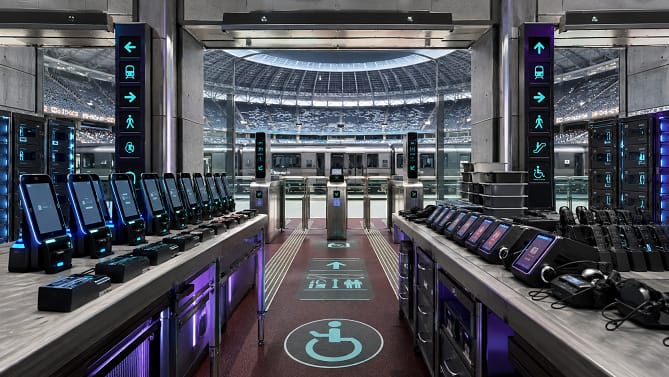
A fan may arrive without reliable mobile data. A device may lose battery power. International roaming can fail. Foreign visitors may be unfamiliar with the required app.
Melbourne’s digital-only ticket model demonstrates why technology is now inseparable from stadium access.
Organizers therefore need redundancy.
Fans need clear download instructions, troubleshooting locations, charging access and customer-support options before reaching security checkpoints.
The irony of digital infrastructure is that it works beautifully until one failure prevents a person from entering the stadium.
As international attendance grows, those edge cases become operationally important.
How The Global Markets Program Supports The Travel Strategy
The international games do not exist independently from the NFL’s broader commercial expansion.
The league’s Global Markets Program gives clubs rights to build their brands, partnerships and fan engagement in designated international territories. All 32 NFL clubs now participate, with rights spanning 22 international markets. Italy was added to the program in 2026.
That means international games increasingly land in markets where clubs are already building relationships.
The strategy is logical.
A team can run youth programs, sponsor activations, fan events and digital campaigns before a regular-season game arrives. When the game is finally scheduled, there is already an audience infrastructure underneath it.
That creates a more sustainable model than parachuting into a country once every several years.
Travel infrastructure and market development reinforce one another.
Why Local Fans And Traveling Fans Need Different Systems
One of the NFL’s biggest challenges is serving two audiences at once.
Local fans need affordable access, domestic ticketing support, clear transportation information and an experience that feels connected to their city.
Traveling American fans need accommodation, language guidance, reliable tickets and help navigating an unfamiliar environment.
Those needs overlap, but they are not identical.
An international game designed mainly for wealthy American tourists risks feeling disconnected from the local market.
A game designed only around local familiarity risks creating unnecessary obstacles for international visitors.
Strong fan planning has to serve both.
That balance will become harder as the NFL adds more markets.
Why Global Games Are Becoming Travel Infrastructure Tests
The NFL’s 2026 international fan rollout shows that the league’s global ambitions can no longer be measured only by sold-out stadiums.
Nine games across seven countries mean nine different transportation environments, multiple ticketing systems, thousands of hotel stays, international flights, digital-access challenges, accessibility requirements and fan cultures.
The league is effectively building a temporary travel network around its football schedule.
Melbourne tests extreme-distance travel.
Rio tests a new Brazilian host city.
London tests repeat-event maturity.
Paris tests a first-time market built around tourism.
Madrid and Munich test a growing European circuit.
Mexico City tests how a returning market can be reactivated after several years away.
Together, those games form something larger than an international schedule.
They form an infrastructure system.
If the NFL wants international games to become a permanent feature rather than occasional spectacles, fans need to believe that traveling to them is understandable, reliable and worth repeating.
That means the next phase of global football growth will depend as much on ticket accounts, mobile access, hotels, transit, wayfinding and city operations as it does on which teams take the field.
The NFL has already proven that international fans will watch.
The 2026 season will increasingly test whether the infrastructure around those fans can travel with the game.