The Commanders Stadium Project is no longer a speculative stadium story. As of September 14, 2026, the District of Columbia and the Washington Commanders had already reached a redevelopment deal for the RFK Stadium site, and the D.C. Council had given the agreement final approval on September 17, 2025. For community sports advocates, the central question is practical: will a major NFL venue produce measurable local gains in jobs, housing, public space, and access, or will public costs outrun public benefits?
The available figures are large, but they are still projections in several key areas. That matters. Stadium districts can support sports participation and neighborhood activity when infrastructure, procurement, and public space are managed with clear targets. They can also create strain if traffic, parking, utilities, and contracting are treated as side issues. The RFK plan deserves a sports-first reading, but one that is grounded in public finance and local development data.
Commanders Stadium Project Deal Terms
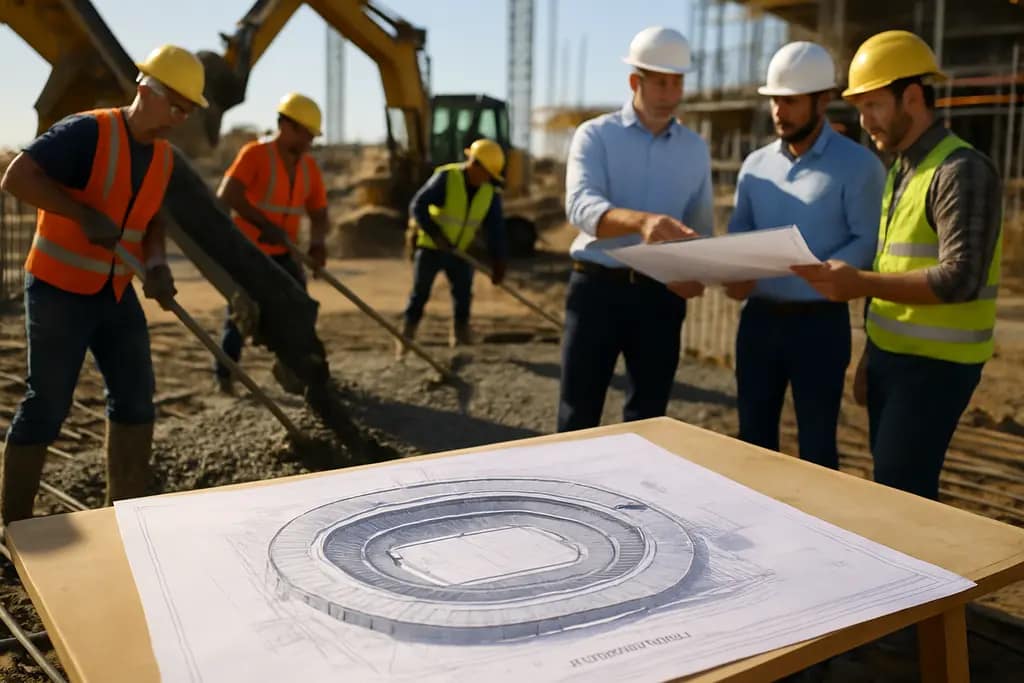
In April 2025, the District and the Washington Commanders struck a $3.7 billion agreement to redevelop the 180-acre RFK Stadium site into a new stadium complex with retail, housing, parks, utilities, and other infrastructure. The Commanders are expected to pay about $2.7 billion, while D.C. taxpayers are expected to cover more than $1 billion in public costs, according to reported deal terms.
Commanders Stadium Project Cost Split
The public share is not a single-purpose stadium payment. Research notes identify roughly $500 million for stadium infrastructure, more than $356 million for parking garages, and about $202 million tied to utilities and a transit-capacity study. That cost profile matters because the most defensible public investments are usually the ones that serve more than eight or nine NFL home dates. Roads, utilities, parks, and mixed-use connections can support residents and small businesses outside the game schedule. Parking structures are harder to judge without transparent event-day and non-event-day use data.
The stadium itself is planned as a covered, 65,000-seat venue, expected to be completed by the 2030 NFL season. Below-grade stadium work is slated to begin in Q1 2027. Because September 14, 2026 precedes that construction window, the next phase should be treated as a planning and oversight period, not as proof that projected benefits have been realized.
Land, Legal Clearance, And Site Scale
The land transfer from the federal government occurred in December 2024, and the D.C. Council’s final approval on September 17, 2025 gave the deal legal clearance. The 180-acre scale creates room for a district rather than a stand-alone venue. That distinction is important for local sports development. A stand-alone stadium is primarily an event facility. A district with parks, housing, retail, and improved access can become a daily-use civic asset if residents have practical ways to enter, move through, and use the site.
Economic Impact Claims Need Careful Reading
The official projections are substantial. The project is forecast to generate about 30,000 construction jobs over development and 2,000 permanent jobs once fully operational. The same public-facing material projects $24.2 billion in total economic output and about $5.1 billion in tax revenue to the District over the life of the project, with more than $60 million in tax revenue in the first full year of operations, as described in the District’s local business notice.
Jobs, Payroll, And Local Business Access
For community impact, the job count is only the starting point. A better scorecard should ask how many construction jobs go to D.C. residents, how many contracts reach local firms, and whether small businesses can participate before major procurement packages are already shaped. The District’s call for businesses to get RFK ready signals that contracting will be a central issue, but residents will need public reporting to judge results.
Sports infrastructure projects often produce visible construction activity long before residents can assess wage quality, contract distribution, and long-term employment. For the RFK project, the most useful reporting format would separate temporary construction work from permanent operations jobs. It should also distinguish stadium operations from hotel, retail, maintenance, security, food service, and public-space management roles.
Spending Forecasts Are Not Guaranteed Outcomes
Research notes show that, over 33 years, including three years of construction plus 30 years of operations starting around 2030, the stadium and its operations are projected to deliver about $14.9 billion in net new direct spending, $20.6 billion in total economic output, and $3.9 billion in personal earnings to Washington, D.C. In the first full year of operations in 2030, stadium operations, in-facility spending, and out-of-stadium fan spending are expected to generate about $800.3 million in net new direct spending, $1.1 billion in total output, and $221.9 million in personal earnings.
Those estimates should be read as benchmarks for later audit, not as settled results. The key phrase is “net new.” If spending shifts from another D.C. neighborhood rather than entering the city from outside, the public benefit is lower. If visitor spending is concentrated inside controlled venue areas, nearby businesses may gain less than projected. If the district attracts non-game activity through parks, housing, hotel use, and retail, the benefits may be broader.
Infrastructure Questions For RFK
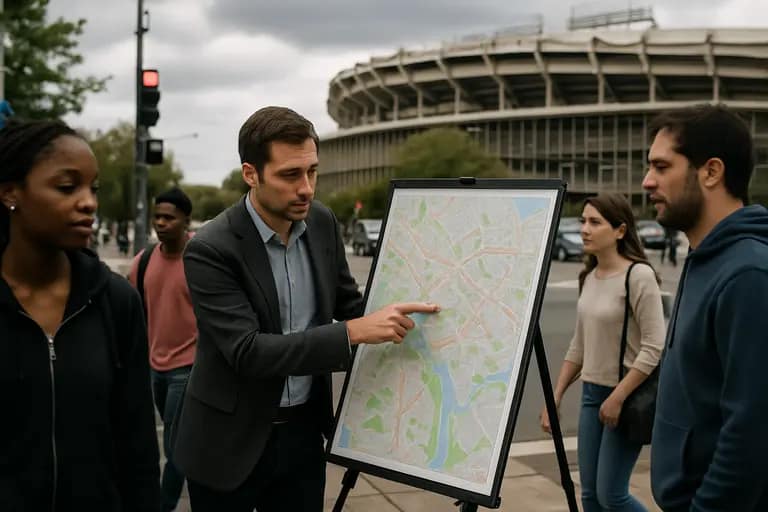
The infrastructure package is one of the most important pieces of the RFK redevelopment. Research notes identify roadway and pipeline utility upgrades, expanded parking facilities and garages, and a shift to about 8,000 parking spaces compared with 22,000 spaces in Landover. That parking reduction signals a different stadium model: less surface parking, more structured access, and a greater need for disciplined transportation planning.
Roads, Utilities, And Event-Day Pressure
A 65,000-seat covered stadium creates concentrated demand before and after games, concerts, and other large events. The available research supports that utilities and a transit-capacity study are part of the public investment plan. It does not, by itself, prove that event-day movement will work well. That uncertainty should be addressed before below-grade work begins in Q1 2027, because utility placement, garage access, and road circulation become more costly to correct after construction advances.
For local sports advocates, the concern is not only NFL traffic. The site also includes parks and green space. If families are expected to use those areas on non-event days, access must work for pedestrians, cyclists, transit users, and drivers. A district that feels closed or difficult to reach will not support broad community sports participation.
Housing, Retail, Hotels, And Public Space
The mixed-use district is planned to deliver 5,000 to 6,000 housing units, with at least 30% affordable housing. It is also expected to include up to 400,000 square feet of retail, 800 hotel rooms, and about 30% of acreage dedicated to parks and green space. These figures point to a district that could be active outside NFL dates, but the public value depends on execution.
Affordable housing targets should be tracked by unit count, income level, delivery date, and long-term affordability rules. Parks should be judged by access, programming, maintenance, and whether local youth sports groups can use space without excessive fees. Retail should be measured not only by square footage but by whether local businesses have realistic lease opportunities. For those looking to explore similar developments, additional insights are available at Scar Sports.
Commanders Stadium Project Accountability
The Commanders Stadium Project can be evaluated with a simple public scorecard. The goal is not to oppose or defend the project before results exist. The goal is to measure whether public commitments turn into public benefits.
A Practical Scorecard For Residents And Sports Groups
Community organizations, youth coaches, neighborhood groups, and local business associations should ask for repeatable data, not one-time announcements. The most useful indicators are concrete and tied to dates.
- Public cost tracking: report actual spending against the planned public categories for stadium infrastructure, parking garages, utilities, and transit-capacity work.
- Job quality: separate construction jobs from permanent jobs and publish local hiring results.
- Contract access: show how many contracts reach D.C.-based and small businesses.
- Mobility performance: measure event-day travel times, garage use, and neighborhood traffic effects after opening.
- Community use: publish access rules and scheduling data for parks and public spaces.
- Housing delivery: track affordable units by number, timing, and affordability terms.
What Would Make The RFK Plan Work Better
The RFK redevelopment has stronger public-interest potential than a stadium-only project because the plan includes housing, parks, utilities, retail, hotel space, and transportation-related study. Still, potential is not performance. The District and the team should be judged by whether the public share produces durable civic assets and whether residents can verify the results.
By September 14, 2026, the project had cleared major legal and political steps, but its largest construction and operations tests remained ahead. The most responsible reading is cautious: the stadium deal could support local economic activity and sports infrastructure if procurement, mobility, housing, and public-space commitments are documented in public. Without that reporting, the headline figures will remain projections rather than proof.