
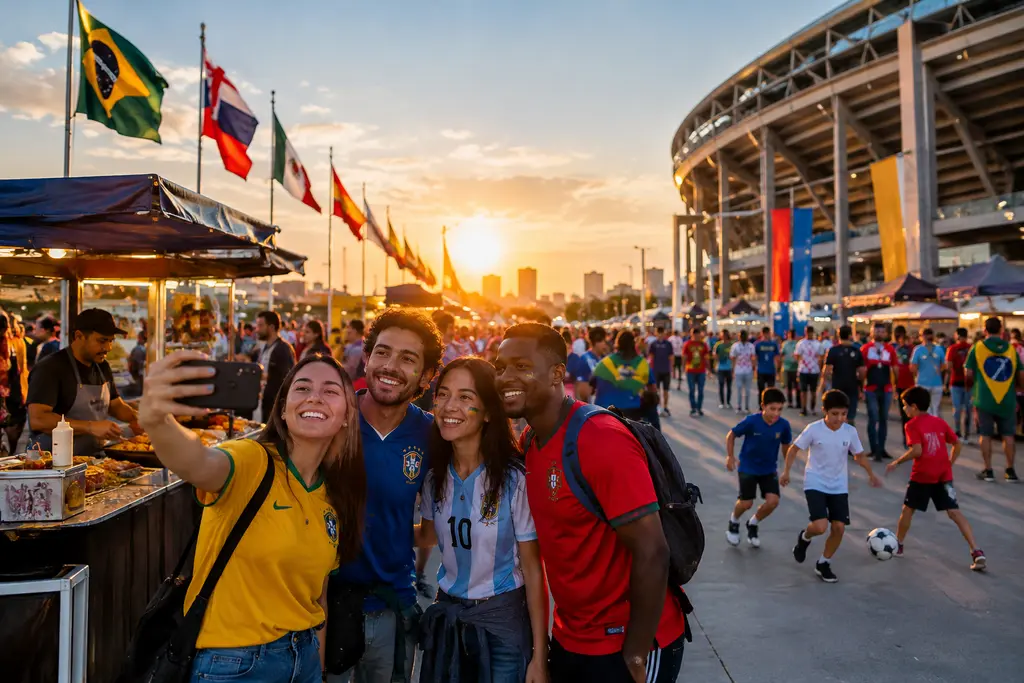
The 2026 FIFA World Cup ended on July 19, 2026, and the early record on sports tourism spending is strong but uneven. U.S. cities saw real short-term gains in visitor activity, hospitality demand, food service, transportation, and event operations. The harder question for civic leaders is whether those gains improved long-term sport access, facility planning, and neighborhood-level participation.
New York City offers the clearest public data point so far. The city estimated $2.0 billion in total economic impact from the summer 2026 World Cup, including roughly $1.3 billion in direct visitor and operational spending and support for more than 12,000 jobs in hospitality, food, retail, and transportation, according to the NYC Mayor’s Office estimate. Those figures give other cities a useful benchmark, but they should not be treated as a simple formula that applies to every host market.
Sports Tourism Spending Evidence From Host Cities
Sports Tourism Spending Metrics Cities Can Track
To treat sports tourism spending as a planning tool rather than a headline number, cities need to separate direct spending from total economic activity. Direct spending covers purchases by visitors, event organizers, teams, media operations, and temporary workforce activity. Total economic impact may include supplier effects and wage circulation, which can be valid but are easier to overstate if public reporting is not clear.
For local sport agencies and park departments, the most useful measures are practical: hotel nights linked to event dates, transit ridership near venues, restaurant and retail sales by district, public safety overtime, sanitation costs, temporary labor demand, and post-event use of upgraded facilities. A city that treats sports tourism spending only as a tourism win may miss the harder community sports question: did the event leave better fields, safer routes, trained volunteers, or stronger club partnerships?
New York’s Visitor And Operations Signal
The New York–New Jersey metro region hosted eight matches, and the official city release said those matches generated around $3.5 billion in total economic activity across the region. New York City was reported to have captured 56% of that total and 70% of visitor spending. That split matters because regional events do not distribute gains evenly. Hotels, restaurants, airports, ride services, and retail corridors near high-demand visitor zones may benefit more than neighborhoods with less direct event traffic.
For community sports advocates, the lesson is not simply to chase mega-events. It is to ask for event agreements that connect tourism gains to sport development. That can mean reserving a portion of event-related public benefit funds for field repairs, youth coach training, inclusive programming, and maintenance reserves. A similar discussion appears in this site’s sports tourism trend analysis, which treats travel demand as one input in a wider local planning model.
What The World Cup Boost Did Not Prove
Hotels Reported A Softer Picture
The World Cup did not produce a uniform boom for every hotel operator. Some hotels in host markets reported bookings below expectations, citing visa delays, high travel and ticket costs, and lower than expected international tourist volume, according to an AP hotel report. That caution matters because cities often build public expectations around peak demand, while private operators may see uneven occupancy, compressed booking windows, or gains limited to specific match nights.
The challenge for sports tourism spending is that match-day surges can sit beside softer demand on non-match days. A city may show strong restaurant receipts near a stadium while smaller hotels outside the main visitor corridor see less benefit. That does not mean the event failed. It means citywide claims should be paired with neighborhood data and cost accounting.
Displacement Risk And Public Claims
Large tournaments can replace some normal tourism rather than create entirely new demand. Regular business travel, conferences, local leisure trips, and family visits may shift away from crowded or higher-cost dates. If a city counts every hotel room or restaurant sale during a tournament as new value, it risks overstating the net gain. Public agencies should compare event-period activity with baseline demand, similar weeks in prior years, and cost categories such as police, sanitation, traffic control, transit extensions, and temporary permitting.
This is where sports-first analysis helps. A soccer tournament is not only a visitor economy event; it is a stress test for fields, stadium access, youth club capacity, volunteer pipelines, and public space. Venue owners who work across basketball, soccer, and concerts can compare crowd movement, premium demand, and neighborhood services across sports; to learn more about arena operations and basketball business context, one can refer to a related site in the network, NBA Playbook.
Planning Tools For Community Sports Systems
A Local Measurement Sheet
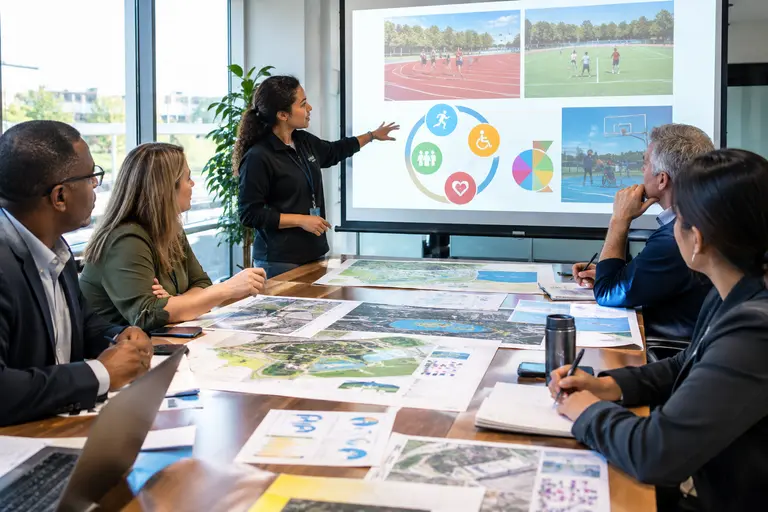
U.S. cities can use the World Cup record to build a repeatable measurement sheet for future tournaments, friendlies, college championships, basketball showcases, and multisport events. The sheet should start before bids are submitted, not after the final whistle. Baseline data is the protection against inflated claims.
- Demand: hotel rooms, short-term stays where legal, transit ridership, parking use, and airport arrivals by event window.
- Local business: restaurant, retail, and service activity by district, with attention to small business corridors outside the stadium zone.
- Public cost: police, fire, EMS, sanitation, street closures, permitting, accessibility services, and communications staffing.
- Sport legacy: field hours added, facilities repaired, coaches trained, youth scholarships funded, and adaptive sport access expanded.
- Equity check: which neighborhoods gained activity, which absorbed disruption, and which received lasting sport infrastructure.
This type of scorecard can keep sports tourism spending tied to decisions that residents can see. It also gives parks departments and local clubs stronger evidence when they ask for maintenance budgets after an event has ended.
Facility And Program Priorities
Host cities often focus on airports, hotels, security, and stadium operations. Those are necessary, but community sport groups should ask for the same discipline around everyday facilities. If a tournament raises city visibility, local leaders can use that moment to audit field lighting, locker room access, public transit to recreation sites, heat policies, water access, and scheduling conflicts between school teams and community clubs.
The best practical outcome is not a one-time ribbon cutting. It is a maintenance plan with assigned owners, funding sources, and usage targets. A renovated field that lacks operating money can become a public relations expense rather than a participation asset. A youth soccer clinic without trained coaches or safe transport can have limited reach. Event planning should connect tourism departments with parks, schools, disability access offices, local clubs, and neighborhood business groups before contracts are signed.
Sports Tourism Spending Playbook For U.S. Cities
Questions Cities Should Ask After A Mega-Event
After the 2026 World Cup, the useful stance is neither celebration nor dismissal. The data from New York City showed a major short-term economic gain, while hotel feedback showed that benefits were not uniform. Both findings can be true. For U.S. cities, sports tourism spending should be judged by net visitor activity, public costs, business distribution, and sport participation outcomes.
City councils, convention bureaus, and sport commissions should ask five direct questions after any major event: What spending was truly new? Which neighborhoods benefited? What public costs were incurred? Which facilities improved? Which local sport organizations are stronger six months later? If those questions are answered with public data, mega-events can become part of a disciplined community sports strategy rather than a short burst of activity followed by guesswork.