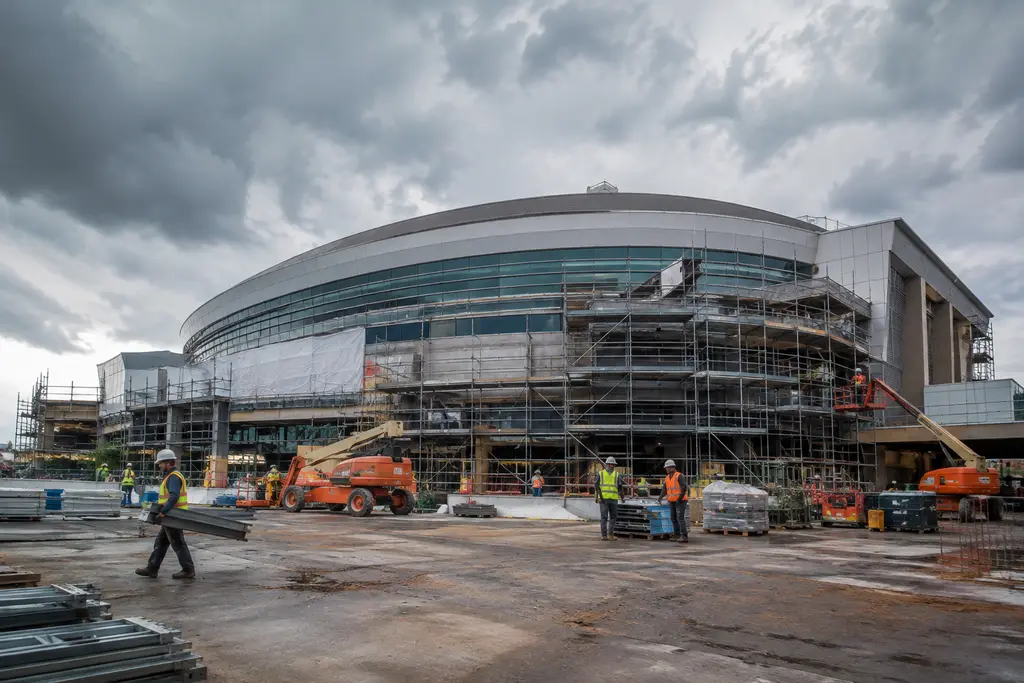
Gas South Arena renovations began with a practical question for Duluth and Gwinnett County: will a $175 million venue project make event days easier for fans while creating community value beyond premium spaces? On September 3, 2026, the arena broke ground on a renovation targeted for completion by early 2028, according to the Gas South District announcement. That timeline matters because fan benefits will not arrive all at once. Parking, entries, seating, hospitality areas and food service each affect a different part of the event-day chain.
For community sports planners, this project is useful because it shows how a large suburban arena can balance two goals that often compete: improving the paid guest experience and preserving public-facing access. Premium seating can help finance and market a venue, but the wider test is whether families, youth teams, concertgoers and local businesses feel the gains in arrival, movement and service. A related 2028 venue plan analysis covered the upgrade timeline; this assessment focuses on fan and community impact.
What Gas South Arena renovations Change First
Gas South Arena renovations Fan Metrics
The most direct fan-facing upgrades are access, seating and service. Reporting on the project identified a 1,000-space parking deck, a redesigned and expanded entrance, upgraded concessions technology, custom bars and upscale food options as part of the plan, according to the WSB-TV report. Those items should be judged by measurable outcomes, not by renderings. The right questions are simple: do queues shorten, do late arrivals decrease, do families find their seats with less confusion, and do concessions lines stop pulling fans away from the event for long periods?
The Gas South Arena renovations also include new premium seating concepts, including loge seating, private suites and a premium club using Personal Seat Licenses, based on the project details provided in the research. Premium inventory can improve hospitality options for sponsors and higher-spending guests. The risk is that premium work can dominate public attention while standard seating, wayfinding, restrooms and pedestrian access receive less scrutiny. Community venues should avoid judging success only by the number of premium products sold.
Arrival Access And Parking Behavior
A 1,000-space parking deck is a major operational change, but extra parking does not automatically solve congestion. It can concentrate vehicle movements at fewer entry and exit points if traffic management is not aligned with event schedules. The fan experience should be measured from the road network to the seat, not just from the parking space to the concourse. Useful measures include average time from campus entry to parking, post-event clearance time, ADA drop-off performance, pedestrian conflict points and communication quality before events.
For a suburban venue, parking is also a community issue. Poor exit flow affects nearby residents, workers and restaurants. Better circulation can support local spending before and after events, but only if fans have clear pedestrian routes and feel there is enough time to use nearby services. Arena operators and local officials should collect event-by-event data, separating weekday concerts, weekend sports events and family shows because traffic behavior differs by event type.
Fan Experience Tests During Construction
Phasing Without Losing Trust
The renovation period runs from September 2026 toward early 2028, so the interim experience is part of the project, not a side issue. Research notes indicate the arena was expected to remain open for most concerts and sports events, with a planned 10-week full closure in summer 2027 for seating replacement, low-level floor seating additions and a new roof. That makes communication a core service. Fans can tolerate temporary detours when they receive clear instructions before arrival, consistent signage on site and realistic expectations about closed areas.
Construction phasing also creates equity concerns. If detours lengthen the walk from accessible parking, ride-share zones or transit connections, the inconvenience does not fall evenly on all fans. Older guests, disabled fans, parents with children and youth teams traveling in groups feel friction sooner. A venue improvement plan should include temporary access audits, not just final-state design reviews.
Concessions, Seating And Time Use
Concessions upgrades are often marketed as variety and speed, but the strongest test is time. If new point-of-sale systems and redesigned stands reduce waiting, fans gain more of the event they paid to see. If upscale food options expand but basic service remains slow, the benefit is uneven. The arena should track transaction time, line length and stand availability by event type.
Seating replacement during the planned closure offers another fan-experience checkpoint. New seats can improve comfort, but sightlines, aisle movement, handrails, cupholders and row identification matter just as much. For sports events, especially hockey, indoor football or basketball-style configurations, small differences in low-level seating can alter perceived closeness to play. For concerts, floor seating and entry control shape both comfort and safety.
Community Engagement Measures For Duluth
Beyond Event Nights
Gas South Arena sits within a district model, not as a stand-alone building. The research notes place the arena work within a broader campus investment that includes convention center expansion, a Westin hotel opened in 2024 and theater upgrades. The community question is whether those assets connect local residents, amateur sports groups, school programs and small businesses to the venue, or whether the campus functions mainly for visitors who arrive, attend and leave.
There is not enough published data in the provided research to state a projected local economic impact figure. That uncertainty should be stated plainly. Visitor counts, hotel activity and event bookings can signal demand, but community engagement requires different measures: local vendor participation, youth sports access, nonprofit event use, school partnerships and affordable community programming. A venue can be busy without being broadly useful.
Premium Revenue And Public Perception
Personal Seat Licenses and premium clubs can support revenue goals, but they can also shift public perception if residents see the project as serving only higher-income fans. The practical response is transparency. Venue leaders should explain which improvements benefit all ticket holders: the entrance, concessions systems, roof, seating, parking and wayfinding. They should also publish plain-language updates during construction so community members understand disruptions before they occur.
Sports culture is shaped by local identity as much as by buildings. For readers exploring ways fans react to venue changes, World Football Idol offers insights into how people perceive infrastructure improvements, access changes, and match-day rituals.
Practical Checklist For Community Sports Venues
A Measurement Tool For Local Officials
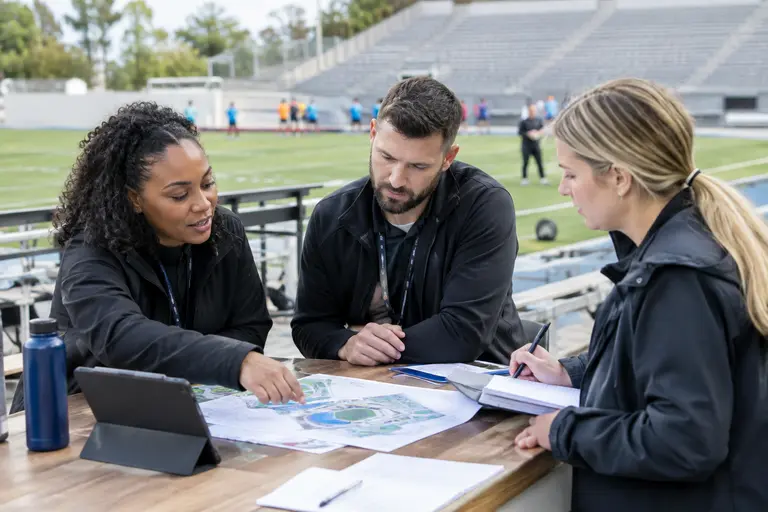
Community sports leaders can use the Duluth project as a checklist rather than a template to copy. The details will differ by budget and building size, but the performance questions travel well. Any public-facing venue renovation should define its fan and community measures before construction starts, then report progress during and after the project.
- Access: Measure arrival time, exit time, accessible parking use, ride-share function and pedestrian safety by event type.
- Service: Track concession wait times, restroom wait times, mobile ordering reliability and staff response points.
- Inclusion: Review temporary and permanent routes for disabled fans, older adults, youth teams and families with children.
- Community Use: Count local vendors, school partnerships, nonprofit events and youth sports opportunities tied to the venue.
- Transparency: Publish construction updates, closure dates, route changes and post-project performance data in plain language.
This approach protects communities from vague claims. A parking deck, premium club or new entrance may be valuable, but each must be connected to a user outcome. For smaller venues, the same logic can support grant applications, capital campaigns and city-county budget requests. Funders respond better when a project defines who benefits, how benefits will be measured and what trade-offs remain.
Gas South Arena renovations And Community Value
The main promise of this project is not just a refreshed arena. It is a better event-day system for Duluth: clearer entry, more parking capacity, improved seating, stronger hospitality and food service that wastes less fan time. The main risk is that visible premium upgrades receive more attention than basic access and community use.
If the Gas South Arena renovations are assessed through early 2028 with public metrics, the project can offer a useful model for community sports infrastructure. The strongest evidence will come after fans have used the new systems across different event types and after local groups can show whether the district is easier to access, easier to use and more connected to everyday community activity.