
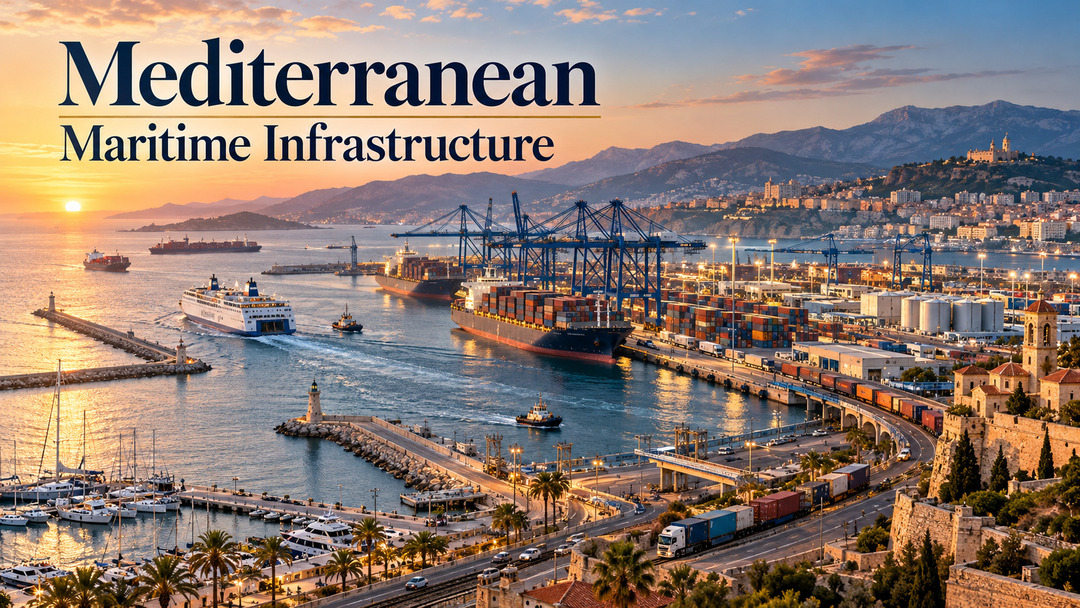
Maritime transport constitutes the indispensable backbone of international commercial exchange, handling upwards of eighty percent of global merchandise trade by volume. Within the Mediterranean basin, coastal hub ports and multimodal freight corridors face unprecedented operational demands driven by container vessel upscaling, fluctuating global supply chains, and stringent environmental decarbonization directives. Optimizing maritime trade throughput requires substantially more than physical berth deepening or land reclamation; it necessitates a comprehensive technological transformation spanning real-time berth allocation, terminal automation, intermodal rail synchronization, and automated gate clearance systems. Port authorities, terminal concessionaires, and logistics operators across the Levante and broader Mediterranean regions must modernize legacy workflows to maintain competitive supply chain connectivity while curbing transport-related environmental footprints.
Strategic Pressures on Mediterranean Port Infrastructure
Over the past decade, maritime shipping economics have heavily favored ultra-large container vessels (ULCVs) exceeding twenty thousand twenty-foot equivalent units (TEUs). While these massive vessels optimize ocean freight economies of scale for global carrier alliances, they generate severe operational friction at destination terminals by discharging concentrated peaks of inbound cargo over narrow temporal windows. According to comprehensive maritime trade assessments published by the United Nations Conference on Trade and Development, port efficiency and container dwell times serve as primary determinants of national trade competitiveness, directly influencing inventory holding costs and regional export viability. When vessel berthing delays occur, the downstream ramifications reverberate across regional trucking networks, dry ports, and warehouse distribution centers.
Beyond capacity management, regional port complexes are subject to tightening environmental mandates under international maritime agreements and European green transition framework policies. The enforcement of sulfur emission control areas (SECAs) and international net-zero decarbonization timelines compels commercial ports to integrate cold-ironing shore power systems, alternate bunkering infrastructure, and zero-emission cargo-handling equipment. Port operators must systematically evaluate multi-million-euro capital investments to ensure that infrastructure upgrades satisfy environmental sustainability targets without sacrificing cargo handling velocity or driving terminal tariffs to non-competitive levels.
Implementing Smart Terminal Operations and Digital Automation
Modernizing port terminal throughput hinges on transitioning from siloed yard management software to fully integrated Port Community Systems (PCS). A high-performance PCS serves as a centralized digital clearinghouse that unifies terminal operators, customs agencies, freight forwarders, shipping lines, and rail carriers into a single secure data interchange. Technical operational frameworks established by the International Maritime Organization emphasize that digital single-window trade platforms dramatically reduce administrative vessel dwell times, eliminate redundant physical manifests, and enhance border inspection accuracy through pre-arrival electronic customs screening.
At the physical terminal level, automated stacking cranes (ASCs) and sensor-driven terminal operating systems (TOS) optimize container placement based on predictive departure scheduling. By deploying computer vision algorithms and radio-frequency identification (RFID) tracking at inbound terminal gates, port facilities achieve continuous automated container inspection, structural damage detection, and optical character recognition (OCR) verification of license plates and container serials. This automated processing curbs truck queuing at terminal access gates, lowering idling diesel emissions and maximizing gate throughput during peak delivery cycles.
Furthermore, machine learning algorithms embedded within quayside operations can anticipate quay crane micro-stoppages, optimizing the sequential staging of automated guided vehicles (AGVs) between ship-to-shore cranes and yard blocks. Eliminating deadheading—where transport vehicles travel empty between operational moves—slashes fuel expenditures and prevents equipment bottlenecks along heavily trafficked quayside aprons.
Comparative Operational Metrics for Terminal Modernization
To quantify the tangible benefits of adopting automated cargo management and digital single-window frameworks, port authorities track performance across several key operational indicators.
| Logistics Operational Metric | Conventional Terminal Baseline | Digital & Automated Terminal Benchmark | Primary Operational Impact |
| Container Gate Turnaround Time | 45 – 75 minutes | 15 – 25 minutes | Reduces regional drayage congestion and road transport fuel burn. |
| Quayside Crane Productivity | 22 – 26 moves / hour | 32 – 38 moves / hour | Shortens vessel berth occupancy and lowers port fee overhead. |
| Customs Manifest Clearance | 12 – 36 hours | 2 – 4 hours | Accelerates intermodal transfer to dry ports and inland distribution hubs. |
| Berth Scheduling Precision | Manual queue / dynamic delay | Predictive Just-In-Time (JIT) arrival | Minimizes vessel anchoring time and reduces marine fuel consumption. |
Hinterland Connectivity and Multimodal Rail Integration
A maritime port’s true operational capacity is strictly bounded by the evacuation efficiency of its hinterland transport corridors. Quayside velocity becomes counterproductive if discharged containers congest yard stacks without rapid overland dispersal. Establishing dedicated on-dock rail terminals that link directly to inland dry ports represents the most effective structural mechanism for decoupling quayside throughput from regional highway congestion. Multimodal transport guidelines published by the European Commission Directorate-General for Mobility and Transport highlight that shifting containerized freight from long-haul road transport to electrified rail corridors reduces transport-related greenhouse gas emissions by up to seventy-five percent per ton-kilometer.
Strategic Imperatives for Port Modernization Programs
Effective multimodal integration requires dynamic synchronized scheduling between national rail freight operators, terminal management systems, and dry port staging yards. When rail departure schedules synchronize directly with quayside discharge cycles, import containers bypass intermediary yard staging and transfer directly from ship to train. This rail-first operational model substantially expands the effective economic hinterland of Mediterranean maritime gateways, allowing coastal ports to efficiently serve industrial manufacturing clusters and metropolitan consumer markets located hundreds of kilometers inland without overwhelming local road networks.
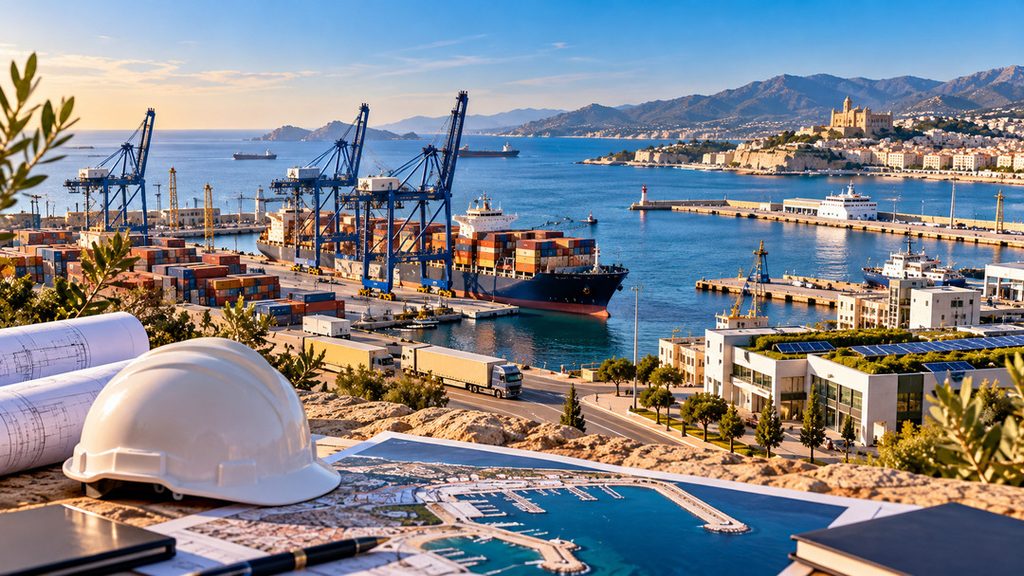
Achieving durable, cost-effective port modernization requires public authorities and commercial concessionaires to coordinate capital expenditures across several structural pillars:
- Deploy high-voltage shore connection (cold ironing) infrastructure at primary berths to allow docked container vessels to shut down auxiliary diesel generators while loading and discharging.
- Establish interoperable Port Community System API architecture compliant with international data-sharing protocols to streamline multi-agency customs clearance and commercial trade transactions.
- Upgrade inland rail sidings to accommodate standard 740-meter freight train configurations, maximizing intermodal throughput per locomotive movement and optimizing rail slot utilization.
- Incorporate predictive IoT sensor networks across yard gantry equipment to transition from reactive maintenance cycles to condition-based predictive maintenance, preventing costly equipment outages.
Charting the Future of Mediterranean Logistics Competitiveness
The modernization of maritime port logistics represents an existential imperative for coastal trade hubs navigating an increasingly volatile global commerce landscape. Incremental dredging projects and physical yard expansions alone cannot resolve the complex bottlenecks imposed by megaship arrivals, regulatory decarbonization mandates, and unpredictable freight volumes. Sustained commercial leadership belongs to port ecosystems that aggressively harness automated physical infrastructure, digital collaboration platforms, and synchronized multimodal rail corridors. By aligning advanced operational technologies with rigorous environmental stewardship, forward-looking Mediterranean ports will secure their status as vital, resilient engines of international trade and regional economic prosperity.