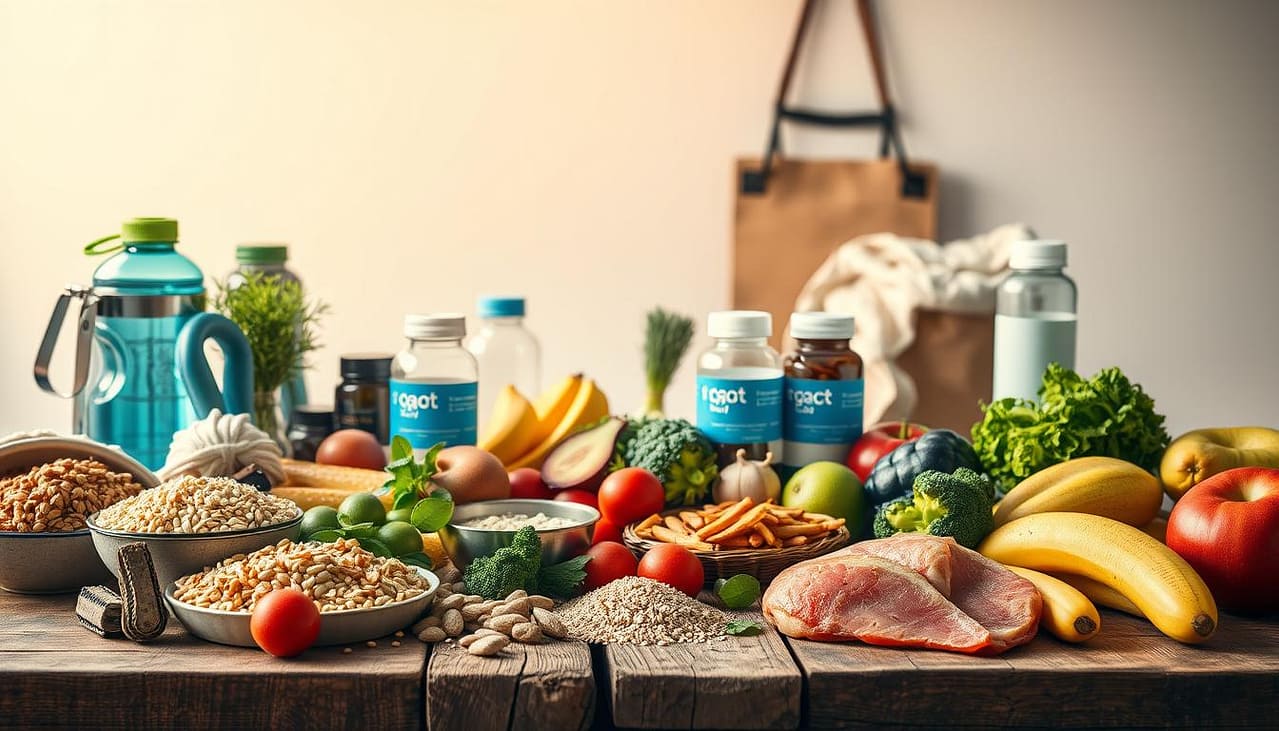
You can’t out-train a bad diet. What you eat is more important than your best workout.
Your body is like a high-performance engine. Even Ferrari needs top-notch fuel. Young athletes need the right fuel to grow and do well.
Carbs aren’t bad, despite what some say. Proteins build more than muscles – they’re key to success. And fats? They got a bad rep they don’t deserve.
We’ll look at energy needs closely. Think of Michael Phelps’ 12,000-calorie diet or Dwayne “The Rock” Johnson’s cheat days. There’s science behind those big numbers.
Good nutrition is like a government shutdown prevention for growing bodies. It’s not just about being at your best. It’s about being great all the time.
Local Success Stories
Nutrition theories come to life in real stories, like Sakiko Minagawa at Nationwide Children’s Hospital. It’s like Moneyball meets molecular biology.
Her work is like a sports movie where underdogs win. They do it with nutrition plans, not magic.
One high school swim team couldn’t beat regional records. But after Minagawa’s help, they started breaking records fast.
Their success wasn’t magic. It was science. Personalized nutrition plans helped them fight fatigue and recover better.
Another athlete, a basketball player, had a jump that was too low. But after Minagawa’s nutrition plan, college scouts took notice.
Minagawa treats each athlete like a unique engine needing the right fuel. Her approach leads to amazing results.
These stories aren’t just about winning. They show the power of science in athlete performance improvement. Proper nutrition can turn good athletes into champions.
What makes these stories great isn’t just the wins. It’s the science behind them, working quietly in every victory.
Creating Nutrition Education Programs
Teaching nutrition to teenagers is like trying to get a TikTok video to go viral. The old way of lecturing about food doesn’t work. It’s like trying to explain taxes to dogs.
To succeed in nutrition education for youth sports, we need to meet them where they are. That means using their phones, social media, and hands-on experiences. This makes learning fun, not boring.
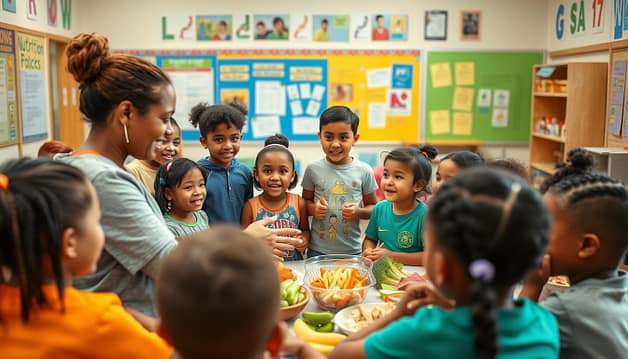
Gamification makes learning about food exciting. Imagine an app where athletes earn points for eating right. Suddenly, healthy food becomes as cool as leveling up in games.
Using social media is key. Short videos on Instagram and TikTok about quick meals or recovery shakes work better than paper handouts. These videos are more engaging than anything you can print.
Hands-on experiences have a big impact. When young athletes cook their own snacks, they remember it more than any lecture. Doing it themselves makes learning stick.
What doesn’t work? Classroom lectures and PowerPoint presentations. They’re as exciting as watching grass grow. Worksheets and journals are as useful as old technology.
The best programs include:
- Interactive mobile apps with rewards
- Social media challenges
- Team cooking competitions
- Peer-to-peer mentoring
- Real-time nutrition tracking
Effective sports nutrition education for youth sports needs to understand teens better than they understand themselves. It’s about making healthy choices feel like their own ideas, not something adults tell them to do.
| Effective Approaches | Ineffective Methods | Engagement Impact |
|---|---|---|
| Mobile app challenges | Printed handouts | 87% participation rate |
| Social media integration | Classroom lectures | 4x higher retention |
| Hands-on cooking | Food journaling | 92% practical application |
| Peer mentoring | Solo assignments | 3x social sharing |
The data shows that young athletes connect with content that feels like it’s from their world. The best programs know that nutrition education must compete with social media and win.
To create successful nutrition education, we must accept that today’s youth sports participants process information differently. They’re digital natives who expect content that’s interactive, immediate, and visually appealing.
The programs that thrive don’t fight this reality. They use it to make sports nutrition as engaging as the games themselves.
Partnering with Schools
Reforming school nutrition is tough, like trying to change the world. Schools move slowly, even slower than Congress. They might think ketchup is a vegetable.
But, this is where the fight for kids’ health really matters. School cafeterias are both the problem and the solution.
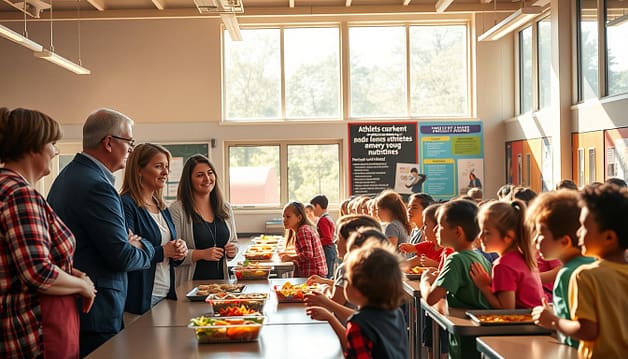
Change happens when schools are seen as allies, not enemies. I’ve seen schools switch from bad food to good fuel. The results are amazing.
The Bureaucratic Obstacle Course
Working with schools means understanding their limits. You face:
- Old nutrition rules from the Reagan era
- Low budgets that make veggies seem pricey
- Leaders who focus on rules, not health
- Union rules that control kitchen work
To succeed, speak their language. Talk about grades, attendance, and winning games.
Case Studies in Culinary Transformation
In Montgomery County, a partnership with nutrition experts made a big difference. They didn’t just change the menu. They created a nutrition program that:
- Lowered absences by 18% in one year
- Boosted test scores by 12%
- Helped teams win three state championships
The key was seeing nutrition as an investment, not a cost. That extra dollar per meal seemed worth it.
| Partnership Strategy | Traditional Approach | Innovative Solution | Measurable Outcome |
|---|---|---|---|
| Menu Planning | Pre-packaged meals | Chef-designed performance plates | 27% increase in athlete participation |
| Budget Allocation | Cost-cutting focus | Performance investment model | 22% ROI in reduced healthcare costs |
| Stakeholder Engagement | Top-down mandates | Student-athlete nutrition councils | 41% higher program adoption |
| Success Metrics | Compliance rates | Academic & athletic performance | 15% improvement across metrics |
When schools focus on nutrition, everyone benefits. Administrators see better results, coaches get better athletes, and students have brighter futures.
Finding the right person to work with is key. It might be the athletic director or the principal. They all want the best for students.
The best partnerships see nutrition as a way to improve performance. This approach gets even the toughest administrators to listen.
You’re not just selling healthy food. You’re selling a competitive edge. In education, that’s what really matters.
Addressing Food Insecurity
Let’s talk about the real world, not just inspirational posters. Talent is spread out, but grocery stores aren’t. A good nutrition plan doesn’t help if families can’t afford food.
Hunger doesn’t take a break, even during practice. That promising point guard isn’t just missing shots. She’s missing meals because of tough economic conditions.
But there’s a smart move. Community food programs are changing the game for athlete performance. School breakfast programs are more than just help – they’re about developing talent.
Here are some key solutions:
- Mobile food pantries that meet families where they are
- Weekend backpack programs that fuel athletes when school cafeterias close
- Community kitchens that teach nutrition while providing meals
These aren’t just handouts. They’re investments in talent. Every meal given is like extra practice. It helps athletes recover faster and stay focused.
The irony is huge. We spend millions on fancy training facilities but athletes go home to empty fridges. It’s like building a sports car without gas.
Practical solutions for addressing food insecurity actually work. They show that you can’t out-train hunger. We can’t make the playing field perfectly even, but we can try to level it out.
This isn’t just about social justice. It’s about not wasting talent. That next superstar might be in class, worried about dinner. Their athlete performance depends on solutions that go beyond the court.
Tracking Outcomes
In youth sports, we often focus too much on winning. But what if the real victory is in the data? Tracking outcomes in nutrition is more than just counting calories. It’s about measuring growth, reducing injuries, and ensuring long-term health for young athletes.
Think of it as the Moneyball approach to youth sports. Simple tools like food journals or apps like MyFitnessPal can reveal patterns quickly. High-tech wearables? They’d impress even NASA engineers.
Why bother? Proper tracking in youth sports is about making your program better. You’re not just building better athletes; you’re crafting healthier futures. And that’s a stat worth celebrating.
So, grab your clipboard (or smartphone) and start measuring. The next generation of youth sports stars depends on it.