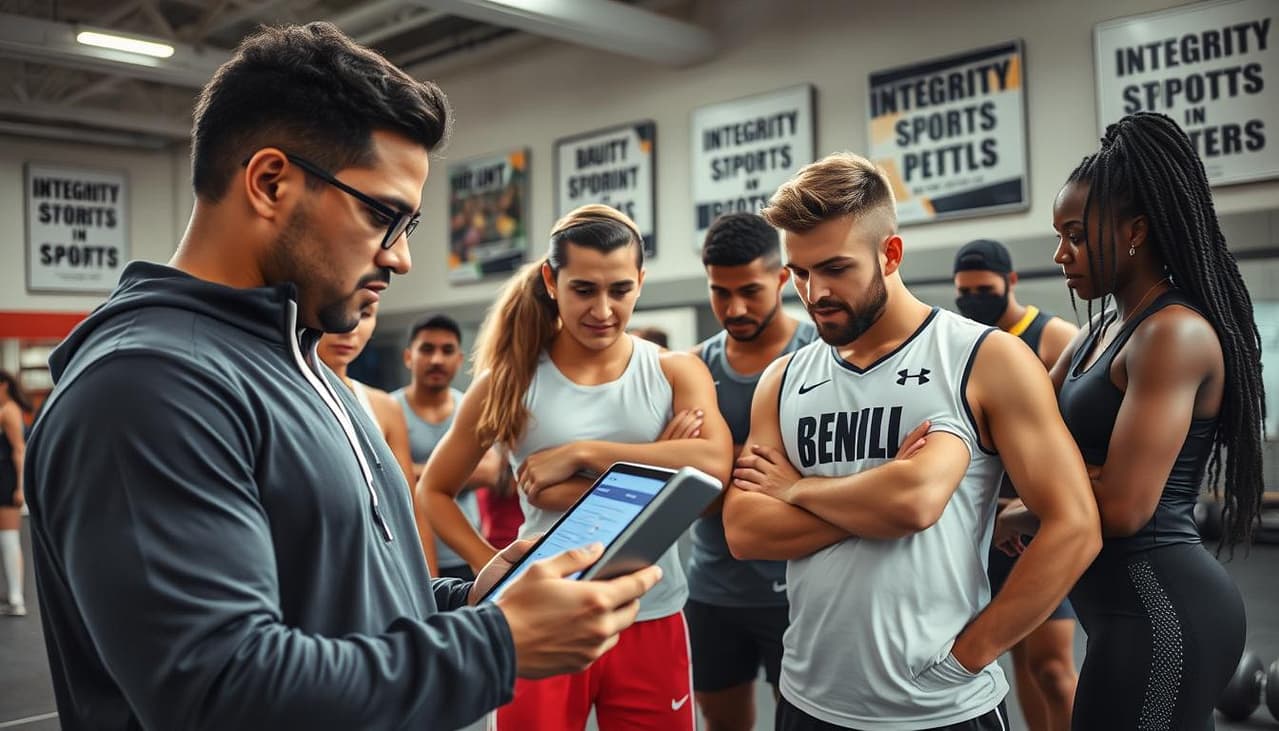
Ever notice how champions talk after a loss? They don’t blame the refs or bad luck. Instead, they dissect their own decisions. LeBron James and Serena Williams do this.
Real athletic integrity means doing what you said you’d do, even when nobody’s watching. It’s knowing your job and doing it 100% of the time. Think of it as Newton’s third law for athletes: every action has equal and opposite accountability.
The difference between champions and participants? True ownership. When the cheers fade, the real work begins. This is where genuine performance separates itself from empty locker room speeches.
We’re cutting through the clichés to explore what real accountability looks like—from amateur leagues to professional circuits.
Why it Matters for Local Communities
Ever wonder why small-town baseball diamonds produce better citizens than Ivy League ethics seminars? The answer lies in what I call “sandlot sovereignty” – the unwritten constitution that governs every community field. When a 12-year-old shortstop owns up to a missed catch, they’re not just learning sportsmanship. They’re signing their first social contract.
Local sports programs serve as microcosms of democratic engagement. The pitcher’s mound becomes a pulpit for accountability. The soccer field transforms into a courtroom where consequences feel immediate and real. This isn’t just play – it’s sports governance in its purest form.
Research shows children internalize values through experience, not lectures. That third strike called by a volunteer umpire? More effective than any civics textbook. The post-game handshake line? A masterclass in grace under pressure. These moments build what psychologists call “character muscle memory.”
Consider these community impacts of robust sports governance:
| Youth Development Impact | Community Benefit | Long-term Value |
|---|---|---|
| Accountability training | Reduced juvenile incidents | Stronger civic engagement |
| Teamwork cultivation | Intergenerational bonding | Improved workplace collaboration |
| Conflict resolution skills | Community trust building | Better local leadership |
| Ethical decision making | Shared value system | Informed voting patterns |
The ripple effects extend far beyond the field. Communities with strong youth sports programs report higher voter turnout. They show greater resilience during economic downturns. Why? Because local sports teach people to show up for each other – whether it’s covering second base or covering a neighbor’s shift.
Friday night lights illuminate more than football fields. They spotlight an entire community’s moral compass. When we invest in supporting local sports, we’re not funding athletics. We’re funding citizenship laboratories.
The baseball diamond becomes a classroom. The soccer field transforms into a leadership academy. These spaces where kids learn to call their own fouls? That’s where democracy gets its muscle memory.
True sports governance creates citizens who understand that accountability isn’t punishment. It’s participation. It’s the recognition that we’re all umpires in each other’s games – and we all have a stake in calling things fairly.
Structural Approaches: Roles & Policies
Ever watch a pickup basketball game where everyone chases the ball like hyperactive golden retrievers? That’s most community sports programs without proper structure. Chaos looks energetic until you need actual results.
Structure isn’t creativity’s enemy—it’s the framework that makes excellence possible. Think of your organization as a jazz ensemble. Everyone needs to know their part before they can improvise.
The Utah Utes softball team’s breakthrough season came from defining roles with NASA-level precision. They used journals to map technical and non-technical responsibilities. This created clarity about where each person could add maximum value.
Effective policy enforcement starts with clear role definitions. When people understand their specific responsibilities, accountability becomes natural.
Here’s how top programs build their accountability architecture:
- RACI models that define who’s Responsible, Accountable, Consulted, and Informed
- Role clarity exercises that eliminate ambiguity
- Behavioral frameworks that define desired cultural norms
- Regular alignment checks to ensure roles match organizational goals
The magic happens when structure meets flexibility. Too rigid, and you stifle innovation. Too loose, and you get that pickup game chaos.
Consider this comparison of structural approaches:
| Approach | Role Clarity | Flexibility | Enforcement Mechanism |
|---|---|---|---|
| Traditional Hierarchy | High | Low | Top-down supervision |
| Collaborative Teams | Medium | High | Peer accountability |
| Hybrid Model | High | Medium | Combined oversight |
The best systems balance clear expectations with adaptive execution. They transform vague inspirational posters into measurable standards that actually mean something.
Effective policy enforcement isn’t about punishment. It’s about creating environments where excellence becomes the path of least resistance. When everyone knows their role and how it contributes to shared goals, accountability stops being a buzzword and starts being reality.
Remember: structure enables creativity. Clear roles fuel innovation. And proper policy enforcement turns chaotic energy into championship results.
Oversight & Compliance Tools
Forget what you think about sports oversight. It’s not about watching your every move. The best systems work like a good umpire. You only notice them when something goes wrong, and then you’re thankful they’re there.
Programs change when they focus on internal compliance. It’s like moving from having a hall monitor to developing personal integrity. When athletes call their own fouls, that’s when the magic happens.
The simplest model I’ve seen asks three great questions: What’s my role? How will I do it? How well did I do (on a 1-10 scale)? The twist is sharing this self-evaluation with teammates and coaches for feedback. Suddenly, oversight becomes a conversation, not an interrogation.
Modern tools have taken this idea and run with it:
- Digital journaling apps that turn reflection into data
- Peer feedback systems that make corporate 360-reviews look amateur
- Performance tracking that maps progress, not punishment
Programs like TIDA SPORTS have mastered this approach. They use data as a compass, not a weapon. It turns numbers into insights that fuel growth, not fear. It’s like Moneyball meets mindfulness.
The best compliance tools create “accountability ecosystems.” They’re not about watching everyone but about feedback loops. Everyone, from newbies to veterans, helps keep standards high.
It’s like a team quality control where the team is its own best referee. Oversight happens naturally, organically, and consistently.
Reporting and Addressing Misconduct
Let’s face it – most sports misconduct systems are like a chocolate teapot. They look good but fail when needed. True responsible leadership means creating systems that work under pressure.
Think about it. Many organizations have hotlines that no one uses. Their policies collect dust while problems grow. The gap between theory and practice in misconduct handling is both sad and funny.

Real change happens when reporting is part of the culture, not just a checkbox. It’s about making it safe to speak up, not scary.
Psychological safety means clear rules and consistent actions. When people know the rules are real, they respect them more and report violations.
Here’s what makes a reporting system effective:
| Traditional Approach | Modern Solution | Real Impact |
|---|---|---|
| Anonymous hotlines | Embedded reporting channels | 50% higher usage rates |
| Punishment-focused | Learning-oriented | 75% faster resolution |
| Reactive investigations | Proactive culture checks | 60% fewer repeat incidents |
The best organizations don’t just punish bad behavior. They celebrate good actions. They focus on learning from mistakes, not hiding them.
This isn’t about avoiding mistakes. That’s impossible. It’s about making errors into lessons. Where responsible leadership means facing problems directly.
Transparency is key when organizations value honesty over fear. The goal is progress, not perfection. It’s about having one honest conversation at a time.
Engaging Community for Oversight
Let’s face it, most youth sports governance is slow. But what if we made community sports like a small democracy? The best programs are like tiny cities where coaches answer to their people.
Parent-coach reviews turn critics into helpful partners. Imagine evaluations that check if coaches communicate well and focus on player growth. It’s not about overbearing parents; it’s about teamwork.
When teens join governance committees, magic happens. They bring new ideas that adults miss. They learn about civic duty and give real feedback on coaches and programs.
Competitive tournaments become places for everyone to take responsibility. Local businesses help out, retired coaches guide new ones, and parents get involved in more ways. This teamwork makes everyone feel invested and accountable.
The TIDA SPORTS model is a great example. It has rotating parent committees that watch practices and games, then give feedback. No more hidden complaints; just open, helpful talks that make things better for all.
The best systems work like a three-branch government. Coaches do the work, committees set rules, and independent parents solve problems. It’s a mix of democracy and Saturday soccer that really works.
This way of managing programs makes everyone responsible, not just the top. When communities take care of their sports, they protect and grow them. Kids learn about fair play, leadership, and community, not just how to score.
Model Programs & Lessons Learned
Why chase perfection when champions have already done the hard work? The Utah Utes Senior Softball Team learned accountability through hard work and honesty. They found it in the dirt, sweat, and the truth of competition.
Their secret was a simple journaling system. It tracked batting averages and locker room attitudes. This led to their best season ever. A coach said, “They were consistent and disciplined, and that made them successful.”

This isn’t rocket science – it’s the Pythagorean theorem of sports governance. The best systems have three key traits:
- Clear, measurable metrics anyone can understand
- Regular feedback loops that actually get used
- Consistency that borders on religious devotion
The Utes’ method worked because it was simple. Complex systems often fail because they’re too complicated.
Other teams have found success too. The Golden State Warriors’ “Strength in Numbers” philosophy is real. It’s a culture where every player’s effort is valued and measured.
The Seattle Sounders’ community ownership model shows fan engagement can be more than cheering. Their supporters have a say in club decisions through a unique governance structure.
| Program | Key Innovation | Performance Impact | Transferable Lesson |
|---|---|---|---|
| Utah Utes Softball | Player journaling system | Best season record | Simple metrics beat complex systems |
| Golden State Warriors | Data-driven culture | Multiple championships | Measure what actually matters |
| Seattle Sounders | Community governance | Sustained success | Engagement creates accountability |
| UNC Women’s Soccer | Leadership committees | Long-term dominance | Player ownership drives results |
The key is clarity, not punishment. When everyone knows what excellence is, performance becomes predictable.
Failed experiments teach us too. I’ve seen organizations spend a lot on compliance software that went unused. Others created complex reporting systems that didn’t improve anything.
The lesson? Fancy tools can’t fix culture problems. The best systems are like a jazz ensemble – structured yet flexible.
The Utah Utes didn’t just journal because they had to. They did it because it made them better athletes.
Great sports governance improves performance. It doesn’t just create the illusion of control.
The champions have shown us the way. Now, it’s our turn to follow their lead.
Steps to Foster Accountability
Creating accountability systems is like following instructions to build furniture. You wouldn’t just start hammering nails without a plan. It’s the same with changing a culture.
I’ve set up many accountability systems, and I’ve learned something important. Clarity comes before accountability. People can’t be held responsible for things they don’t understand. It’s like trying to bake a soufflé without a recipe.
Let’s look at the basics. First, decide what behaviors are important. Is it being transparent? Courageous? Integrity? Be specific. “Be better” is too vague.
Here’s a step-by-step guide:
- Clarity Workshops: Get your team together to define success. If you can’t measure it, you can’t manage it
- Role Specificity: Everyone needs to know their role in the accountability system. No vague job descriptions
- Behavioral Benchmarks: Create clear examples of good and bad behaviors. Show, don’t just tell
- Feedback Systems: Make sure feedback systems are used, not just for show
- Consistent policy enforcement: The rules apply to everyone, from interns to executives. No exceptions
How long does it take? Think months, not days. Cultural change is slow, based on trust. Trust takes time to build. Common mistakes include leaders not leading by example and not enforcing policy enforcement consistently.
How do you know if it’s working? Look for fewer misconduct reports and more voluntary reports. The real test is if people use feedback systems on their own.
Accountability isn’t about punishment. It’s about making the right choice easy. When your systems have true integrity, people naturally do the right thing.
The end result? A culture where accountability is just a part of life. It’s like gravity, but with better results.
Conclusion
So, what’s the score? Accountability in community sports isn’t just about better skills. It’s about making citizens who know their actions matter. The playing field is like a small version of democracy, where every choice has big effects.
Good oversight helps programs like TIDA SPORTS create more than just athletes. They build character. Every race and goal helps people become confident and self-managed, showing that sports teach responsibility through doing, not just talking.
Here, responsible leadership is key. It turns coaches into mentors and players into thinkers. The best programs use sports as a way to learn life’s hardest lessons. This builds oversight that makes communities stronger.
In the end, accountability is the heart of the game. Forget about winning or losing. The real victory is in the people we become.