
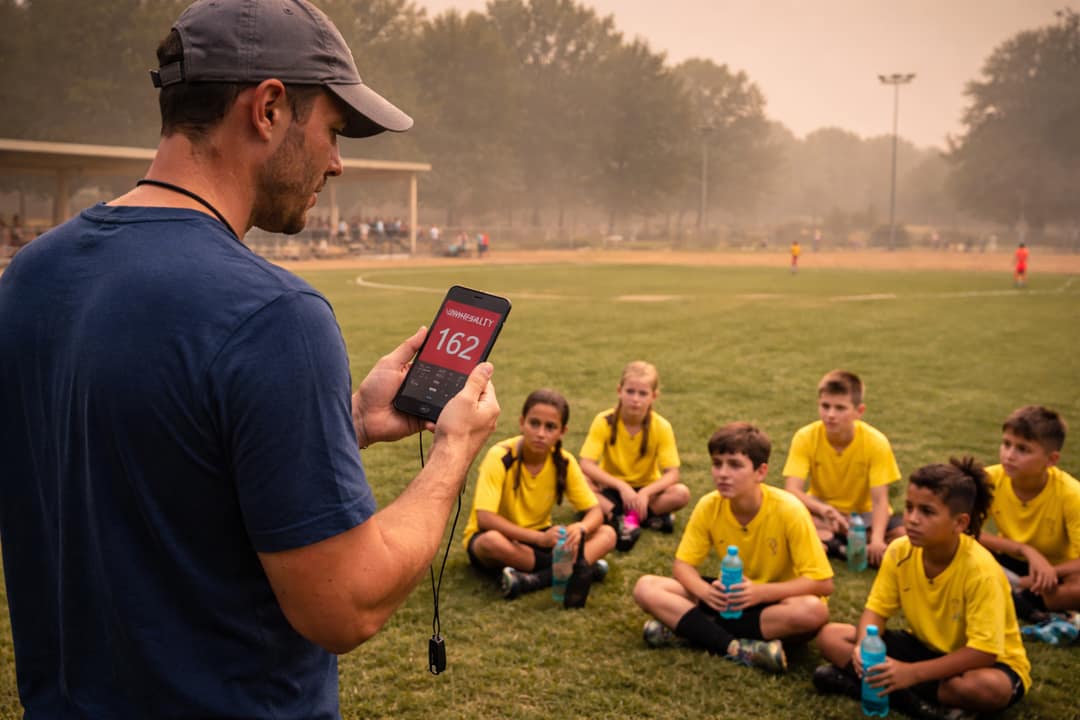
The sky can look clear and still be dangerous.
In recent years, wildfire smoke has traveled hundreds—sometimes thousands—of miles beyond burn zones. Youth sports programs that once worried primarily about heat now face a second invisible threat: particulate matter suspended in the air.
The scoreboard may read 72°F and breezy. The Air Quality Index (AQI) may tell a different story.
Youth athletics operate outdoors by default. But climate volatility is redefining what “safe conditions” mean. Air quality has become a governance issue, not just a weather update.
Understanding AQI And Why It Matters
The Air Quality Index translates complex environmental data into a standardized scale that indicates health risk. It measures pollutants such as ground-level ozone and fine particulate matter (PM2.5), which is especially dangerous during wildfire events.
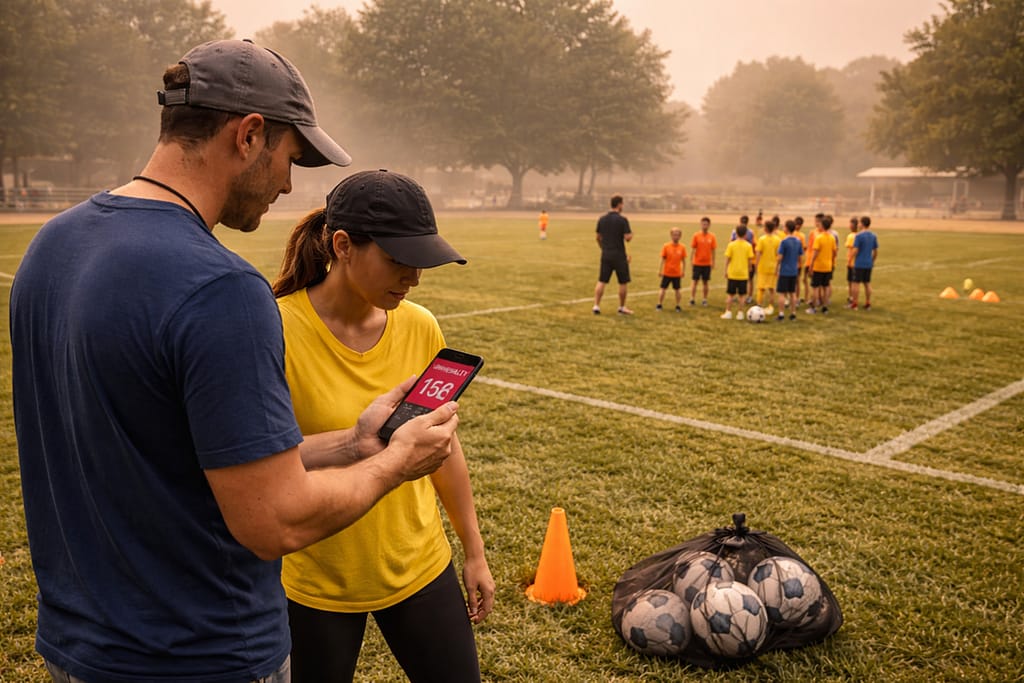
According to the Air Quality Index guidelines published by the U.S. Environmental Protection Agency (EPA), AQI categories range from “Good” (0–50) to “Hazardous” (301+).
For youth sports programs, these categories are not abstract labels. They signal when lungs are under stress.
Children are particularly vulnerable because:
- Their lungs are still developing
- They breathe more air per pound of body weight than adults
- They engage in high-intensity activity outdoors
Fine particulate matter (PM2.5) penetrates deep into the respiratory tract. During intense activity, inhalation rates increase, compounding exposure.
Air quality thresholds are therefore not optional metrics. They are operational boundaries.
Setting Clear Activity Thresholds
Just as programs developed heat index protocols, they must now define AQI-based activity limits.
Below is a practical framework many districts are adopting:
| AQI Level | Category | Recommended Action |
|---|---|---|
| 0–50 | Good | Normal outdoor activity |
| 51–100 | Moderate | Monitor sensitive athletes |
| 101–150 | Unhealthy for Sensitive Groups | Reduce prolonged exertion; modify drills |
| 151–200 | Unhealthy | Shorten practice; limit high-intensity activity |
| 201+ | Very Unhealthy/Hazardous | Cancel or move indoors |
The key is consistency. Without defined thresholds, decisions become subjective. Parents question cancellations. Coaches feel pressure to “push through.”
Programs that have already implemented climate safety planning for extreme heat can apply similar logic here.
Clear thresholds reduce conflict. They also reduce liability.
Wildfire Smoke As A Regional Risk
Unlike localized pollution, wildfire smoke is unpredictable. It shifts with wind patterns, temperature inversions, and topography.
Communities far from active fires can experience sudden AQI spikes. Morning readings may appear safe; afternoon levels can escalate rapidly.
Programs should avoid relying solely on static daily forecasts. Best practice includes:
- Monitoring AQI hourly on competition days
- Assigning one staff member as air quality monitor
- Establishing communication templates for rapid schedule changes
Air quality governance is about preparedness, not panic.
Infrastructure Adaptation: Beyond Open Fields
Air quality challenges expose a structural weakness in youth sports infrastructure: overreliance on outdoor facilities.
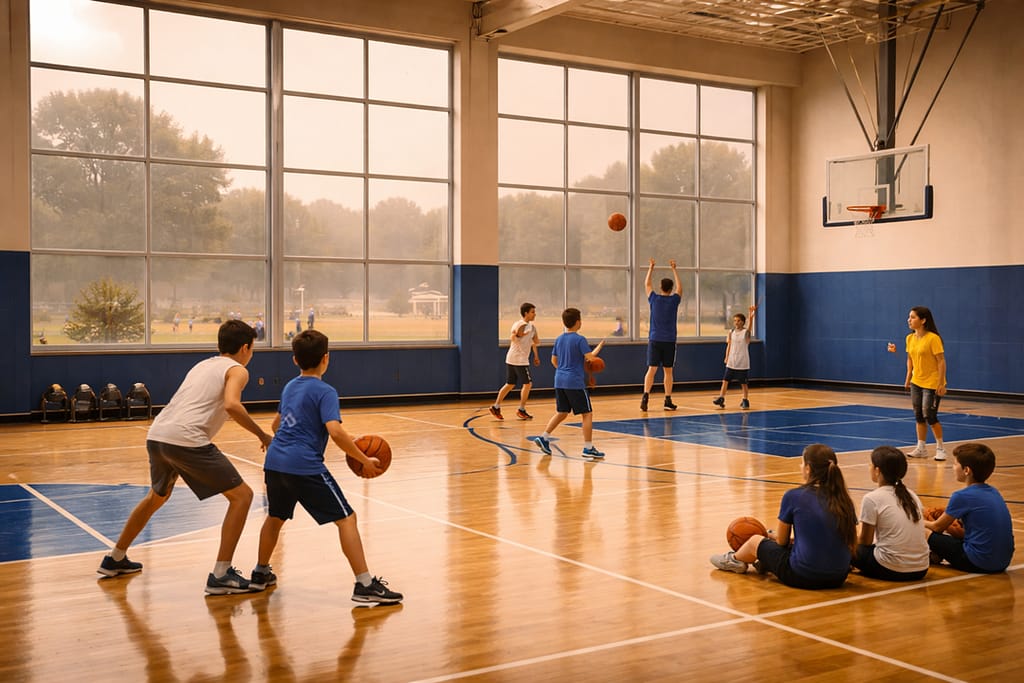
Communities with access to:
- Indoor practice spaces
- HVAC systems with high-efficiency filtration
- Flexible scheduling windows
are better positioned to adapt.
Filtration standards such as MERV 13 or higher significantly reduce particulate concentration indoors. While not every league can build a fieldhouse, partnerships with schools or community centers can provide temporary refuge during smoke events.
Infrastructure resilience increasingly intersects with environmental volatility.
Health Monitoring And Communication
AQI thresholds are only part of the equation. Programs must also monitor athlete symptoms.
Common smoke-related symptoms include:
- Persistent coughing
- Shortness of breath
- Chest tightness
- Headache or unusual fatigue
Unlike visible injuries, respiratory stress can escalate quietly.
Communication protocols should include:
- Pre-season education for parents
- Clear cancellation criteria
- Post-event health reporting channels
The goal is not alarmism. It is transparency.
The Competitive Pressure Problem
One complicating factor is tournament culture.
Travel leagues often hesitate to cancel events, especially when teams have incurred lodging and transportation costs. Yet exposure during high-AQI conditions undermines athlete wellness and contradicts duty-of-care principles.
The long-term health of athletes outweighs short-term competitive commitments.
Leadership must normalize cancellation as responsible governance—not weakness.
Data As Defensive Strategy
Programs should document:
- AQI readings at event time
- Modification decisions
- Any reported respiratory symptoms
This data protects organizations and informs future policy refinement.
Just as environmental conditions evolve, so should response frameworks.
| Policy Component | Implementation Tool | Operational Benefit |
|---|---|---|
| AQI Monitoring | AirNow app or EPA site | Real-time accuracy |
| Cancellation Threshold | Written board policy | Reduced dispute |
| Indoor Backup Plan | Facility partnership | Continuity of play |
| Communication Protocol | Automated messaging system | Rapid parent notification |
Consistency transforms reactive decisions into evidence-based practice.
Redefining “Game Time”
Youth athletics were once governed by simple weather metrics: temperature and precipitation.
Today’s climate reality demands a broader lens.
Air quality is invisible but measurable. Wildfire smoke may be seasonal in some regions and episodic in others. Either way, it is now part of operational planning.
The question is no longer whether smoke events will occur. It is how prepared programs are to respond.
Safety thresholds are not about limiting opportunity. They are about sustaining it.
Youth sports should build resilience—not respiratory risk.