
Youth sports in the United States were once organized primarily through local recreation departments, school leagues, and volunteer-run community programs. Games took place at neighborhood parks. Participation costs were modest. The focus was often as much about community as competition.
Today, that landscape has changed dramatically.
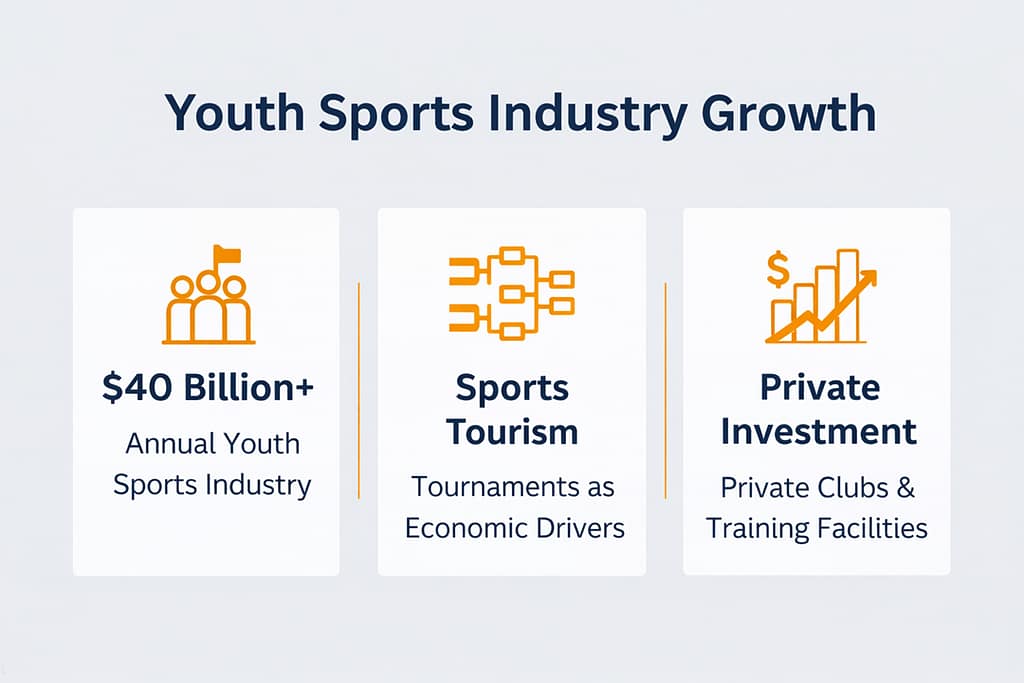
Youth sports have evolved into a massive national industry estimated to exceed $40 billion annually, encompassing travel leagues, private training facilities, tournament circuits, sports technology companies, and large-scale sports complexes. What began as community recreation has increasingly become a professionalized ecosystem that blends athletics, entertainment, tourism, and business.
For many athletes and families, the expansion has created new opportunities for development and exposure. But it has also raised an important question for communities, policymakers, and youth sports leaders:
Who truly benefits from the youth sports boom?
The Growth Of A Massive Youth Sports Industry
The scale of the youth sports economy has grown rapidly over the past two decades. Private clubs, tournament organizers, and sports facility developers have built entire business models around youth competition.
Several forces helped fuel this expansion:
- The rise of club-based competition structures
- Increased college recruitment visibility for elite youth athletes
- Growth in sports tourism and regional tournaments
- Private investment in youth training academies
Many youth sports organizations now operate with professional-level infrastructure. Tournament organizers schedule large multi-day events involving hundreds of teams. Private coaching academies offer year-round training programs. Facilities designed specifically for youth tournaments are appearing across the country.
Large multi-field sports complexes have become common in many regions. These facilities are designed not only for athletic development but also for hosting major youth tournaments that attract teams from across the country.
The Rise Of Sports Tourism
One of the biggest drivers of the youth sports economy is sports tourism.
Weekend tournaments frequently draw hundreds of teams to a single location, generating hotel bookings, restaurant traffic, and retail activity. Local governments increasingly view youth sports events as a reliable source of tourism revenue.
In many cities, sports complexes are built specifically to attract these events. The economic model is straightforward: tournament visitors fill hotel rooms, spend money locally, and help offset the costs of maintaining large athletic facilities.
Some communities have embraced this model as part of their economic development strategy. Large tournament facilities can bring millions of dollars in annual visitor spending.
However, the emphasis on tournaments also changes how sports infrastructure is designed and used. Facilities may prioritize hosting traveling teams rather than serving local recreation needs.
Private Investment And Club Sports Expansion
As the industry has grown, private investment has become a major force shaping youth sports.

Private clubs and training organizations now dominate many sports development pipelines. These organizations often operate outside traditional school or municipal recreation systems, offering specialized coaching and competition schedules.
Parents seeking advanced training or college exposure for their children frequently turn to these clubs. In response, the market for private coaching, performance training, and recruiting services has expanded significantly.
Club sports can provide high-level development opportunities, but they also introduce a pay-to-play model that may limit access for some families.
Participation costs in club programs often include:
| Cost Category | Typical Expenses |
|---|---|
| Club Membership Fees | Annual team participation fees |
| Training Programs | Private coaching and conditioning |
| Tournament Travel | Transportation, lodging, meals |
| Equipment And Uniforms | Team gear and specialized equipment |
For many families, total costs can reach several thousand dollars per year.
This financial barrier has sparked growing debate about equity and access in youth sports participation.
The Participation Gap
Despite the rapid growth of the youth sports economy, participation trends reveal an important paradox: not all children are benefiting from the expansion.
According to research from the Aspen Institute’s Project Play initiative, youth sports participation varies significantly by income level. Children from higher-income households are far more likely to participate in organized sports than those from lower-income families.
Rising costs play a major role in this disparity. Travel leagues, club memberships, and tournament schedules can make participation financially difficult for many families.
When youth sports become closely tied to travel and private training programs, community-based leagues may struggle to maintain participation.
Addressing this participation gap has become a priority for many youth sports organizations and policy leaders.
The Infrastructure Race
The boom in youth sports has also fueled an infrastructure race among cities and regions seeking to host tournaments.
Communities across the United States have invested heavily in large multi-field sports complexes designed to accommodate major youth events.
These facilities often include:
- Multiple tournament-ready fields
- Expanded parking capacity
- Spectator amenities and concession areas
- Adjacent hotels and restaurants
While these complexes can attract regional tourism, they also require substantial public investment and ongoing maintenance.
Planning these facilities requires careful consideration of community needs, land use, and long-term sustainability. The planning challenges involved are similar to those discussed in our article on designing inclusive sports infrastructure, where facility design must balance competitive events with everyday community access.
Who Truly Benefits?
The youth sports boom has created clear winners.
Tournament operators, sports facility developers, equipment companies, and training academies have all benefited from the industry’s rapid growth. Cities that successfully attract major tournaments may also see economic gains from visitor spending.
For some athletes, travel leagues and private clubs offer pathways to higher levels of competition and college recruitment.
At the same time, the expansion of the youth sports economy has introduced new pressures on families, communities, and local recreation systems.
Participation costs continue to rise. Travel requirements increase the environmental and logistical burden of competition. Community leagues sometimes lose players to regional club systems.
The future of youth sports may depend on finding a balance between these competing forces.
Maintaining accessible, community-based programs while supporting competitive development opportunities will require thoughtful leadership from cities, leagues, and youth sports organizations.
The youth sports industry may be worth $40 billion, but the real measure of success will be whether the next generation of athletes can still find a place to play—regardless of their family’s budget or ZIP code.