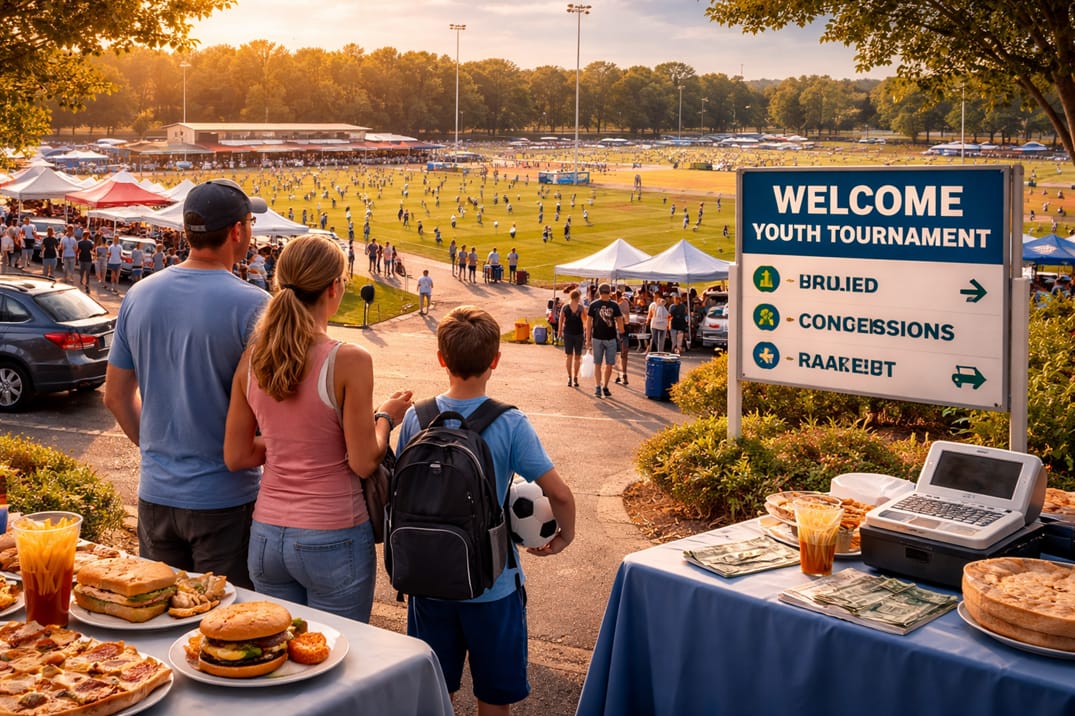
Youth sports tournaments were once small, local events—weekend games that brought together nearby teams and families. Today, they have evolved into something far more significant: a multi-billion-dollar engine driving regional tourism, infrastructure investment, and local economic strategy.
Across the United States, cities are actively competing to host youth tournaments, recognizing their ability to generate consistent, repeatable economic activity. From hotel bookings and restaurant traffic to facility development and job creation, youth sports tourism is reshaping how communities think about economic growth.
What was once just a game is now a powerful economic force.
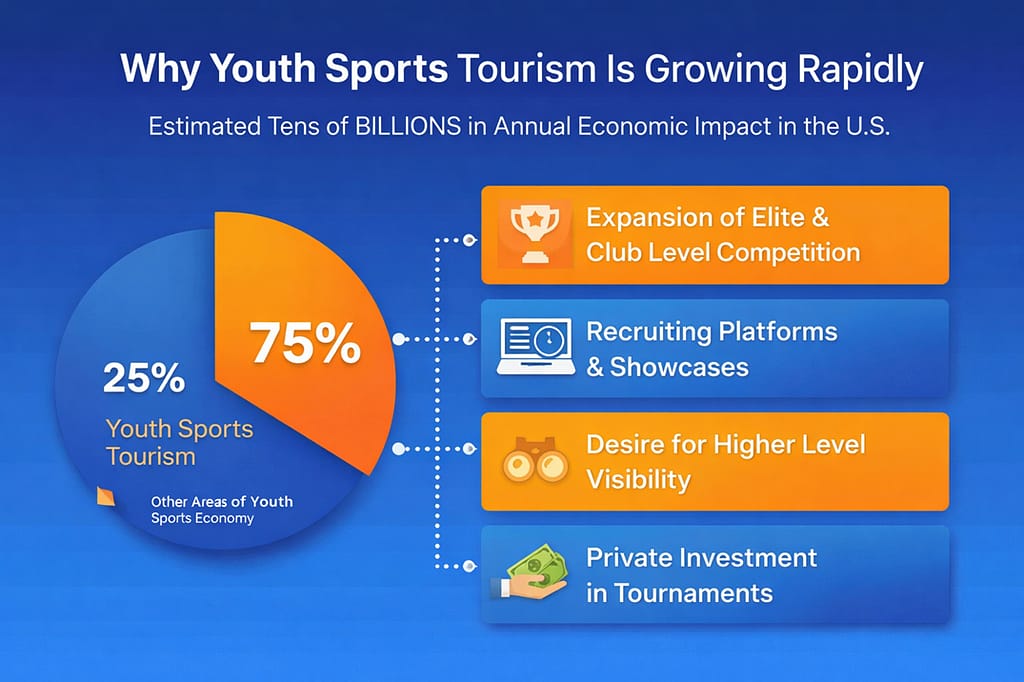
Why Youth Sports Tourism Is Growing Rapidly
The rise of travel teams and club-based competition has fundamentally changed the structure of youth sports. Families are no longer staying within local leagues—they are traveling across state lines for tournaments, showcases, and multi-day events.
This shift has created a new category of economic activity: sports-driven travel tourism.
Several factors explain the rapid growth:
- Expansion of elite and club-level competition
- Increased exposure through recruiting platforms and showcases
- The desire for higher-level competition and visibility
- Investment from private organizations and tournament operators
Youth tournaments now function similarly to small-scale conventions, bringing hundreds—or even thousands—of visitors into a single community over a short period.
According to industry data, youth sports tourism generates tens of billions of dollars annually in the United States, making it one of the fastest-growing segments of the travel economy.
The Economic Impact On Local Communities
The economic benefits of youth sports tournaments extend far beyond the playing field. When teams travel, they bring entire ecosystems with them—families, coaches, spectators, and support staff.
This creates immediate demand across multiple sectors.
| Economic Area | Impact From Youth Tournaments |
|---|---|
| Hotels & Lodging | High occupancy rates during event weekends |
| Restaurants & Food Services | Increased traffic from teams and families |
| Retail & Local Businesses | Boost in sales from visiting consumers |
| Transportation Services | Increased use of rideshare, rentals, and fuel |
| Municipal Revenue | Tax income from tourism-related spending |
For many mid-sized cities, youth tournaments provide a reliable source of recurring revenue without the need for large-scale professional sports franchises.
Unlike one-time mega-events, youth tournaments happen throughout the year, creating a steady economic rhythm for host communities.
Facility Investment And The Rise Of Sports Complexes
As demand for tournament hosting grows, cities are investing heavily in large-scale sports complexes designed specifically for youth events.
These facilities often include:
- Multiple multi-use fields
- Indoor courts and training spaces
- On-site concessions and retail areas
- Parking infrastructure for large crowds
- Integrated scheduling and event management systems
The goal is not just to host games—but to create a destination.
| Facility Feature | Strategic Purpose |
|---|---|
| Multi-Field Layouts | Host multiple games simultaneously |
| Synthetic Turf Surfaces | Reduce maintenance and increase usage |
| Lighting Systems | Extend playable hours for tournaments |
| Centralized Amenities | Improve visitor experience and spending |
| Digital Scheduling Tools | Optimize event logistics |
These complexes are often funded through public-private partnerships, reflecting the belief that youth sports tourism is a long-term economic investment.
This shift aligns closely with broader trends in multi-sport field design and community planning, where flexibility and scalability are key priorities.
The Hidden Costs And Community Trade-Offs
While the economic benefits are significant, youth sports tourism also brings challenges that communities must manage carefully.
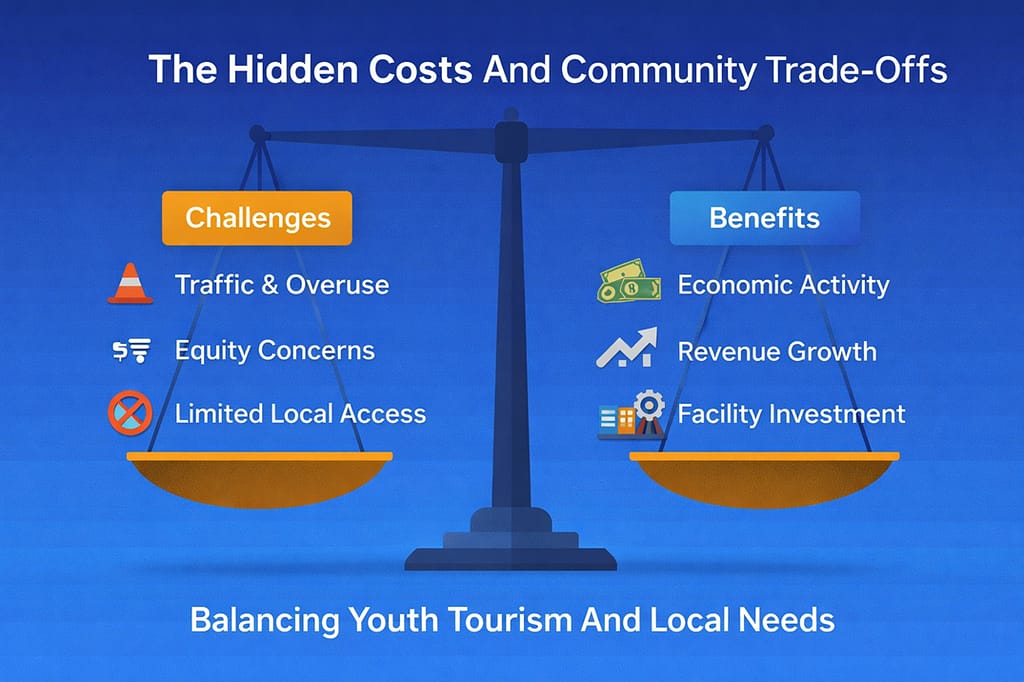
Increased traffic, facility overuse, and limited access for local residents can create tension between tourism-driven programming and community needs.
There are also equity concerns.
Not all families can afford the costs associated with travel sports—entry fees, transportation, lodging, and equipment. As tournaments become more central to youth sports culture, there is a risk of widening the gap between recreational access and elite participation.
Communities must balance:
- Economic opportunity vs local accessibility
- Facility use for visitors vs resident programs
- Revenue generation vs long-term sustainability
Without careful planning, the same systems that generate economic growth can also create unintended barriers.
The Role Of Scheduling In Maximizing Economic Impact
One of the most overlooked aspects of sports tourism is scheduling.
Tournament organizers and facility managers must coordinate:
- Field availability
- Team travel logistics
- Weather conditions
- Accommodation capacity
- Staff and volunteer resources
Efficient scheduling increases both economic impact and operational success.
For example, clustering games into weekend blocks allows cities to maximize hotel occupancy and visitor spending. Extending play into evening hours through lighting systems increases field utilization.
At the same time, poor scheduling can lead to congestion, delays, and reduced visitor satisfaction.
As tournaments grow in scale, scheduling is becoming a strategic tool for both economic optimization and experience management.
The Future Of Youth Sports Tourism
The trajectory of youth sports tourism suggests continued expansion. As more families participate in travel-based competition, demand for high-quality facilities and well-organized tournaments will increase.

Several trends are likely to shape the future:
- Greater integration of technology in event management
- Increased investment in destination-style sports complexes
- Expansion into emerging sports and non-traditional events
- Stronger partnerships between municipalities and private operators
Communities that approach youth sports tourism strategically—balancing economic growth, accessibility, and sustainability—will be best positioned to benefit from this evolving landscape.
Youth tournaments are no longer just about competition. They are about community identity, economic development, and the future of how sports connect people across regions.