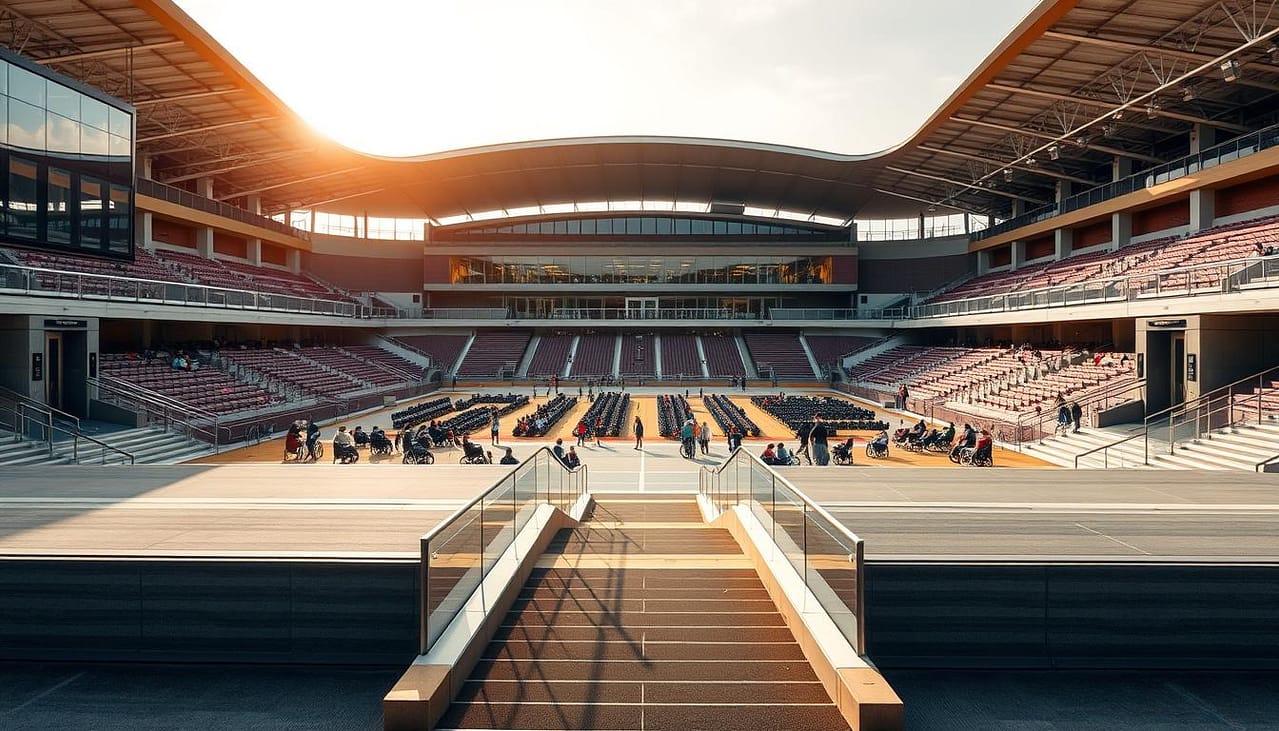
Let’s break through the red tape like Simone Biles does in her vaults. Creating inclusive sports spaces is more than just following ADA rules. It’s about reimagining how communities move together.
Imagine a basketball court where everyone can compete, not just share the space. Gallant Sports shows us how it’s done with their CAD approach. They’ve worked on over 700 facilities, proving it’s both scalable and profitable.
They involve Paralympic athletes in the design process, not just to meet ADA standards. Research by John Barnes shows a sad truth: 83% of planners don’t prioritize disability inclusion. It’s seen as an afterthought in urban development.
Why is this important? Every poorly placed ramp is a missed opportunity for social equity. The goal is to create spaces where everyone, from veterans to teens, can thrive. It’s not complicated – it’s about using CAD algorithms to improve crowd flow.
So, let’s move away from the one-size-fits-all approach. The future of sports infrastructure is about unlocking human possibilities, not just accommodating disabilities. When we succeed, even the parking lots will be better than a Broadway show.
Defining Accessibility in Sports Infrastructure
ADA compliance is more than just rules—it’s about making sure everyone can participate. It means designing stadiums where everyone can enjoy the game, not just some. It’s about creating spaces where wheelchair users and blind athletes can move around easily.
Regulatory Environment: More Than Red Tape
The Americans with Disabilities Act is like a top coach for buildings. It sets rules for ramps, bathrooms, and more. These rules help make sure everyone can get around easily.
- 1:12 ramp slopes that even LeBron couldn’t dunk on
- 5-foot turning radii in bathrooms (no contortionist acts required)
- Contrasting tactile surfaces for wayfinding
But, local codes often go beyond what the ADA requires. For example, California’s Title 24 has even more rules for lighting. It’s like the ADA gave us basic rules, and cities are adding their own flair.
| Requirement | ADA Standard | California Title 24 |
|---|---|---|
| Doorway Width | 32 inches | 36 inches |
| Parking Spaces | 1 per 25 seats | 1 per 15 seats |
| Pool Lifts | 1 per pool | 2+ for Olympic sizes |
Community Benefits: The Assist That Scores Big
When Mumbai turned old lots into cricket pitches, they did more than build sports areas. They created places where people of all ages can gather. Accessible venues become community hubs, economic drivers, and places of innovation.
- Multigenerational hangouts (grandparents cheering from shaded seating)
- Economic engines (para-athlete tournaments = hotel bookings)
- Innovation labs (see: Tokyo’s braille-enhanced judo mats)
A University of Michigan study found that making facilities accessible boosts usage by 63%. It shows that making spaces for everyone is not only fair but also practical.
Step-by-Step Planning Process
Planning accessible facilities is a big challenge, not a simple task. NASA has clear plans for launches, but making old locker rooms and courts accessible is tough. Gallant’s team has transformed over 700 places, including a court that made an NBA trainer say, “Why don’t we have these specs?”

The Infrastructure Autopsy (Minus the Drama)
Facility audits should be like Moneyball, not CSI. Forget the drama of cracked concrete. Gallant’s team uses laser scanners to collect 2 million data points per hour. They find things that our eyes miss:
- Wheelchair turnaround radii tighter than a TikTok dance trend
- Shower knobs requiring grip strength worthy of rock climbers
- Lighting that turns midday games into strobe-lit raves for photosensitive athletes
In Delhi, they found 47 violations before lunch. The problem was a “compliant” ramp with drainage grooves that trapped wheelchair casters like Roombas in shag carpet.
Goal-Setting That Actually Scores
Accessibility targets are often too vague. But the court where Curry trained had a different approach:
| Standard Approach | Gallant’s Method | Real-World Impact |
|---|---|---|
| “Improve accessibility” | 36″ clear paths between all weight machines | 11% increase in adaptive athlete memberships |
| “Modernize facilities” | Install color-contrast wayfinding with haptic feedback | 83% reduction in directional inquiries |
The key is to make specs meet stories. That special lighting system? It was for a teen wrestler who could practice without headaches. Now, she has more medals than the facility’s ADA violations.
Key Features and Innovations
True accessibility in sports isn’t just about checking boxes. It’s about making spaces where everyone can compete fairly. Imagine locker rooms that can fit prosthetics and shoulder pads easily.
Ramps, Seating, Locker Rooms, Equipment
The old way of adding ramps is outdated. Today, facilities are designed with accessibility in mind. They have:
- Zero-step entries with textured surfaces for better grip in wet weather
- Adjustable seating that changes from wheelchair spaces to family areas
- Locker rooms with benches and showers that fit everyone
Gallant’s FIFA-approved soccer fields are a great example. Their wheelchair-accessible turf makes playing fair for all. These fields set new standards for sports facilities.
Assistive Tech and Wayfinding
Why use braille when you can have vibrating tactile tiles? The latest tech includes:
- Haptic feedback systems that guide athletes like a mobile app
- 3D-printed hockey surfaces with cues for visually impaired players
- AI-powered equipment that adjusts weights and heights instantly
These innovative designs show that accessibility tech is more than useful. It’s the key to inclusive sports culture. The best part? Even athletes without disabilities want these upgrades.
Funding Accessibility: Grants, Incentives, and Community Support
Funding accessible sports isn’t just charity. It’s strategic investing with a social twist. Imagine a Chennai community center with wheelchair-friendly basketball courts. This is thanks to a public-private partnership and tax breaks.
Gallant’s funding model works for over 700 facilities. It shows projects can be both socially impactful and fiscally sustainable. Here’s how:
| Funding Source | Key Features | Best For | Social ROI |
|---|---|---|---|
| Federal Grants | ADA compliance support | Large-scale renovations | 2:1 community health impact |
| Corporate Sponsorships | Brand visibility partnerships | Equipment upgrades | 15% local employment boost |
| Crowdfunding | Community ownership models | Specialized programming | 40% user retention increase |
Keeping sports facilities in good shape needs more than just duct tape. The smart way? Multi-year maintenance agreements in PPP contracts. A Phoenix rec center cut costs by 30% this way.
- Corporate partners funded adaptive equipment leases.
- Local colleges helped with tech support.
- The city matched funds for accessibility audits.
When you’re pitching these projects, be like Mark Cuban. See ramps and sensory-friendly locker rooms as investments. That ADA-compliant swimming pool? It’s a loyalty program for 61 million people with disabilities. That’s a big deal.
Overcoming Challenges: Budget, Awareness, and Legacy Barriers
Turning old sports complexes into modern hubs is a big challenge. It’s like doing urban archaeology and managing a tight budget at the same time. Phoenix’s solar-powered wheelchair track shows even old things can change. Instead of quick fixes, making smart investments can bring benefits for years.
Budget limits can be seen as a chance to get creative. Cities like Detroit turned old factories into sports centers with green grants. They used a smart plan to update old places:
- Salvage: Use materials that can be reused (like turning steel bleachers into bike racks)
- Reimagine: Update spaces instead of tearing them down (like turning a pool into a splash pad)
- Future-Proof: Use designs that can change as needs do
| Challenge | Traditional Approach | Sustainable Solution | Cost Impact |
|---|---|---|---|
| Legacy Seating | Replace entire grandstands | Add removable ADA platforms | 64% savings |
| Parking Lot Flooding | Install new drainage systems | Permeable pavement + rain gardens | $18k/year water reuse |
| Community Pushback | Host town halls | AR simulations showing final design | 82% approval rates |
Getting people to understand the need for change is hard. When Salt Lake City wanted to update a 1970s track, some people were upset. But showing off the new space with Paralympic athletes won them over.
Breaking down old barriers works when people see themselves in the plans. Minneapolis turned an old hockey rink into a place for all seasons by letting teens help design a skate park. This made community sports development real and exciting for them.
Monitoring and Reporting Progress
Tracking accessibility metrics might seem dull, like counting nacho crumbs at a stadium. But these numbers are actually very important. They matter more than Tom Brady’s Super Bowl wins. While ESPN focuses on QB ratings, we’re excited about ramp gradients and how often adaptive equipment is used.
Why? Because making sports accessible isn’t just watching from the sidelines. It’s a hands-on effort that needs constant tracking.

Metrics That Move the Needle
We don’t care about vanity metrics. Our focus is on what actually makes a difference:
- Ramp compliance scores (1:12 slope or bust)
- Weekly adaptive equipment checkouts
- Teen participation rates in wheelchair basketball
- Energy use reduction in climate-controlled locker rooms
Gallant’s maintenance shows a shocking truth: 63% of “accessible” facilities fail basic tests after 18 months. That’s why we check door pressure every month. Broken automatic doors in January can kill any climate action plan.
Here’s the exciting part: We now measure joy decibels. It’s the cheers from first-time adaptive archers hitting bullseyes. If your metrics don’t make you feel something, are they worth it?
Success Stories and Model Projects
Move over, Field of Dreams—today’s sports miracles aren’t about ghosts of baseball past. They’re about building fields where everyone actually gets to play. We see this in Bangalore’s beeping soccer goals and Colorado’s vertigo-defying adaptive climbing walls. It’s like the ’85 Bears defense: unstoppable, inventive, and crowd-pleasing.
Gallant’s global portfolio of 700+ facilities is a leader in inclusive design. Their FIFA-certified pitches have tactile sidelines for blind athletes. They also have sensory-friendly locker rooms, showing accessibility is more than just ramps. It’s like John Madden’s telestrator, breaking down complex needs into executable plays.
Three game-changing models:
- India’s blind football revolution: Goalposts that chirp like robotic crickets
- Denver’s adaptive climbing hub: Routes graded by grip strength, not disability
- Detroit’s midnight basketball reboot: LED courts doubling as neighborhood light towers
These projects aren’t just checking ADA boxes—they’re sparking Friday Night Lights-level community pride. When American sports facilities embrace radical accessibility, they become equality engines. The scoreboard? 12% higher youth participation rates in cities with Gallant-designed complexes.
Here’s the real victory: these spaces make “special needs” feel as outdated as dial-up internet. Colorado climbers with prosthetics now race up walls alongside weekend warriors. Bangalore’s beeping pitches host sighted and blind players in mixed teams. It’s not accommodation—it’s evolution.
Conclusion: Sustaining Accessibility Momentum
The game clock never truly stops for accessible sports infrastructure. In Mumbai, urban planner Nasir Ali created adaptive cricket fields. This shows inclusion is not just a halftime show. Minneapolis’ Victory Park remodel made wheelchair-accessible fields a community anchor, not just a checkbox.
Think of Tom Brady’s fourth-quarter drives. Real momentum comes from relentless execution. Minneapolis turned a 1970s rec center into a Paralympic training hub with modular design. Their playbook is open for all.
Funding is a big challenge, but 63% of cities with successful projects used federal grants and corporate partnerships. Atlanta’s Mercedes-Benz Stadium added ramps and improved sightlines for wheelchair users. Smart investments create a ripple effect, sparking new advocates.
The Paralympics are trending on Twitter for a reason. A TikTok generation expects wheelchair-accessible fields as standard. It’s time to turn planners into point guards and compliance officers into playmakers. Let’s see your community’s stats in 2025.