
Local sports groups face a big challenge. They need funding for facilities and approval for permits. This requires quick public support and visibility to those who decide.
Old ways don’t work well today. Email is full, and social media hides important messages. This makes it hard to quickly get people involved.
But, there’s a better way. Online petitions can make a big difference in local sports. They help build community ties and get attention fast.
This shift to digital is key. A digital-first strategy is now essential for real change. It’s the best way to get things done in today’s world.
Pick the Right Goal: vote, budget line, land use, permit
Starting a campaign means first figuring out the best way to make a change. Goals must be clear and achievable. This means turning a general idea into a specific goal that can be won.
Goals can be to sway a council vote, get a budget line, change land use, or get a permit. Each is a clear decision point.
The first step is to understand what the community really needs. This shows if the goal has support. It’s important to sort needs to focus efforts.
| Need Type | Description | Advocacy Focus |
|---|---|---|
| Perceived Need | What the community believes it requires. | Building awareness and aligning perception with reality. |
| Expressed Need | Demand shown through actions like petitions or complaints. | Channeling visible public sentiment into targeted action. |
| Absolute Need | A universal standard or essential requirement. | Framing the issue as a non-negotiable right or safety issue. |
| Relative Need | A gap compared to another group or standard. | Highlighting inequity to argue for fair resource allocation. |
It’s also key to know what your team can do. Can you reach out to the community, get legal advice, and keep in touch? Knowing your resources is essential.
A clear goal guides every step. It tells you who to talk to and how to talk to them. For example, changing a zoning law means focusing on planning commissioners. Fighting for a budget line means targeting finance committee members.
Being clear in your email to council makes a big difference. Instead of just complaining, supporters send focused messages. This makes officials pay attention to what they can change.
Solutions can be divided into three main areas, each matching a different goal:
- Policy Change: Changing laws or rules (like a new ordinance).
- Systems Change: Changing how things work or how money is spent (like a new budget line).
- Environmental Change: Changing the physical environment (like getting a permit for a new field).
Choosing the right goal is not a guess. It’s based on solid data. This ensures that efforts, like a well-coordinated email to council campaign, have the greatest impact.
Tool Stack: action pages, petition platforms, CRMs, SMS, link tracking
A professional digital advocacy campaign needs a strong technology stack. This setup turns public support into real political pressure. The right tools make the campaign efficient and growable.
The core parts include five key systems. Each plays a unique role in the supporter’s journey.
Action pages are special landing pages for one goal. They host petitions, email forms, or RSVPs. Good action pages have clear calls-to-action and few distractions to boost sign-ups.
Specialized petition platforms collect signatures and supporter data. They have social sharing and live counters. This builds momentum for the cause.
The advocacy CRM is the heart of the system. It keeps all supporter info, interactions, and preferences. A good advocacy CRM segments audiences and tracks engagement.
SMS tools are key for quick mobilization. Modern platforms support various campaigns. Broadcasts alert entire lists, while targeted SMS sends specific calls to action.
Two-way SMS lets for real-time chats with supporters. Keyword opt-ins grow the list naturally. Drip workflows send follow-up messages based on user actions.
Link tracking tools give attribution data. They show which channels and messages work best. This data helps improve campaign strategy and resource use.
Organizations can pick an integrated platform or a best-of-breed setup. Integrated platforms combine events, actions, and data in one place. This makes data integration easier and often automates tasks.
A best-of-breed setup uses specialized tools from different vendors. It might have better features but needs more technical work to link systems. The choice depends on the campaign’s size, budget, and tech skills.
These tools together make a full digital advocacy stack. From the first action page visit to tracking a meeting request, each part is vital. This stack allows for precise targeting, efficient communication, and measuring impact.
Build the List: Sign-Up Flows at Games, QR Codes, Partner Lists (with Consent)
Getting clear consent from people is the first and most important step in building a list. A list of supporters who have given their permission is key for any sports campaign. This list is the base for all digital efforts to mobilize people.
To build this list, a systematic approach is needed. Experts use different channels to get contacts where people are most active. Each method must have clear ways for people to opt-in and follow data rules.
Here are the main ways to get people on the list. Each method adds to a single database for easy management.
| Tactic | Primary Channel | Consent Method | Integration Path |
|---|---|---|---|
| Event Sign-Up | Live Games & Tournaments | Digital Form with Checkbox | Direct CRM Import |
| QR Code Campaign | Printed Materials & Social Media | Landing Page Form | Automated Webhook |
| Partner List Share | Aligned Organizations | Explicit Data-Use Agreement | Secure, Compliant Transfer |
| SMS Keyword Opt-In | Text-to-Join Promotions | Double Opt-in Text Response | Instant CRM Tagging |
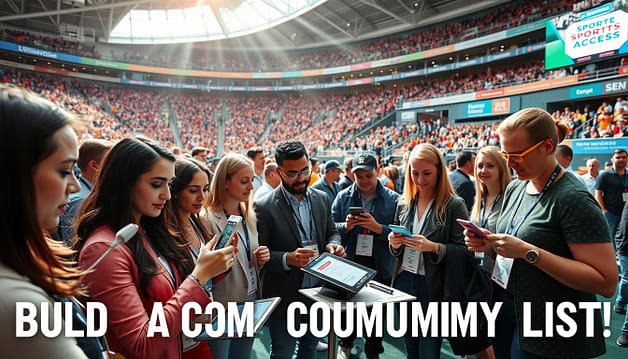
Live sports events are great for growing the list. Setting up sign-up stations at events captures fans. Using tablets or smartphones with easy forms boosts sign-ups.
QR codes on programs, banners, and jerseys link to a mobile page. This page should explain how data will be used for advocacy.
Digital surveys and canvassing find supporters, as shown in community research. Short polls on social media or email segment the audience. This builds a profile of what people care about.
Sharing data with partners can grow the list. This needs formal agreements and donor consent. Hosting events together where people opt-in to both groups is a good practice. For more on working with partners, see these best practices for engaging funders and.
SMS keyword opt-ins are a powerful tool. Promoting a shortcode at events or online lets people join by text. This adds a contact to the list and can start a SMS actions sequence. For example, texting “JOIN” could send a welcome message and a link to a petition.
All these methods must be clear and respectful. Each sign-up should include a privacy statement. This builds trust and keeps the list strong. A good list turns scattered interest into a powerful force.
Message Kit: talking points, images, alt text, translations
A campaign’s vision needs a well-thought-out content package called a message kit. This kit helps everyone involved speak with one voice. It’s key for a unified message.
A clear message framework cuts down on confusion and reduces communication friction. It turns vague goals into clear, engaging stories. These stories connect with the community and those who make decisions.
The heart of a good kit is its talking points. These points clearly state the problem, its impact, and the solution needed.
A complete set of talking points includes:
- The problem statement: Why current sports access is inadequate.
- The local impact: How this affects youth, families, and community health.
- The proposed solution: The specific facility, policy, or funding change needed.
- A clear call-to-action: The immediate step the audience should take.
Professional visual assets boost engagement and memory. Photos, infographics, and branded social tiles make the message real.
Images should show the problem and the solution. For example, old, crowded facilities next to new, open ones. Using the same look for all materials helps people recognize the campaign.
Alt text for every image is a must. It makes content accessible to screen reader users. It’s also good for SEO and legal reasons.
Good alt text should describe the image well. For instance, “alt=”Rendering of a new inclusive playground with adaptive equipment”” is better than “alt=”playground image.” This helps more people and improves online visibility.
To reach everyone, translate key materials. This shows respect for different languages and grows your supporter base.
Focus on translating materials for the most spoken languages in your area. Important documents like petitions and fact sheets should be in these languages. This makes it easier for people to join in.
In the end, a unified message kit is the blueprint for a campaign’s story. It combines talking points, visuals, accessibility, and translations. This ensures everyone is on the same page, boosts persuasion, and builds a diverse coalition.
Action Ladders: petition → email rep → call script → meeting RSVPs
Getting signatures is just the start. The real power comes from a journey of actions that grow stronger. This journey, called an action ladder, turns simple interest into real political power.
An action ladder has different levels of action. It starts with small steps and moves to big actions. Its main goals are to make people more involved, find the most passionate supporters, and put real pressure on those in power.

For sports access campaigns, there’s a clear four-step plan. Each step gets supporters ready for the next level of action.
Stage 1: The Broad-Based Online Petition. This is where it all starts. It’s easy to join and shows a lot of people care. It’s a key way to get people involved and gather important data.
Stage 2: Targeted Email to Representatives. After signing the petition, supporters get an email to send to their officials. This email is personal and shows the campaign’s strength.
Stage 3: Structured Call Scripts for Direct Contact. Next, supporters make phone calls. They get a script and the official’s number. This direct contact is more powerful than emails.
Stage 4: Meeting RSVPs with Decision-Makers. The final step is meeting officials in person. Asking for RSVPs finds the most committed supporters. It also shows a strong presence to those in power.
Using automated tools is key to moving supporters through these steps. As shown in data, automated messages can follow up on actions. For example, after emailing, a supporter might get a message suggesting a phone call next.
This action ladder makes it clear how to move forward. It helps managers sort supporters by how active they are. Most importantly, it sends a series of strong messages to officials, making a big impact.
Targeting and Power: district maps, committee chairs, swing votes
Advocacy is more effective when you focus on the few who can make a difference. This is called power mapping. It helps shift efforts from broad awareness to targeted political pressure.
First, clearly define the issue and the solution. This is key before talking to key stakeholders. The main targets are local politicians and officials who can help achieve the campaign’s goal.
Start by looking at district maps. This helps identify which areas are affected by the issue. Knowing this helps find the right city council members or state legislators.
Understanding district boundaries helps tailor messages to local needs. It also finds community leaders who can speak to their representatives.
Next, find committee chairs. They control the agenda and decide if proposals move forward. Targeting the chair of the relevant committee can be more effective than appealing to the whole legislative body.
Lastly, identify swing votes on the final decision. These are officials who can go either way. Focus persuasive efforts on them to sway their vote.
The table below outlines key targets, their influence, and how to engage them.
| Target Type | Source of Power | Primary Role | Engagement Strategy |
|---|---|---|---|
| Committee Chair | Agenda control, procedural authority | Gatekeeper for policy movement | Present detailed briefings; demonstrate strong community backing to justify agenda priority. |
| Swing Vote | Pivotal decision-maker | Decisive vote on final outcome | Direct, personalized persuasion; leverage constituent contacts and address specific concerns. |
| Constituent Champion | Representative relationship, local credibility | Influencer within a district | Arm with talking points and data; facilitate direct meetings with their elected official. |
By analyzing district maps, committee structures, and voting histories, campaigns become more precise. This approach focuses efforts on those most likely to influence decisions. It makes campaigns more professional, efficient, and successful.
Compliance and Privacy Basics
Following data protection laws and communication rules is key for any advocacy campaign. It’s not just a side note but a main part of planning. It keeps the organization safe from big fines and keeps supporter trust strong.
Explicit, consent-driven engagement is the heart of ethical online outreach. Campaigns need clear opt-in choices. Supporters must agree to get messages, knowing what they’re signing up for.
Pre-checked boxes or assumed consent don’t cut it. Every new contact must show they agreed to join.
It’s also key to have an easy opt-out process. Every message should have clear unsubscribe info. For emails, this is usually a big “unsubscribe” link. For texts, use shortcodes like “STOP” or “UNSUBSCRIBE.”
Acting on these requests quickly is both the law and shows respect for people’s choices.
Telecommunications Compliance: TCPA and 10DLC
In the U.S., text messages follow the Telephone Consumer Protection Act (TCPA). This law requires written consent for automated texts. It also demands clear sender info and an easy way to opt out.
The 10DLC (10-Digit Long Code) system helps make business texts better. It means registering your campaign with mobile carriers.
Using platforms that handle 10DLC makes things easier. It helps messages get through and keeps them from being seen as spam.
Data Privacy and Security Protocols
Keeping supporter data safe is also critical. Use encrypted data, secure storage, and strict access controls. This keeps supporter info safe.
Being open about data use is also good. Have a clear privacy policy that explains what data is used for and who it’s shared with.
| Regulation / Standard | Primary Focus | Key Requirement for Advocates |
|---|---|---|
| TCPA (Telephone Consumer Protection Act) | SMS/Text Message Communications | Prior express written consent and mandatory opt-out mechanisms. |
| 10DLC Registration | Carrier Approval for SMS | Business registration of SMS campaigns to ensure message deliverability. |
| General Data Privacy Principles | Supporter Information Security | Explicit opt-in consent, data encryption, and transparent privacy policies. |
| CAN-SPAM Act | Commercial Email | Accurate header information, clear subject lines, and a visible unsubscribe link. |
Keeping supporter trust is the main goal of all compliance efforts. When people see an organization handles their data well, they stick around. They become loyal supporters.
But, one privacy mistake can hurt trust a lot.
In short, a good advocacy group sees compliance and privacy as key parts of its plan. Using platforms that ask for consent, knowing laws like TCPA, and keeping data safe are musts. These steps make the campaign strong and lasting.
Measuring Impact: sends, opens, conversion to meetings, decision outcomes
The real value of a digital advocacy campaign is seen in its performance data. It’s not just about launching it. It’s about analyzing its data against set goals. This requires a focus on key performance indicators (KPIs) that show both efficiency and impact.
Campaign managers need to look at two main types of metrics. The first is operational metrics, which show how much your campaign reached. The second is strategic metrics, which show how it changed supporter behavior and policy decisions.
Operational metrics are the basic numbers. They include email sends, SMS delivery rates, open rates, and click-through rates. For SMS campaigns, it’s important to watch delivery, open, and response rates, as Source 1 shows. These numbers tell us if our message was delivered.
Strategic impact metrics show the true efficacy. They track how people move from one action to another. The most important metric is the outcome of the decision we targeted.
| Metric Category | Example KPIs | Primary Question Answered | Data Source |
|---|---|---|---|
| Operational (Volume & Reach) | Number of sends, Delivery rate, Open rate, Click-through rate (CTR) | Did our message successfully reach the audience? | Email/SMS Platform Analytics |
| Strategic (Conversion & Outcomes) | Petition-to-email conversion rate, Call script completion rate, Meeting RSVPs, Policy decision outcome | Did our campaign change behavior and influence the result? | CRM, Action Page Analytics, Public Records |
This data-driven method helps make changes in real-time. If open rates are low, try new subject lines. If conversion from email to call is low, make the call-to-action clearer. Good data helps make better decisions about engagement and retention, as Source 2 points out.
This approach proves a campaign’s value and return on investment. It moves from “we tried” to “we achieved.” For professionals, setting clear marketing KPIs is key. Applying the same effort to advocacy shows real results.
Templates: petition page, email-to-officials, social tiles
Starting a digital advocacy campaign needs ready assets to turn interest into action. Practical templates offer a professional start, ensuring consistency and speed.
A good petition page should have clear navigation, a compelling story, and a big sign-up form. Campaign data shows effective pages have specific goals, supporter testimonials, and a live signature counter. Design should focus on mobile friendliness and fast loading.
The email-to-officials template must be formal and persuasive. It should start with a clear subject line about the issue. The body should explain the supporter’s position, ask directly, and link to the petition. Personalization fields for the official’s name and the constituent’s address are key.
Social media advocacy needs visually consistent tiles. These include quote graphics, statistics, and clear call-to-action buttons. Campaigns should use a defined hashtag and a content calendar with various posts. Partnering with local influencers can greatly increase reach.
Using these templates helps teams quickly launch a professional campaign. Consistent messaging across all platforms builds credibility and speeds up public mobilization.