
Major League Cricket’s decision to move its 2026 playoffs and championship final to Oakland Coliseum is more than a postseason scheduling note. It is one of the clearest tests yet of whether U.S. cricket can move from niche momentum into a real sports infrastructure model that works across large venues, regional fan bases, broadcast demands, and repeatable event operations.
The league announced that the 2026 playoffs and championship final would be played at Oakland–Alameda County Coliseum in July, marking the first time Major League Cricket’s postseason is staged on the West Coast after three straight sold-out championship finals in Grand Prairie, Texas. MLC’s own ticket announcement adds a sharper timeline: the playoffs begin Wednesday, July 15, and the 2026 champion is scheduled to be crowned Saturday, July 18, in Oakland.
That matters because cricket’s U.S. growth cannot be measured only by attendance spikes or international names on rosters. The bigger question is whether American venues can handle cricket-specific needs: pitch preparation, boundary dimensions, sightlines, concessions, parking, transit, media, and fan education. That same issue has already appeared in broader U.S. sports infrastructure planning, where emerging sports need more than short-term excitement to become sustainable.
Why Oakland Changes The Scale Of The MLC Question
Oakland Coliseum gives Major League Cricket a different kind of platform than Grand Prairie Stadium. Grand Prairie, Texas, has become the league’s strongest proof of concept, with a cricket-first identity and a fan base that has already shown up for championship cricket. Oakland brings the league into a larger West Coast sports market and a venue with a long history of hosting major American sports and entertainment events.
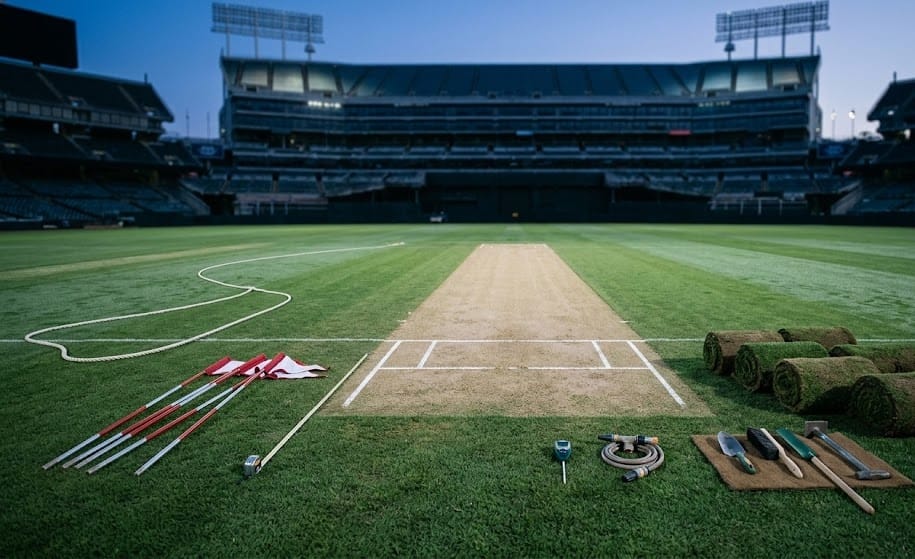
That changes the question from whether cricket can succeed in a purpose-built or cricket-adapted environment to whether it can operate inside a large multipurpose venue with older infrastructure, complex fan flows, and a broader regional audience.
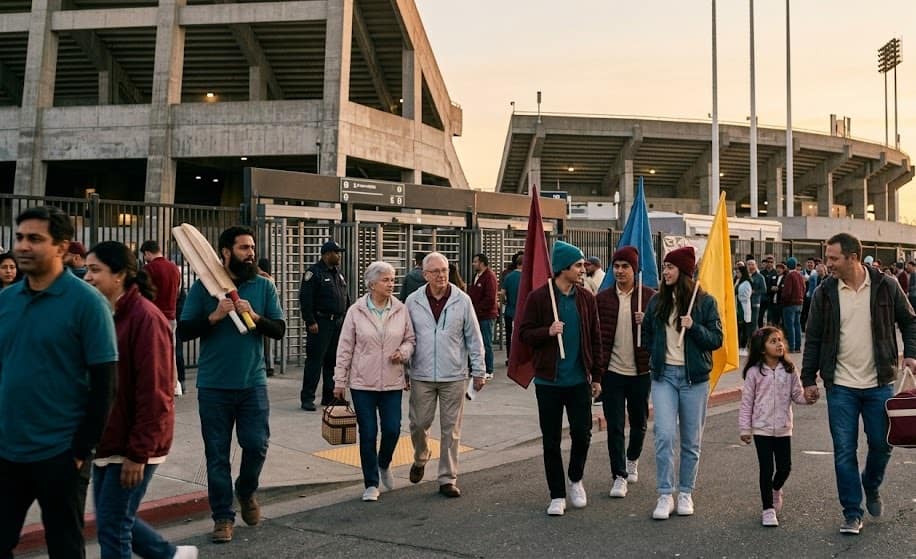
Oakland is not just a stadium name. The Oakland-Alameda County Coliseum Complex sits at 7000 Coliseum Way and is part of a large sports and entertainment site that includes Oakland Arena. The complex has highway access, public transportation access, a pedestrian bridge from Coliseum BART, and roughly 10,000 on-site parking spaces. Those details matter for cricket because T20 matchdays create a different rhythm than many U.S. fans are used to. Matches can last several hours, families may arrive in groups, and fan movement around concessions, restrooms, and shaded areas can shape the event experience as much as the score.
MLC’s official playoff announcement framed the move as a major step for West Coast cricket. The infrastructure test is whether Oakland can convert that symbolic step into a smooth operational model.
How A Multipurpose Venue Tests Cricket Differently
Cricket is not an easy sport to drop into any large American stadium. The field shape, pitch strip, ball visibility, player safety areas, practice spaces, and broadcast angles all matter. A venue that worked for baseball or football does not automatically work for T20 cricket without careful planning.
Oakland Coliseum’s history makes the move intriguing. It has hosted football, baseball, soccer, concerts, and major entertainment events. That gives the venue experience with crowds and large-scale operations, but cricket adds its own requirements. The playing surface has to support fast bowling, spin, fielding, and consistent bounce. Boundary placement has to make sense inside the stadium’s geometry. Sightlines need to help fans follow a sport where the main action often moves between pitch, boundary rope, scoreboard, and fielding positions.
The venue also has to serve two audiences at once. Cricket-literate fans will care about pitch behavior, bowling changes, powerplay strategy, and death-over execution. Newer fans may need clearer signage, scoreboard explanations, venue hosts, broadcast-style graphics, and matchday programming that makes the format easier to follow.
That is why the Oakland move is a real infrastructure test. It is not enough for the venue to be big. It has to be legible. Fans need to know where to enter, where to sit, how to follow the match, how long the event may run, and how to move around the building without losing the flow of play.
Why The West Coast Matters For U.S. Cricket Growth
The West Coast gives Major League Cricket a different demographic and commercial opportunity. The Bay Area has large South Asian, Australian, British, Caribbean, and global tech communities that can support cricket as both a cultural sport and a modern entertainment product. The San Francisco Unicorns also give the region a franchise identity that can make Oakland more than a neutral venue.
That regional fit is important because cricket in the United States cannot depend on one market. Grand Prairie has shown the value of a focused cricket hub. Oakland tests whether the sport can spread into a second kind of market: a large, diverse, transit-connected West Coast region where cricket competes with soccer, baseball, basketball, football, concerts, and global events for attention.
The current 2026 MLC schedule makes Oakland more than a late-stage playoff stop. The league’s official fixtures page lists multiple regular-season matches at Oakland Coliseum in late June, including San Francisco Unicorns, Texas Super Kings, Washington Freedom, Seattle Orcas, MI New York, and Los Angeles Knight Riders fixtures. That gives the venue a runway before the postseason. Event staff, field crews, broadcast teams, and fans all get a chance to learn the site before the playoffs raise the pressure.
That approach is smart infrastructure planning. A championship final should not be the first serious test of a venue. By staging regular-season matches in Oakland first, MLC can study arrival patterns, seat demand, concessions timing, sightline issues, crowd behavior, and field maintenance before the season’s biggest matches arrive.
What Oakland Can Reveal About Cricket Facility Gaps
The Oakland move also highlights a central challenge for U.S. cricket: the country does not yet have enough elite cricket-ready venues. MLC’s 2026 footprint leans on three key sites: Grand Prairie Stadium in Texas, Oakland Coliseum in California, and Knight Riders Cricket Field at Fairplex in Pomona. That is a meaningful expansion, but it also shows how limited the top-tier venue map remains.
For cricket to grow beyond a summer novelty, the sport needs more than one or two strong venues. It needs a connected facility network that can support league matches, youth tournaments, training sessions, women’s cricket, college cricket, community events, and international fixtures. Without that, every major event becomes a heavy lift.
Oakland can reveal where the gaps are. If the venue handles pitch quality, broadcast requirements, fan comfort, and matchday operations well, it gives other cities a model for adapting large multipurpose venues. If problems show up, those lessons may be just as useful. Cricket needs honest feedback about what works in U.S. stadiums and what does not.
The field itself will receive the most attention, but the hidden infrastructure may matter just as much. Locker rooms, warmup areas, field access, scoreboard visibility, media workrooms, hospitality spaces, sponsor zones, and temporary cricket equipment storage all shape whether the event feels professional. The better those details work, the easier it becomes for MLC to convince other venues and cities that cricket is worth hosting.
How Fans And Local Businesses Become Part Of The Test
A postseason cricket event in Oakland also creates a local business test. Cricket crowds often arrive with family groups, community networks, and long matchday windows. That can help restaurants, hotels, parking operators, transit services, and small businesses near the venue, but only if the event is easy to understand and easy to reach.
The Coliseum site has useful advantages. The official complex information points to highway access, public transportation, and a BART-linked pedestrian bridge. Those are important because cricket’s U.S. audience is regional rather than purely neighborhood-based. Fans may travel from San Jose, Fremont, Sacramento, San Francisco, and other Bay Area communities. Some may also fly in for the playoffs if the final becomes a destination event.
That means MLC has to think like both a league and a tourism operator. Ticketing, match times, transit information, parking plans, hotel partnerships, and food options can all affect whether new fans return. A poor first visit can make cricket feel confusing. A strong matchday experience can turn a championship final into a community sports habit.
The fan education piece should not be underestimated. Cricket has passionate American audiences, but a large venue creates room for curious spectators who may not know the sport deeply. Clear scoreboards, short format explainers, strong in-stadium hosting, and well-paced entertainment can help make T20 cricket more accessible without watering down the sport for core fans.
Why The Oakland Move Matters Beyond One Season
Oakland’s playoff role should be read as part of a wider sports infrastructure trend. The United States is adding new venues, adapting old ones, and testing sports that once lived mostly outside the mainstream American facility model. Cricket sits near the center of that shift because it combines global audience potential, immigrant community strength, broadcast appeal, and Olympic relevance.
The sport’s return to the Olympic program in Los Angeles in 2028 adds urgency. Major League Cricket is not the Olympics, but it can shape how American fans, cities, and venue operators think about high-level cricket before that global moment arrives. A successful Oakland postseason would show that cricket can work in large U.S. venues outside Texas and that the West Coast can support more than occasional exhibition cricket.
It could also influence future investment. If Oakland proves strong, more cities may consider cricket-friendly field conversions, temporary pitch systems, or dedicated training facilities. If Pomona’s new cricket field develops alongside Oakland’s large-venue test, California could become one of the sport’s most important U.S. growth corridors.
That is the real value of the 2026 playoffs. The result on July 18 will crown a champion. The event around it will say more about whether cricket has the infrastructure to become a stable part of the American sports calendar.
What U.S. Cricket Should Watch Next
Major League Cricket’s Oakland Coliseum move gives the sport a meaningful public test at the right time. The league has teams, recognizable international talent, a growing schedule, and a postseason date that can concentrate attention. The next step is proving that U.S. venues can support cricket with the same seriousness they apply to established American sports.
The key signs will be practical. Does the pitch hold up? Do fans understand the event flow? Are sightlines strong enough? Does transit reduce pressure on parking? Do concessions and restrooms handle longer match windows? Can the broadcast make Oakland look like a credible cricket venue? Do local fans treat the final as a one-off curiosity or the start of a recurring sports tradition?
If those answers are positive, Oakland Coliseum may become more than the site of the 2026 MLC final. It may become evidence that U.S. cricket infrastructure is ready to scale beyond isolated success stories. If the answers are mixed, the event still provides a useful map of what the sport must fix before the next wave of growth.
Cricket’s American future will not be decided by one stadium. Still, Oakland is a valuable test because it sits at the intersection of venue reuse, West Coast demand, postseason pressure, and the sport’s push toward broader recognition. For MLC, the playoff move is a bold scheduling decision. For U.S. cricket infrastructure, it is a measurement point the sport cannot afford to waste.