
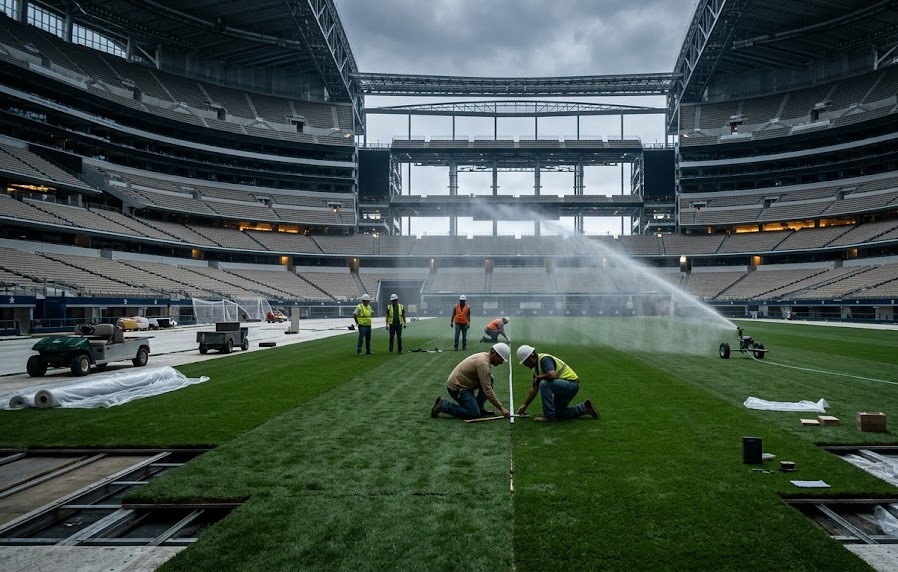
MetLife Stadium’s grass debate is not just a local complaint about one field in East Rutherford. It is a clear example of the deeper infrastructure challenge facing U.S. stadiums built for NFL operations but asked to host elite international soccer under World Cup standards.
The venue, branded as New York New Jersey Stadium for FIFA World Cup 26, is scheduled to host five group-stage matches, two knockout matches, and the July 19, 2026 final. That gives the surface debate more weight than a normal venue issue. If the final is the sport’s biggest global stage, the pitch has to support the speed, rhythm, and technical demands of the best teams in the world.
The issue also fits a wider pattern already visible across World Cup 2026 infrastructure planning. Hosting the tournament is not only about stadium capacity. It is about whether U.S. venues, transit systems, field crews, security plans, fan routes, and media operations can adapt from domestic sports habits to global football expectations.
Why MetLife Became A Symbol Of The NFL-To-Soccer Conversion Problem
MetLife Stadium was designed around American football, large event turnarounds, suite inventory, parking scale, and the shared needs of the New York Giants and New York Jets. Soccer asks different questions of the same building. The field is wider, the ball moves differently, players cover space in different ways, and the surface has to reward first touch, passing tempo, and changes of direction.
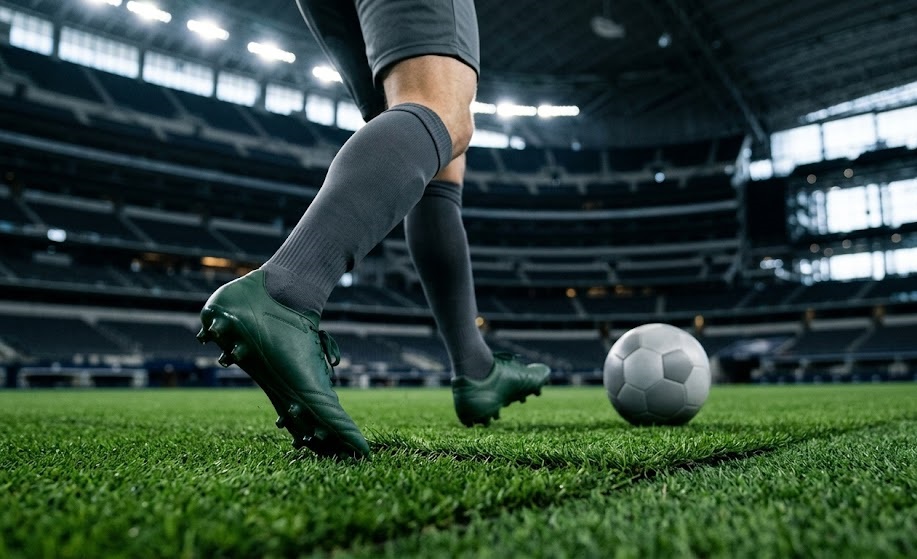
That is why FIFA’s natural-grass requirement matters. U.S. venues with artificial turf had to convert to grass before hosting World Cup matches, and MetLife became one of the most visible examples because of its role in the final. The stadium’s official event page notes that the venue’s World Cup schedule includes the tournament’s biggest match on July 19, with parking lots opening at 10 a.m., doors opening at 11 a.m., and the event starting at 3 p.m. for the World Cup final at MetLife Stadium.
The grass conversion has technical and logistical layers. A temporary pitch has to sit over a base built for another surface, handle multiple matches, respond to New Jersey summer weather, and maintain consistency from touchline to touchline. A soccer player notices surface changes that may not matter as much during an NFL game, where plays stop frequently and the ball is carried more often than passed along the ground.
That difference explains why an NFL-ready stadium can still face soccer-specific scrutiny. The building may be large enough. The lighting may be strong enough. The hospitality may be premium enough. The question becomes whether the pitch feels like a football surface rather than a temporary solution placed inside an American venue.
How Player Feedback Turned A Field Issue Into A Tournament Story
The debate intensified because the complaints came from players and coaches who understand elite match conditions. France midfielder Adrien Rabiot and manager Didier Deschamps criticized the surface after playing there, describing the pitch as hard and unnatural. Brazil forward Vinícius Júnior also raised concerns that dry grass slowed the ball and affected the rhythm of play.
Those comments matter because World Cup soccer is built on fine margins. A heavy or dry pitch can change passing speed, pressing triggers, recovery runs, and how quickly teams attack space. A ball that slows unexpectedly can turn a clean build-up pattern into a turnover. A surface that feels hard can affect player confidence when accelerating, stopping, or landing after contact.
FIFA has defended the overall field standard, and some later comments were less negative after weather and settling time changed the surface condition. That does not erase the larger issue. It shows how delicate the conversion process can be.
A temporary grass field is not judged only by whether it is safe enough to use. It is judged by whether it supports the football product. On that standard, the debate around MetLife raises a valuable infrastructure question for every future U.S. host venue: should major stadiums treat soccer conversions as short-term tournament projects, or should they build more permanent flexibility into the venue model?
The answer matters beyond one summer. The United States will keep attracting major soccer events: World Cup matches, Copa América games, club friendlies, CONCACAF tournaments, FIFA Club World Cup events, and international exhibitions. If NFL venues remain central to that calendar, pitch conversion cannot be treated as an occasional inconvenience.
Why Natural Grass Is Harder Than It Looks In A Multiuse Stadium
Natural grass can sound simple until the venue context is considered. A World Cup pitch has to be grown, installed, monitored, watered, cut, protected, and repaired under a schedule that may include rehearsals, media demands, security operations, fan activations, and multiple matchdays.
MetLife’s conversion drew attention before the tournament because of the scale of the work. CBS Sports reported that FIFA’s pitch preparation across North America involved years of research and months of grass growth, with MetLife among the venues receiving a carefully engineered surface before the World Cup. That kind of project shows that the issue is more than rolling sod across an NFL floor. It is a sports-science and venue-management challenge tied to climate, roots, drainage, firmness, moisture, and match frequency. The MetLife grass project became a visible test of that entire process.
Multiuse stadiums create extra pressure. The same building may need to serve football, concerts, corporate events, international soccer, and large-scale hospitality. Each use has different loading needs. Concert stages can damage surfaces. Football teams prefer predictable conditions for blocking and traction. Soccer teams demand a consistent roll and bounce.
That creates a planning dilemma. A permanent grass surface may satisfy soccer, but it can conflict with NFL scheduling, maintenance costs, event revenue, and the weather realities of a northern open-air stadium. A temporary surface can protect the NFL model, but it may struggle to satisfy soccer players if the field feels too firm, too dry, too uneven, or too new.
MetLife’s debate shows that venue flexibility has a ceiling. A stadium can be built to host everything, but the playing surface still has to meet the specific needs of the sport on the day.
What The Final Raises For U.S. Stadium Standards
The July 19 final changes the stakes. If MetLife were only hosting an early group-stage match, the grass debate would still matter. With the final on the schedule, every field critique becomes part of the tournament’s credibility story.
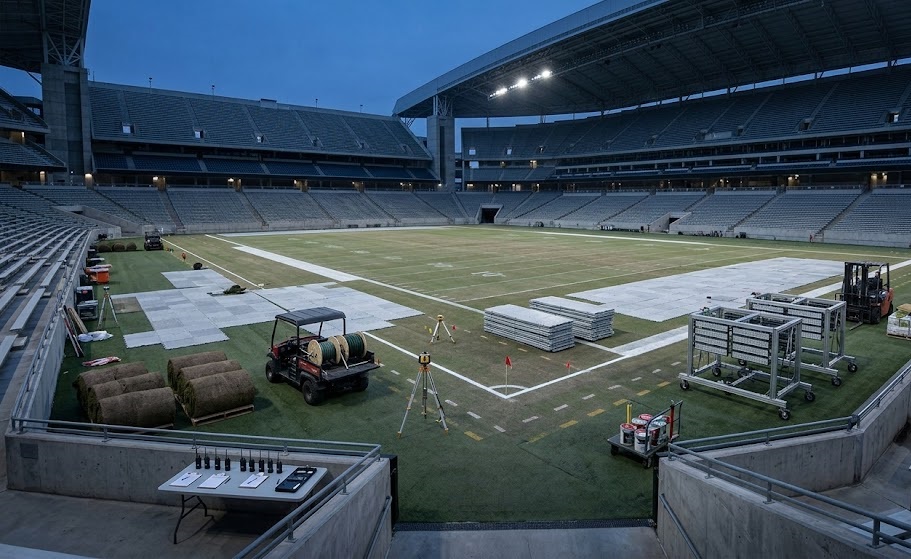
FIFA has called New York New Jersey Stadium the site where the biggest-ever World Cup will end, after a 48-team tournament and 104 matches across North America. That places MetLife in a small class of venues expected to deliver a global broadcast product, a fair competitive environment, and a matchday experience worthy of the final. FIFA’s own announcement of the New York New Jersey final makes the venue more than a regional host. It makes it the last image of the tournament.
That is where U.S. infrastructure expectations become sharper. American stadiums are often judged by capacity, premium seating, video boards, concessions, and parking. World Cup soccer adds other measures: pitch quality, transit access, fan flow, supporter segregation, media circulation, team training logistics, and the ability to handle international expectations.
The field is the most visible part of that pressure because it directly affects the match. Fans may forgive a long walk from transit. They may complain about concessions but still enjoy the event. A poor pitch, or even the perception of one, can shape how players, coaches, broadcasters, and global fans judge the venue.
That is why the MetLife debate should not be dismissed as surface-level criticism. It is a warning about the difference between being event-capable and football-ready.
How Future U.S. Hosts Can Learn From The MetLife Debate
The lesson for U.S. venues is not that NFL stadiums should stop hosting soccer. The lesson is that soccer conversion needs to become a core design and operations priority when a venue expects to chase major international events.
That starts with earlier pitch planning. If a venue knows it will host elite soccer, the surface strategy should be mapped years in advance, not treated as a final-stage overlay. Field trays, drainage systems, removable seating, ventilation, grow lights, and maintenance schedules all affect whether a stadium can shift between sports without compromising quality.
It also requires better communication. Fans understand that a stadium may need temporary changes, but players and coaches want to know that the surface is tested, monitored, and adjusted with football performance in mind. When surface complaints appear during a tournament, venue operators and governing bodies need clear explanations that go beyond broad assurances.
The debate should influence cities beyond East Rutherford. Dallas, Atlanta, Houston, Los Angeles, Kansas City, and other U.S. host markets all face some version of the same question: how does a venue built for domestic sports become a reliable stage for the global game?
For soccer-specific stadiums, the answer is easier. For NFL venues, the answer depends on investment and planning discipline. Grass cannot be an afterthought. It has to be part of the business case for hosting elite soccer.
Why This Pitch Debate Matters After The Final
MetLife’s World Cup grass debate will eventually be judged by how the final plays. If the surface improves and the match delivers, the issue may fade from casual conversation. If players keep criticizing the field, the debate could follow the venue long after July 19.
The long-term value is already clear. The controversy has exposed a real infrastructure question for U.S. sports: can the country’s largest multipurpose stadiums meet soccer’s most demanding surface standards without rebuilding their business models?
That question will matter after the World Cup because international soccer is not leaving the U.S. market. Clubs, federations, leagues, and event organizers will keep looking at American venues for revenue, exposure, and fan growth. Stadium operators that solve the pitch problem will have an advantage. Those that treat grass conversion as temporary decoration may face the same criticism again.
MetLife’s debate is a useful case study because it sits at the intersection of NFL design, FIFA requirements, player performance, and global event pressure. The stadium may still deliver a memorable final. The broader lesson is that future U.S. hosts need to plan for soccer from the ground up, starting with the surface beneath the players’ feet.