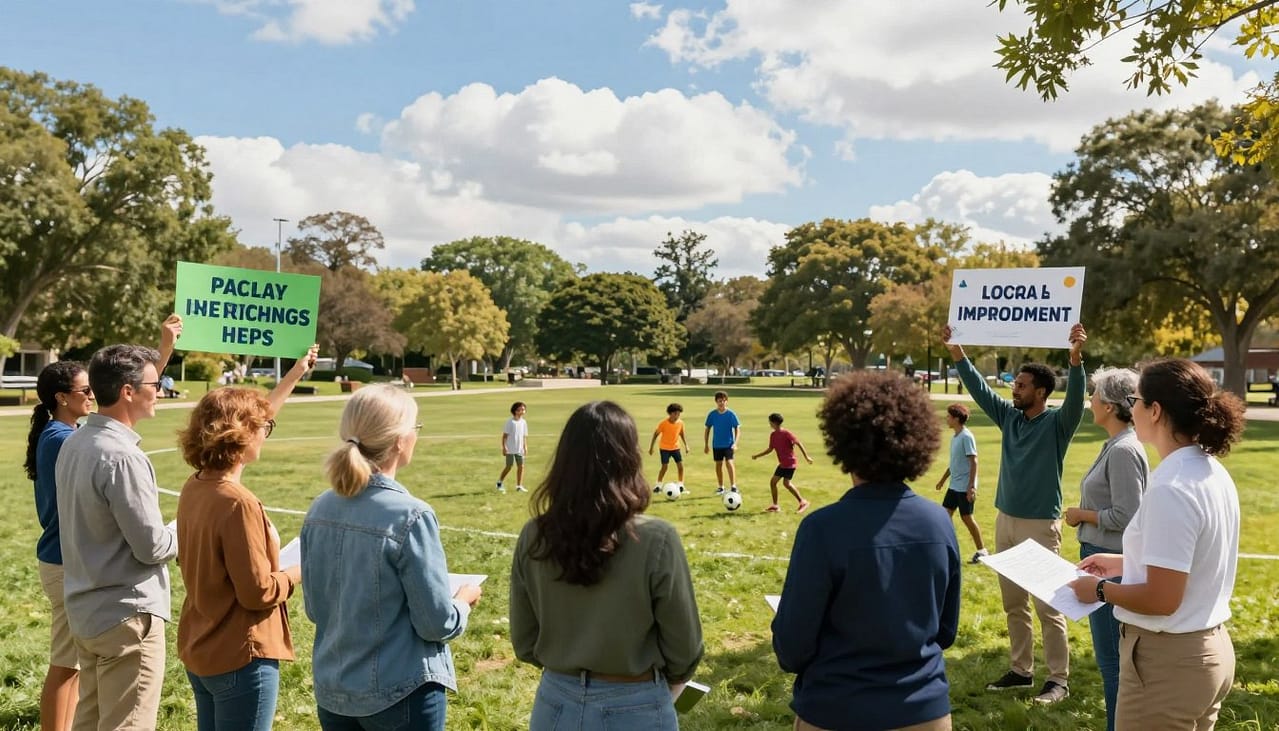
The term sports advocacy campaigns might make you think of famous athletes in ads. But, the real work happens on the ground. Imagine a heated debate at a city council meeting about a broken swing set. This is where advocacy truly comes alive.
Both big campaigns and local efforts need a strong story, caring listeners, and a clear call to action. I’ve seen more passion in a community meeting than in a Super Bowl ad meeting. It’s not just about better facilities; it’s about the local rec center being our first social network.
In this article, we’ll show you how to move from just talking to actually making things happen. We’ll use the same smart planning that big brands do, but with less money and lots of heart. For more on effective advocacy, check out this technical report on health advocacy.
Building a Case for Change
To push for change, start by looking at what your community already has and what it lacks. This step is key to figuring out what people really need. Many efforts fail because they rely on feelings instead of facts. It’s like being a detective, finding out what’s really needed versus what people just don’t like.
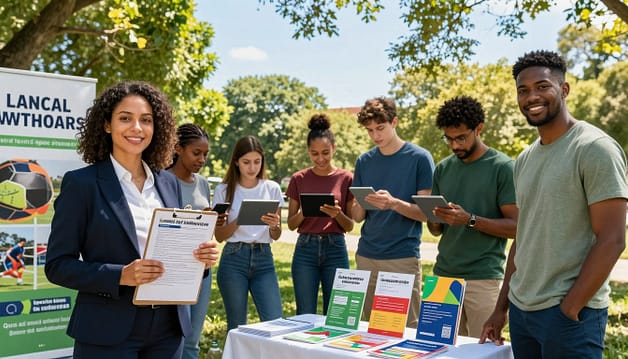
Your first outreach toolkits should be practical, not just pretty pictures. Use digital surveys and clipboard checks at the farmer’s market. You’re not just counting people; you’re sorting out problems. Ask yourself, is this about changing a rule, fixing a system, or just cleaning up a mess?
Surveying the Local Landscape: From Potholes to Playing Fields
Start by surveying your area. Look at everything from potholes to parks. See what works and what doesn’t. Use surveys to ask the community about their biggest complaints and hopes for change. This info is gold.
Categorizing Needs: Absolute, Relative, and the Merely Annoying
After collecting data, sort out the needs. Put them into three groups: absolute, relative, and annoying. Absolute needs are urgent, like broken equipment. Relative needs are important but can wait. Annoying issues are just minor problems.
Identifying Stakeholders and Mapping the Political Terrain
Then, find out who can make changes happen. Who has the power? It might be the parks director, a secret committee, or a long-time HOA member. You need to know who to talk to. If you can’t find the person who can say “yes,” you’re just shouting into the wind.
In short, making a case for change is about facts, sorting, and knowing who to talk to. With this foundation, you’ll be ready to advocate with both heart and strategy.

Choosing the Right Tools (Petitions, Media Kits, Digital Platforms)
A good set of tools is key to your sports advocacy campaigns. Let’s look at the essential tools that can turn your efforts into a powerful movement.
The Digital Petition: More Than Just a Signature
Digital petitions are more than just signatures. They are the spark that starts a movement. A successful petition can:
- Engage the community by showing their collective voice.
- Be a rallying point for supporters.
- Provide data to present to stakeholders.
But remember, a petition is just the start. It needs a compelling story that connects with your audience.
Media Kits That Don’t Put Reporters to Sleep
Today’s media kits should tell a story, not put people to sleep. Think of it as a movie trailer for your cause. Here’s how to make it stand out:
The Art of the One-Pager and the B-Roll Footage
Your one-pager should be short and to the point. It should highlight the main issues, solutions, and community impact. Don’t forget about B-roll footage! A good 90-second video can be more impactful than any ad.
Digital Platforms: Where Slacktivism Meets Strategy
Social media is a double-edged sword. Platforms like Instagram and X (formerly Twitter) can boost your message but also dilute it. Use them wisely:
- Instagram: Great for emotional storytelling—use visuals that touch the heart.
- X: Ideal for witty public accountability, holding officials accountable.
- Nextdoor: A mixed bag, often leading to tangential debates. Use it to engage locals but be careful.
The goal is not to go viral but to become a household name in your area. Authenticity is key—if your social presence feels corporate, you’ve lost the battle.
For more resources on advocacy tools, check out this toolkit and learn how to influence policy for community benefit here.
Community Partnerships
In the world of community advocacy, teamwork is key. It turns good ideas into real change. When improving local sports facilities, your outreach toolkits should grow into detailed partnership plans. The best results come from working with unexpected allies.
The Unlikely Allies: Corporate Sponsors and Local Bodegas
Look at the Laureus Sport for Good Index for inspiration. Brands like Dove team up with Nike on body confidence projects. You can aim for similar partnerships with local businesses.
Imagine a local hardware store sponsoring a backstop for a banner. Or a tech startup funding a scoreboard that fits their wellness goals. That’s the goal.
But be careful. You don’t want to look like you’re just trying to look good. If a partner doesn’t really fit, people will notice. Being true to your mission is essential.
Lessons from the Laureus Index: Dove, E.ON, and Purpose-Washing Pitfalls
When picking partners, check if their values match yours. Are they really helping the community, or just for show? Good partners can boost your message, bad ones can hurt it.
Mobilizing the Base: From Online Noise to Physical Bodies
Now, get your team ready to make a difference. Turn online support into people showing up at meetings. It’s about making the community’s needs real to those in power.
Create outreach toolkits that inspire action. Use social media to get people excited, but remember, action needs to happen in real life. Get your community to speak up and be seen.
Measuring Impact
You’ve got the new lights, and the ribbon is cut. But what comes next? Most sports advocacy campaigns treat this moment as the grand finale, while it’s really just the beginning. The true measure of success goes beyond a shiny new facility. It’s about assessing whether community engagement has genuinely increased or if we merely dressed up the same old spaces.
Beyond the Ribbon Cutting: Defining Tangible Victory
Did your efforts lead to a measurable rise in participation? This isn’t just about fanfare; it’s about accountability. Did your outreach toolkits foster lasting change? The goal is to ensure that the community is empowered, not just entertained. If they can advocate for themselves, you’ve hit a home run.
The Policy Brief: Your Closing Argument in Bureaucratic Bloodsport
Your policy brief should not gather dust in a drawer. Frame it as a case study for future initiatives. This document is your battle plan, showing what worked and what didn’t. It’s a roadmap for future sports advocacy campaigns, guiding you through the next bureaucratic showdown.
Post-Game Analysis: Sustaining Momentum for the Next Fight
What about the next challenge? Transparency is key. Share both the wins and the setbacks with your community. This creates a culture of trust and resilience. When the next crisis arises—like that pesky sewer line under the soccer field—you won’t be starting from scratch. Instead, you’ll be running a play that’s already proven effective.