
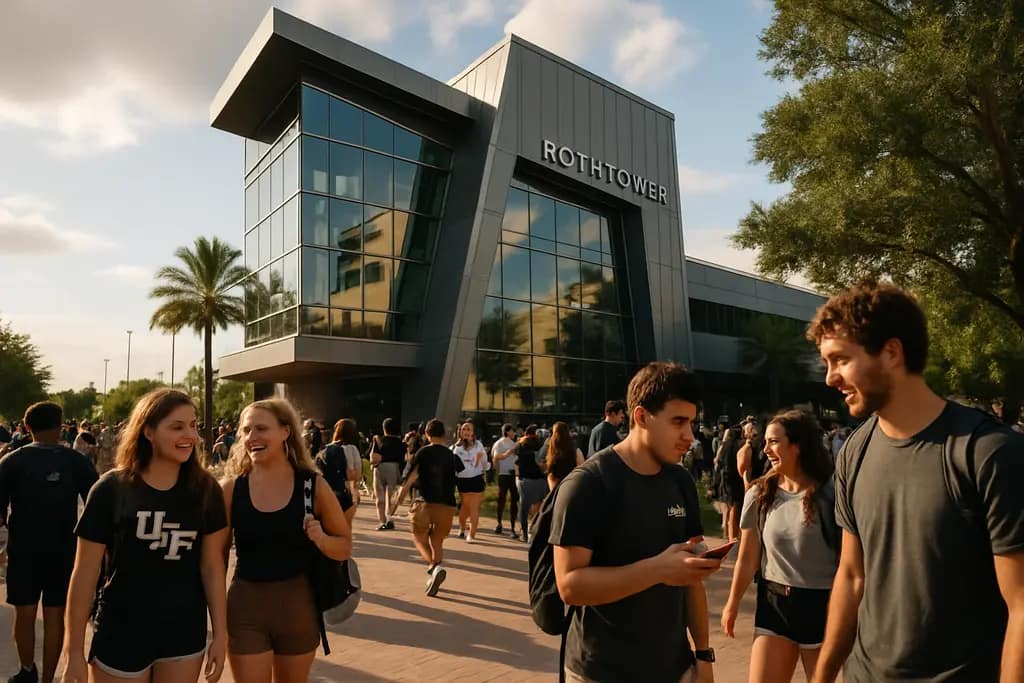
UCF Travel Planning changed in a concrete way after the completed Roth Tower expansion at Acrisure Bounce House. UCF’s 2026 football season began on Thursday, September 3, 2026, with a home game against Bethune-Cookman, and the stadium marked its 20th anniversary during that season. The university reported that Roth Tower was finished and fully operational for 2026 as a $90 million expansion funded by Orange County Tourist Development Tax revenues, according to UCF News.
For fans, parents, older adults, alumni groups, and community sports organizers, the useful question is not just whether the building looks better. The more practical question is how the venue changes movement, comfort, caregiving, and decision-making before kickoff and after the final whistle. Stadium upgrades can support wellness when they reduce avoidable stress: fewer confusing entry points, better shade, more places to pause, and clearer options for families who need restrooms, nursing space, or less crowded seating choices.
This analysis stays within the available research. It does not claim shorter lines, faster exits, lower heat risk, or reduced waste because those outcomes would require post-game operational data that was not included in the source material. What can be assessed is the planning value of the documented upgrades and how fans can use them responsibly.
What Roth Tower Changed For UCF Travel Planning
Roth Tower is the headline project because it changes both premium capacity and the way people use the west side of the stadium. UCF Athletics states that usable club space increased from about 4,400 square feet to approximately 15,650 square feet, a 256% increase. The project also added 42% more club seats, 28 luxury suites that are roughly 38% larger than previous suites, and 34 new outdoor Sky Suites, as detailed by the UCF Athletics project page.
UCF Travel Planning Signals From Premium Areas
The practical UCF Travel Planning point is that premium expansion does not affect only premium buyers. When a stadium adds larger suites, more club seats, and outdoor Sky Suites, it changes the distribution of arrivals, concessions use, elevator demand, concourse flow, and gate preference. The research also notes that Roth Tower introduced about 1,700 new premium seats and prompted the first major seat-relocation process in years, which increased inventory across multiple price points. That can create more choice, but it can also make seat comparison harder for fans who are trying to balance cost, shade, restroom access, and walking distance.
For wellness-oriented planning, premium inventory should be judged by more than food access or sightlines. Reserved chair-back seating, dedicated lounge spaces, private restrooms, televisions, and upscale concessions in options such as the Carl Black & Gold Cabana may matter for fans traveling with older relatives, young children, or people who need predictable rest periods. The research gives season ticket prices for premium options at $700 to $900 and single-game premium starting around $100. Those figures help families compare comfort against budget without assuming that the most expensive option is the best fit.
Movement, Shade, And The 360-Degree Concourse
The stadium upgrades also include substantially more shaded seating across the stadium bowl, 360-degree concourse access, and enhanced lighting. Those details matter because the Bounce House is an outdoor venue in Orlando, where a long football day can mean sustained sun exposure, walking between lots and gates, and standing in crowded areas. The research does not quantify heat reduction, so the safer reading is this: more shade is a planning advantage, not a guarantee of comfort.
The 360-degree concourse access is especially relevant for group planning. A full concourse path can give fans more flexibility to choose a restroom, concession stand, or meeting point without backtracking through a dense section. Community sports venues can learn from that design principle. A stadium does not need to copy a Power Four venue to improve wellness; even small facilities can reduce friction by giving people clearer circulation loops and visible pause points.
Access, Parking, And Care Needs Around Acrisure Bounce House
For UCF Travel Planning, the travel question starts before fans reach their seats. The research lists new parking lots at West Softball and Lot F1, courtesy shuttle service between Gate 14 and both the softball complex and Garage H, and new Roth Tower entrances at Gate 1N and Gate 1S. It also notes a new nursing room on the first-floor concourse level of Roth Tower.
Arrival Choices Should Match Mobility Needs
Those access changes give fans more decision points, but they also require pre-game communication. A family using the courtesy shuttle between Gate 14 and Garage H will plan differently from a group entering Roth Tower through Gate 1N or Gate 1S. A fan with limited walking tolerance should not rely on habit if their previous parking pattern no longer matches the best gate or seating location.
A cautious planning approach is to assign roles before leaving: one person confirms parking, one tracks gate location, and one identifies the nearest restroom or nursing room for the group. This may sound basic, but it reduces the cognitive load that often builds during crowded arrivals. Wellness at a stadium is not only about athletic performance on the field. It is also about how spectators conserve energy, avoid unnecessary confusion, and keep children or older relatives comfortable.
A Practical Fan Checklist
The following tool uses only the documented upgrade categories from the research and turns them into decisions fans can make before any UCF home game after September 3, 2026.
- Parking: Check whether West Softball, Lot F1, Garage H, or another assigned area best matches your gate and seat location.
- Shuttle: If using Garage H or the softball complex, plan around the courtesy shuttle connection with Gate 14.
- Entry: Roth Tower users should verify whether Gate 1N or Gate 1S is the correct entrance for their ticket type.
- Shade: Compare available shaded seating options before prioritizing price or proximity alone.
- Caregiving: Families who may need nursing space should note the first-floor concourse nursing room in Roth Tower.
- Food and drink: Review concession choices by section instead of assuming every stand carries the same items.
The concession changes are practical rather than cosmetic. The research notes UCF-branded aluminum cups intended to keep drinks colder, chicken tenders at concourse stands 108 and 115, the return of the Dogs of the Game themed hot dog series, and items such as the Sword Pretzel in premium areas. From a sustainability lens, the aluminum cup detail is worth watching, but it should not be overstated. Without published data on reuse, recycling, or waste diversion, it is only fair to describe the cup as a fan-comfort and materials change, not proof of lower environmental impact.
Technology, Lighting, And Community Venue Lessons
The stadium’s technology improvements began before the 2026 Roth Tower opening. In July 2023, the venue switched from metal-halide lighting to a full LED lighting system, with roughly 50% more fixtures. The research says the lighting meets NCAA championship lighting standards and that the project included MatSing lens antennas for improved cellular connectivity in high-density areas.
Why Better Connectivity Affects Wellness
Connectivity often gets discussed as a convenience, but it has a safety and caregiving dimension. Fans use phones to coordinate rides, locate family members, access digital tickets, check weather, and communicate after the game. The research does not provide performance testing from 2026 crowds, so it would be premature to say connectivity problems are solved. Still, antenna investment in high-density areas is a relevant planning signal.
Lighting has a similar dual purpose. Better lighting supports broadcast and competition standards, but it can also improve how spectators perceive steps, aisles, exits, and gathering points. Again, the research does not include injury or incident data, so the finding should remain limited: the stadium has documented lighting upgrades, and those upgrades are relevant to fan movement and event operations.
What Smaller Sports Sites Can Borrow
Community sports leaders do not need a $90 million project to learn from UCF’s upgrade pattern. The transferable idea is sequencing: pair seating improvements with circulation, caregiving, concessions, and communications. A youth tournament site, municipal field, or regional golf facility can ask the same questions at a smaller scale. Where do families rest? Where do older adults avoid sun? Where do people refill or buy drinks? How do visitors find the right entrance without asking volunteers for every step?
For readers comparing sports facilities beyond college football, Copeland Hills Golf Club offers a valuable example within the same network, showcasing how venue amenities and services can enhance the overall sporting experience without unnecessary strain. The focus is not solely on luxury, but rather on ensuring comfort and ease for attendees.
For a more venue-specific look at seating and stadium changes, the related Roth Tower fan experience review can sit alongside this travel and wellness framework.
UCF Travel Planning For A Healthier Football Day
The strongest takeaway from the recent upgrades is that UCF Travel Planning should now be more intentional. Acrisure Bounce House has more premium seating, more club space, new Roth Tower entrances, documented shade improvements, a 360-degree concourse, added parking options, a courtesy shuttle connection, expanded concessions, a nursing room, LED lighting, and cellular antenna upgrades. Each item may seem separate, but fans experience them as one day: drive, walk, enter, find seats, eat, rest, reconnect, and leave.
The evidence does not prove that every fan will have a better day. Stadium operations depend on crowd size, staffing, weather, opponent, kickoff time, and individual needs. Still, the documented changes give fans more variables to control before arrival. A healthier football day begins with matching the seat, gate, parking plan, food plan, and caregiving needs to the upgraded stadium rather than relying on habits from earlier seasons.