The Allegiant Stadium renovation moved from proposal to approved public funding on September 2, 2026, when the Las Vegas Stadium Authority unanimously authorized up to $75 million for work at the North Entry plaza. For fans, the practical question is direct: will this reduce crowding, improve shade, and make arrival from the Strip less stressful without creating a new tax burden?
The available record supports a cautious yes, with several conditions. The project targets one of the stadium’s heaviest pressure points, the north side, where many spectators arrive after crossing from the Las Vegas Strip by way of the Hacienda Bridge. The public share is tied to the Waterfall Residual Fund created under Senate Bill 1 in 2016, which receives surplus room-tax revenue and can be used for stadium debt retirement, capital improvements, or nearby infrastructure. The Raiders’ official announcement says the authority approved the funds and describes the finance source as not imposing new taxes through the approved stadium funds.
That distinction matters for community sports advocates. Public stadium spending should be judged by clear civic outcomes, not just better premium experiences. In this case, the stated work is centered on movement, shade, public-space use, and event-day transportation. Those are measurable areas. Wait times, pedestrian density, heat exposure, pick-up delays, and non-game community access should all be tracked before and after completion.
What The Allegiant Stadium renovation Funds Cover
The project is estimated at $158 million, with up to $75 million approved from public stadium-related funds and the remaining $83 million identified in the research record as the Raiders’ share. The NFL described the plan as a North Entry upgrade and reported the $158 million estimate in its account of the stadium authority review. Allegiant Stadium opened in 2020, seats about 65,000 people, and cost roughly $2 billion to build, according to the research notes.
Public Funding And The Waterfall Residual Fund
The use of the Waterfall Residual Fund is the central finance point. Because that fund is part of the stadium financing structure established by Senate Bill 1 in 2016, the approval is not described as a new tax. That does not remove the need for public review. It does, however, set a narrower question: whether surplus room-tax revenue assigned to stadium-related purposes is being directed toward improvements with broad fan and civic value.
A useful public test is whether the work benefits more than a narrow set of suite holders or event operators. The research notes point to pedestrian access, a shaded plaza, event decks, transportation staging, and a future Vegas Loop station connection. Those elements are more public-facing than a back-of-house renovation would be. Still, the final benefit will depend on operating plans: staffing, signage, queue design, rideshare management, and whether the plaza is genuinely usable beyond NFL dates.
Allegiant Stadium renovation And North Entry Demand
The North Entry is a logical target because it absorbs heavy pedestrian traffic from the Hacienda Bridge. A bridge arrival can be efficient if the landing area spreads people safely. It can become strained if walkers funnel into tight gates, meet crossing vehicle traffic, or queue in direct sun. The planned elevated pedestrian deck would extend from the West Hacienda Avenue overpass toward the stadium’s north gate, which should reduce conflict points if the final design separates walking paths from pick-up and drop-off operations.
The canopy may be more than a comfort feature. In Las Vegas, shade can affect how early fans arrive, how long they are willing to wait, and whether families, older adults, and visitors with mobility concerns feel comfortable using a walking route. For community sports facilities, the lesson is simple: access is not only about distance. It is about exposure, crowd pressure, and recovery space at the end of a walk.
Fan Flow, Shade, And Transportation Effects
For fans, the Allegiant Stadium renovation is likely to be felt first at arrival and exit. The proposed deck, plaza, and transportation area should create more sorting space between pedestrians, vehicles, and people waiting for rides. That does not guarantee faster entry on every event day, especially for concerts or neutral-site events with different arrival patterns than Raiders games. It does give operators more physical room to manage the crowd.
Arrival From The Strip
The Strip-to-stadium walk has become part of the Allegiant Stadium experience. The North Entry project appears designed to formalize that demand rather than treat it as a side effect. If the elevated deck connects walkers more directly to the gate, it may reduce stop-and-start movement near the north plaza. Fans should expect the biggest improvement on high-attendance dates when pedestrian volume is steady for several hours before kickoff or showtime.
Construction is expected to begin in Q3 2027 and finish by late 2028, based on the research notes. That means at least part of the 2027 and 2028 event calendars may need temporary routing. Until the stadium authority or team publishes a phasing plan, any claims about exact detours, gate changes, or construction impacts would be speculative.
Pick-Up, Drop-Off, And Future Tunnel Access
The planned transportation improvements beneath the deck include a dedicated pick-up and drop-off area. The research notes also describe a future station connected to The Boring Company’s Vegas Loop. The practical value of those pieces will depend on capacity and coordination. A dedicated zone can reduce curbside confusion, but only if rideshare staging, private vehicles, buses, and pedestrian exits are assigned clear spaces.
For event managers in other cities, the lesson is transferable. Pedestrian improvements should not be evaluated in isolation. A smoother walkway can fail if it deposits people into a congested vehicle zone. A shaded plaza can work poorly if signs do not tell fans where to queue. A future transit connection has limited value unless it is timed, staffed, and priced in a way that fits event-day demand.
| Project Element | Likely Fan Effect | Metric To Watch |
|---|---|---|
| Elevated pedestrian deck | More direct walk from Hacienda Bridge to the north gate | Average time from bridge landing to gate entry |
| Canopy over plaza | More shade during pre-event waiting and community use | Heat-related service calls and dwell time in shaded areas |
| Pick-up and drop-off area | Clearer vehicle staging after events | Exit delay and pedestrian-vehicle conflict points |
| Event decks and plaza | More space for concerts and community programming | Number and type of non-game activations |
Community Value Beyond Raiders Games
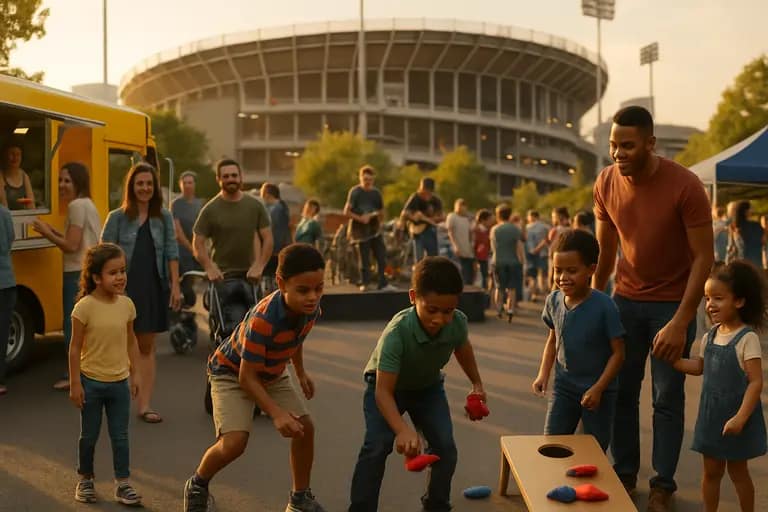
The strongest case for this project rests on shared-use infrastructure. The research notes say the plaza area would include event decks for concerts and other community activations. That phrasing should be watched closely. A plaza that is open, programmable, and safe can support civic events. A plaza that is used only as a ticketed-event buffer has narrower public value.
What Community Sports Planners Can Borrow
Community sports planners do not need a $158 million budget to apply the same planning logic. The first step is identifying the pinch point: the gate, the sidewalk, the bus bay, the concession corner, or the parking exit. The second step is matching money to the user problem, not to a prestige item. Shade, queue width, safe crossings, and post-event dispersal often matter more to participation than decorative features.
A practical review framework should include:
- baseline counts for peak pedestrian flow before construction;
- arrival and exit timing by event type;
- shade coverage during high-heat periods;
- accessibility checks for fans using mobility devices;
- community-use days separated from major ticketed events.
Comparable venue planning cases can help local advocates ask better questions. A related discussion of stadium renovations and fan planning shows why arrival windows, seating choices, transit, lodging, and amenities should be assessed together rather than as separate fan issues. For broader regional sports coverage in the same network, browsing through Texas Sportsmen can offer valuable insights on various community and fan-focused sports topics with a keen interest in infrastructure.
Economic Claims Need Transparent Follow-Up
The research notes report that Allegiant Stadium hosted 151 major ticketed events in its first six years, welcomed more than 7 million attendees, and generated more than $10.6 billion in economic activity. Those are large figures, but public value depends on how benefits are distributed and how costs are controlled. For this upgrade, the most relevant follow-up is not only total visitor spending. It is whether the North Entry work reduces friction for ordinary fans and supports usable public space.
The reported timing also deserves care. The notes say construction is expected to conclude by late 2028 ahead of a 2029 Super Bowl return to Las Vegas, but the specific Super Bowl label in the notes is uncertain. The safer interpretation is that the project is being timed for major-event readiness before 2029, while the exact event designation should be verified through official league scheduling when available.
Fan Planning For The Allegiant Stadium renovation
The Allegiant Stadium renovation gives fans a clear set of expectations, but not yet a full operating map. The approved funding supports a North Entry project with an elevated pedestrian deck, shaded plaza space, transportation improvements, and future tunnel-network potential. The fan benefit should be judged by shorter crowd compression, safer walking routes, better heat protection, and cleaner post-event pick-up patterns.
Between September 15, 2026, and the expected Q3 2027 construction start, the most useful public documents would be a phasing plan, temporary pedestrian routes, accessibility provisions, and event-day transportation diagrams. Those details will decide whether the approved capital project becomes a better daily experience for fans and a stronger piece of community sports infrastructure.