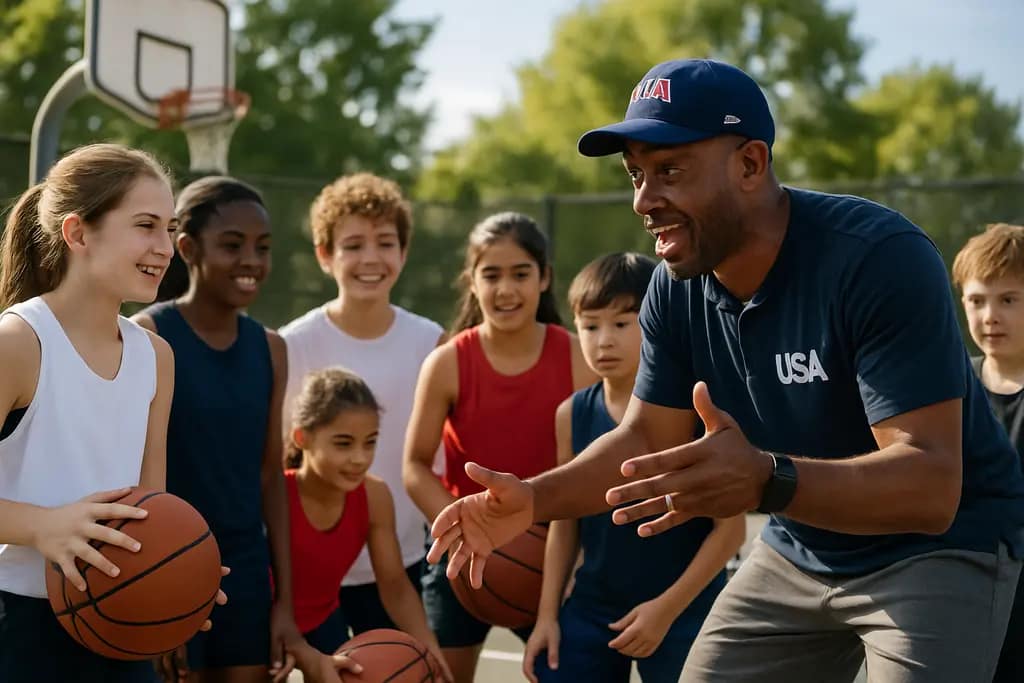
As of September 28, 2026, the USA Basketball Minicamp is scheduled for October 9-11, 2026, at the U.S. Olympic & Paralympic Training Center in Colorado Springs, Colorado. USA Basketball announced that the Men’s Junior National Team October Minicamp will include nearly 90 athletes from the high school graduating classes of 2027, 2028, 2029, and 2030, with parents also involved in the programming USA Basketball announcement. For community sports leaders, the event is useful not only as an elite-player gathering, but as a case study in how athlete development can include family education, eligibility literacy, mental health support, and financial instruction.
The inclusion question is not whether a national-team minicamp can reach every young player. It cannot. The more practical question is what parts of the model can be adapted by local clubs, school programs, parks departments, and nonprofit basketball groups. A three-day camp for top prospects sits far from most community gyms, but its structure points to a wider principle: player development is stronger when athletes and families receive clear information before decisions become urgent.
What USA Basketball Minicamp Offers
USA Basketball Minicamp Roster Mix
The October 2026 roster design covers four high school classes, from 2027 through 2030 graduates. That age spread matters. A program that gathers older and younger athletes can expose younger players to higher training standards while giving older players a setting to model habits. USA Basketball’s announcement said nearly 90 athletes and their parents are expected, and 50 athletes have prior USA Basketball experience. That group includes 18 USA Basketball medalists, with 16 gold medalists and two silver medalists. The announcement also referenced recent team accomplishments, including wins at the 2026 FIBA U17 Men’s World Cup in Istanbul and the 2025 FIBA U16 AmeriCup in Juárez, Mexico.
That concentration of prior national-team experience can sharpen the competitive environment, but it also creates a design challenge. If a minicamp serves both evaluation and education, staff must make sure first-time participants and families are not left behind by insider language, assumed knowledge, or informal peer networks. Community programs face the same issue on a smaller scale when returning travel-team families know the process and newer families do not. The development value depends on whether the setting explains expectations clearly.
On-Court Work Paired With Life-Skills Sessions
The USA Basketball announcement described on-court drills and competitive scrimmages, but the off-court programming is the part most transferable to community sport. The October 2026 minicamp includes life-skills sessions led by USA Basketball, NBA Player Development, the NCAA, and others. The listed topics include media training, NCAA rules and eligibility education, mental health and well-being guidance, and financial management, with financial guidance partnered with Morgan Stanley.
The USA Basketball Minicamp setting shows why development cannot stop at skill work. A talented teenager may understand spacing, defensive reads, and shot selection while still lacking basic information about eligibility rules, public attention, stress management, or money decisions. Those gaps can affect athletes from any background, but they can be harder on families without prior experience in elite basketball systems. For comprehensive basketball insights and comparisons across different settings, NBA Playbook offers a wide array of related content.
Inclusion Risks Around Elite Basketball Pathways
What Access Data Suggests
Any inclusion analysis of a national minicamp should be cautious. The available announcement does not provide a full socioeconomic, geographic, race, disability, or gender breakdown of the October 2026 men’s minicamp attendees. Without those data, it would be inaccurate to claim that the event itself proves broad access. What can be assessed is the wider youth basketball pathway that often feeds elite selection.
A study of AAU basketball and NBA player profiles found that AAU teams associated with current NBA players were significantly skewed toward lower Area Deprivation Index rankings, meaning higher socioeconomic status areas. The study also reported that AAU participation alone can range from US$400 to US$4,000, depending on team and travel demands AAU accessibility study. Those figures do not describe the cost of the USA Basketball camp. They do show that the broader youth basketball pipeline can carry financial and geographic barriers before athletes reach national-team environments.
What USA Basketball Minicamp Cannot Solve Alone
The USA Basketball Minicamp answers one part of the development problem: once athletes are in the room, they receive structured basketball work and education. It does not, by itself, remove the cost of club basketball, travel exposure events, private training, or family time away from work. A cautious inclusion strategy should separate access to information from access to opportunity. Information sessions are valuable, but they work best when paired with earlier identification, local coaching support, and affordable participation routes.
This distinction matters for community sports. Local programs should not copy only the prestige layer of elite camps. They should copy the teachable parts: parent briefings, plain-language eligibility education, mental health referral pathways, and financial literacy basics. If those tools are offered only after a player has reached a national pool, many families will receive them late. The more inclusive model begins earlier, in middle school gyms, recreation leagues, school teams, and community centers.
Practical Tools For Community Basketball Programs
Translate The Model To Local Scale
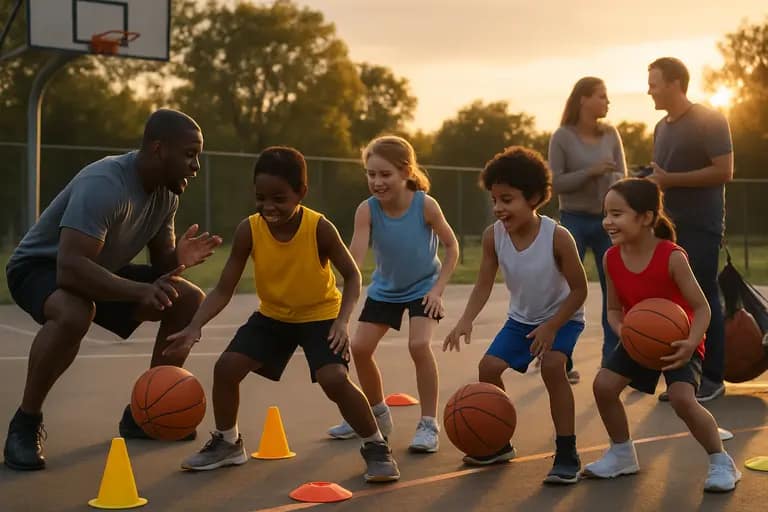
Community programs do not need a national facility or a large roster of elite prospects to use this framework. They need a written plan that treats family knowledge as part of player development. A local version could pair Saturday skill sessions with short parent modules on academic eligibility, safe communication with coaches, nutrition basics, financial planning for travel sports, and mental health support. The content should be repeated across the year, because families enter programs at different times.
Access also requires attention to format. Sessions should be offered at times working families can attend. Materials should be written in direct language. Programs serving multilingual communities should identify translation needs rather than assuming English-only delivery is enough. If a group cannot provide a licensed mental health professional, it can still provide referral information from qualified local agencies and set clear boundaries around what coaches are trained to handle.
A Community Program Scorecard
The table below adapts the minicamp concept into practical checks for local basketball organizations. It avoids claims about outcomes that have not been measured and focuses on actions that can be documented.
| Development Area | Local Action | Evidence To Track |
|---|---|---|
| Family education | Hold brief parent sessions on eligibility, costs, and season expectations. | Attendance counts and translated materials provided. |
| Mental well-being | Share referral options and train coaches on boundaries. | Referral list review dates and coach training logs. |
| Financial barriers | Publish fee ranges early and identify scholarship criteria. | Number of scholarships requested and awarded. |
| Player pathway | Explain how athletes move between recreational, school, club, and higher-level play. | Written pathway map and annual family survey results. |
For small organizations, the first year can be simple. A program might begin with two parent meetings, one athlete workshop, and one written cost sheet. The key is to document what was offered, who could access it, and where participation dropped. Inclusion work needs records, not slogans.
USA Basketball Minicamp Access Checklist
Questions For Coaches And Directors
The October 2026 event provides a high-profile reminder that elite development now includes more than drills and scrimmages. The safer lesson for community sport is not to assume that a national model can be copied in full. Instead, directors can ask specific questions before their next season begins.
- Do families receive written information on costs, schedules, eligibility expectations, and contact rules before tryouts or registration?
- Are athletes and parents offered development sessions that cover mental well-being, media or social communication, and financial pressures?
- Does the program track who leaves because of cost, travel, schedule conflicts, or unclear expectations?
- Are younger athletes and first-time families given the same pathway information as returning families?
- Can the organization identify one access barrier it will reduce before the next registration period?
The USA Basketball Minicamp is scheduled to bring nearly 90 high-level boys players and their parents to Colorado Springs on October 9-11, 2026. Its broader value for inclusion is the structure around the athletes: education, family involvement, and support topics that reach beyond the box score. Community basketball programs can use that structure at a smaller scale, while being honest about what remains unproven without fuller access data. The practical test is whether more families understand the pathway, see the costs early, and receive support before talent alone is expected to carry them through.