
Youth soccer development is strongest when access is built into the first touchpoint, not added after registration fills up. In the United States, that means treating camps, school clinics, after-school sessions, and mini-pitch programming as parts of one participation system. On March 23, 2026, U.S. Soccer, the Soccer Forward Foundation, and Bank of America launched Soccer at Schools with a stated goal of making soccer accessible in every U.S. school by 2030 through equipment, training, starter kits, and clinics, with emphasis on underserved areas U.S. Soccer announcement.
That goal matters because youth sports access is not only about interest. It is also about transportation, facility space, coach availability, cost, safety, and whether children feel welcome when they arrive. Camps can help, but only if they operate as low-barrier entry points rather than early sorting events for families who already understand club soccer.
The Inclusion Test For Youth Soccer Development
Youth Soccer Development Begins Where Children Already Are
For community programs, the first planning question should be simple: where can children reach soccer without depending on private transportation, high fees, or parent work flexibility? Schools are a logical access point because they are already part of daily life for most children. A school-based clinic can introduce the sport before a family has to compare club dues, tournament travel, or equipment requirements.
The Soccer at Schools model is useful because it connects four practical pieces: equipment, training, starter kits, and clinics. None of those pieces is enough alone. A bag of balls without trained adults will not sustain participation. A coach clinic without safe space can stall. A one-day event without a next session often fades quickly. The inclusion value comes from connecting the first experience to a repeatable local pathway.
What The School Model Can And Cannot Prove
The available official information supports a clear access strategy, but it does not prove that every local school program will increase long-term participation. Local leaders still need attendance logs, retention tracking, caregiver feedback, and referral data. If a clinic introduces 200 children to soccer but only a small share can reach the next program, the access gap has only moved downstream.
That is why camp planners should avoid measuring only sign-ups. A better test is whether first-time participants return, whether girls and children from lower-income households feel safe and included, whether coaches can support beginners, and whether the program has a no-cost or low-cost continuation option.
Camps And Engagement Models That Reduce Barriers
Design Camps As Entry Points, Not Tryouts
Inclusive camps should start with the assumption that children arrive with different skill levels, fitness levels, languages, and prior exposure to organized sport. The first session should not feel like an evaluation for advanced players. It should teach basic ball familiarity, small-sided play, cooperation, and safe movement. This does not lower standards. It creates a wider front door.
For camp directors, youth soccer development should include three lanes: beginner-friendly instruction, social connection, and referral to the next opportunity. A child who enjoys camp but cannot afford club registration still needs a next step. That next step might be a school session, recreation league, free clinic, after-school program, or neighborhood mini-pitch activity.
Coach Capacity Is An Access Issue
The Soccer at Schools announcement cited two barriers that local programs should take seriously: 67% of parks and recreation departments reported insufficient facility space, and 82% of community sport agencies reported coach shortages. It also cited wider health concerns, including about one in five U.S. schoolchildren being obese and about 71% not meeting recommended physical activity levels.
Those figures point to a practical conclusion: expanding camp seats without expanding coach capacity can weaken program quality. A crowded camp with too few prepared adults may increase waiting time, reduce ball touches, and make behavior management harder. For inclusion, coach training should cover more than drills. It should include group management, trauma-aware communication, disability awareness, gender inclusion, and how to welcome families who are new to organized soccer.
Measurement Before Expansion
Participation Counts Are Not Enough
Scale is valuable only if programs can show who is being reached and what happens next. The U.S. Soccer Foundation reported that, over three years leading into 2026, its It’s Everyone’s Game campaign engaged 300,000 children through Soccer for Success and installed 380 mini-pitches in underserved communities. The same report set targets of reaching 1 million more children and building 1,000 mini-pitches by the end of 2026 Foundation anniversary report.
Those numbers help frame the scale of national work, but local programs need smaller measures that can guide weekly decisions. A camp director should know how many first-time players attended, how many came from scholarship households, how many returned for a second session, and how many were referred into a continuing program. Without those measures, leaders may confuse a busy event with a fair pathway.
Equity Measures For Girls And Underserved Areas
Gender inclusion should be measured directly. Programs can track attendance by age group, session type, and self-reported experience, while protecting privacy. If girls register but do not return, the issue may be schedule timing, coach assignment, peer climate, facility safety, or the lack of girls-only options in some communities. Official national initiatives show that large-scale participation goals are being set, but the local design still determines whether families experience the program as welcoming.
Underserved communities also need facility measures. A mini-pitch or school gym can reduce travel barriers, but only if scheduling is fair and supervised time is available. Access is not the same as a locked field behind a fence. Community partners should define who controls the space, which hours are open, and how new players learn about sessions.
Practical Camp Design For Local Clubs
A Four-Part Operating Template
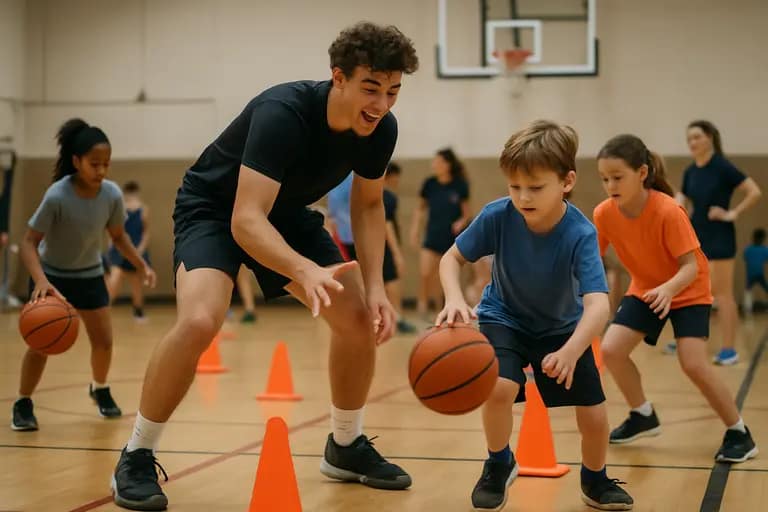
A practical youth soccer development plan can be built around four operating commitments. Each one is simple enough for a volunteer board to review, yet specific enough to guide decisions.
- Access: Set aside free or reduced-cost places before registration opens, not after families ask for help.
- Coaching: Train every coach on beginner instruction, inclusion expectations, and safe group management.
- Facilities: Choose sites near schools, transit, or walkable neighborhoods when possible.
- Continuation: Give every participant a written next-step option before camp ends.
This structure also helps clubs avoid a common mistake: treating inclusion as a message rather than an operating plan. A flyer can say everyone is welcome. The budget, schedule, coach list, and field map decide whether that promise is real.
Referral And Retention
Referral systems should be plain. A family should leave camp knowing the next date, location, cost, equipment needs, and contact person. If the next program has a fee, scholarship information should be shared before the family disengages. If the next program requires travel, local partners should assess whether a school-based or neighborhood option is more realistic.
For a related local planning perspective, this site’s evaluation of inclusive camps examines access barriers that clubs can address before registration opens. Programs looking to broaden participation resources can also explore materials available at My All Time Best to build their own checklists.
Youth Soccer Development Access Checklist
Before The Next Program Cycle
Youth soccer development should be reviewed before each camp or clinic cycle using evidence that a local board can understand. Start with the last program’s attendance and retention. Then compare that data with the community the program claims to serve. If the program is missing children from nearby schools, lower-income neighborhoods, girls’ groups, or immigrant communities, the outreach plan needs revision.
Cost should be reviewed in full. Registration is only one expense. Shoes, shin guards, meals, travel, uniforms, and tournament fees can block participation. A camp that advertises a scholarship but still requires costly equipment may remain out of reach for some families.
What To Report Publicly
Community trust grows when programs report concrete information. Useful public metrics include total participants, scholarship seats, repeat participation, coach training hours, school or community partners, and the number of children referred to follow-up play. Programs should avoid overstating outcomes they have not measured. If a camp only measured attendance, say that. If it also measured retention and family feedback, report those results separately.
The strongest access strategy is not a single camp, clinic, or facility project. It is a connected system that makes the first experience easy, the second experience clear, and the longer pathway realistic for families with different resources. That is the standard community soccer leaders should use when they assess whether participation growth is truly inclusive.