
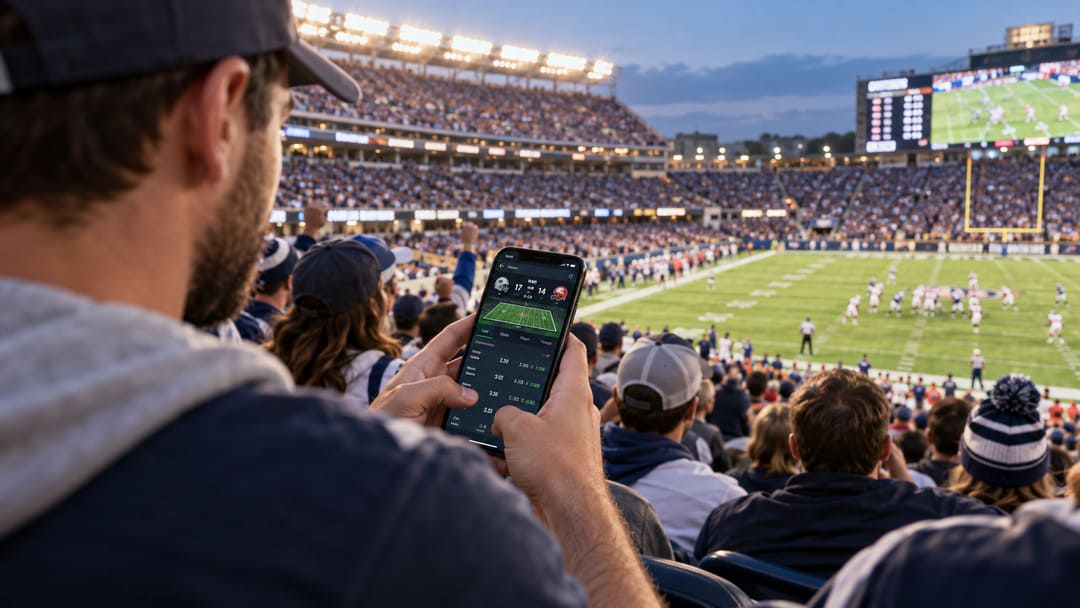
Sports betting has moved from a separate gambling activity into the everyday sports experience. Odds appear during broadcasts, live markets change while games are being played, and individual player performances can carry financial consequences for spectators. That shift makes sports betting fan wellness a legitimate community-sports concern. The issue is no longer simply whether an adult chooses to wager, but how betting affects the way supporters watch, discuss and react to sports.
For adults who decide to wager, researching the operator is one part of making an informed choice. Resources examining EveryGame features and reputation can help readers understand the characteristics of a particular sportsbook before deciding whether to use it. That research should still be separated from questions about local gambling law, regulatory protections, personal spending limits and whether betting remains entertainment rather than financial pressure.
For Aplevante’s community-sports audience, that distinction fits a broader idea already visible in its coverage of LLWS travel planning for fan wellness. Fan wellness is not limited to hydration, transportation, accessibility and physical comfort. It can also include the psychological and social pressures surrounding the way people consume sports.
Sports Betting Changes the Meaning of a Result
Sports fans have always had emotional stakes in games. A supporter can spend years following a team and still feel frustrated by one missed shot, questionable call or late turnover.
Betting adds something different: a financial result.
A team can win while a fan’s wager loses. A quarterback can deliver an excellent performance but finish one passing yard below a bettor’s prop. A basketball team can dominate an opponent while failing to cover a point spread.
That difference sounds small, but it changes the incentives surrounding spectatorship.
Without a bet, fans generally evaluate an athlete according to what helps the team succeed. With player props and live wagers, a spectator may begin evaluating the same athlete according to whether a specific statistic produces a payout.
The sporting result and the betting result are no longer necessarily the same result.
That distinction becomes especially important when financial frustration is directed back at athletes.

When a Losing Bet Becomes Athlete Harassment
The NCAA has documented the connection between sports wagering and abusive fan behavior.
In its March 2026 survey of Division I men’s and women’s basketball players, nearly 60% of respondents said sports betting had contributed to unfair public scrutiny of athletes. The NCAA also reported that nearly half of the men’s basketball players surveyed had been targeted by fans because of betting losses. Large majorities of both men’s and women’s players said betting-related abuse weakens trust between athletes and fans.
Those findings make one boundary especially important: a wager creates risk for the bettor, not an obligation for the athlete.
A missed free throw may destroy a parlay. A late substitution may affect a player prop. A coach’s tactical decision may change the outcome of a spread.
None of those events gives a bettor a legitimate reason to threaten, insult or personally contact an athlete.
Sports organizations can respond by treating gambling-related harassment as a fan-conduct issue rather than dismissing it as an unavoidable consequence of modern betting. Reporting systems, social-media policies and athlete-support programs should recognize that wagering creates new pathways for abuse.
Sports Betting Fan Wellness Requires Consumer Literacy
Responsible gambling is sometimes presented as a simple instruction to “bet responsibly.” That phrase has little practical value unless fans understand what responsible behavior actually requires.
A better framework separates four different questions.
| Decision | What the fan should consider |
|---|---|
| Choosing a sportsbook | Regulation, reputation, withdrawals, terms and account protections |
| Choosing a wager | Price, probability and how much can actually be lost |
| Setting a budget | Money that can be lost without affecting essential expenses |
| Reacting to a loss | Whether the next wager was planned or is an attempt to recover money |
These questions address different forms of risk.
Researching a sportsbook may help someone understand its features. It does not determine how much that person should wager.
Understanding odds may improve a betting decision. It does not guarantee the outcome.
Setting a budget can limit financial exposure. It does not make every gambling behavior healthy.
The National Council on Problem Gambling’s responsible gambling resources for sports betting similarly emphasize harm reduction and access to support. Its sports-betting work addresses issues including player assistance, informed decision-making, self-exclusion and measures intended to reduce gambling-related harm.
For fans, the most useful principle is simple: information about a betting product and control over betting behavior are two separate responsibilities.
Live Betting Makes Emotional Decisions Easier
Traditional pregame betting at least creates a natural stopping point. A person chooses a wager, the event begins and the outcome eventually becomes known.
Live betting removes much of that separation.
Odds can change after a touchdown, injury, substitution, pitching change or scoring run. A bettor can respond immediately, sometimes within seconds.
That speed can be entertaining, but it creates another risk: emotional decision-making.
Someone who loses an early bet may suddenly see dozens of opportunities to win the money back before the game ends. Someone who has already won may increase wager sizes because the evening feels successful.
Neither decision necessarily reflects what that person planned before the event.
A practical wellness approach is therefore to decide limits before the game begins. That can include a maximum amount of money, a maximum number of wagers or simply a decision not to add money after reaching a predetermined limit.
The purpose is not to predict every emotional response. It is to reduce the number of financial decisions that have to be made while emotions are already elevated.
Keep Fan Engagement Bigger Than Betting Engagement
Sports organizations increasingly compete for attention beyond the playing field. Mobile apps, social media, statistics, fantasy competitions, interactive displays and loyalty programs are all designed to extend the relationship between a team and its supporters.
Betting can become another part of that ecosystem, but it should not become the definition of engagement.
Aplevante’s discussion of families strengthening community bonds through sports illustrates why this matters. Sports can connect parents, children and communities through participation and shared experiences that have nothing to do with financial stakes.
That broader purpose deserves protection.
A supporter should still be able to follow statistics because they reveal something about performance rather than because every statistic can become a wager. Families should be able to attend games without betting promotions becoming the dominant conversation. Younger fans should be able to learn tactics, teamwork and competition without being taught that money must be attached to those experiences.
Betting can be one optional layer of fandom without becoming the gateway to fandom itself.
Younger Fans Need Clearer Boundaries
The normalization of betting language creates a particular challenge for families.
Children may hear adults discussing parlays, spreads, props and live odds long before they understand financial risk. Sports broadcasts and online conversations can make those terms sound like ordinary components of following a game.
Pretending betting does not exist is unlikely to solve that problem.
Families can instead establish a straightforward distinction: predicting what happens in a game is part of sports conversation; risking money on the prediction is an adult financial decision that can result in losses.
Adults can reinforce that boundary by avoiding claims that betting is easy money, not asking children to help choose wagers and not presenting occasional wins as proof that gambling is a reliable way to earn income.
The lesson does not have to be anti-betting. It has to be accurate.
What Healthier Sports-Betting Culture Looks Like
Community organizations, teams and individual supporters do not need complicated policies to establish healthier expectations.
Several principles cover much of the problem:
- Keep betting optional. A fan should never need a wagering account to feel fully involved in a sport.
- Protect athletes from betting-related abuse. Losing money does not create an excuse for harassment.
- Research operators separately from betting behavior. A sportsbook assessment and a personal risk assessment answer different questions.
- Set financial limits before games. Predetermined boundaries reduce decisions made in frustration or excitement.
- Preserve non-betting fan experiences. Statistics, watch parties, youth events and community programs can engage fans without requiring a wager.
- Keep gambling conversations age appropriate. Young supporters need an accurate explanation of risk rather than normalization.
- Recognize changes in behavior. Chasing losses, hiding gambling activity or using money needed for everyday expenses deserves attention rather than another wager.
These principles do not require every sports organization to become a gambling-policy organization. They simply recognize that the fan environment changes when financial risk becomes attached to the action on the field.
Sports Betting Fan Wellness Is About Keeping Perspective
Sports wagering is already part of the modern sports economy. For many eligible adults, it will remain an occasional form of entertainment.
The more meaningful question is what happens around that wager.
Fans need enough consumer information to understand the platforms they consider using. They also need boundaries strong enough to prevent a bad bet from becoming another person’s problem. Athletes should not become targets because somebody lost money. Families should have room to enjoy sports without betting becoming the default definition of participation if you have a betting problem read responsible gaming resources.
That is ultimately what sports betting fan wellness should protect.
The game can accommodate wagering without becoming nothing more than a collection of wagering opportunities. When communities preserve that distinction, betting remains one possible part of the fan experience instead of taking over the experience itself.