
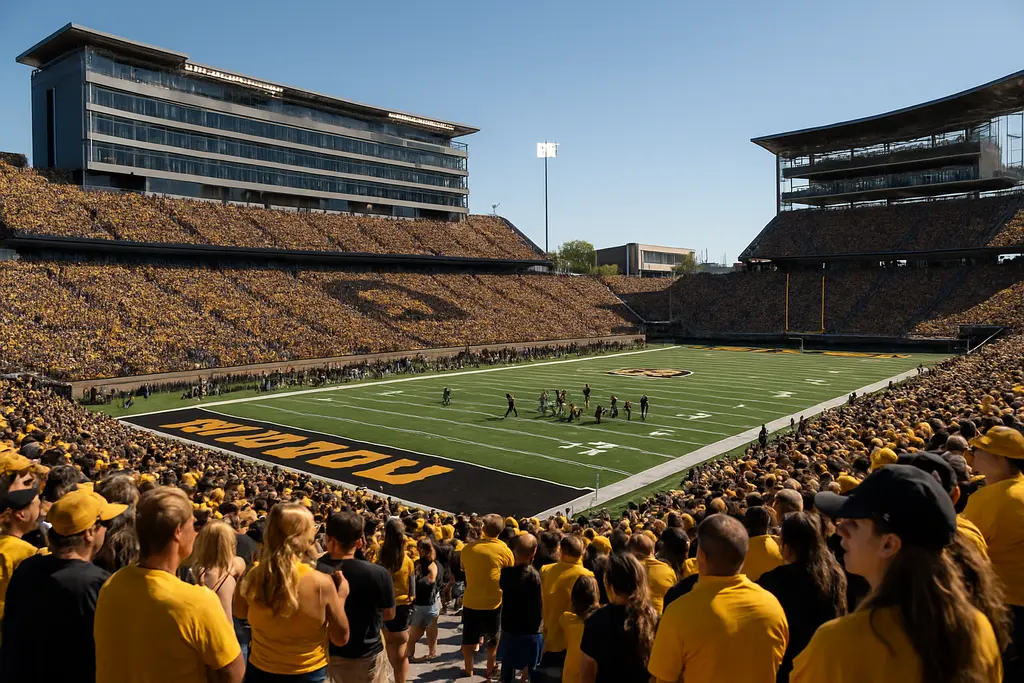
The Memorial Stadium renovation at the University of Missouri is a useful case study for sports infrastructure because it links a major athletics project to fan services, premium revenue, student learning, and year-round facility use. The University of Missouri Board of Curators unanimously approved the $250 million Memorial Stadium Improvements Project on September 12, 2024, with completion planned ahead of the 2026 college football season, according to the university’s official approval notice.
That approval framed the project as more than a football upgrade. It was tied to the stadium’s 100th anniversary period, 1926–2026, and later advanced under the Memorial Stadium Centennial Project name after construction broke ground on November 30, 2024. As of October 6, 2026, the available research supports a cautious read: the project’s physical scope and intended benefits are clear, while longer-term results such as net operating performance, non-game event demand, and recruiting effects still require post-opening data.
What the Memorial Stadium renovation Changes
The project centers on the north end zone and stadium support spaces. The renovation adds roughly 160,500 square feet of new construction, including about 98,000 square feet of enclosed space for premium seating and climate-controlled uses. It also encloses the north end zone with a new multi-level concourse, adds a stadium entry plaza, and includes modernized concessions, restrooms, wayfinding, graphics, an upgraded video board and sound system, and structural repairs.
Memorial Stadium renovation Features To Track
The seating mix matters because not all new capacity produces the same financial or access outcome. New options identified in the project materials include 14 field-level open-air suites, 140 loge boxes with four seats each, 270 mezzanine club seats, 24 Tiger Den private outdoor patio suites, two new club sections, and a 300-person Rock M Club under historic Rock M Hill. Stadium capacity is projected to increase to nearly 65,000 seats, but the more important business shift is the larger premium inventory rather than a simple expansion of general admission volume.
Why The North End Zone Carries The Project
End-zone work often changes the feel of a college football venue because it affects arrival, circulation, crowd noise, sightlines, and sponsor-facing hospitality. For Missouri, enclosing the north end zone also gives the venue a more complete bowl configuration. That can improve the in-stadium experience, but the practical test is operational: shorter lines, clearer movement, better restroom access, and fewer points where fans crowd into narrow paths.
| Project Element | Supported Benefit | Measurement Need |
|---|---|---|
| Premium seating and clubs | Higher revenue per seat | Renewal rates, utilization, event bookings |
| Restrooms and concessions | Better fan service | Queue times, sales per cap, complaint data |
| New concourse and entry plaza | Improved circulation | Ingress timing, pinch-point observations |
| Event spaces | Year-round campus and community use | Non-football event days and net revenue |
Benefits That Can Be Measured
For community sports planners, the Memorial Stadium renovation offers a practical reminder: infrastructure benefits should be defined before ribbon-cutting, not after. Missouri’s stated benefits include improved fan experience, expanded premium seating, stronger recruiting appeal compared with peer SEC facilities, and new event spaces for university, athletics, and community use. Those claims are plausible, but each needs a specific performance test.
Fan Experience Is An Operations Question
Modern amenities are often described in broad terms, yet fans experience them in narrow, measurable moments. How long did it take to enter? Were restrooms available close to the section? Did concession lines move during halftime? Was wayfinding clear for first-time visitors? A renovated concourse is valuable only if it improves these routine interactions. For Missouri, the new multi-level north concourse, concessions, restrooms, sound system, video board, and graphics should be evaluated through surveys, transaction data, and crowd-flow observations after full use.
Student Learning Adds A Workforce Benefit
The project also had an academic dimension. University reporting stated that students, including civil engineering majors, helped with construction-related work during summer 2026 and gained hands-on experience in the final phase of the stadium work through the engineering program. That is a different type of return than ticket revenue, but it matters for a public university: major campus infrastructure can create applied learning opportunities when academic units are connected to the work.
- Fan service: track restroom wait time, concession throughput, mobile-order use if offered, and postgame exit timing.
- Revenue: track premium inventory sold, renewal rate, event-space bookings, and net operating contribution.
- Access: track seating mix, wayfinding issues, entry distribution, and feedback from older fans and guests with disabilities.
- Community use: track non-football event days, campus meetings, youth or civic uses, and staffing cost per event.
Revenue, Access, And Community Use
The Memorial Stadium renovation is funded through private donations and university or school dollars rather than general taxation, based on the research provided. That distinction affects the public-benefit discussion, but it does not remove the need for accountability. A university venue still sits within a campus and civic setting. Traffic, event scheduling, student access, local vendors, and neighborhood pressure can all affect how the project is received.
Premium seating is a rational revenue strategy for a power-conference football program. Suites, loge boxes, club seats, private patios, and climate-controlled clubs can produce higher per-seat income than standard seating. That revenue can help support athletics operations, but the trade-off is worth watching: if the stadium gains revenue while ordinary fans face higher prices or fewer practical seating options, the access case weakens. The nearly 65,000-seat projection should be interpreted alongside the type of seats being added.
How Local Sports Leaders Can Use The Case
Smaller venues will not copy a $250 million project, but they can copy the evaluation method. A high school stadium, municipal soccer complex, recreation center, or local ballpark can ask the same questions at a different scale: which user groups benefit, what revenue is realistic, what operations data will be collected, and how often public results will be reviewed? The lesson is not to build bigger. The lesson is to connect capital spending to measurable participation, access, and service outcomes.
Peer cases can help local leaders frame those questions. For example, venue planning lessons from other football projects are discussed in this related review of stadium renovations and fan planning. Furthermore, those evaluating various sports amenities might consider visiting Copeland Hills Golf Club within the same network, showcasing another community-oriented sports facility.
Risks That Should Stay On The Dashboard
The clearest risk is that physical completion can be mistaken for policy success. A new plaza, clubs, and enclosed space can look successful before anyone knows whether lines improved, events filled dates, or operating costs stayed in range. Another risk is relying too heavily on premium demand. If premium products underperform, the expected financial cushion can narrow. A third risk is limited transparency after opening; without regular reporting, community members cannot see whether the stated benefits materialized.
Memorial Stadium renovation Infrastructure Impact
The case for Missouri’s project is strongest where the benefits are direct and measurable. The stadium gained substantial new construction, premium spaces, a reworked north end zone, modern fan-service areas, upgraded media and sound systems, and structural repairs. Those are concrete improvements. The stronger question is whether they produce durable value beyond opening attention.
A disciplined post-project review should compare planned benefits with observed results after multiple football games and non-football events. Missouri can measure fan comfort, premium use, event bookings, student learning, and operations performance without overstating what a stadium can do by itself. For community sports advocates, that is the main takeaway: large venues should be judged not only by cost and capacity, but by whether the project improves service, creates usable spaces, and produces evidence that future facility decisions can rely on.