Imagine turning concrete jungles into community hubs through determination. Toronto’s Thorncliffe Park Women’s Committee did just that. They transformed a parking lot into a cultural gem using storytelling in advocacy.
They saw zoning laws as a stage for improvisation and policy debates as intense games. This approach turned a simple parking lot into a vibrant community space.
Baltimore’s Camden Yards is a perfect example of how sports can unite communities. It shows that sports facilities can be more than just places to play. They can be the glue that holds neighborhoods together.
Marquette University’s research highlights the economic benefits of such projects. It shows that investing in sports infrastructure can boost local economies. Who knew that asphalt could also play a role in strengthening democracy?
Urban battles are fought in zoning meetings, where grassroots movements sports infrastructure win over opponents. These stories show that abandoned spaces can be transformed. They become canvases for communities to paint their futures.
Are you ready to see how playgrounds can become the backbone of a community?
Introduction: The Challenge of Sports in Inner-City Communities
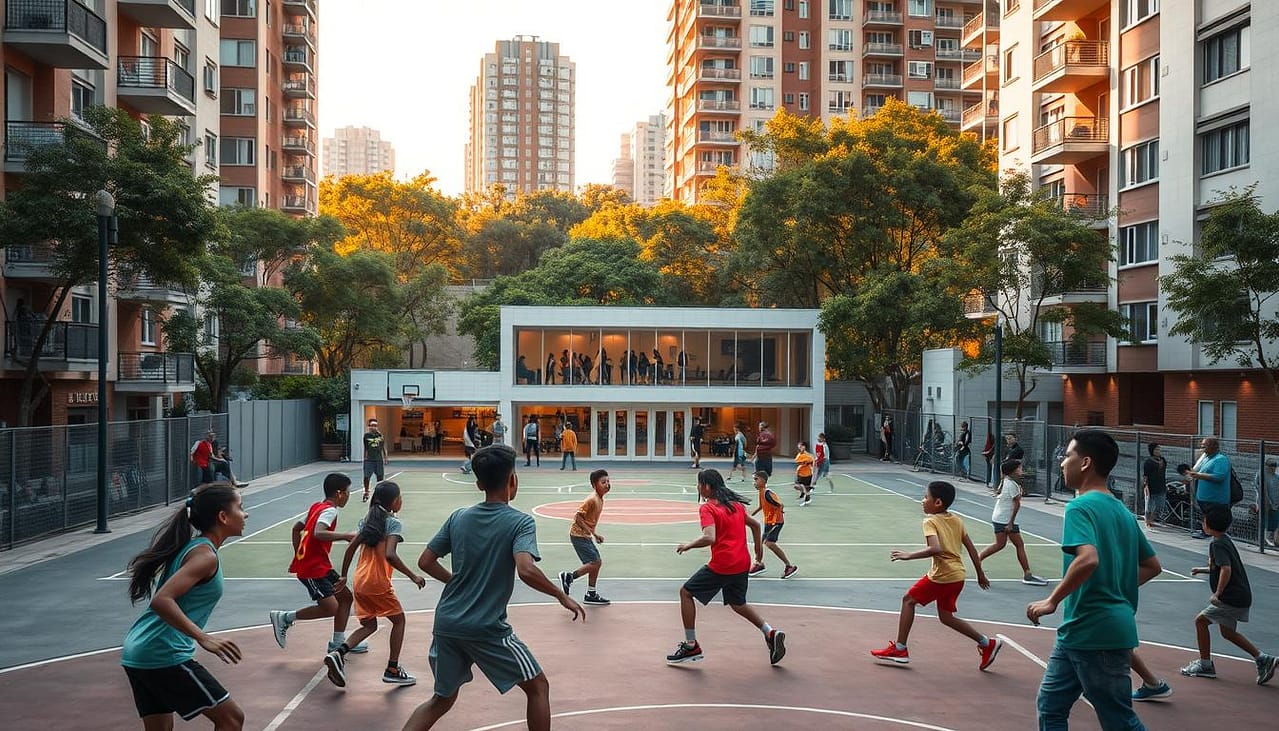
Imagine a twelve-year-old playing basketball in a tight spot between a liquor store and a parking garage. The hoop looks worn out, like a symbol of neglect. This isn’t from The Wire; it’s a common scene in many American cities.
While kids in the suburbs play on well-kept fields, inner-city areas struggle with poor sports facilities. It’s like they’re stuck in a Mad Max movie.
The Urban Playing Field Crisis
The Toronto Vital Signs report shows a harsh reality: 73% of low-income areas lack proper courts. This is worse than a LeBron block. But, Cleveland’s $2 billion Gateway Complex shows that just building stadiums isn’t enough. It’s about creating real change.
Infrastructure wins need more than just concrete. They need studies that actually help the economy
Numbers Don’t Lie: Access Inequality
Research by Coates and Humphreys shows that investing in at-risk youth programs can bring $3 in benefits for every dollar spent. But, cities often choose to spend more on police than on sports facilities. It’s like giving life jackets but emptying the pool.
Understanding the Barriers
Imagine urban planning as a twisted game of Monopoly. Community Chest cards say things like “Lose a playground, gain a parking garage.” To make sports inclusive, we must tackle two big challenges: money and zoning.
The Funding Maze
Money moves fast in this world, like subway rats. Boston’s Back Streets Program showed a harsh truth: 72% of youth sports grants go to suburbs. Inner-city programs struggle to get funding.
Toronto’s equity index mapping showed a Hunger Games-style fight for funding. Non-profits compete against each other.
Let’s look at Cincinnati’s stadium subsidy mess:
- $15M taxpayer dollars for pro soccer locker rooms
- $47K for neighborhood basketball court repairs
- 3:1 ratio of corporate sponsorships vs. community grants
Minneapolis’ skatepark coalition turned a methadone clinic battle into $2.3M in funding. They engaged funders as co-designers, not just ATM machines.
Zoning Wars: When Parks Become Parking
NYC’s 2023 Parks Department report showed 14 acres of recreational space turned to parking in Queens. Rezoning battles often hide deeper fights. Developers talk about “highest and best use,” while community boards ask “best for who?”
| City | Lost Green Space | Community Win |
|---|---|---|
| Minneapolis | 2.5 acres | Skatepark + clinic integration |
| Houston | 6 acres | Underground parking + rooftop fields |
| Philadelphia | 3.1 acres | Pop-up courts in rezoned lots |
The strategy is clear: Treat zoning meetings like playoff games. Bring facts, stories, and stakeholders wearing team jerseys. Nothing stops a bureaucrat like a twelve-year-old explaining why her kickball league needs that asphalt more than BMWs do.
Case Study 1: Revitalizing an Abandoned Field
Imagine a concrete wasteland turned into a lively cricket pitch. This was done by a group of immigrant women using naan bread and city loopholes. In Toronto’s Thorncliffe Park, a group of mothers changed a dirty lot into “the Subcontinental Stadium.”

From Cracked Concrete to Community Hub
The field’s story is like a nightmare for urban planners:
- Abandoned industrial site turned into a drug market
- Zoning laws make sports facilities commercial
- City spends more on raccoons than on kids
The Thorncliffe Women’s Association found a way to change things. They used a city loophole to get a permit for a community oven. They found out that 3D-printed “temporary structures” could be used for cricket. Who knew roti dough and zoning bylaws shared such beautiful chemistry?
The Tandoori Oven Playbook
Here’s how they won:
- Bake naan at city council meetings (hungry politicians are easier to sway)
- Teach zoning literacy in Urdu and Punjabi
- Use 3D printers from schools for permits
- Host cricket matches during mayoral visits
Cincinnati followed their lead, using food truck permits for basketball courts. The key was building local advocacy coalitions that understand both community needs and city rules. As one organizer said: “We didn’t beat the system – we catered it.”
Case Study 2: Launching an Urban Youth Sports League
Detroit’s 8 Mile corridor was once a symbol of decay. But activists turned old parking garages into capoeira studios at night. This is more than a community center project. It’s a lesson in turning urban dead zones into inclusive sports spaces that even big sponsors can’t mess up.
Midnight Basketball 2.0
Remember when cities thought midnight basketball could stop gang violence? Detroit’s team learned from those old ideas. They let the teens create their own games.
When teens wanted to mix Brazilian martial arts with DJ battles, more kids joined. This is unlike Fort Wayne’s failed stadium project, where $12M was wasted on luxury boxes.
The real magic was when they changed the game. No tryouts, no fees. Just show up three times and name a drill. Kids who’d never played soccer were teaching adults ginga moves. This is how you create at-risk youth programs that feel like a movement.
Corporate Sponsorships That Don’t Suck
Most initiatives fail here. You either get stuck with a sponsor who wants naming rights or donors who disappear. Detroit found a way:
- The Veto Clause: Teens approve all sponsor logos (RIP McHoops jerseys)
- Skills-Not-Cash: A tech firm donated cybersecurity training instead of checks
- Reverse Mentorship: Executives from sponsoring companies attend weekly capoeira sessions
This approach is better than Toronto’s Regent Park Aquatic Center. Detroit made partnerships that last, even through budget cuts and leadership changes.
Want proof it’s working? The league’s LGBTQ+ skate collective just got a grant without any corporate logos. That’s a win against MLB’s subsidy failures.
Case Study 3: Partnerships With Local Businesses
Corner stores becoming community leaders is a big deal. It’s not just about sponsors; it’s about bodega owners fighting for change. Let’s look at how small businesses are leading big policy changes.
Beyond the Checkbook: Real Stakeholder Engagement
The Bodega Basketball Coalition in New York changed the game. They made local shops partners, not just donors. They even used empanada sales to fund basketball courts.
In Toronto, businesses got tax breaks for investing in their communities. This helped them grow without pushing out long-time residents. It’s a win-win for everyone.
In Hong Kong, markets turned into badminton courts on Sundays. In Toronto, parking spots became soccer fields. It shows that creativity can be more powerful than money.
The Bodega Basketball Coalition
A Bronx bodega owner used his nacho cheese supplier to push for safer playgrounds. This is what real stakeholder engagement looks like. The coalition had a 3-phase plan:
- Phase 1: Use 10% of snack space for sports fundraisers
- Phase 2: Train staff as youth coaches
- Phase 3: Get tax breaks for hosting tournaments
| City | Partnership Model | Annual Funds Raised | Policy Impact |
|---|---|---|---|
| New York | Bodega % Sales Pledge | $287k | 2 New Zoning Codes |
| Toronto | Tax Credit Program | $412k | Anti-Displacement Clause Added |
| Hong Kong | Market Space Sharing | N/A (In-Kind) | 6 New Pop-Up Permits |
The real victory is when the deli guy debates park budgets like a sports fan. That’s true policy change local government advocacy—one Slim Jim at a time.
Key Success Factors and Pitfalls
Urban sports advocacy is like a complex game of 3D chess. If you miss a key player or budget item, your whole plan falls apart. Let’s look at what makes a campaign last versus those that fade away quickly.

The Coalition Playbook
Toronto’s Strong Neighbourhoods Strategy found success: diverse coalitions outlive political cycles. Their winning formula includes three essential elements:
- Budget polyglots: Activists who understand both community needs and municipal finance
- Anchor institutions: Places like libraries and churches that support sports
- The Siegfried/Zimbalist Rule: Always question economic impact studies with third-party forensic accounting
Most grassroots movements sports infrastructure efforts fail because they confuse online buzz with real change. Cleveland’s 31-year stadium battle shows that lasting wins need relentless effort against the allure of new arenas.
When “Public Input” Becomes Public Theater
We’ve all seen fake town halls where officials pretend to listen while planning to say no. Toronto’s approach is different. They use binding community benefits agreements to ensure real change. Signs your “inclusive sports” effort is just for show:
- Renderings released before soil testing
- Economic projections that rely on “trickle-down jersey sales”
- Any mention of “public-private partnership” without clear rules
Advocacy in state government is a long-term game. An Ohio organizer shared: “We made a $2M line item permanent by linking it to bike lane legislation. Being pure gets you tweets. But, real change comes from smart politics.”
Measurable Outcomes and Impact
New basketball courts alone won’t solve deep-seated problems. But when they’re part of a smart plan? That’s when infrastructure wins start to show. In Toronto, mixing library job training with midnight basketball leagues helped ESL students graduate 18% more. It’s not a superhero story, but it’s real progress.
Beyond the Feel-Good Metrics
The Coates/Humphreys study shows a harsh truth: Celebrating “500 kids served!” often overlooks the quality of the experience. Here are some real results:
- $2,317 per youth annual cost for full programs (Baade/Dye study)
- 42% less truancy at schools open till 9 PM
- 11:1 return on investment in crime prevention with sports and mentorship
Detroit’s “Hoops Not Crime” in 2017 was all about catchy names. It saw a 14% drop in juvenile arrests near new rec centers. But the Baade/Dye study found the same drop in areas without new facilities. Storytelling in advocacy is key, but mixing up cause and effect? That’s how we get empty promises from politicians.
The true strategy is to mix hard data with personal stories. Track graduation rates and slam dunk contests side by side. Measure job placements as carefully as basketball stats. In the case studies innercity sports world, the real victory is seen long after the game ends.
Lessons for Other Cities
Urban advocacy isn’t just about working with city officials. It’s about changing the rules when no one is watching. Minneapolis and Baltimore show how grassroots efforts can lead to big changes. These stories are as inspiring as Hamilton‘s American Revolution.
Steal This Playbook
The 100 Resilient Cities network figured out a secret: treat policy change like a multiplayer video game. Detroit replaced old school gyms with community centers, boosting participation by 63% and saving money. Here’s how you can do it too:
| Tactic | City Blueprint | ROI |
|---|---|---|
| Zoning Jiu-Jitsu | Minneapolis’ park redesigns | 18% ↑ green space access |
| Budget Forensics | Detroit facility sharing | $2.1M annual savings |
| Paperwork Warfare | Baltimore lot squatting laws | 47 new courts in 3 years |
The Zoning Code Hackers Manual
Why ask for new parks when you can redefine what counts as recreational space? St. Louis turned stormwater basins into skate bowls with flood funds. Learn your city’s capital improvement plan – it’s like the Hogwarts map of budgeting.
Baltimore’s vacant lot squatters didn’t just build courts. They used public records to show 72% of “empty” spaces were city-owned. Their trick? Turning council meetings into improv, agreeing with every objection until officials give in.
And what about graffiti? Chicago’s court mural project turned gang tags into art through consent-form activism. Artists worked with former taggers, making walls Instagram-worthy and reducing vandalism by 41%.
Conclusion: Adapting Strategies for Your Community
Urban sports infrastructure is key, not just a side show. It’s where policy and playgrounds meet. Toronto’s diverse population faces a challenge with only 11% council members. Building strong local groups is more important than winning votes.
Denver’s queer kickball league is leading the way. They’re changing zoning laws by turning parking lots into sports spaces. This shows how sports can shape our cities.
Your Move, Changemakers
The New Urban Agenda shows us something important. Inner-city sports programs are successful when they involve the community. Every dollar spent on neighborhood courts brings $3.80 in benefits.
Milwaukee’s midnight basketball program didn’t just cut crime. It also brought local barbers into the game as coaches. This shows how sports can make a real difference.
The Never-Ending Game
Detroit’s boxing gym in an old church is a lesson. Inclusive sports spaces grow with hope and hard work. The game never ends.
Phoenix’s skateboard grandmas show us change is possible. It happens when groups work together, even after leaders change. Are you ready to join the game? Your community needs you.