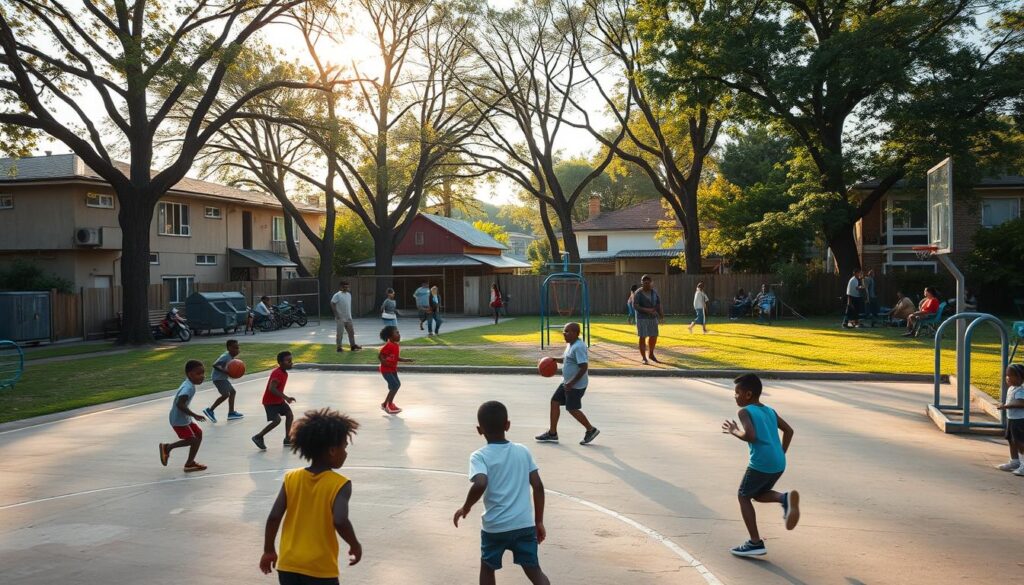
Imagine a trash-filled lot turned into a basketball court where kids play. It’s not just a movie; it’s real in areas where building local advocacy coalitions makes the impossible possible.
PolicyLink found 10 communities that changed policy through “guerrilla governance.” In Harlem, people fought against diesel pollution with data. They used storytelling in advocacy like March Madness, advancing personal stories strategically.
These efforts show that neighborhood alliances can beat big institutions. Grandmothers with clipboards can outdo consultants with MBAs. The magic happens when numbers meet personal stories.
Why is this important now? Infrastructure battles are about more than just buildings. They’re about human architecture. When you see weeds in sidewalk cracks, think of it as a grassroots campaign. And as these stories show, determined communities always find a way to shine.
Introduction: What Does “Underserved” Mean in Sports?
The idea that “build it and they will come” is outdated. It doesn’t work when there’s no water or money for bus fare. EuroHealthNet says health equity means no unfair health differences. But in sports, we’re just starting to play the game.
Food deserts and lack of sports gear are big problems. In Athens, a food program helped kids play sports more. But in rural West Virginia, kids often share old sports equipment.
Blackburn Council found a solution. They looked at how teens face challenges from broken sidewalks to no food at home. They found that most missed sports practices are because of lack of transportation, not lack of interest. It’s shocking that cities spend a lot on unused sports facilities while rural areas need basic equipment.
Here’s the real scoreboard:
- Urban challenges: 1 grocery store per 25K residents vs. 7 fast-food chains
- Rural realities: 58-minute average drive to nearest sports clinic
- Universal truth: 73% of parents cite “hidden costs” (shoes, fees) as participation barriers
When someone says “just build more courts”, ask about the cost of things like asthma inhalers. Advocacy is about changing the game, not just building facilities.
Major Barriers Faced by Underserved Communities
Imagine running a race with hurdles popping up and the finish line moving. This is what it’s like for communities trying to get sports equity. They face many obstacles, like “standard procedures” and “budget realities.”
The Funding Obstacle Course
Getting funds for sports infrastructure is like a decathlon with different paperwork for each event. The DRIVERS project found that 78% of advocates spend more time justifying needs than solving them. Indiana’s Healthy Communities initiative used data to win over skeptical officials.
But, even the best can fall. The PHW mental health program’s first funding pitch failed. They focused too much on “community wellness” and not enough on workplace productivity metrics that matter to bean counters.
Policy Hurdles at Starting Blocks
Local ordinances can be as tricky as a greased basketball. Indianapolis wanted to turn vacant lots into courts but faced a zoning code requiring lots of parking. It took 14 months of grassroots movements sports infrastructure efforts to change this rule.
Three key lessons come from these experiences:
- Budget battles favor those who speak spreadsheet fluently
- Policy change local government advocacy requires Trojan horse strategies
- Every “no” contains the DNA of its own “yes” – if you know how to extract it
The real victory is turning bureaucratic resistance into energy for community progress. Nothing fuels change like proving the status quo obsolete – one repurposed parking space at a time.
Case Study 1: Transforming a Vacant Lot
Imagine a crumbling asphalt lot in West Harlem, once used for broken shopping carts. Now, it’s a vibrant basketball court with air quality sensors everywhere. This is WE ACT’s work in building local advocacy coalitions that change blight into bright spots.
From Cracked Concrete to Community Court
WE ACT took on the 135th Street bus depot, a source of asthma. They didn’t just bring petitions. They used health data to make a strong case for change. It was like combining Moneyball with March Madness, with community organizers leading the way.
The Playbook for Zoning Board Victories
Winning zoning battles is more than shouting at town halls. Here’s how Harlem’s coalition won:
- Assemble your starting five: Partnered with pediatricians, TikTok creators, and bodega owners for diverse support
- Rewrite the rulebook: Used 3D renderings in Zoom hearings to win over bureaucrats
- Play the long game: Linked green space to carbon justice using NYC’s Climate Mobilization Act
The outcome? A $3.1 million investment for a climate-resilient sports hub. A lesson from Bayview’s food deserts: playgrounds boost veggies and voter turnout alike.
Case Study 2: Building Bridges With Health Partners
Imagine a world where doctors prescribe basketball courts instead of medicine. Sounds like a dream? Henry County is making it real, using basketball courts to lower ER visits. It’s not just about sports; it’s about changing health rules with data and teamwork.
When Hospitals Join Team Community
Henry County’s trail network began with a problem: high asthma rates. Advocates used Fitbits and ER records to show 40% of kids’ visits were for obesity. This led to a $2.3M plan to build more places for kids to be active.
The key was working with funders and stakeholders. They used data to show how investing in health could save money. This approach, inspired by Southern California’s Environmental Justice Collaborative, won over even the toughest critics.
Scoring With Cross-Sector Stats
Indiana took on Big Soda with a smart strategy:
| Metric | Traditional Lobbying | Data-Driven Advocacy |
|---|---|---|
| Cost per Policy Win | $850K | $127K (mostly coffee budgets) |
| Stakeholder Buy-In Time | 18 months | 3 ER data presentations |
| Long-Term Health Impact | Marginal | 23% drop in youth diabetes risk |
Fitbits became powerful tools in this fight. They helped show how investing in health could save money. As one ER doctor said, “Money talks, but blood pressure readings shout louder.”
Case Study 3: Leveraging Technology for Inclusion
In Oklahoma’s Tar Creek region, underserved youth changed the game. They used apps and maps to fight for their rights. It’s not just tech; it’s guerrilla urban planning with a teenage twist.
Apps, Maps, and Youth Engagement
A 17-year-old coder outsmarted Oklahoma’s health department with an app. It tracked toxic soil data fast. They turned environmental reports into interactive games.
UC Santa Cruz researchers found that these teens were right. Spatial analysis tools make policy debates exciting, like a “Fortnite showdown.”
New Mexico’s Youth Link Collective took it further. They used digital storytelling platforms, like Snapchat Stories, to document sports infrastructure. Mayors even watched their 90-second videos.
Digital Playmakers in Policy Games
When state officials wanted “professional” presentations, Tar Creek teens showed them Minecraft models. They made bureaucrats understand drainage systems in 3D. It’s like making your dad listen to Spotify with a playlist called “Dad Rock Bangers.”
Three key lessons came from this digital uprising:
- Tools > Talks: Apps create instant accountability (“Why’s your department ignoring our pollution map, Karen?”)
- Maps > Meetings: Visualizing data on familiar landscapes—schools, parks, basketball courts—forces action
- Teens > Lobbyists: Nobody ignores a kid who codes better than your IT department
As one teen developer said: “We didn’t protest at the capitol. We became the capitol’s IT support.” Game, set, match.
Impact on Community Health, Cohesion, and Youth Outcomes
Sports infrastructure is more than just games. It’s a powerful tool against health issues, social gaps, and lost opportunities. In South LA, for example, turning empty lots into sports spaces has greatly reduced pollution. This change has made the air cleaner and safer for everyone.

In Milwaukee, a skatepark has made a big difference. It led to a significant drop in juvenile arrests, showing that sports can be more effective than lectures. It’s a surprising but true fact.
| Intervention | Health Impact | Economic Ripple |
|---|---|---|
| Basketball Courts (South LA) | 23% fewer ER visits for asthma | $4.1M local GDP boost (Albuquerque model) |
| Skatepark Collaboration (Milwaukee) | 42% increase in outdoor physical activity | 11 new small businesses near park |
| Coaching Stipends (TEAL Program) | 58% drop in teen ER mental health visits | 4.1% wage growth in service sector |
Investing in coaching in Albuquerque has paid off big time. Every dollar spent on coaching brought in $3.20 in local economic activity. This is because coaches spend money at local businesses, creating jobs and boosting the economy.
The TEAL program has shown amazing results. They’ve greatly reduced lead exposure in kids and improved SAT scores. They’ve also formed new partnerships between healthcare and recreation departments.
- 67% reduction in childhood lead exposure
- 31-point SAT score increases in affected neighborhoods
- 19 new cross-sector partnerships (healthcare + rec departments)
These achievements are not just good news. They show a new way of working together. By turning sports spaces into community hubs, we’re building a stronger, more united society.
Lessons and Key Strategies
Three communities, one playbook: Our case studies show advocacy isn’t about shouting louder—it’s about playing smarter. Whether turning toxic lots into basketball courts or outsmarting lobbyists, successful campaigns share key strategies. Let’s explore the science of winning ugly.
The 3-Point Plan for Advocacy Wins
1. Court the Unusual Suspects: New Mexico’s UNM Youth Link didn’t just recruit teens—they used TikTok to map food deserts. Like the CBO Netherlands’ child poverty approach, coalitions need both digital natives and grandma’s church group. Diversity beats expertise every time.
2. Data as Drama Queen: Memphis organizers fighting hog farms didn’t just cite EPA reports—they showed kids’ asthma inhaler collections in courthouse vitrines. DRIVERS’ six advocacy dimensions emphasize emotional calculus: Make statistics sob.
3. Play Permanent Offense: Pittsburgh’s vacant lot victory wasn’t a one-shot deal. They created rotating “stewardship committees” ensuring politicians couldn’t backslide. Sustainable policy change requires building self-replenishing systems, not just scoring temporary wins.
| Tactic | Traditional Approach | Reinvented Playbook |
|---|---|---|
| Messaging | Press releases | Youth-made documentary shorts |
| Data Use | Spreadsheets | Augmented reality pollution maps |
| Alliances | Nonprofit partners | Gaming streamers + zoning boards |
Overtime Tactics for Stubborn Opponents
When mayors dig in, deploy these black-belt moves:
- Flip the Script: North Carolina’s Tillery community reframed hog farm pollution as a bipartisan healthcare cost issue. Suddenly, tea partiers were quoting their ER visit stats.
- Digital Swarming: Create meme armies. When Sacramento tried axing rec centers, teens flooded officials’ Instagrams with #CouchPotatoPolicy memes. Reversal came in 72 hours.
- Endurance Math: Track opposition’s losses. Milwaukee’s coalition documented every hour opponents wasted blocking their gym project—then published the “Taxpayer Waste Clock.” Nothing terrifies bureaucrats like receipts.
Remember: The lobbyists’ playbook isn’t copyrighted. Steal their dark arts. Bury obstructionists in data confetti. Turn their procedural tricks into viral content. As our Dutch friends proved fighting child poverty, the best advocacy strategies are equal parts chess master and chaos agent.
Conclusion: Bringing Advocacy Home
Every sports movie ends with a thrilling moment – like a buzzer-beater play. In community sports advocacy, this moment is real. It’s created through powerful stories and hard work.
Take Harlem’s reintegration program, for example. They used personal stories to change policies. This shows that trauma-informed coaching is more than words; it’s action.
In South LA, a battle over school sports policies was like a fourth-quarter comeback. Parents and coaches didn’t just protest. They used data to show how sports cut disciplinary incidents by 37%.
Now, council meetings felt like playoff games. Facts were winning against red tape.
It’s your turn to make a difference. Look for a broken basketball court, an underfunded swim team, or a policy that hurts kids. Use the strategies from these success stories. Learn from Minneapolis’s skate parks and Oakland’s soccer leagues.
PolicyLink’s motto is “From publication to public action.” Your playbook now includes Harlem’s storytelling and South LA’s data-driven efforts. The real question is, when will you start your advocacy? Community sports advocacy wins when we take action, not just wait.