Imagine the scene after a big race or festival. It often looks more like a disaster than a celebration.
We’ve all seen it: mountains of single-use bottles, traffic jams, and tons of leftover gear. For years, being a fan felt like carrying a heavy burden of guilt.
But that’s changing. The new approach to sustainable event operations isn’t about taking away the fun. It’s about making it smarter.
It’s like an upgrade. We’re moving from a “take-make-waste” model to something circular and thoughtful. Events like the Outside Festival show it’s possible to have big gatherings without leaving a trace.
This change is leading us to zero-waste events. The aim is to create fun for everyone today without harming tomorrow.
It’s clear that winning well is the only victory that truly lasts.
Event Footprint 101: Where Impacts Occur
Before you can shrink an event’s carbon footprint, you need to understand its sprawling, often chaotic anatomy. Think of a major festival or marathon not as a simple gathering, but as a pop-up city. It has a power grid, water lines, a massive supply chain, and a transient population with a serious travel habit.
The numbers don’t lie. Global sports are responsible for roughly 350 million tonnes of CO2 equivalent each year. For a single big-city marathon, the total emissions can equal the lifetime carbon output of 35 people. It’s a scale that demands a forensic look.
So, where does all this impact come from? Let’s tour this temporary metropolis and meet the usual suspects.
The Commuter Crisis (Travel & Transport)
This is the undisputed heavyweight champion of event emissions. Thousands of cars idling in endless queues. Flights for out-of-town fans and athletes. It’s a logistical ballet with a diesel-fueled soundtrack. For most festivals and games, audience transport is the single largest source of carbon. Any plan for sustainable event operations must tackle this mobile monster first.
The Tragedy of the Commons (Waste Stream)
Here lies a sad opera of convenience. Mountains of single-use plastics, perfectly good food turned into scraps, and branded merchandise with a lifespan shorter than a pop song’s chart run. This isn’t just trash; it’s a story of resources extracted, manufactured, shipped, and discarded in one frenetic weekend.
The Energy Guzzlers (Power & Infrastructure)
Behind the scenes, diesel generators hum like mechanical bees, powering stages and vendor stalls. Stadium lights blaze brighter than a supernova. This temporary city needs immense power, often from the dirtiest sources available. It’s the invisible cost of keeping the show lit.
The Hidden Backstory (Supply Chain)
Every souvenir tee, every concession tray, every piece of signage has a backstory. It involves resource extraction, manufacturing, and freight miles long before it reaches the venue gate. This upstream impact is the silent partner to all the downstream waste.
Understanding this map isn’t about assigning blame. It’s about intelligence. You can’t manage what you don’t measure. This breakdown is the essential playbook for anyone serious about sustainable event operations. It reveals that even something as simple as green ticketing—digital passes that eliminate paper and streamline entry—is a strategic move against this multi-front problem.
Knowing where the impacts occur turns vague eco-ambitions into targeted tackles. It’s the difference between waving a green flag and actually running a greener race.
Vendor Sustainability Clauses & Compliance
Let’s be honest. You can talk about sustainability all day. But if fans leave with lots of plastic and questionable merchandise, your message falls flat. Your vendors are like your team. If you aim for a zero-waste event, they can’t be the ones causing the mess.
Vendor sustainability clauses are your strongest tool. They’re about making your environmental goals a legal part of every deal. It’s about making it happen, not just hoping for it.
Look at the Outside Festival’s approach. They didn’t just ask for sustainability. They made it a non-negotiable part of their contracts. It’s a big step from asking nicely to making it a must.
So, what should your clause include? It’s like a recipe for sustainable concessions and responsible operations.
First, tackle the packaging. No single-use plastics for serviceware is a must. Opt for compostable plates or reusable cups. And make sure suppliers pack their goods with minimal packaging.
Then, check the materials. Your branded items should be made from recycled materials. It’s not about being the sustainability police. It’s about matching your story with your actions.
Lastly, cut the junk swag. Those cheap, plastic trinkets usually end up in the trash. A “no junk swag” policy makes your merchandise better. It encourages items that people will actually keep.
Compliance isn’t about being a buzzkill. It’s about being true to your values. When everyone follows the same green rules, you create a unified fan experience. It’s a story that’s consistent from start to finish.
This changes how you work with vendors. It turns them into partners, not just suppliers. They bring solutions like local ingredients or carbon-neutral shipping because it’s rewarded in the contract.
| Clause Component | The Old Way (Vague) | The Green Clause (Specific) | Key Impact |
|---|---|---|---|
| Packaging & Serviceware | “Encourage eco-friendly options.” | “All food service items must be compostable ASTM D6400 certified or part of the venue’s reusable system. No polystyrene or plastic film.” | Directly enables zero-waste events by diverting tons of landfill trash. |
| Product Sourcing | “Quality merchandise.” | “All apparel must contain a minimum of 50% recycled or organic content. Provide material traceability documentation.” | Reduces virgin resource use and supports circular supply chains. |
| Swag & Giveaways | “Promotional items welcome.” | “No single-use plastic promotional items. All giveaways must be useful, durable, or edible.” | Eliminates waste stream and enhances brand perception. |
| Operations & Shipping | Not addressed. | “Vendor shall minimize inbound packaging. Use recycled/recyclable materials and consolidate shipments.” | Reduces hidden waste before products even reach the event. |
| Compliance Proof | None. | “Submit a sustainability plan with this bid. Failure to adhere to clauses may result in fee reduction or future contract exclusion.” | Transforms clauses from suggestions to enforceable standards. |
See the difference? The green clause is clear, measurable, and has real power. It turns a good idea into a solid plan. It tells vendors, “We’re serious, and we want you to succeed with us.”
Asking for this level of detail is professional, not petty. It protects your event’s reputation and makes sure your environmental efforts pay off. When your sustainable concessions are backed by a contract, you’re not just hoping for a greener event. You’re making it happen legally.
Reuse First: Water refill, cup/bottle programs
The single-use plastic water bottle is a big problem in the event industry. It shows up uninvited, stays too long, and makes a mess. Getting rid of it is a big step towards sustainable event operations.
The idea is simple: put Reuse at the top. This is the main idea for zero-waste events.

First, set up lots of water refill stations. Make them as common as ATMs. Encourage fans to bring their own bottles. Offer branded, collapsible bottles as cool merchandise.
Concessions need a change too. Work with Hiccup for colorful silicone cups. It’s like Netflix for drinkware, making it easy and fun for fans.
But what if reuse isn’t possible? That’s when we get creative. Think of the London Marathon’s Ooho water blobs. They were a hit, showing a future where waste is minimal.
Make the sustainable choice the easy, cool option. The Outside Festival went plastic-free, using refill stations as a key part of their plan.
Choosing the right way to hydrate is key. The table below shows the options, from best to okay.
| Solution | How It Works | Fan Experience | Operational Impact | Waste Footprint |
|---|---|---|---|---|
| Reusable Cup Service (e.g., Hiccup) | Fans pay a small deposit for a silicone cup, use it all day, return it to designated bins for professional cleaning. | Engaging, colorful, feels like being part of a solution. Minimal behavior change. | Requires partner logistics and bin collection. Eliminates cup purchasing and massive waste sorting. | Near Zero. Cups are reused hundreds of times. |
| BYOB + Refill Stations | Fans bring their own bottle. Event provides plentiful, clean water refill stations throughout the venue. | Empowering and personal. Saves money. Creates a community ritual. | Highest upfront cost for station infrastructure and filtration. Very low ongoing cost and labor. | Zero for beverage containers. Reduces vendor waste. |
| Compostable Single-Use (e.g., Vegware) | Vendors serve drinks in plant-based cups that are collected in separate streams for commercial composting. | Familiar convenience. Feels “greener” than plastic. | Requires strict vendor compliance, separate waste streams, and access to industrial composting facilities. | Low, if properly composted. High if contaminated and landfilled. |
| Innovative Edible/Drinkable (e.g., Ooho) | Water is encapsulated in an edible seaweed membrane. The package is consumed with the water. | Novel, fun, and highly shareable on social media. Minimal waste. | Complex sourcing and storage. Best for specific, high-impact moments. | Extremely Low. Biodegradable and edible. |
Watching the crowd refill bottles or return cups is amazing. It’s a fun, interactive moment. It’s way better than seeing a lot of plastic waste.
This change makes a big statement. It shows that sustainable event operations are about smart design, not giving up. It’s key for zero-waste events.
Food: Local sourcing, plant-forward menus, donations
Event food can be a big problem, leaving a big carbon footprint and disappointing taste buds. But, your food program can be a highlight of your event’s sustainability story. It just needs a change from making money to engaging with guests.
A single hamburger’s carbon footprint is as big as nine falafel sandwiches. This is not just activist talk, but science. Events like the Outside Festival use local food trucks and focus on “conscious consumption” to reduce waste.
Local sourcing is more than just a feel-good idea. It’s smart business. It means fresher food, less pollution, and supporting local farmers. Guests can taste the difference between a tomato shipped far away and one picked locally.
Creating a sustainable and healthy food plan means more than just adding vegan options. Go plant-forward. Make creative, tasty plant-based dishes the main attraction.
Here are some menu ideas for your next event:
- The Main Attraction: Jackfruit BBQ sandwiches that shred like pulled pork
- The Comfort Classic: Loaded sweet potato fry bowls with cashew crema
- The Global Twist: Falafel wraps with harissa yogurt and pickled vegetables
- The Shareable: Crispy cauliflower “wings” with three signature sauces
These dishes are not just for non-meat-eaters. They’re so good, they might sell more than traditional options. When plant-based meals are this appealing, you’re not asking people to give up, but to upgrade.
After the event, food donation is key. It’s not charity, but smart business. Don’t let good food go to waste. Have a plan to donate to a local food bank or shelter ready before the event.
Here’s how to set up a donation system:
- Partner with a local organization at least two weeks before the event
- Train concession staff on safe handling and packaging protocols
- Designate clear collection points and refrigeration areas
- Schedule pickup for immediately after the event concludes
By focusing on local food, plant-based options, and donations, your concessions can be a win for the environment and the community. You’re not just serving food; you’re telling a story that tastes good and does good. This makes your event stand out in the world of zero-waste events.
The best part? When guests rave about the food, like the jackfruit sandwich, or feel good about supporting local farmers, you’ve done something special. You’ve made sustainability delicious. And in the world of zero-waste events, that’s what most planners are missing.
Transport: Transit passes, bike valet, EV charging
The journey to any big event is often a test of patience in a crowded car. The carbon footprint of an event starts in the long lines of cars. These lines are a common sight before the event even begins.
Imagine if we could change this. It’s not just about reducing emissions. It’s about making it easier to travel green and rewarding those who do.
Start by linking transit passes to ticket sales. Make public transport cheaper and easier than driving alone. This is smart green ticketing. It helps with parking and cuts emissions at the same time.
Then, rethink parking. Offer a bike valet service that’s as good as VIP parking. This shows cyclists they’re valued. The Outside Festival did this well, encouraging biking and walking.
For drivers, provide EV charging stations. This is more than just a service. It’s a statement of support for green technology. It makes your event more appealing to those who care about the environment.
Don’t forget about carpooling. Work with apps like GroupCarpool or Comovee. Promote them before the event. Give carpools special parking spots. This reduces traffic and makes everyone happier.
Make the green choice easy. When public transport, biking, and EVs are supported, the journey becomes part of the fun. The stress of getting there is replaced by a sense of unity.
This approach to transport is key to modern sustainable event operations. It helps with traffic and makes attendees happier. Events that support different ways of getting there are better for everyone.
You’re not just moving people. You’re making the arrival smoother and greener. Let’s leave the traffic jams behind and make the journey better for everyone.
Digital Ticketing & Paperless Ops
Digital ticketing is not just convenient; it’s a big step for the environment. Think about it. We stream movies, pay bills online, and sign documents digitally. But, event tickets are stuck in the past.
Green ticketing is essential. It cuts out paper, ink, and shipping. It also makes entry fast and easy, without the hassle of lost tickets or fraud.
But why stop at tickets? Take it further to all event operations. Digital waivers and guides are a must. Attendees already have the perfect tool in their pocket.
Replace big, trashy goodie bags with digital ones. Sponsors love it because they can offer clickable coupons. Attendees use the discounts, and the planet thanks you.
Operational upgrades are key. No more printing crises or shipping delays. Updates are instant through your app. It’s not just about zero-waste events; it’s about smarter events.
Some worry about tech exclusion. But, over 85% of Americans have smartphones. For the rest, simple solutions exist. The goal is progress, not perfection.
Choosing digital ticketing and paperless operations sends a strong message. You’re showing respect for your audience’s time, intelligence, and the planet. You’re also saving money on printing and logistics.
This change is more than just being green. It shows your event is modern, efficient, and fits today’s lifestyle. The paper trail ends here. The future is in their hands.
Quiet Hours & Community Relations
Think of your event’s closing time as the start of your community relations plan. True sustainable event operations are more than just recycling and carbon offsets. They’re about earning the right to be there next year.
An event that plays loud music late, blocks streets, and leaves trash behind fails in many ways. It’s not just about waste. It’s about being a good neighbor. Angry neighbors can hurt your event’s future.
To change, adopt an urban “Leave No Trace” approach. It’s not just for hiking. For events, it means planning to leave the community better than you found it.
Let’s look at how to be a good neighbor. First, manage noise. Quiet hours are a sign of respect, not a loss of fun. Tell everyone about them and use sound barriers.
Next, handle traffic and transit well. Your plan should help the community, not harm it. Use public transport and bike valets to reduce traffic jams.
Lastly, clean up after your event. Clean the venue and the streets around it. Showing you care about the place is more powerful than any statement.
The difference between a bad event and a good one is clear. Here are two examples:
| Aspect | The Bad Neighbor Event | The Good Partner Event |
|---|---|---|
| Noise Policy | Sound bleeds past curfew, no clear quiet hours. Assumes “the show must go on” at any cost. | Has enforced quiet hours, uses directional sound, informs neighbors of schedule in advance. |
| Traffic Impact | Creates gridlock, blocks local access, prioritizes attendee convenience over resident mobility. | Implements staggered exits, promotes alternative transport, works with city on traffic flow. |
| Post-Event State | Litter spills into community, cleanup is slow or confined to venue fences. | Leaves area cleaner than before, has rapid-response cleanup crews for surrounding blocks. |
| Community Communication | Minimal, reactive. Only engages when complaints are filed. | Proactive. Meets with neighborhood associations, provides contact for concerns, shares plans. |
| Long-Term Result | Builds resentment, risks permit denial, operates on borrowed time. | Builds goodwill, secures social license, turns residents into advocates for the event’s return. |
This table is more than a checklist. It’s a guide for lasting success. Good communication and cleanup show you care. Effective noise, traffic, and litter management build trust.
The real test of your sustainable event operations isn’t just waste reduction. It’s getting a yes from the community for next year. That’s true success, and it’s quiet.
Real-Time Ops Dashboard (Waste, Water, Energy)
Forget crystal balls. The modern event organizer’s most powerful tool is a real-time ops dashboard. It shows waste, water, and energy in real-time. This isn’t just for the tech team. It’s the heart of your event’s green promise.
Flying blind on your environmental impact is old news. You can’t manage what you don’t measure. A live dashboard, like those from Green Disco, turns vague green goals into clear, doable steps.
Imagine a single screen as your event’s control center. It shows water usage and waste bin levels in real-time. It tracks energy use, showing highs and lows.
This live data lets you make quick changes. See a compost bin almost full? Send a cleanup team. Notice a water station is low? Refill it fast. It turns chaos into control.
The data tells a strong story. The Outside Festival used a dashboard to know their exact impact. This shift is key for zero-waste events. It’s the difference between hoping you recycled and knowing you diverted 85% from landfill.
Why does this matter for sustainable concessions? Vendors become accountable partners. You see which stands generate the most compost or use the most water. This data shapes future contracts and menus. It makes sustainability a team effort.
Let’s look at the big difference between guessing and knowing:
| Operational Area | The “Guessing” Game (Pre-Dashboard) | The “Knowing” Advantage (With Dashboard) |
|---|---|---|
| Waste Management | Cleanup crews run fixed routes. Bins overflow. Contamination rates are a mystery after the event. Recycling efforts are just hopes. | Dynamic routing based on live bin sensors. Immediate alerts prevent overflow. Real-time contamination tracking. Verifiable diversion rates (e.g., 72% compost, 18% recycle, 10% landfill). |
| Water Usage | Refill stations run dry, causing lines and bottled water sales to spike. Total water consumption is a rough guess from bills weeks later. | Usage monitored per station. Predictive refills prevent shortages. Exact gallon consumption is tracked, proving the value of refill programs and reducing plastic bottle use. |
| Energy Consumption | Generators run constantly “just in case.” Solar array output is unknown. Energy spikes are unexplained, leading to high costs and carbon footprint. | Live monitoring of generator load and solar input. Allows for scaling generators up/down based on demand. Quantifies renewable energy contribution and pinpoints high-draw areas. |
| Vendor Performance | All concessions are treated equally. Compliance with sustainability clauses is assessed after the event, if at all. | Data can attribute waste streams and resource use to specific vendors. Provides objective metrics for evaluating sustainable concessions compliance and rewarding top performers. |
In today’s world, data is your strongest storyteller. A dashboard doesn’t just help you run a greener event. It proves it. You’re not just trying to be green. You are executing a data-driven, resource-smart operation where every decision is informed.
This is how you build credibility. Sponsors, fans, and the community don’t want promises. They want proof. A real-time ops dashboard delivers that proof, live from the field. It turns your event from a one-time party into a case study for the future of zero-waste events.
Volunteer Corps & Fan Education
Forget fancy tech—your best sustainability tool is a volunteer with a smile. They can explain composting in a way that sticks. Too many event planners just check boxes for sustainable event operations and green ticketing. But they forget about the power of human connection.
Meet the Green Team. At events like the Outside Festival, they were more than just enforcers. They were friendly ambassadors at waste stations, ready to share a joke or explain things clearly. Their goal was to stop “wishcycling” by being friendly, not stern.
Real education happens through positive interactions, not emails. A volunteer high-fiving someone for composting correctly makes a big difference. It makes the idea of reducing waste feel rewarding and real.
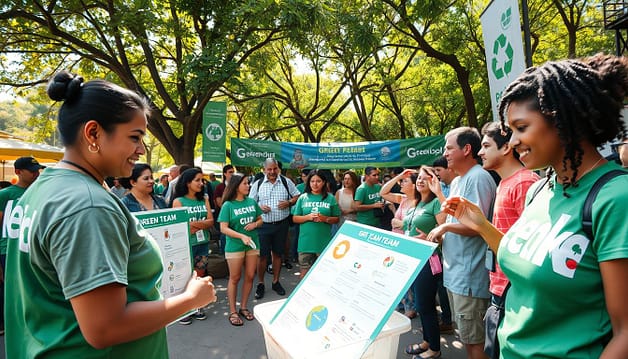
Using events as teaching moments is powerful. When fans learn about bike valets or cup deposits from peers, they remember. It’s not about being lectured, but learning from someone who cares. You hope they’ll keep these practices going long after the event.
Look at groups like Green Runners. They show the power of shared knowledge and action. Your event can spark that same energy. Your Green Team is the spark.
So, what does a good volunteer corps look like? It’s about empowering, not policing. The table below shows how different roles can change behavior and get fans on board.
| Volunteer Role | Primary Station | Key Educational Message | Measurable Impact |
|---|---|---|---|
| Waste Warrior | Composting/Recycling Stations | “Napkins & food scraps here, plastic there. Let’s keep it clean!” | Reduces contamination by 40-60% through direct guidance. |
| Transit Ambassador | Event Entrance/Info Booth | “Skip the traffic—your ticket includes the train pass. Here’s the schedule.” | Increases use of public transit by 25% versus baseline. |
| Hydration Hero | Water Refill Stations | “Refill for free! Save money and a bottle from the landfill.” | Documents # of refills, directly showing plastic bottle reduction. |
| Community Connector | Roaming/Fan Engagement Zones | “Thanks for biking in! Check out our local vendor map.” | Builds positive community sentiment, measured via post-event surveys. |
Training is key. Give your volunteers simple scripts and the reasons behind each policy. When they believe in the mission, their excitement is contagious. They’re not just directing traffic; they’re building a culture.
This turns passive attendees into active participants in the event’s success. Suddenly, sustainable event operations are something everyone does together. This shift is key. It’s about building a community with a green purpose, and it’s more fun than looking at spreadsheets.
The main point? Technology helps, but people persuade. Your volunteer corps connects your green goals with the fan experience. Invest in them, celebrate them. They’re the secret to making sustainability last long after the event ends.
Post-Event Impact Report Template
Think of your post-event report as the season finale recap for your sustainability efforts. The crowd has dispersed, the lights are off, but the story isn’t over. This document is where the plotlines of waste, water, and carbon all converge into a narrative of genuine impact—or a cautionary tale of green intentions gone astray.
In a landscape cluttered with eco-claims, this report is your authenticity stamp. It’s the difference between saying you hosted a “green” event and proving it. The Council for Responsible Sport (CRS) certification framework gets this right. It turns vague promises into auditable metrics.
So, what’s in the winning playbook? Don’t just talk about being sustainable. Show the receipts.
Your report needs hard numbers that fans and sponsors can digest. It’s your accountability mechanism and, let’s be honest, your bragging rights. Transparency isn’t just nice-to-have; it’s your defense against cynicism.
A stellar template moves beyond fluff. It focuses on key performance indicators that matter. Calculate your total carbon footprint, including the travel emissions from those fans who drove hundreds of miles. Track your waste diversion rate like a coach tracks a win-loss record. How many gallons of water did your refill stations save?
What percentage of your menu came from local farms? These are the stats that build a legacy.
Publish this data openly. Celebrate your wins loudly. Did you achieve a landmark diversion rate? Was your plant-forward menu a hit? Shout it from the digital rooftops. But here’s the sage advice: honestly state your areas for improvement. Maybe the composting bins were confusing, or the EV charging stations were underused. Admitting this doesn’t show failure. It shows integrity and a plan for next season.
This report isn’t a private memo for the boardroom. It’s for your community, your fans, and your partners. It demonstrates tangible progress year-over-year. It transforms your event from a weekend spectacle into a trusted community institution. In the game of public trust, this is your sustainability MVP.
To make it actionable, here’s a template table. Fill it with your data to tell a compelling story.
| Impact Category | Key Metric | Your Event’s Data | Industry Benchmark (Sample) | Notes & Improvement Goals |
|---|---|---|---|---|
| Waste Management | Total Waste Generated (lbs) / Diversion Rate (%) | e.g., 4,200 lbs / 85% diverted | 70-90% for certified zero-waste events | Contamination in recycling stream was 15%. Goal: reduce to 10% with clearer bin signage. |
| Carbon Emissions | Total CO2e (metric tons) / % Offset | e.g., 55 tons / 100% offset | Full offset is becoming standard for major events. | Travel was 80% of footprint. Goal: increase transit pass uptake by 20% next year. |
| Water & Concessions | Water Saved via Refill (gallons) / Local Food (%) | e.g., 3,000 gallons / 65% local | Top-tier sustainable concessions source 50%+ locally. | Refill stations were popular. Goal: partner with a local brewery for a signature drink. |
| Community & Engagement | Volunteer Hours Logged / Fan Education Interactions | e.g., 450 hours / 2,000 interactions | Engagement is qualitative but critical for long-term buy-in. | Volunteer corps was highly effective. Goal: create a “Green Fan” loyalty program. |
| Vendor Compliance | % of Vendors Meeting Sustainability Clauses | e.g., 95% compliance | 100% is the target for full supply chain alignment. | Two food vendors used non-compostable service ware. Goal: pre-event toolkit for all vendors. |
This template turns abstract goals into a clear scorecard. It’s the final, critical step in running a tournament that doesn’t just entertain a crowd, but genuinely respects the community and planet it operates within. Now, go write your season recap.
Sponsor Activation with Purpose
The old way of sponsorship was simple: just put a logo on a banner and get paid. But that’s outdated. Today, fans can spot a fake partnership from a mile away. Your partners need to be part of your story, not just a backdrop.
Purpose-driven activation is your key to success. Think of a local credit union funding your bike valet service. Or an outdoor brand like Patagonia running a gear repair clinic at the event. A tech company could even power your green ticketing system. These partnerships do more than just fund; they amplify your message.
But you must be careful who you partner with. Working with a sponsor who pollutes is a big no-no. The Dacia/UTMB controversy is a perfect example. Your reputation is everything.
Look for sponsors who want to make a difference, not just promote themselves. A sponsor funding a “Trees not Tees” initiative tells a compelling story. A beverage company supporting a reusable cup program is a smart investment.
When business and values align, you create something special. It’s a story that connects with your audience on a deeper level. Your event becomes a powerful statement. And that’s a partnership worth having.