

We build sports venues for unforgettable moments. But we often ignore climate change. It’s time to change that.
Climate change is real and serious. Remember TomorrowWorld’s mud and Pukkelpop’s stage collapse? These were preventable disasters.
Many people worry about climate change. Yet, our sports facilities are outdated. Disasters don’t wait for a schedule.
Protecting our sports venues is more than just keeping them dry. It’s about keeping our communities together. When venues are damaged, we fail.
Let’s focus on being proactive. We need to make every field and court ready for floods. It’s time to update our approach for today’s world.
Local Hazard Mapping & Risk Prioritization
Flooding is like the jump scare in a horror movie. But wildfire smoke is the slow creep that follows you home. We’re drawn to the big, dramatic events like floods and storms. Yet, climate change brings us more subtle dangers.
Your community sports complex might be safe from floods. But it could be downwind from a wildfire, making it a place for asthma clinics instead of soccer games.
In Calgary, people fear flooding the most. But when asked about personal impact, they talk more about heat and smoke. This shows we fear the big events but suffer from the slow, constant dangers.
Traditional hazard maps focus on big disasters like floods and earthquakes. But we need to look at how local conditions affect our areas. We should know where water pools after rain and how heat builds up in parking lots.
This is about understanding how people live in their environment. We need to map where vulnerable groups are, like seniors and kids with asthma. Your wildfire smoke policy should be based on these facts, not just how close you are to forests.
To prioritize risks, we need to be honest. List all possible threats and then sort them by how likely they are and how bad they could be. A 100-year flood might be rare, but wildfire smoke is a yearly problem in the West.
| Hazard Type | Perceived Risk (Public) | Actual Impact (Data) | Priority Level | Key Mitigation Strategy |
|---|---|---|---|---|
| River Flooding | High – “Catastrophic” | Low (if outside floodplain) | Medium | Elevate critical equipment |
| Wildfire Smoke | Medium – “Seasonal nuisance” | High (frequent cancellations, health impacts) | High | Indoor air filtration & activity guidelines |
| Extreme Heat | Low – “Just summer” | High (heat illness, surface burns) | High | Shade structures, cooling centers, hydration stations |
| High Winds | Medium – “Storm damage” | Medium (structural, tree damage) | Medium | Secure storage, tree maintenance |
| Power Outages | Low – “Inconvenience” | High (loss of refrigeration, lighting, communications) | High | Backup power for critical loads |
There’s a big gap between what we fear and what really affects us. Wildfire smoke doesn’t destroy buildings but harms our health. Yet, most places don’t have a wildfire smoke policy for outdoor activities.
To map hazards, start with environmental data and historical reports. Talk to people who’ve been affected by smoke and flooding. This will show you where you’re most vulnerable.
The goal isn’t to prepare for every disaster. It’s to find out which slow-moving crises will disrupt your season. Your map should highlight these gaps and guide you to make your place safer.
Flood-Ready Design: Grading, bioswales, permeable pavers
Sandbags are old news for flood control. Modern design works with water, not against it. Think of your sports facility as a system that absorbs and redirects water.
Proper grading is key to flood control. But many venues get it wrong. It’s not just about sloping land away from buildings. It’s about creating a system that manages water.
Bioswales are more than just ditches with plants. They slow down water, catch pollutants, and let water soak into the ground. They’re heroes of sustainable drainage upgrades, turning problems into features that improve water quality.
Permeable pavers are a game-changer. They let water soak through, recharging groundwater. This reduces flooding and helps with water scarcity.
The shift to modern approaches is about more than tech. It’s about managing water wisely.
| Approach | Traditional Method | Modern Flood-Ready Design | Key Advantage |
|---|---|---|---|
| Surface Management | Impermeable asphalt/concrete | Permeable pavers & porous surfaces | Reduces runoff, recharges groundwater |
| Water Diversion | Sandbags & temporary barriers | Strategic grading & bioswales | Permanent, aesthetic, improves water quality |
| Storage Solution | Overwhelmed storm drains | Underground reservoirs & retention basins | Manages peak flows, prevents system overload |
| Integration Level | Separate systems | Integrated Sustainable Drainage (SuDS) | Holistic watershed management |
These systems turn liabilities into assets. That parking lot that used to flood? Now it’s part of your water solution. Those “drainage upgrades” enhance your facility’s look and performance.
Implementation needs creative thinking. Consider:
- Underground reservoirs for irrigation
- Green roofs for runoff reduction and cooling
- Elevated pathways for access during floods
- Ground protection mats for turf preservation
Real communities are already doing this. They’re finding that resilience doesn’t mean just building walls. It means creating smarter landscapes. Your facility should thrive, not just survive, the next storm.
When rain hits, these systems work quietly. They’re the MVPs, keeping the game going. That’s the real victory in climate-proofing our spaces.
Drainage Retrofits for Fields & Parking
Retrofitting drainage is like doing open-heart surgery on your venue while it’s running a marathon. The game must go on, even as you dig up its arteries. Most community sports sites weren’t built for today’s deluges. You’re working with a legacy landscape that drains like a cereal bowl.
Your mission is to make surgical improvements, not a complete tear-down. This is where engineering gets its hands dirty. The goal is to give your old infrastructure a stealthy, much-needed plumbing upgrade.
For grass fields, the secret weapon is often beneath the surface. A subsurface drainage system—a network of perforated pipes buried in a gravel bed—acts like a hidden lymphatic system. It whisks water away before the surface even knows it’s saturated. No more swampy pitches or canceled matches.
Parking lots demand a more visible approach. Here, retrofits focus on interception and detention:
- Channel drains cut across asphalt to catch runoff before it pools.
- Strategic regrading directs flow toward planted retention basins at the lot’s edges.
- Replacing old asphalt islands with permeable pavement creates mini-infiltration zones.
But here’s the non-negotiable truth: your flood mitigation venue strategy lives or dies by its access. The roads and paths are the circulatory system. If they fail, everything fails.
Remember TomorrowWorld in Georgia? A single remote access road, a dirt path really, met sustained rain. It turned to impassable mud. Shuttles and cars froze. Thousands of attendees were stranded overnight. It wasn’t just a logistical failure; it was a humanitarian one. Your retrofit plan must start with these arteries. Can people get in? More importantly, can they get out?
This work isn’t glamorous. It involves backhoes, budget meetings, and temporary disruption. But weigh that against the cost of a canceled season, a lawsuit, or a stranded community. Suddenly, the retrofit looks less like an expense and more like the smartest insurance policy you’ll ever buy. It’s the trench warfare that wins the long-term battle for your field’s usability.
Backup Power & Critical Loads Planning
Let’s talk about what happens when the power goes out during a smoke event. Your wildfire smoke policy has a key chapter on kilowatts. Without a plan, your facility’s IQ drops to zero.
This isn’t just about keeping the slushie machine running. It’s about critical loads planning. This means figuring out what’s essential and what’s not.
What’s essential? Emergency lighting and exit signs for safety. The PA system and radios for communication. And the HVAC system for a clean-air shelter. Refrigeration for medical supplies is also critical.

The hardware matters too. A diesel generator is reliable but loud and thirsty. A solar-plus-battery system is cleaner and quieter. Your choice depends on your budget and how green you want to be.
An untested generator is useless. It looks good but fails when it matters most. Do monthly “no-grid” drills to test it. This ensures your safety and continuity.
Critical vs. Non-Critical Loads: A Planning Table
| System/Equipment | Load Category | Priority Rationale | Notes for Planners |
|---|---|---|---|
| Emergency Egress Lighting | Critical | Prevents injury and panic during evacuation in smoke-darkened buildings. | Often on dedicated circuits; test battery backups regularly. |
| HVAC for Clean-Air Shelter | Critical | Maintains breathable air quality (AQI) for vulnerable populations. | Calculate startup & running watts; size generator accordingl |
| Refrigeration (Medical) | Critical | Preserves life-saving medications that require cool temperatures. | Consider a dedicated, smaller backup unit for pharmacy-grade fridges. |
| PA System & Emergency Radios | Critical | Enables clear instructions and coordination with first responders. | Ensure radios have secondary battery power; keep chargers on backup. |
| Concession Stand Cooking Equipment | Non-Critical | Not essential for immediate life safety during an event. | Can be manually disconnected at the panel to reserve generator capacity. |
| Scoreboard & Entertainment Systems | Non-Critical | No functional role in emergency response or shelter operations. | First items to shed from the backup power load. |
Energy resilience is your community space’s silent guardian. It turns your wildfire smoke policy into a real shield. Plan your loads, choose your power, and test it often. When the lights go out, yours need to stay on.
Wildfire Smoke: AQI Thresholds, Indoor Filtration (MERV/HEPA)
Wildfires are not just about the flames; it’s the smoke that’s the real danger. Smoke is a silent threat that can turn clean air toxic. Calgary’s report underestimated the risk of wildfires, rating it as “relatively low.”
This is like ignoring the infection while worrying about the bullet. The real danger is the fine particles in the smoke, not the fire itself.
Your defense starts with data, like the Air Quality Index. This isn’t just about feeling the air is hazy. You need clear AQI thresholds to decide when to move activities indoors.
Deciding when to cancel games is not just about inconvenience. It’s about protecting the health of your players’ lungs.
Think of it as upgrading the atmosphere’s drainage system. You need to filter out the poison from the air. Find a building to turn into a clean-air sanctuary.
For your HVAC system, use filters with a Minimum Efficiency Reporting Value (MERV) of 13 or higher. These filters can catch the fine particles that harm your heart.
For areas without HVAC, use portable High-Efficiency Particulate Air (HEPA) units. They’re essential for keeping the air clean indoors. Make sure you have the right Clean Air Delivery Rate (CADR) for your space.
Having N95 respirators for staff and volunteers is also important. They help protect everyone’s lungs when the air quality is bad.
| AQI Range (PM2.5) | Health Category | Recommended Sports Facility Action | Filtration Protocol |
|---|---|---|---|
| 0 – 50 | Good | All activities proceed normally. | Standard HVAC operation acceptable. |
| 51 – 100 | Moderate | Monitor sensitive individuals. Consider reducing intense outdoor exertion for at-risk groups. | Increase fresh air intake if outside air is better. Check filter status. |
| 101 – 150 | Unhealthy for Sensitive Groups | Move youth and sensitive-population activities indoors. Cancel outdoor events for these groups. | Activate enhanced filtration (MERV 13+). Seal building envelopes. |
| 151 – 200 | Unhealthy | Cancel all outdoor activities and events. Limit outdoor work for staff. | Maximum filtration mode. Deploy portable HEPA units in designated clean-air spaces. |
| 201 – 300 | Very Unhealthy | Facility closure for outdoor areas. Indoor use only in filtered spaces with N95 masks recommended for transit. | All filtration systems at maximum. Consider creating positive pressure in clean rooms. |
| 301+ | Hazardous | Full facility closure recommendation. Emergency operations only. | Shelter-in-place protocols with highest grade filtration. |
Notice the shift from “consider” to “cancel” around AQI 150. This is the red line. It’s where science meets politics in park management.
Creating fire breaks around your site addresses the flame front. But it does nothing against smoke traveling hundreds of miles.
This investment in air drainage upgrades is unsexy. There’s no ribbon-cutting for a new MERV 13 filter. Yet, when the atmospheric soup rolls in and other venues shutter, being the community center with breathable air isn’t just responsible—it’s legendary. It transforms your facility from a victim of climate chaos into a fortress against it.
Ultimately, smoke preparedness flips the script. You’re not just protecting assets from water or wind. You’re safeguarding the very medium of life your visitors breathe. In the era of climate change, that’s not an extra feature. It’s the foundation of any credible community sports infrastructure.
Shelter-in-Place vs Closure Decision Tree
The moment of climatic truth for a flood mitigation venue arrives with a deluge of data points. It demands an immediate, life-altering decision. Do we hunker down or send everyone home? Relying on gut instinct during a crisis is like navigating a storm without a compass—you might get lucky, but you’ll probably get lost.
This is where a pre-baked, brutally simple decision tree becomes your organizational life raft. It transforms panic into procedure. Think of it as your emergency playbook, where every “if” has a corresponding “then.”
The triggers must be objective, measurable, and devoid of interpretation. For flooding, it’s not a “feeling” about the rain. It’s a specific rainfall rate (e.g., 2 inches per hour) or a river gauge hitting a pre-determined danger level. For wildfire smoke, the trigger is the Air Quality Index (AQI) crossing into hazardous territory. For extreme heat, it’s the wet-bulb temperature—a metric that combines heat and humidity to measure real physiological danger.
The logic is binary: IF [Condition X] is met AND the forecast shows worsening, THEN [Activate Protocol Y]. No committees. No debates.
Choosing to shelter-in-place means you have confirmed the building itself is the safest option. This requires prior work: the structure must be on verified high ground, sealed against smoke infiltration, and stocked with essentials. It’s a fortress, not just a building.
Choosing closure and evacuation is the opposite calculus. You’ve determined the risk inside outweighs the risk of leaving. This requires verified clear evacuation routes and a robust communication plan to direct traffic safely. Indecision—the gray area where people mill about confused—is the most vulnerable state of all.
Technology is your force multiplier here. Mass text alert systems can reach thousands in seconds. Social media provides real-time updates. And then there’s the cool stuff: digital signage and crowd-control AI. Imagine electronic boards at your venue that don’t just say “Exit” but dynamically change to show the safest, clearest path based on real-time sensor data. This is evacuation innovation in action.
But tech fails. Batteries die. Networks collapse. Your decision tree must have a low-tech branch: air horns for alerts, pre-printed route maps, and volunteers with megaphones. Redundancy isn’t paranoid; it’s prudent.
| Hazard Type | Trigger Metric | Shelter-in-Place Criteria | Closure/Evacuation Criteria | Primary Communication |
|---|---|---|---|---|
| Flash Flood | Rainfall > 2″/hr OR River Gauge > [X] ft | Building elevation > 100-yr flood plain; Basement sealed | Access roads predicted to flood within 30 min; Water rising toward structure | Dynamic digital signage + SMS blast |
| Wildfire Smoke | AQI > 200 (Purple/ “Very Unhealthy”) | Building HVAC with MERV 13+ filtration; Windows/doors sealed | AQI > 300 (Maroon/ “Hazardous”) OR fire within 5 miles | Social media push + indoor PA announcements |
| Extreme Heat | Wet-Bulb Temp > 88°F | Designated cool zone with AC & water; All activities moved indoors | Wet-Bulb Temp > 91°F OR power outage affecting cooling | Staff/volunteer direct instruction + flag system |
| Severe Storm (Tornado/Wind) | NWS Tornado Warning OR Wind > 75 mph | Designated interior shelter rooms (no windows); Below ground if possible | Storm has passed but structure integrity is compromised | Mass text alert + air horn signals |
Making the tough call early, based on clear metrics, is the hallmark of leadership. It won’t make you popular. Canceling the big game or clearing the pools as a storm approaches will draw grumbles. But safety isn’t a popularity contest.
The ultimate goal for any community sports hub is to be a place of joy, not jeopardy. A solid decision tree ensures that when nature throws its worst, your response is your best—calm, coordinated, and decisive. Your flood mitigation venue becomes a true sanctuary, because you know exactly when to lock the doors and when to point people toward home.
Asset Protection: Materials, storage, insurance
Protecting community sports infrastructure is like being a museum curator and an actuary at the same time. The building’s structure is important, but the real value lies in what’s inside. Think about the championship trophies, historical archives, and the sound system that has lasted for decades.
When it comes to the building’s structure, using Class A fire-rated materials is essential. Aluminum bleachers are a safer choice than wood, as they won’t catch fire easily. You can also use treated wood or fire-resistant polymers for protection without losing the building’s look.
Storage is another key area to focus on. Don’t keep important equipment in a flood-prone area. Move critical items to higher floors. Or, consider digitizing important documents and storing the originals in safer places.
Insurance is also vital. It might seem complex, but it’s important to understand what’s covered. Many policies exclude damage from gradual climate events or specific flood zones. This means smoke damage from a wildfire might not be covered.
A good wildfire smoke policy goes beyond just the building. It should cover contents, business interruption, and temporary relocation costs. You might need a separate policy for flood protection. It’s like preparing for different weather conditions.
Asset protection is about making smart choices today for a better tomorrow. It’s the difference between rebuilding and starting over. When reviewing your wildfire smoke policy, ask tough questions. What’s excluded? How are “acts of God” defined in today’s climate?
Storage decisions are just as important. That trophy case by the entrance is lovely but not safe. Use fire-resistant display cases or make replicas for public viewing while keeping originals safe.
Asset protection is about being practical and wise with your finances. Choose materials that can handle the new climate. Store valuables carefully. And insure everything as if the worst could happen, because it often does. A solid wildfire smoke policy is your guide to recovery.
Continuity of Operations Plan (COOP)
When floods hit, your survival plan is more important than sandbags. A Continuity of Operations Plan, or COOP, is your guide. It’s how you keep going when nature disrupts everything.
Think of it like this: all those drainage upgrades are great for fields. But what’s your plan when your office turns into a lake? A COOP answers the big question: “How do we keep going as a community hub when our main place is out of order?”
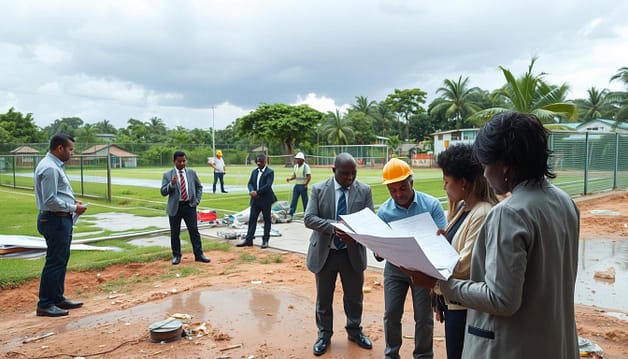
This isn’t about fixing things after a disaster. It’s about keeping your mission alive during the chaos. Can you move youth soccer to the middle school gym? Can admin staff do payroll from a library? A COOP makes these moves possible, not panic-driven.
Your COOP must have a few key parts. First, figure out your Essential Functions. What are the three to five things you absolutely must do? It might be:
- Providing safe youth programming.
- Maintaining communication with members and families.
- Processing payroll for staff.
- Managing critical vendor relationships.
Next, find an Alternate Site. Where will you do these things if your main place is flooded or damaged? This could be a backup location, a partner’s space, or even a virtual command center.
Lastly, set up a clear Chain of Command. Who gets to start the plan? Who decides to move operations? Make this clear. In a crisis, arguing over who’s in charge is a luxury you can’t afford.
The details of a COOP are clearer when broken down. The table below shows the main parts that turn a vague idea into a real plan.
| COOP Component | What It Addresses | Key Questions to Answer |
|---|---|---|
| Essential Functions | The heart of your operation. What you cannot stop. | What services are irreplaceable to our community? What generates revenue we need to survive? What legal obligations must we meet? |
| Delegation of Authority | Decision-making power during disruption. | Who can activate the COOP? If the director is unavailable, who is next in line? How are decisions communicated? |
| Orders of Succession | Leadership continuity. | For each critical role, who are the two designated backups? Have they been trained and given access to necessary systems? |
| Alternate Facilities | A physical or virtual place to work. | Do we have a memorandum of understanding with a partner for space? Is our tech stack cloud-based and accessible from anywhere? |
| Vital Records & Data | Access to critical information. | Are member databases, financial records, and insurance docs backed up off-site and in the cloud? Can key staff access them remotely? |
A COOP is a living document. It’s not something you dust off and forget. It’s a tool you use and update. Run drills with your team. Ask “what if” questions. Update the plan after every event.
This ongoing process is like a drainage upgrade for your organization’s mindset. It turns uncertainty into action. Without a tested COOP, you’re just hoping. And hoping is not a strategy.
Multi-Agency Coordination (Parks, OEM, Schools)
Think your flood mitigation venue works alone? It’s actually a key part of a larger system. When your parking lot floods, it affects more than just you. It changes traffic for the Office of Emergency Management.
Opening as a shelter means you need help from Parks for generators and Schools for supplies. It’s not just about cleaning up water. It’s about working together to keep everyone safe.
Coordination is not just about following rules. It’s about survival. Build relationships before emergencies happen. Know who to call and what to do.
It’s not about making friends. It’s about forming strong teams that work together. This is how you stay strong when things get tough.
Remember that quote from Calgary about snow plowing? It’s about how important it is to keep things moving. Clear roads mean buses run. Buses help people get where they need to go.
Let’s look at the main players:
- Parks Department: They manage land and equipment. A flooded field next door can affect your drainage.
- Office of Emergency Management (OEM): They manage disaster efforts. Your venue is part of their plan.
- School District: Schools are shelters too. Working together means sharing resources and plans.
Do joint exercises to practice working together. Make scenarios that test how well you communicate. This helps you improve before a real disaster hits.
In a disaster, knowing who to call is key. Being isolated doesn’t help. True strength comes from working together. Your flood mitigation venue becomes a vital part of the community’s safety net.
Funding Sources for Resilience Projects
Resilience projects are a smart investment. For every dollar spent on flood, fire, or smoke protection, communities save six dollars later. That’s a 600% return, beating any stock market investment.
This shifts the focus from costs to strategic investments. It’s about the most strategic investment a community can make in its own survival and fiscal health. Show your project as an investment, not just a cost.
So, where does the money come from? There are many sources now. FEMA grants, state funds, and municipal green bonds are key. They help communities fund their own safety projects.
Companies also play a role. They want to look good on their Environmental, Social, and Governance (ESG) reports. A strong wildfire smoke policy and clean-air projects are great for their image. Your project’s value is in its social impact.
Creative financing is the real game-changer. Look into public-private partnerships. A local utility might fund solar panels for your sports complex. Or, a community grant program could help with backup power or air systems.
The key is to think like a fund manager, not a grant applicant. Your product is community safety. The return is long-term savings. And the demand for this is only growing.
Training & Drills for Staff/Volunteers
The most critical drainage upgrades for any organization aren’t for water; they’re for human fear and uncertainty. A plan is a static document. Your people are the dynamic system that must execute it under duress. Training is the process of installing that system, and drills are the pressure tests.
Think of it like this. Your Continuity of Operations Plan (COOP) is the script. Without rehearsals, the first real performance—amidst howling wind or choking smoke—will be a shambolic, panicked improv. We need to build muscle memory, not just check a compliance box.
Start with the conference room. Tabletop exercises are cheap, low-stress, and incredibly revealing. Gather your team. Present a scenario: “A flash flood warning is issued, the parking lot is already pooling, and a youth soccer tournament starts in 90 minutes.” Walk through the decision tree. Who calls whom? When do you pull the plug? This is where you find the gaps in your beautiful plan.
Then, get sweaty. Schedule full-scale drills that simulate real conditions. Practice deploying those portable flood barriers you invested in. Time your team on setting up the indoor HEPA filtration system. Run an evacuation drill from the farthest field on a (normal) Saturday. Make it engaging—turn it into a timed challenge with a debrief pizza afterward. Include your volunteers. They are often the first eyes and ears on the ground.
Not all drills are created equal. The scale and focus should match your risk profile and resources. Here’s a breakdown:
| Drill Type | Scale & Resources | Primary Focus | Ideal Frequency |
|---|---|---|---|
| Tabletop Exercise | Low. Conference room, printed plans. | Communication flow, decision-making, identifying plan weaknesses. | Quarterly or semi-annually. |
| Functional Drill | Medium. Specific equipment (e.g., generators, filters). | Technical proficiency with key systems and backup protocols. | Bi-annually, before peak hazard season. |
| Full-Scale Evacuation | High. Involves all staff/volunteers, may include public. | Coordinated movement, crowd management, real-time adaptability. | Annually. |
| Shelter-in-Place Drill | Medium. Focus on interior spaces and air quality. | Sealing buildings, activating air filtration, managing occupants. | Annually, before wildfire season. |
The magic—and the brutal honesty—happens in the debrief. This isn’t a time for pats on the back. It’s a forensic audit. What command broke down? Which radio channel was silent? Did anyone actually know where the master water shut-off valve was? Ruthless critique is the only path to improvement.
This cycle—train, drill, debrief, improve—is the heartbeat of a resilient organization. It channels chaotic energy into coordinated action. It transforms your staff and volunteers into a competent response network. That human system, well-maintained through practice, is the ultimate infrastructure upgrade. It’s the drainage upgrades that ensures panic flows away, leaving clear-headed action in its place.
Post-Event Recovery & Debrief Checklist
The real work starts when the sirens stop. The final whistle on disaster response begins a detailed analysis. It’s not just about fixing things. It’s about learning from the tough questions to build resilience.
Did our flood and wildfire plans actually work? Where did the water or fire win? Did our smoke protocols protect the most vulnerable?
The Calgary climate report shows we must adapt fairly. No one should be left behind. Did we protect the elderly and low-income families?
Your debrief checklist needs honesty. Record every failure and success. Use these lessons to improve your next plan.
Update hazard maps with real data. Revise shelter-in-place plans. Train staff on what you learned.
This process turns trauma into growth. The aim is not just to rebuild. Smart communities grow stronger from each lesson. They build protection for all, not just some.
The climate game never stops. Your preparation must always grow, adapting to every storm and ember. Let recovery be your strongest teacher.