
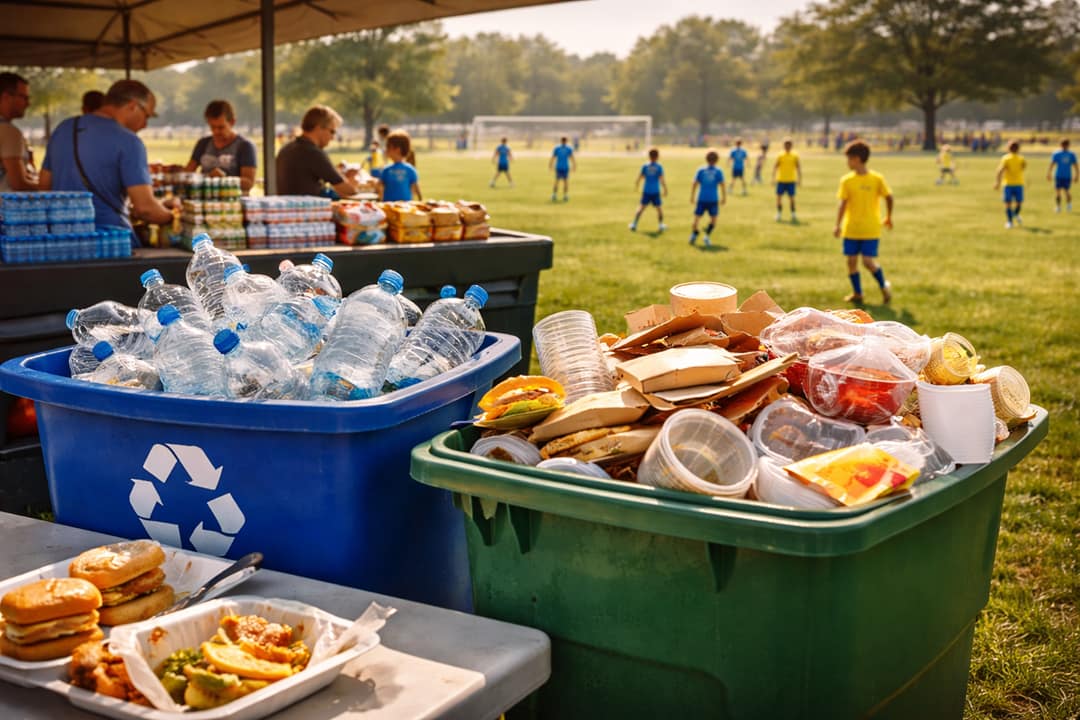
Weekend youth tournaments are often celebrated as vibrant community gatherings. Families travel across regions, fields fill with spectators, and local economies benefit from the influx of teams and supporters. Yet behind the excitement lies a rarely discussed consequence: the environmental footprint of youth sports events.
From disposable water bottles and concession packaging to single-use food containers and plastic gear wraps, youth tournaments generate significant volumes of waste in just a few days. Because many events occur in parks or temporary sports complexes, recycling and waste diversion systems are often limited or inconsistent.
The result is a quiet but persistent sustainability challenge. Youth athletics are designed to promote health and community engagement, but without thoughtful event management, tournaments can produce large quantities of avoidable plastic waste.
How Tournament Culture Drives Waste
Youth tournaments compress hundreds of games into a short timeframe. This dense scheduling structure is efficient for competition but creates intense surges in food consumption, packaging use, and disposable product demand.
Families often spend entire days at sports complexes, purchasing drinks, snacks, and quick meals between games. Vendors typically rely on convenient single-use materials such as plastic cups, bottled beverages, and foam containers to handle high transaction volumes.
These operational choices make logistical sense. However, they also create a temporary waste ecosystem that grows rapidly throughout a tournament weekend.
Common sources of tournament waste include:
- Disposable water and sports drink bottles
- Plastic food containers and wrappers
- Single-use utensils and napkins
- Equipment packaging and plastic wrap
Unlike permanent stadium venues, many youth facilities lack large-scale recycling infrastructure, meaning a substantial portion of this material ends up in landfill.
The Plastic Bottle Problem
Water bottles represent one of the most visible waste streams in youth sports events.
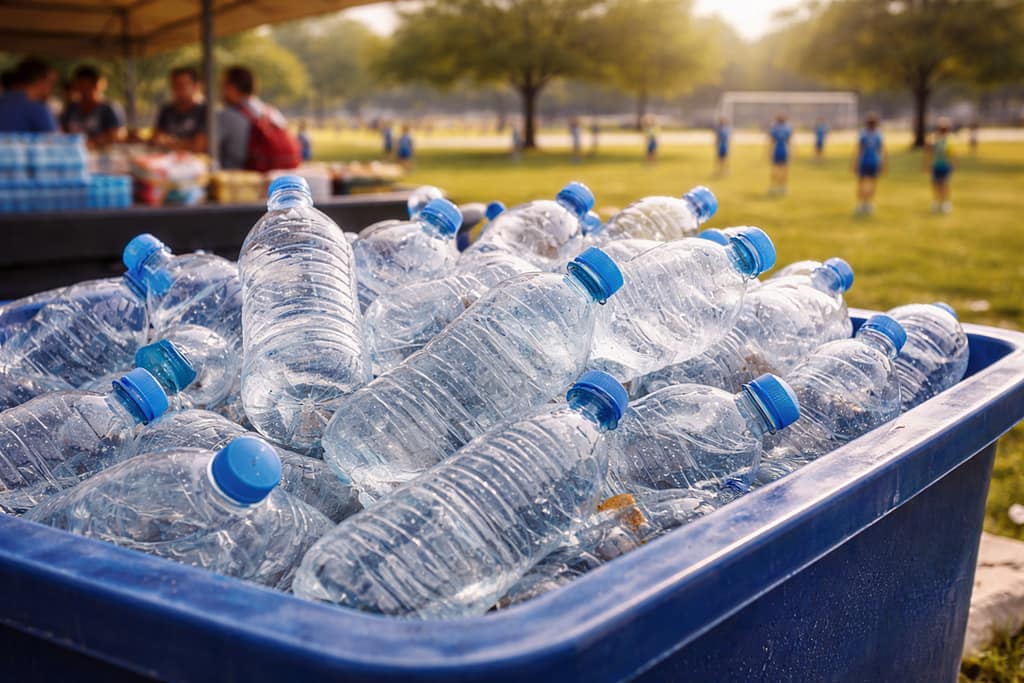
Athletes must remain hydrated, especially during summer tournaments. However, hydration frequently relies on individually packaged beverages rather than refillable systems.
A single youth tournament with 40 teams can easily generate thousands of plastic bottles in a single weekend. Multiply that by hundreds of tournaments across a region and the environmental impact becomes significant.
Public health organizations increasingly encourage refillable hydration systems to reduce plastic consumption. The environmental impacts of plastic waste, documented by the United Nations Environment Programme, highlight how single-use plastics contribute to pollution across ecosystems worldwide.
Transitioning toward refill stations and reusable bottles offers one of the simplest and most effective sustainability improvements tournaments can adopt.
Concessions And Packaging Waste
Food service is another major contributor to tournament waste. Concession stands rely heavily on packaging materials designed for convenience rather than durability.
Typical items include:
- Plastic food trays
- Foam containers
- Individually wrapped snacks
- Disposable condiment packets
While these materials simplify food distribution, they also increase landfill volumes dramatically over a short period of time.
Tournament organizers who introduce compostable packaging or bulk condiment stations often see immediate reductions in packaging waste without sacrificing operational efficiency.
| Waste Source | Typical Tournament Use | Sustainable Alternative |
|---|---|---|
| Plastic Water Bottles | Athlete hydration | Refill stations and reusable bottles |
| Foam Food Containers | Concession meals | Compostable containers |
| Plastic Utensils | Food service | Reusable or biodegradable utensils |
| Single-Use Condiment Packets | High-volume concessions | Bulk dispensers |
Small changes in packaging policy can significantly reduce environmental impact across an entire event.
Facility Design And Waste Infrastructure
Waste management challenges are not only operational—they are also infrastructural.
Many youth sports complexes were designed primarily for competition rather than sustainability. Recycling stations, compost bins, and waste sorting signage are often limited or absent.
Without clear disposal systems, spectators tend to place all waste into the nearest trash container.
Facility planners increasingly recognize that sustainable event management begins with infrastructure design. Modern sports complexes now integrate:
- Clearly labeled recycling stations
- Compost collection bins
- Centralized waste sorting areas
- Refill hydration stations
These improvements align with broader sustainability planning strategies discussed in our guide to multi-use community sports facilities, where infrastructure decisions influence environmental impact across the life of a facility.
Education And Behavior Change
Infrastructure alone cannot solve the waste challenge. Spectator behavior also plays a role in sustainability outcomes.
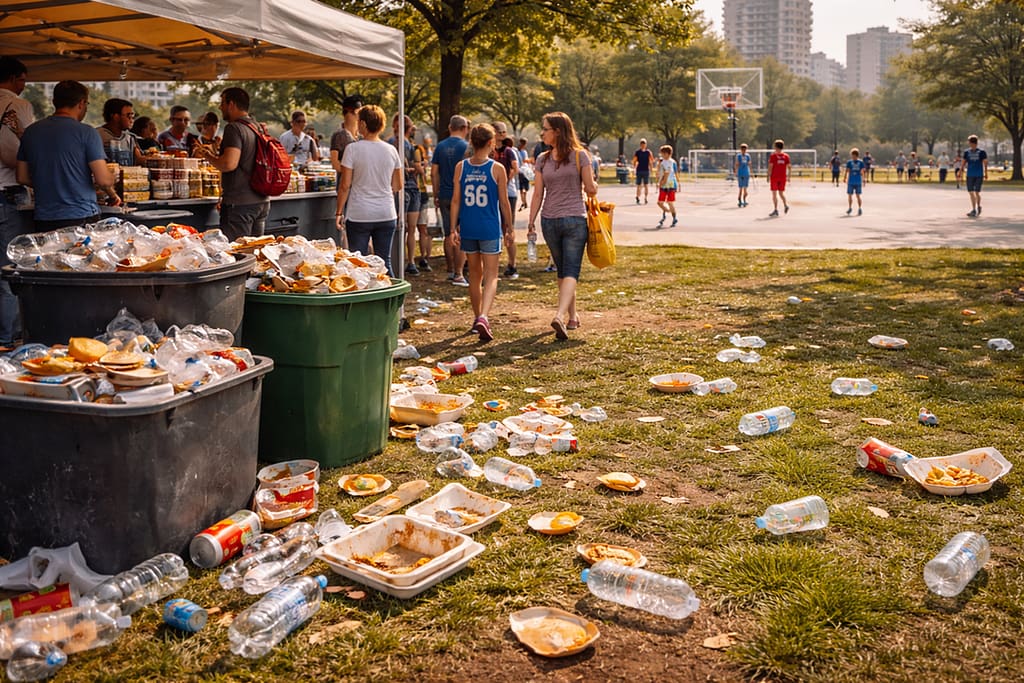
Tournament organizers who provide clear messaging often see higher recycling participation rates. Announcements, signage, and volunteer guidance help spectators understand how to dispose of materials correctly.
Some events even designate “green team” volunteers responsible for assisting with waste sorting and educating attendees about sustainable practices.
The goal is not to eliminate concessions or tournament traditions. Instead, it is to encourage a cultural shift toward more environmentally responsible events.
Rethinking Tournament Sustainability
Youth sports tournaments are powerful community experiences. They bring families together, create memorable moments for athletes, and support local businesses.
Yet these events also highlight how easily convenience-driven systems can generate unnecessary waste.
Sustainability in youth sports does not require dramatic changes. Simple strategies—hydration refill stations, improved recycling infrastructure, and thoughtful packaging choices—can significantly reduce environmental impact.
As communities continue investing in youth athletics, integrating sustainability into tournament planning ensures that sports events strengthen both community well-being and environmental responsibility.
The goal is not only to organize successful competitions but to create events that reflect the same values youth sports aim to promote: health, stewardship, and long-term community care.