
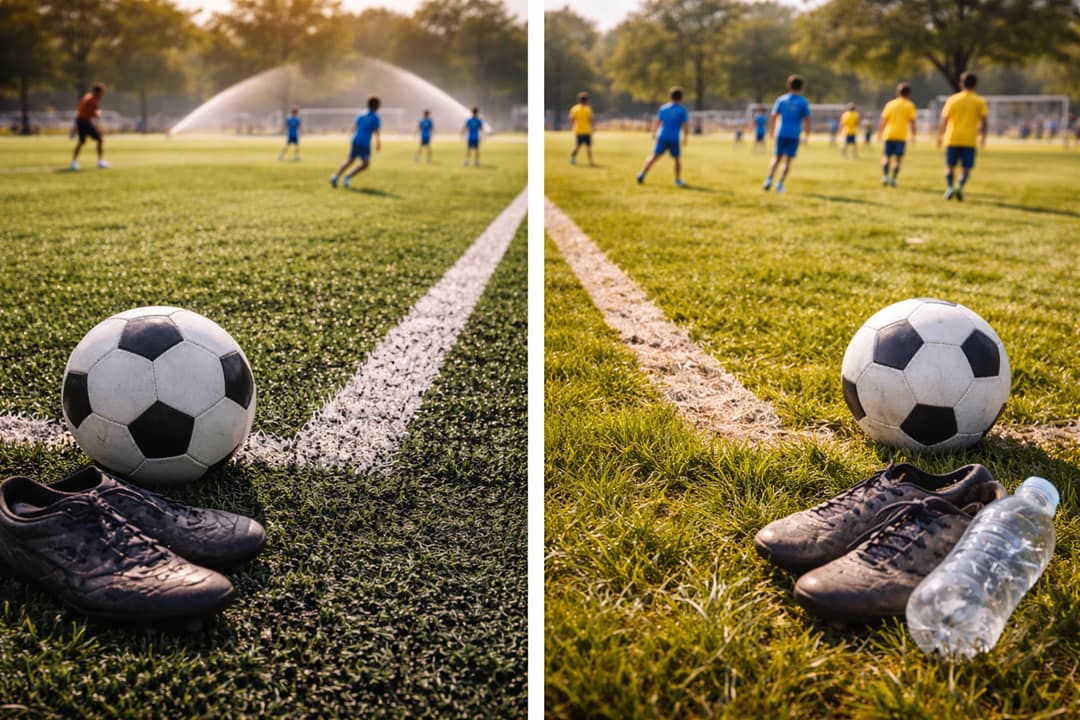
Across the United States, communities are investing heavily in youth sports facilities. As participation grows and field demand increases, cities, school districts, and private leagues face an important infrastructure decision: should youth sports fields use artificial turf or natural grass?
Both surfaces promise performance benefits, but they carry very different environmental implications. Artificial turf offers durability and consistent play conditions, while natural grass provides ecological advantages and cooling benefits. The debate has intensified in recent years as concerns about heat, sustainability, maintenance costs, and microplastic pollution continue to grow.
For planners, coaches, and community leaders, choosing between turf and grass is no longer just a maintenance question. It has become a broader conversation about environmental responsibility, athlete safety, and long-term facility design.
Why Artificial Turf Became Popular
Artificial turf fields first gained popularity because they solved several logistical problems faced by youth sports programs. Natural grass requires rest periods, irrigation, and ongoing care, making it difficult for heavily used community facilities to maintain playable surfaces.

Synthetic turf allows fields to host games and practices nearly year-round. A single artificial surface can support several times more annual playing hours than a natural field without deteriorating.
This capacity advantage has made turf attractive to municipalities trying to accommodate growing demand for youth leagues, tournaments, and school sports.
Typical reasons communities choose turf include:
- Increased field availability for practices and tournaments
- Reduced downtime due to rain or muddy conditions
- Consistent playing surface across seasons
However, while synthetic fields solve scheduling and durability challenges, they also introduce new environmental considerations.
Environmental Concerns Around Synthetic Turf
Artificial turf fields are built using synthetic fibers, rubber or plastic infill materials, and layered drainage systems. While these materials create a durable playing surface, they also raise questions about sustainability and long-term environmental impact.
One of the most widely discussed concerns is microplastic pollution. Over time, synthetic turf fibers and infill materials break down, releasing small plastic particles that can migrate into soil and nearby waterways.
Environmental researchers increasingly recognize sports turf systems as one source of microplastic dispersal in urban environments. The broader ecological risks of plastic pollution have been widely documented by organizations such as the United Nations Environment Programme’s research on plastic pollution.
Another issue involves disposal. Artificial turf fields typically last 8–10 years, after which the materials must be replaced. Recycling options remain limited, meaning many surfaces ultimately end up in landfills.
These factors have prompted some communities to reconsider whether synthetic turf aligns with long-term sustainability goals.
The Heat Problem On Synthetic Fields
Temperature is another key concern in the turf debate.
Synthetic turf absorbs and retains heat differently than natural grass. On hot summer days, turf surfaces can become significantly warmer than the surrounding air.
Studies measuring field temperatures have recorded artificial surfaces reaching 140°F or higher, particularly in direct sunlight. These elevated temperatures can affect athlete comfort and increase heat stress risk during practices and games.
Natural grass, by contrast, cools itself through evapotranspiration and typically remains much closer to ambient air temperature.
This temperature difference has become especially relevant as climate patterns change and summer heat waves become more frequent. Communities investing in youth sports infrastructure increasingly consider surface temperature management as part of facility planning.
Natural Grass And Its Ecological Benefits
Despite its maintenance requirements, natural grass offers several environmental advantages.
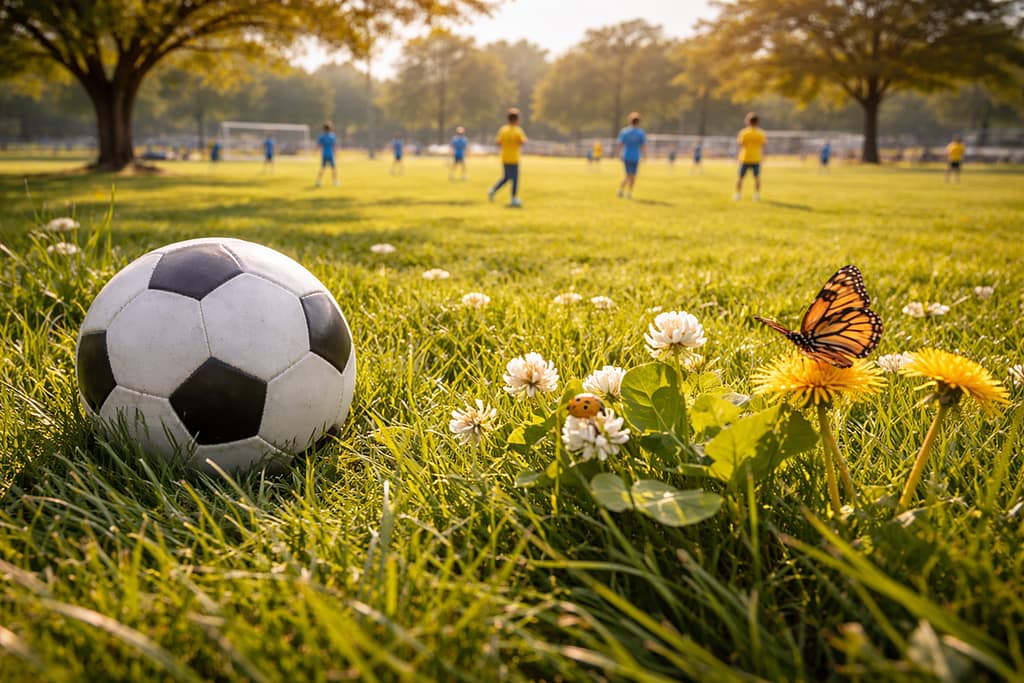
Grass fields provide living vegetation that contributes to urban ecological health. They absorb carbon dioxide, support soil stability, and allow rainwater to filter naturally into the ground.
Additional environmental benefits include:
- Natural cooling through plant evaporation
- Reduced plastic and synthetic material use
- Improved stormwater absorption
Grass fields can also support broader green space goals within parks and recreation systems.
However, these benefits come with trade-offs. Maintaining healthy natural grass requires water, fertilizer, and ongoing groundskeeping, all of which have their own environmental footprint.
The sustainability conversation therefore becomes a question of balancing maintenance inputs against long-term material impacts.
Comparing Turf And Grass Field Impacts
When evaluating field surfaces, decision-makers must consider both operational demands and environmental outcomes.
| Factor | Artificial Turf | Natural Grass |
|---|---|---|
| Annual Field Usage | Very high availability | Limited by recovery time |
| Surface Temperature | Often significantly hotter | Naturally cooler |
| Maintenance Needs | Lower daily upkeep | Regular mowing, irrigation, care |
| Environmental Impact | Synthetic materials, microplastics | Living ecosystem support |
| Lifespan | 8–10 years before replacement | Long-term with maintenance |
Neither surface provides a perfect solution. Instead, the most appropriate choice depends on climate, usage levels, and community priorities.
Hybrid And Emerging Solutions
Because both turf and grass have advantages, many communities are exploring hybrid approaches.
Some sports complexes combine surfaces, reserving artificial turf for high-use tournament fields while maintaining grass surfaces for local practices or lower-traffic areas.
Other facilities are investing in improved grass technologies, including reinforced root systems and improved drainage designs that allow fields to recover faster between games.
Field scheduling strategies can also reduce wear and extend grass durability. As discussed in our article on designing multi-use sports facilities, thoughtful planning allows communities to balance usage levels while protecting long-term field health.
Advances in turf materials may also improve sustainability outcomes in the future. Manufacturers are experimenting with alternative infill materials such as cork, coconut fiber, and other organic compounds to reduce plastic use.
The Future Of Youth Sports Field Design
The debate between artificial turf and natural grass reflects a broader shift in how communities think about sports infrastructure.
Youth sports facilities are no longer viewed solely as competition venues. They are increasingly considered part of a larger ecosystem that includes environmental sustainability, public health, and community recreation.
As participation grows and environmental awareness increases, the future of sports field design will likely include a mix of surfaces, smarter scheduling systems, and more sustainable material choices.
Ultimately, the most successful facilities will be those that balance playability, environmental responsibility, and long-term community benefit—ensuring that youth sports continue to thrive while protecting the spaces where games are played.