
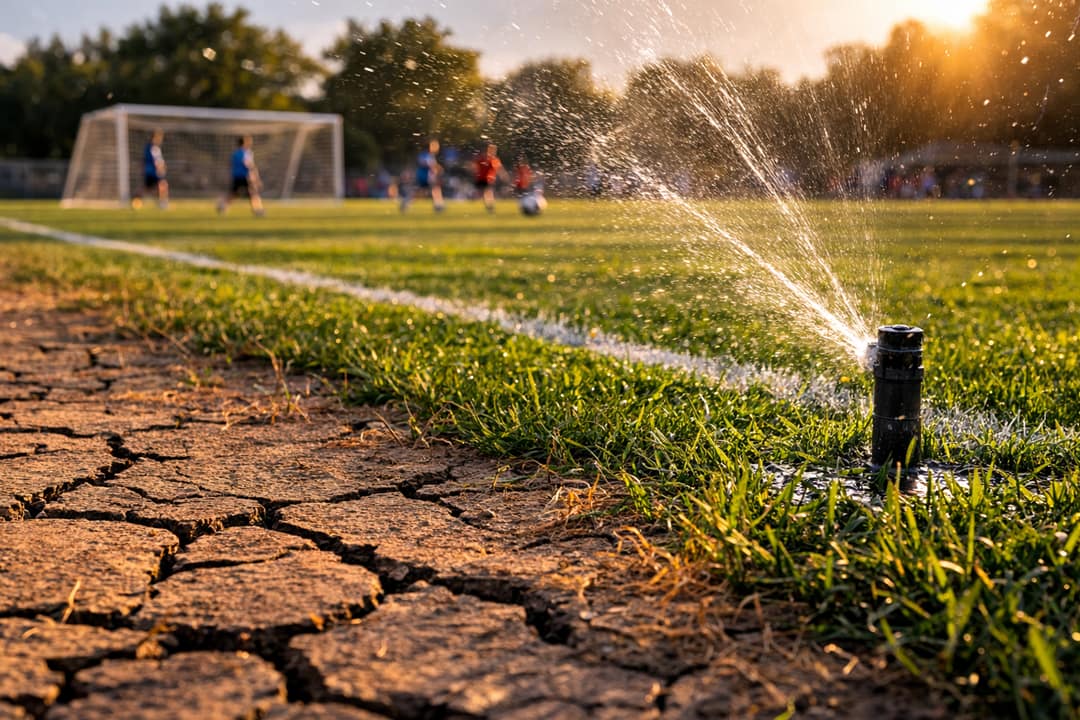
Across the United States, youth sports fields are facing an increasingly complex challenge: water availability. As drought conditions intensify in many regions and municipalities adopt stricter water conservation policies, maintaining natural grass sports fields has become more difficult and more expensive.
Community parks departments, school districts, and youth sports organizations are now forced to balance two competing priorities. On one side is the need for safe, playable fields that support thousands of young athletes each year. On the other is the growing pressure to reduce water consumption in a climate increasingly defined by scarcity.
The debate is no longer hypothetical. In many communities, water restrictions already influence how fields are built, maintained, and scheduled. The future of youth sports infrastructure may depend on how effectively communities manage irrigation, drought resilience, and sustainable field design.
Why Natural Grass Fields Require Significant Water
Natural grass fields remain the traditional surface for many community sports programs. Grass provides a cooler playing surface, natural cushioning, and ecological benefits such as stormwater absorption and soil stability.
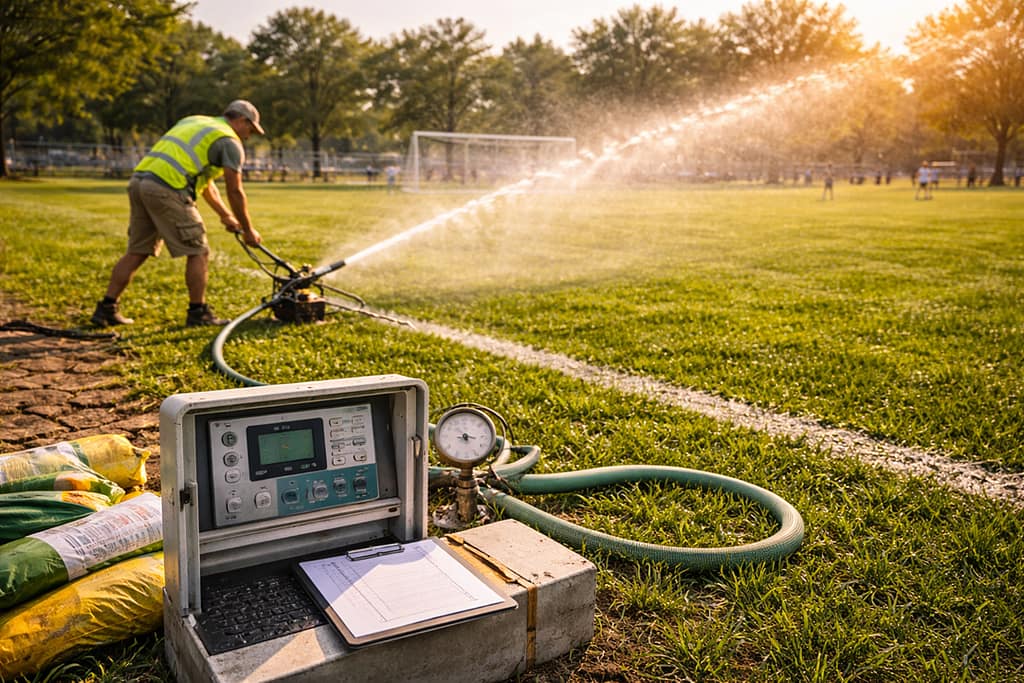
However, these benefits come with a substantial maintenance requirement: consistent irrigation.
A healthy grass sports field must withstand heavy foot traffic, frequent games, and variable weather conditions. To maintain durability and safety, grounds crews often irrigate fields multiple times per week, especially during summer tournament seasons.
Typical irrigation needs vary based on climate and soil conditions, but sports turf managers generally aim to maintain soil moisture levels that allow grass roots to remain resilient under repeated use.
Key irrigation demands often include:
- Routine watering to prevent turf stress
- Increased irrigation during heat waves
- Recovery watering after tournaments or heavy play
In water-rich regions, these practices are manageable. But in drought-prone areas, they raise serious questions about long-term sustainability.
Drought Conditions Are Reshaping Field Management
Across the American West and parts of the Southwest, prolonged drought has already changed how cities manage recreational landscapes. Some municipalities have reduced irrigation allocations for parks, while others have replaced traditional turf areas with drought-resistant landscaping.
These changes are beginning to affect youth sports infrastructure.
When water supplies tighten, athletic fields compete with other priorities such as drinking water, agriculture, and public landscaping. Maintaining large grass playing surfaces may no longer be considered the most efficient use of limited water resources.
According to the U.S. Environmental Protection Agency’s water efficiency guidance, outdoor irrigation accounts for nearly 30 percent of residential water use nationwide, and significantly more in arid regions.
For municipal planners, reducing irrigation demand has become a central strategy for managing long-term water supply challenges.
Smart Irrigation Technology
Rather than abandoning natural grass entirely, many sports facilities are investing in smarter irrigation systems designed to minimize water waste.
Modern irrigation technologies can monitor soil moisture, weather patterns, and evaporation rates to deliver water only when necessary. These systems allow field managers to maintain safe playing conditions while significantly reducing total water usage.
Examples of smart irrigation improvements include:
- Soil moisture sensors that trigger watering only when needed
- Weather-based irrigation controllers
- Zoned watering systems that target high-use areas
These technologies allow communities to maintain grass fields more efficiently, reducing unnecessary watering while protecting turf health.
In many cases, upgrading irrigation infrastructure can reduce water use by 20 to 40 percent compared with traditional systems.
The Rise Of Drought-Resistant Turfgrass
Another strategy gaining attention involves selecting grass varieties specifically designed to tolerate drought conditions.
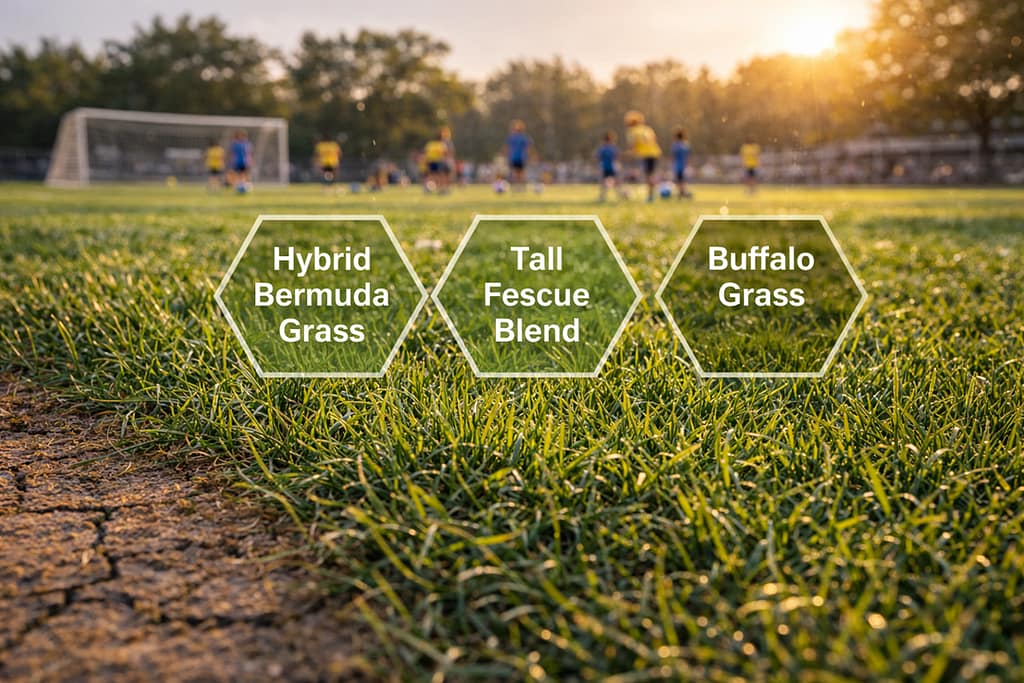
Turfgrass scientists have developed several hybrid species that require less irrigation while maintaining durability for sports use. These grasses often feature deeper root systems that access moisture stored further below the soil surface.
Some drought-tolerant turf options now used in sports fields include:
- Hybrid Bermuda grass
- Tall fescue blends
- Buffalo grass varieties
These grasses are increasingly common in regions where water conservation policies limit irrigation availability.
Choosing drought-resistant turf can reduce water requirements while preserving the natural playing surface many athletes prefer.
Comparing Field Surface Water Demands
The debate over water use has also influenced discussions about artificial turf.
Synthetic surfaces eliminate irrigation needs entirely, which can appear attractive to water-conscious communities. However, turf introduces other environmental concerns, including heat retention and material sustainability.
Evaluating the long-term tradeoffs requires examining multiple environmental factors.
| Field Surface | Irrigation Needs | Considerations |
|---|---|---|
| Natural Grass | Moderate to high depending on climate | Cooling effect, ecological benefits |
| Artificial Turf | None | Heat retention, plastic materials |
| Drought-Resistant Turfgrass | Lower irrigation demand | Maintains natural surface benefits |
Communities often weigh these factors carefully before deciding which surface best aligns with local climate and environmental priorities.
Scheduling And Field Usage Strategies
Water management is not only a matter of infrastructure. It is also influenced by how sports programs schedule practices and games.
Heavy field use during peak summer months places additional stress on grass surfaces, requiring more irrigation for recovery.
Some organizations are now adjusting scheduling practices to reduce this burden. Earlier start times, seasonal rotation between fields, and recovery periods can help grass fields maintain resilience without excessive watering.
These planning strategies are similar to the infrastructure decisions discussed in our article on multi-use community sports fields, where facility design and scheduling policies work together to extend field longevity.
Effective scheduling reduces turf damage, which in turn lowers irrigation needs.
The Future Of Water-Conscious Sports Facilities
As climate conditions continue to evolve, water availability will increasingly influence how youth sports facilities are built and maintained.
Communities that invest in efficient irrigation technology, drought-resistant turf varieties, and thoughtful scheduling policies will be better positioned to sustain both recreational access and environmental responsibility.
Rather than viewing the issue as a simple choice between grass and turf, forward-thinking planners are adopting integrated solutions that combine smart infrastructure with sustainable field management.
Youth sports fields are essential community assets. But in a changing climate, maintaining them responsibly will require balancing the needs of athletes, cities, and ecosystems.
Water may be one of the most valuable resources shaping the future of community sports—and the decisions made today will determine how those fields remain playable for the next generation.