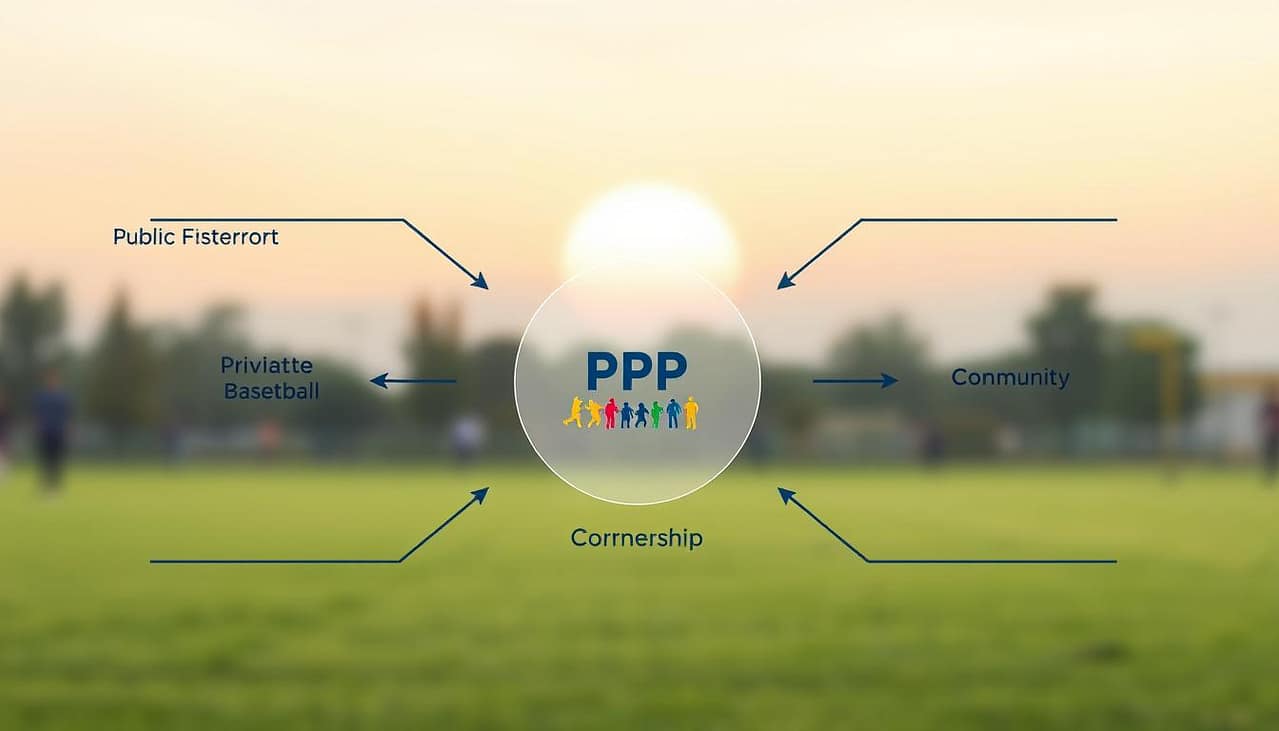
Imagine a way to make community dreams come true with shiny facilities and lively programs. This is what public private partnerships sports offer. It’s a new way to fund projects that’s better than old methods.
Old methods often use only city budgets or private money alone. But PPP sports combines public goals with private skills and money. It’s a smart mix.
This isn’t just about money. It’s about creating lasting value. Success needs clear plans and rules, not just guesses. This is how you build strong partnerships.
These partnerships are key for making policies that help communities. They bring top-notch facilities and big social changes where old ways fail. It’s like having a clear plan for change.
Think of it as a blueprint for making a big difference. It’s all about working together for the greater good. Learn more about how it works at this link.
Introduction: When to consider a PPP
Experts now agree that pure public money for sports stadiums often doesn’t pay off. This shows that old ways don’t work. Instead, a public-private partnership (PPP) is a smart, evidence-based choice for lasting growth.
Deciding on a PPP is a big step forward. It’s not just about saving money. It’s about making a real change in community infrastructure.
One key moment is when a city wants to use private money and skills. Public funds can be slow and unpredictable. A PPP makes projects happen much faster than usual ways.
Another sign is when a city wants to make a public asset more dynamic. Usually, cities just focus on keeping things running. A private partner brings new ideas and ways to use the space better.
Big projects come with big risks. A PPP helps by sharing these risks. This way, the public side doesn’t lose money, and the private side takes on clear tasks.
Also, think about a PPP when the community wants more. Today, people want places that are always buzzing with activity. A partnership can make this happen.
A PPP is not just a backup plan. It’s a smart way to make big changes. It moves away from just hoping for the best and towards agreements based on results.
| Consideration Factor | Traditional Public Project | Structured PPP Model |
|---|---|---|
| Primary Funding Source | Taxpayer bonds & appropriations | Blended public/private capital stack |
| Project Timeline | Often delayed by budget cycles | Accelerated via private sector efficiency |
| Risk Allocation | Public bears all cost overruns | Shared and contractually defined; true risk sharing |
| Operational Model | Public maintenance focus | Innovative, revenue-generating programming |
| Long-term Community Impact | Static facility, limited hours | Vibrant hub with expanded access and events |
Choosing a PPP shows ambition. It’s a promise to build something lasting, not just a building. This approach offers a clear path for investment, innovation, and risk sharing that fits today’s needs and dreams.
Models: lease-to-operate, design-build-maintain, concession, sponsorship + programming partner
There are four main ways for cities to partner on sports facilities. These range from simple programming deals to full partnerships for building and running facilities. The choice of model affects the risk, cost, and community benefits of the project. It’s the plan for turning public dreams into lasting, successful assets.
Lease-to-Operate
This model lets a private company run an existing public sports facility for a long time. They handle everything from day-to-day operations to marketing. They also take on the risk of making money, which motivates them to work well.
It’s important to know the difference between a lease vs license. A license just lets someone use a space. A lease gives them the right to run it and make changes. This is key for a real partnership where the private side can invest and add value.
Design-Build-Maintain
For new facilities, this model offers a complete solution. One company does everything: designing, building, and maintaining it for years. This means they are responsible for keeping the facility in good shape.
This approach often leads to better construction and design. The private side focuses on making a lasting, efficient facility. It makes the process from start to finish smoother and more efficient.
Concession
The concession model is the most involved partnership. A private company pays for, builds, runs, and keeps a facility for 25-30 years. They handle all the risks and make money through fees and sponsorships.
This deep partnership is guided by a detailed concession agreement. It outlines how the facility will perform, how money will be spent, and what happens at the end. For cities, it means big projects without upfront costs and less risk.
Sponsorship + Programming Partner
This model is less involved. A company pays for specific improvements or events in exchange for branding rights. They help make the facility more active and engaging.
It’s a great way to add energy and resources to a public space. The city keeps ownership and control. The partner boosts the facility’s role in the community through events and programs.
| Model | Key Description | Primary Risk Holder | Typical Term | Best For |
|---|---|---|---|---|
| Lease-to-Operate | Long-term lease of existing facility; operator runs day-to-day. | Private Partner (Revenue) | 10-20 years | Revitalizing underused public arenas or pools. |
| Design-Build-Maintain | Single entity designs, builds, and maintains a new asset. | Shared (Public: Design; Private: Maintenance) | 15-30 years | New construction projects seeking quality and lifecycle efficiency. |
| Concession | Private partner finances, builds, and operates under a concession agreement. | Private Partner (Full Demand & Revenue) | 25-35 years | Major new stadiums or district developments without public capital. |
| Sponsorship + Programming | Corporate funds specific programs/improvements for branding rights. | Public Entity | 5-10 years | Adding premier events or upgrading features in publicly-run facilities. |
Partner selection: RFP/RFQ steps, scoring matrix, due diligence red flags
Finding the right operations partner is a detailed, multi-step process. It’s key to finding a true partner, not just a contractor. This stage is critical, turning a public dream into a lasting partnership.
When governments look for a partner, they want clear, detailed plans. They start by choosing between a Request for Qualifications (RFQ) or a Request for Proposals (RFP). An RFQ helps narrow down firms with the right skills and money. An RFP asks bidders to share their detailed plans.
A clear selection process uses a scoring matrix. This tool helps judge proposals fairly, looking beyond just cost. Important criteria include:
- Technical Expertise & Experience: A proven track record with similar projects.
- Financial Offer & Stability: A solid financial plan and realistic income projections.
- Programming & Operational Vision: Creative plans for using the facility and keeping it running well.
- Community Benefit Plan: Plans to make the facility accessible to all and support local leagues.
This matrix makes sure the chosen partner is more than just cheap. They must be a complete operations partner.
Due diligence is the last step. It’s a must to check the shortlisted partners carefully. Look out for:
- Lack of direct, comparable project experience.
- Unclear financials or a refusal to share.
- Revenue forecasts that seem too good to be true.
- A history of not really working with the community.
- Legal terms that put too much risk on the public side.
A careful selection process is key. It uses clear RFx documents, a fair scoring matrix, and thorough checks. This way, a public-private partnership can succeed, bringing both great operation and public benefit.
Agreements: term length, capital obligations, maintenance standards, community access hours, fee caps, revenue share
The partnership agreement is like a constitution for the project. It covers everything from who pays upfront to how much users will pay. This detailed document is key—it helps avoid delays and makes sure everyone wins.
The negotiation focuses on several key areas:
- Term Length: It finds a balance between the private partner’s need for profit and the public’s need for flexibility. Agreements usually last 20 to 30 years, ensuring stability.
- Capital Obligations: It outlines the initial investment, repair funds, and who pays for what. This ensures everyone knows their financial responsibilities.
- Maintenance Standards: It sets clear goals for keeping the facility in good shape. This makes upkeep measurable and enforceable.
- Community Access Hours: It makes sure locals and non-profits get affordable access. This ensures the facility benefits the community first.
- Fee Caps: It prevents user fees from getting too high. This keeps the facility accessible, no matter the market.
- Revenue Share: It explains how to split any extra money made. This motivates both sides to work efficiently and profitably.

Each part of the agreement needs careful thought. For example, capital obligations must cover the initial cost and future repairs. Maintenance standards should be clear, like how often to resurface the court.
The revenue share model is key to a good partnership. It lets the public benefit from success while encouraging the private partner to use the facility well.
Elements like naming rights add a lot of value. They can bring in a lot of money upfront or over time. Negotiating these rights carefully is important to protect the community’s image.
In the end, a well-made agreement turns dreams into reality. It manages risks, sets clear goals, and makes sure the facility grows and benefits the community for years to come. The hard work here prevents problems later and creates a valuable community resource.
Equity guardrails: scholarships, priority use for local leagues, gender equity, disability access
To make a facility a community treasure, equity must be built into the PPP’s core. These are not just extras. They are key equity guardrails that make the project socially sustainable and respected from the start.
A Creator’s dream for a sports venue needs to reach everyone. The guardrails keep the focus on serving the community, not just making money. They ensure the facility benefits all.
Money should never stop talent from shining. A strong PPP includes funds for scholarships or low-cost memberships. This opens doors for those who can’t afford it.
These programs are set in stone, with a minimum amount of money each year. They bring diversity to the fields and courts. It’s a way to invest in the community’s future, not just the building.
Legally Binding Priority for Local Leagues
The heart of a community facility is its local teams. A key equity guardrail is a rule that gives priority use to municipal leagues. Their schedules are safe from private events or high-profit rentals.
This rule is non-negotiable. It makes sure the facility stays true to its public purpose. Local kids and amateur athletes always get first priority.
Active Promotion of Gender Equity
True inclusion means taking action. Gender equity clauses do more than offer co-ed programs. They demand equal access, coaching, and promotion for women’s and girls’ sports.
The facility’s design must also show this commitment. There must be equal locker rooms, quality, and location. The goal is to actively fight historical imbalances.
Universal Design for Full Disability Access
Following the ADA is just the beginning. The Creator standard goes further with universal design for disability access. This means features that are both beautiful and functional for everyone.
Think of wheelchair-accessible benches, spaces for those with sensory issues, and storage for adaptive equipment. The facility should welcome athletes and spectators of all abilities. This is what inclusivity looks like in action.
With these equity guardrails in place, the project’s value grows. It builds trust and ensures it lasts. The facility becomes a true center for everyone, showing the community it serves.
As one project lead said, “We’re not building a sports center; we’re building a community engine. The guardrails ensure it powers everyone.” This careful approach to accessibility and inclusion makes a big difference. It turns a PPP into something truly transformative.
Financial model: capital stack, O&M costs, revenue projections, sensitivity analysis
A financial model is key to getting investment and success. It turns a dream into a solid plan. It also avoids the mistakes of old stadium funding methods by using real data.
The model starts with the capital stack. This shows how much money comes from each source. A clear stack builds trust and shares risk fairly.
- Public Funds: These cover land, infrastructure, or the basic structure, keeping costs low.
- Private Equity: This is the partner’s investment, ensuring efficiency and commitment.
- Debt Financing: Loans or bonds that add scale, paid back from project earnings.
- Grants & Incentives: Money from governments or foundations for community benefits.
Next, the model carefully plans O&M costs. It looks ahead for decades, not just one year.
It includes regular costs like utilities and staff. It also plans for repairs and updates. Insurance, taxes, and management fees are also included. Underestimating these costs can cause problems.
The heart of the model is making solid revenue projections. It’s more than just ticket sales. It includes many income streams.
- Primary Use: Ticket sales, suite leases, and food.
- Membership Programs: Gym access, youth training, and lounges.
- Facility Rentals: Tournaments, league play, and events.
- Sponsorships & Naming Rights: Long-term deals for upfront money.
- Ancillary Development: Money from nearby shops and parking.
Each income stream needs its own set of assumptions. These are based on market data and growth plans. The “novelty effect” can make the first year look better than it is.
The last step is a sensitivity analysis. This tests the model’s strength by changing key assumptions. What if fewer people show up? What if costs go up? How about during an economic downturn?
This analysis shows the project’s limits and prepares for risks. It turns the financial model into a tool for managing risks. It shows how the project might do under different conditions. This careful planning is what makes a PPP successful, not just a risk.
Governance & transparency: oversight board, public reporting, audits
The governance structure is key for the sports facility PPP. It makes sure public goals and private actions match up. This is not just a simple agreement but a structured, not improvised plan for success. It turns a contract into a partnership that works well over time.
A joint Oversight Board is at the heart of this system. It has members from the public side, the private operator, and independent community groups. Their job is to check if things are going as planned, solve problems, and make sure everyone follows the rules. This setup keeps everyone focused and working together well.
Transparency is key, and it’s achieved through regular, detailed Public Reporting. This is a must-have. Reports should show how money is being used, how the facility is being used, and the benefits to the community. This openness helps build trust and shows the partnership’s worth. A good governance framework needs this openness to work right.
The last check is the right to do independent Audits. These audits can look at both the money side and how things are run. A financial audit checks if money is being shared right. An operational audit looks at how well the facility is maintained, the quality of programs, and if everyone has equal access. This independent check makes sure promises are kept.
This combination of governance—active oversight, public reports, and independent audits—makes a strong partnership. It goes beyond just managing risks to build a culture of continuous improvement and trust. This leads to a partnership that lasts, delivering on its promise to the community.
Case snapshots: small-town fieldhouse; urban futsal courts
A small-town fieldhouse and urban futsal courts show how PPP sports models work. They turn community challenges into assets. This is thanks to tailored partnerships.
Snapshot 1: The Small-Town Fieldhouse Revival
A midwestern town had a problem. Its old fieldhouse couldn’t handle the demand. The town didn’t have enough money for a new one.
They found a solution in a 25-year PPP sports deal. A private company paid for, built, and runs the new facility.
The town got a new, top-notch gym without spending a dime. It’s used for basketball, volleyball, and community events. The deal also protects the town’s interests.
The gym is open for school teams and seniors. Local kids get first pick for games. The town’s mayor said it’s more than a gym. It’s a source of pride and opportunity.

In a city, old concrete pads under a highway were ignored. They were ugly and had graffiti. The city couldn’t fix them or use them.
A Sponsorship + Programming Partner model helped. A sportswear company paid for a makeover. They added new fencing, lights, and futsal courts.
The company gets to name the space and runs free clinics for kids. The public gets a safe, active place. Graffiti went down a lot.
This PPP sports deal turned a forgotten spot into a community hub. It offers free programs and builds local pride. The company gets to be seen as supporting the community.
These examples show how PPP sports can change things. One needed a big commitment for a big project. The other used a small sponsorship to make a big impact. Both changed lives through a well-planned PPP sports plan.
| Project Type | PPP Model | Core Public Benefit | Private Partner Incentive | Key Equity Feature |
|---|---|---|---|---|
| Small-Town Fieldhouse | Long-Term Concession | State-of-the-art facility with no upfront public capital | Long-term operations revenue and user fees | Dedicated access hours for schools and seniors |
| Urban Futsal Courts | Sponsorship + Programming | Revitalized public space with free youth programming | Naming rights, brand goodwill, community marketing | Free, professionally-run clinics for all skill levels |
Implementation timeline & checklist
Turning a signed Public-Private Partnership agreement into a sports facility takes careful planning. Studies show these partnerships often take longer to set up because of their complexity. A detailed plan is key to keep things moving, manage costs, and ensure a smooth start.
This guide helps turn a vision into reality. It breaks down the complex PPP process into simple steps.
The timeline below shows the main steps from financial close to opening day. Each step has important tasks that need to happen in the right order.
| Phase | Key Activities | Duration (Typical) | Milestone |
|---|---|---|---|
| Phase 1: Financial Close & Mobilization | Execute final agreements, secure performance bonds, draw initial financing, establish project office, finalize all permits. | 1-3 Months | All capital committed; construction can legally begin. |
| Phase 2: Construction/Renovation | Site work, building construction/fit-out, installation of playing surfaces, utilities, and core systems. | 6-18 Months | Certificate of Occupancy issued. |
| Phase 3: Pre-Opening | Hire and train management staff, install management software, launch membership & program sales, secure vendor contracts, begin marketing campaign. | 3-4 Months | Management team in place; first revenue booked. |
| Phase 4: Soft Launch & Grand Opening | Final staff training, systems testing, limited community orientation sessions, full-scale marketing blitz, official ribbon-cutting event. | 1-2 Months | Facility open to the public and generating operational revenue. |
A detailed checklist is also important. It helps make sure everything is done right.
- Secure all permits and approvals: Building, zoning, environmental, health, and safety.
- Finalize financing draws and disbursements: Align capital inflows with contractor payment schedules.
- Install and test integrated management software: For membership, scheduling, point-of-sale, and access control.
- Launch membership sales and program registration: Build a customer base and guaranteed revenue stream before opening.
- Establish vendor and concession contracts: Secure partners for food service, equipment, maintenance, and security.
- Conduct community orientation sessions: Engage local leagues, schools, and residents to build goodwill and ensure smooth adoption.
- Develop and drill standard operating procedures: For safety, customer service, maintenance, and emergency response.
- Finalize O&M protocols with the private partner: Clearly define daily responsibilities and performance standards.
Following this timeline and checklist is key to avoiding delays and cost overruns. It gives both public officials and private operators a clear plan for success. This careful approach makes sure the project meets its goals—turning community dreams into reality on time and within budget.
Risk register: cost overruns, mission drift, political risk—mitigations
A public-private partnership needs a detailed risk register. It tackles three big issues: cost overruns, mission drift, and political risk. Sharing risks smartly is key to a strong partnership.
Cost overruns can kill a project. To fix this, use fixed-price contracts and a shared fund. This way, both sides share the risk, keeping the project on budget.
Mission drift happens when profit goals clash with community needs. To prevent this, use equity measures like scholarships and inclusive design. An oversight board keeps the project true to its social goals.
Political risks, like leadership changes, are always there. Partnerships involve many people, leading to political issues. Building community support and clear benefits in the contract helps. Having clear exit clauses also reduces uncertainty.
By planning well, communities can turn risks into manageable challenges. They can then use public-private partnerships to create lasting sports and civic spaces.