
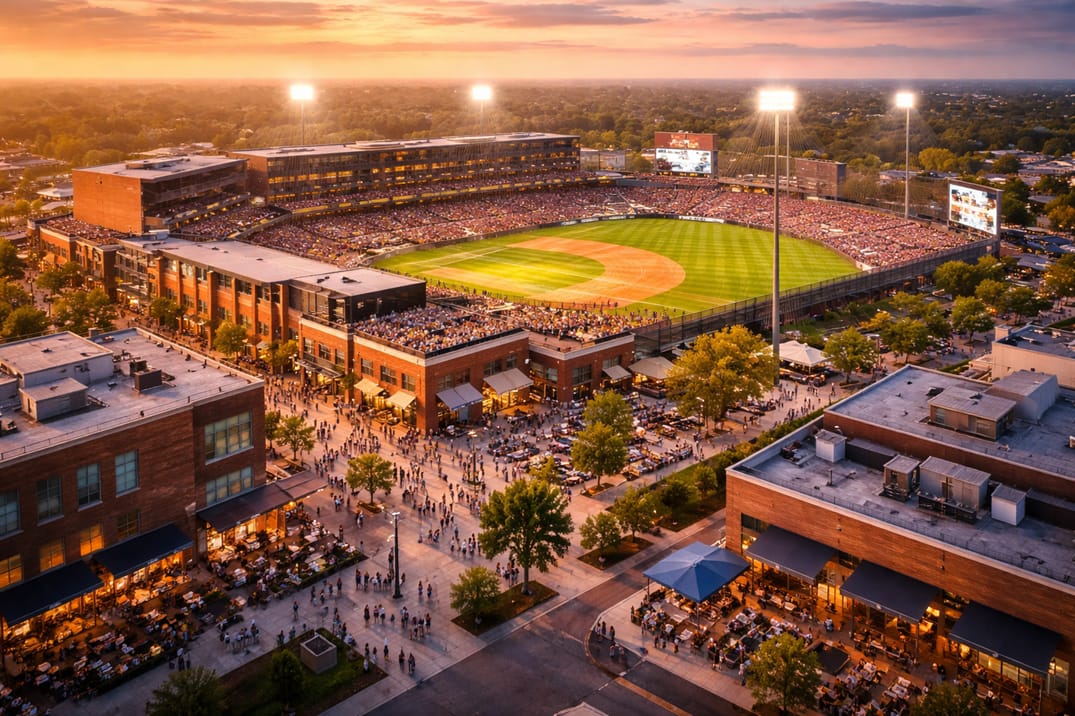
Across the United States, a new wave of stadium construction is quietly transforming the role of minor league sports in local economies. What were once modest venues built for seasonal entertainment are now evolving into multi-million-dollar, multi-use developments designed to anchor neighborhoods, attract investment, and redefine community infrastructure. This stadium boom is not just about sports—it is about how cities leverage physical assets to drive long-term growth.
From Single-Purpose Venues To Multi-Use Destinations
Historically, minor league stadiums served a narrow function: hosting games for a limited number of events each year. Today’s facilities are designed with a fundamentally different objective—continuous activation.
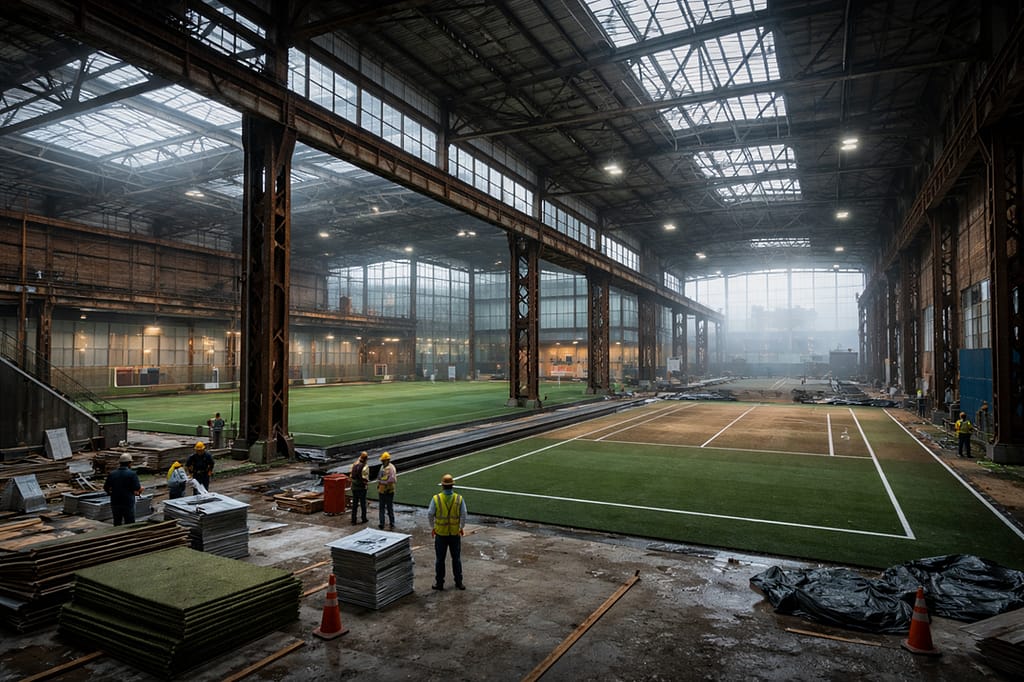
Modern stadium projects increasingly include:
- Retail and dining spaces integrated into the venue footprint
- Public plazas and open spaces for year-round community use
- Flexible seating and field configurations for concerts and events
This transformation reflects a broader shift in infrastructure philosophy. Stadiums are no longer isolated structures; they are components of mixed-use ecosystems that connect sports, commerce, and public space.
Cities investing in these facilities are prioritizing versatility, ensuring that the infrastructure remains economically productive beyond the sports calendar.
The Economic Multiplier Effect Of Stadium Development
The appeal of new stadium construction lies in its potential to generate economic spillover. While the direct revenue from ticket sales and concessions is limited in minor leagues, the surrounding development often produces more substantial returns.
| Economic Driver | Impact On Community |
|---|---|
| Hospitality (Hotels, Food) | Increased local spending and tourism |
| Retail Development | Job creation and small business growth |
| Event Hosting | Year-round economic activity |
| Property Value Uplift | Higher tax base for municipalities |
These effects position stadiums as catalysts for broader urban regeneration. In many mid-sized cities, a well-planned sports facility can anchor redevelopment efforts in underutilized districts.
However, the scale of investment—often reaching tens or hundreds of millions of dollars—raises critical questions about long-term return and public value.
Public-Private Partnerships And Funding Structures
The financing of minor league stadiums typically relies on a combination of public funding, private investment, and long-term lease agreements. This hybrid model reflects both the opportunity and the risk associated with large-scale infrastructure projects.
Public entities often contribute through:
- Land allocation and zoning approvals
- Infrastructure upgrades (roads, utilities)
- Direct financial support or tax incentives
Private partners, including team ownership groups and developers, provide capital and operational expertise.
This structure requires careful alignment. Without clear accountability and performance metrics, communities may bear disproportionate financial risk. Insights from recent sports infrastructure investment models highlight the importance of structuring agreements that prioritize long-term community benefit over short-term gains.
Smaller Cities As New Growth Frontiers
One of the defining characteristics of the current stadium boom is its geographic focus. Rather than concentrating in major metropolitan areas, many new projects are emerging in mid-sized and smaller cities.
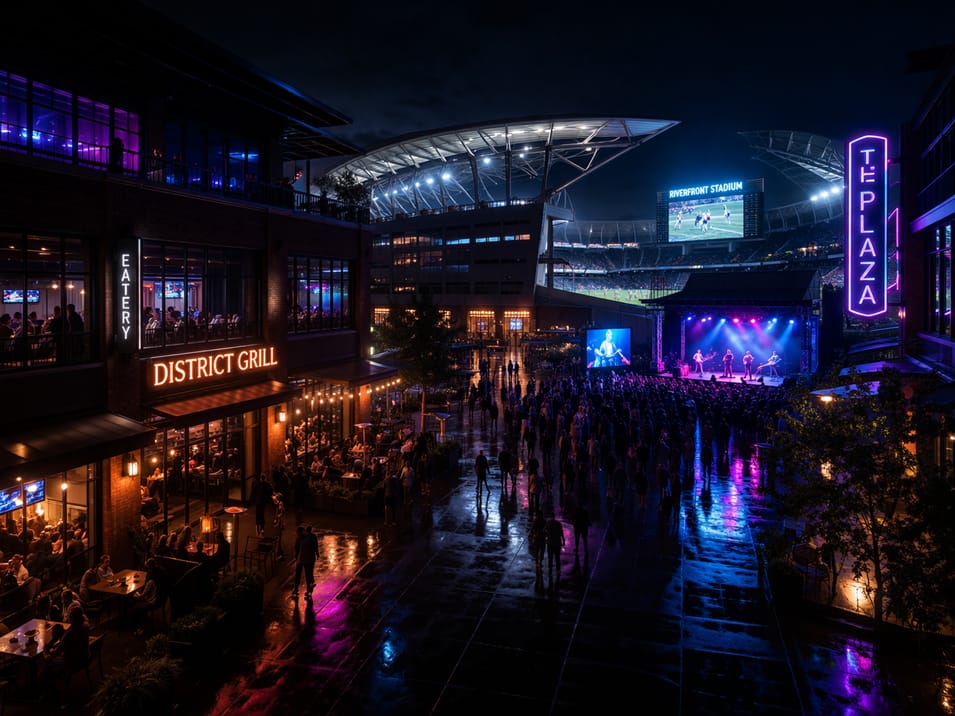
These markets offer:
- Lower land acquisition costs
- Stronger community engagement with local teams
- Greater potential for visible economic transformation
For these cities, a stadium is not just a venue—it is a strategic asset that signals growth, attracts external investment, and enhances regional identity.
At the same time, this trend raises equity considerations. Communities must ensure that development benefits are distributed broadly, rather than concentrated within specific districts or demographics.
Infrastructure Design And Long-Term Sustainability
Modern stadium projects are increasingly incorporating sustainability principles into their design. Energy-efficient systems, water management strategies, and environmentally conscious materials are becoming standard features rather than optional upgrades.
Organizations such as the U.S. Green Building Council emphasize that integrating sustainable design into large-scale developments reduces operational costs while improving environmental outcomes.
In the context of minor league facilities, sustainability also intersects with resilience. Climate-adaptive design—such as improved drainage systems and heat mitigation strategies—ensures that stadiums remain functional under changing environmental conditions.
This alignment between sustainability and durability reinforces the role of stadiums as long-term infrastructure investments.
The Social Dimension Of Stadium Development
Beyond economics, stadiums are increasingly being positioned as community spaces. Youth programs, recreational leagues, and public events are integrated into facility usage, expanding their role beyond professional sports.
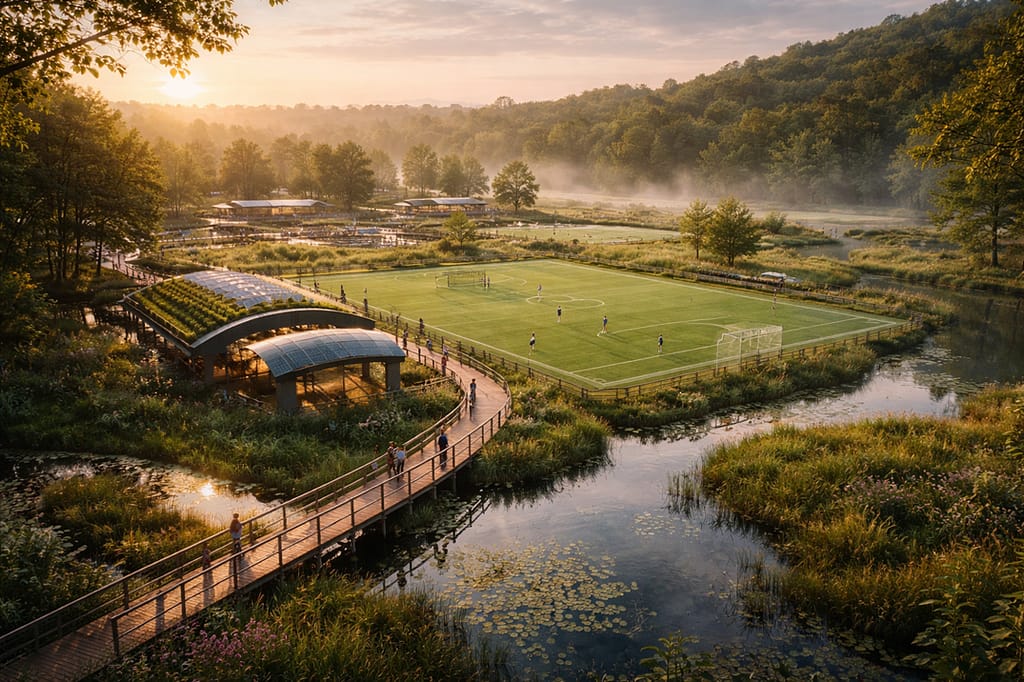
This approach strengthens social cohesion by:
- Providing accessible recreational opportunities
- Creating shared spaces for community interaction
- Supporting youth engagement and development
The impact is particularly significant in areas where access to quality sports infrastructure is limited. When designed intentionally, stadiums can function as inclusive hubs that serve diverse populations.
Risks Of Overbuilding And Market Saturation
Despite the optimism surrounding new stadium projects, there are legitimate concerns about overexpansion. Not all markets can sustain the operational demands of modern facilities, particularly if projected economic benefits fail to materialize.
Key risks include:
- Underutilization outside of peak events
- Financial strain on municipal budgets
- Competition between nearby markets for limited audiences
These challenges underscore the importance of data-driven planning. Demand forecasting, community needs assessments, and long-term financial modeling are essential components of responsible infrastructure development.
Redefining The Role Of Minor League Sports In Urban Systems
The current stadium boom reflects a broader redefinition of minor league sports within urban systems. These leagues are no longer peripheral—they are increasingly central to how cities approach development, branding, and community engagement.
The integration of stadiums into mixed-use districts illustrates a shift toward infrastructure that delivers multiple forms of value simultaneously. Economic, social, and environmental outcomes are now interconnected within a single project framework.
A New Model For Community-Centered Development
As cities continue to invest in minor league stadiums, the success of these projects will depend on how well they align with community priorities. Facilities that prioritize flexibility, accessibility, and sustainability are more likely to deliver lasting benefits.
The stadium boom is not inherently positive or negative—it is a tool. Its impact depends on how it is designed, funded, and integrated into the broader urban landscape.
For planners and decision-makers, the challenge is clear: to ensure that these developments serve as engines of inclusive growth, rather than isolated symbols of investment.