

Youth sports facilities are no longer just fields and courts—they are rapidly becoming data-driven, technology-enabled environments designed to improve performance, safety, and operational efficiency.
From smart lighting systems to wearable athlete tracking, technology is transforming how facilities are built, managed, and experienced. What was once considered “elite-level infrastructure” is now becoming standard across community and tournament-level venues.
This shift isn’t just about innovation—it’s about meeting the growing demands of modern youth sports ecosystems.
Smart Facilities: The Rise Of Connected Sports Environments
At the core of this transformation is the concept of the connected facility—a sports complex where systems communicate, adapt, and optimize in real time.
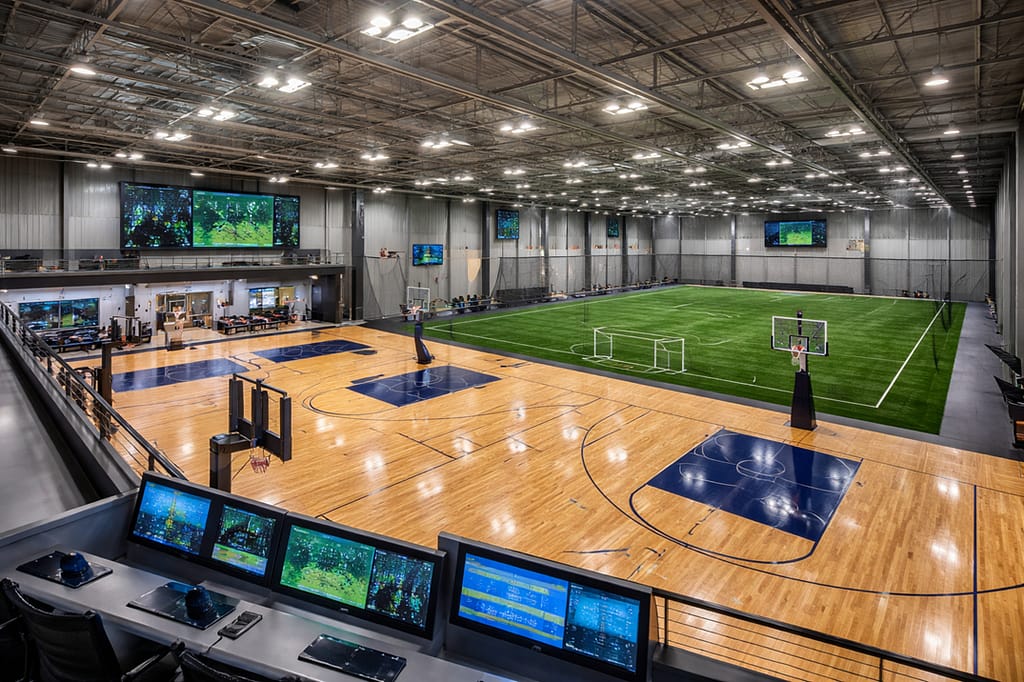
Modern venues are integrating technologies such as:
- Automated lighting systems that adjust based on usage and daylight
- Sensor-based irrigation systems that respond to weather conditions
- Digital access control for secure facility management
- Real-time occupancy and scheduling tools
These systems reduce operational costs while improving user experience.
| Technology | Function | Impact |
|---|---|---|
| Smart Lighting | Adjusts brightness based on activity and time | Reduces energy consumption |
| IoT Sensors | Monitor field conditions and usage | Improves maintenance efficiency |
| Digital Scheduling Systems | Automate bookings and usage tracking | Minimizes conflicts and downtime |
| Access Control Systems | Manage entry and security | Enhances safety and accountability |
Facilities are no longer static spaces—they are responsive environments built for efficiency and scalability.
Wearable Technology And Athlete Performance Tracking
One of the most visible changes in youth sports is the rise of wearable technology.
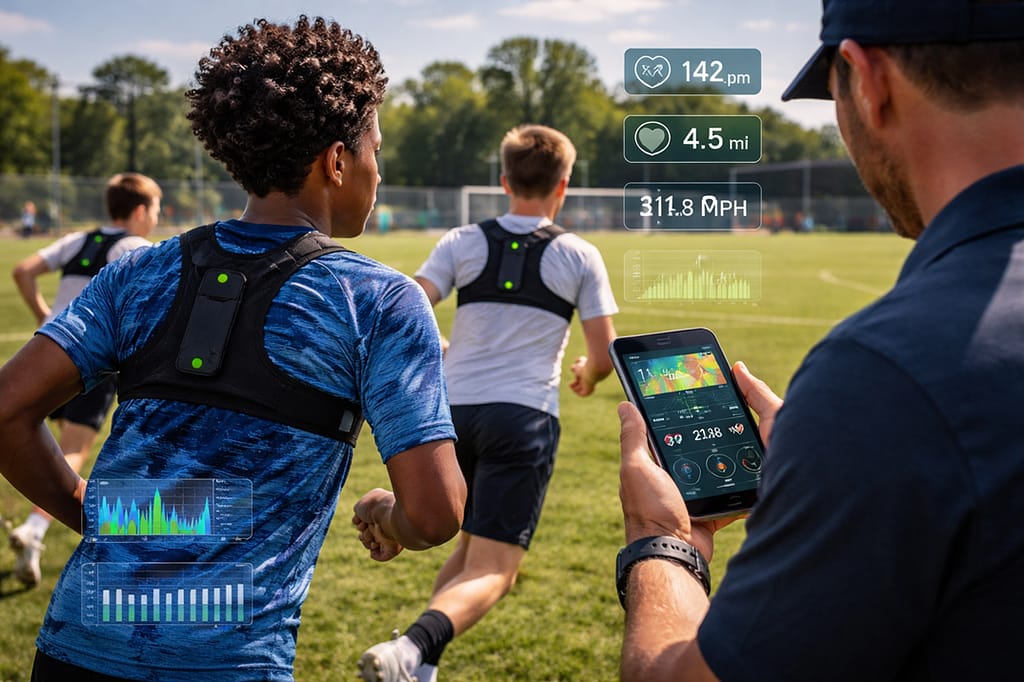
Devices such as GPS trackers, heart rate monitors, and motion sensors allow coaches and trainers to monitor athlete performance in real time. These tools provide insights that were previously only available at professional levels.
Wearable data helps track:
- Distance covered and movement patterns
- Heart rate and exertion levels
- Recovery time and fatigue indicators
- Risk factors for injury
This evolution is closely tied to broader trends in youth sports health monitoring systems, where data is becoming central to athlete safety and development.
The result is a shift from reactive coaching to data-informed decision-making.
Video Analysis And AI-Driven Coaching Tools
Video technology has moved far beyond simple game recording.
Today’s facilities are increasingly equipped with:
- Multi-angle camera systems
- Automated game tracking software
- AI-powered performance analysis tools
These technologies allow coaches to break down gameplay with precision, identify patterns, and provide targeted feedback.
For athletes, this creates a powerful learning environment. For facilities, it adds value—especially for tournaments and training programs seeking competitive advantages.
| Tool | Purpose | Benefit |
|---|---|---|
| Automated Cameras | Capture full-field gameplay | Eliminates need for manual recording |
| AI Analysis Software | Breaks down player performance | Enhances coaching accuracy |
| Instant Replay Systems | Provide real-time feedback | Improves training efficiency |
Video and AI are turning facilities into development hubs, not just competition venues.
Energy Efficiency And Sustainable Technology Integration
Technology is also playing a critical role in addressing sustainability challenges in youth sports facilities.

Energy consumption—especially from lighting and irrigation—has become a major concern. In response, facilities are adopting solutions such as:
- LED field lighting systems
- Solar-powered infrastructure
- Smart energy monitoring systems
- Water-efficient irrigation technologies
These upgrades are not just environmentally responsible—they are financially strategic.
According to the U.S. Department of Energy, LED lighting can reduce energy use by up to 75%, making it a key component of modern facility design.
The integration of sustainable technology reflects a broader shift toward long-term operational resilience.
Digital Scheduling And Facility Optimization
As youth sports participation grows, managing facility usage has become increasingly complex.
Digital scheduling platforms are now essential tools for:
- Coordinating tournaments and league play
- Managing multi-field complexes
- Preventing scheduling conflicts
- Maximizing facility utilization
These systems often integrate with mobile apps, allowing coaches, parents, and administrators to access real-time updates.
The impact is significant: better scheduling leads to higher efficiency, improved user experience, and increased revenue potential.
Facilities that fail to adopt these tools risk falling behind in an increasingly competitive landscape.
Challenges Of Technology Adoption
Despite its benefits, the adoption of technology in youth sports facilities is not without challenges.
Cost remains a primary barrier. Advanced systems—especially AI and sensor-based infrastructure—require significant upfront investment.
There are also concerns around:
- Data privacy and athlete monitoring
- Unequal access between well-funded and under-resourced programs
- Training requirements for staff and coaches
- Long-term maintenance and system upgrades
Communities must carefully evaluate how to implement technology in a way that is equitable, sustainable, and aligned with their long-term goals.
The Future Of Tech-Enabled Youth Sports Facilities
Looking ahead, the role of technology in youth sports facilities will only continue to expand.
Emerging trends include:
- Fully integrated smart complexes with centralized control systems
- Greater use of AI for injury prevention and performance optimization
- Expansion of virtual and augmented reality training tools
- Increased focus on data-driven safety protocols
Facilities are evolving into multi-functional ecosystems that combine performance, safety, and community engagement.
The question is no longer whether technology belongs in youth sports—it’s how effectively communities can integrate it to serve athletes, families, and the broader public.
The future of youth sports facilities will be defined by those who can balance innovation with accessibility, and performance with purpose.