
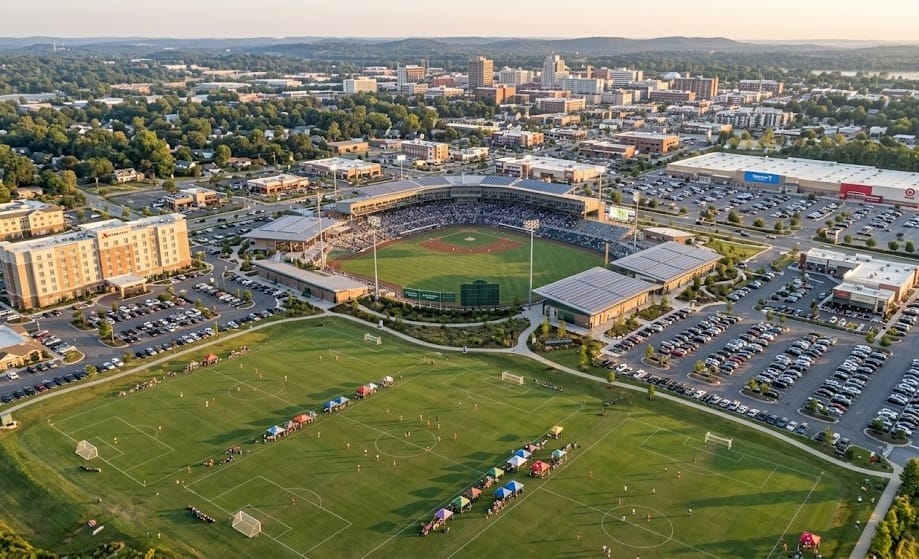
In cities that rarely appear on national sports broadcasts, a quiet transformation is underway. Tournament-grade sports complexes—once considered niche investments—are now driving measurable economic activity across mid-size American markets. From Pennsylvania to Florida, these facilities are attracting year-round tournaments, reshaping land use, and positioning youth sports as a legitimate economic sector rather than a seasonal recreational activity.
The Rise Of Tournament-Centric Infrastructure
Over the past five years, municipalities and private developers have increasingly shifted toward building large-scale, multi-field tournament complexes. These facilities are designed not for a single team, but for continuous event hosting—baseball, softball, soccer, and multi-sport competitions that rotate throughout the calendar.
A notable example is the Williamsport Lumber Yards complex, opened in 2024 in Williamsport, Pennsylvania. With over a dozen baseball and softball fields, the $22 million facility was designed explicitly to attract regional and national tournaments. Its strategic focus is clear: maximize visitor inflow rather than serve only local leagues.
This shift reflects a broader trend—infrastructure built for volume, not exclusivity.
How Tournaments Generate Local Economies
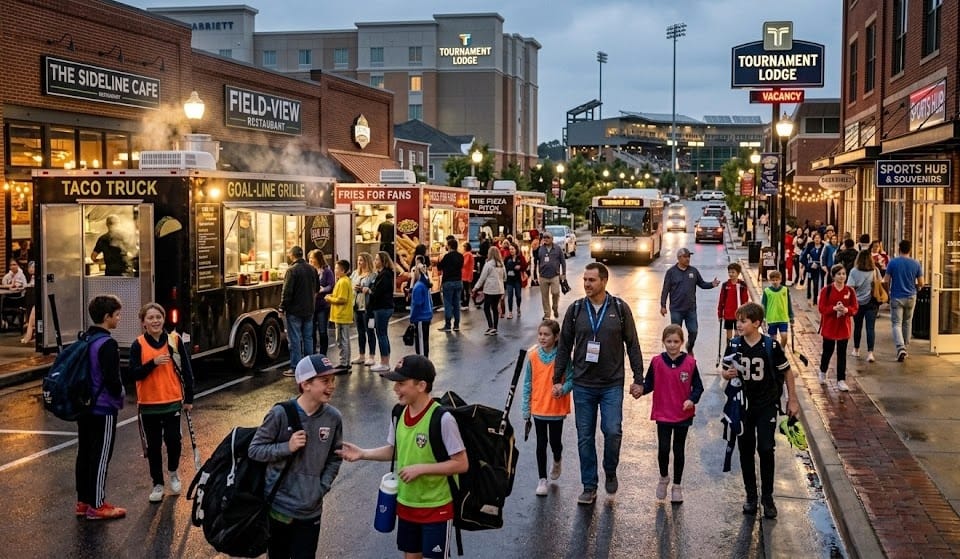
Unlike traditional sports facilities, tournament complexes operate as economic multipliers. Their value lies in their ability to attract out-of-town participants, creating demand across multiple sectors.
| Economic Channel | Direct Impact On Mid-Size Markets |
|---|---|
| Hospitality | Increased hotel occupancy rates |
| Food & Beverage | Higher local restaurant revenue |
| Transportation | Regional travel and logistics demand |
| Retail | Spending on gear, apparel, and services |
A single weekend tournament can bring thousands of visitors into a local economy. Over the course of a year, this volume translates into sustained economic activity that rivals more traditional tourism sectors.
According to the U.S. Travel Association’s economic impact insights, sports tourism is one of the fastest-growing segments of domestic travel, reinforcing the viability of tournament-driven development models.
Mid-Size Cities As Strategic Hosts
Mid-size markets—typically defined as cities with populations between 100,000 and 500,000—are uniquely positioned to capitalize on this trend. They offer a combination of affordability, accessibility, and available land that larger metropolitan areas often lack.
Cities like:
- Williamsport, Pennsylvania
- Mesa, Arizona
- Sanford, Florida
have invested heavily in tournament infrastructure, recognizing that sports-driven tourism can serve as a primary economic engine.
These markets benefit from lower operational costs while still being accessible to regional travel networks, making them ideal destinations for multi-day events.
Infrastructure Design For High-Volume Use
Tournament complexes differ fundamentally from traditional sports facilities in their design priorities. Efficiency, durability, and flexibility are central to their functionality.
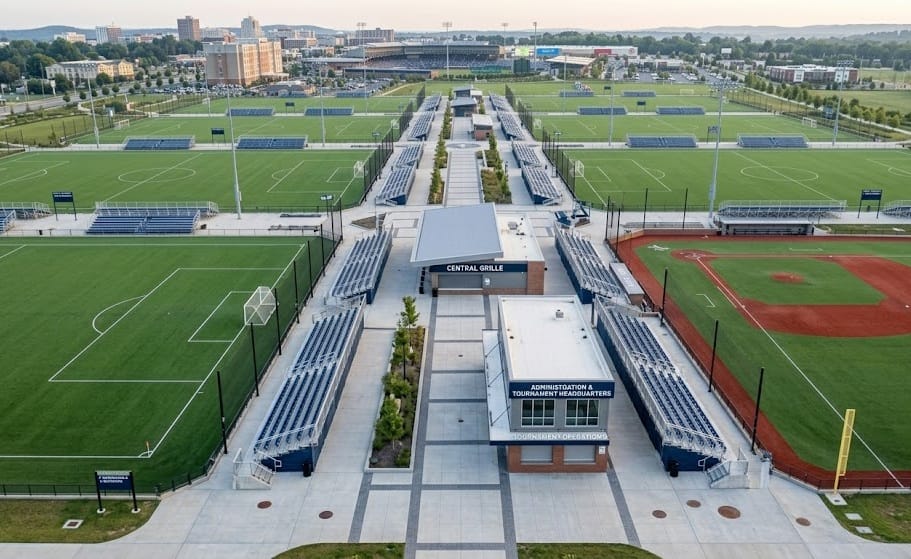
Key features typically include:
- Multiple adjacent fields to host simultaneous games
- Centralized amenities such as concessions and locker rooms
- Parking and transportation systems designed for peak traffic
These complexes are engineered to handle thousands of users in short timeframes, requiring infrastructure that can withstand continuous use without degradation.
Insights from minor league infrastructure investment trends show that facilities designed for high utilization rates achieve stronger financial performance over time.
The Shift From Recreation To Industry
What distinguishes this new wave of development is the reclassification of youth sports from a recreational activity to an economic sector. Tournament complexes operate with business models that resemble event management companies rather than traditional municipal services.
Revenue streams include:
- Tournament hosting fees
- Sponsorship agreements
- Facility rentals
- Ancillary event programming
This commercialization introduces both opportunity and complexity. While it increases financial sustainability, it also raises questions about access, affordability, and the prioritization of local versus visiting users.
Community Impact And Local Access
The economic benefits of tournament complexes are significant, but they must be balanced against community needs. Facilities that prioritize external events risk limiting access for local athletes.
Successful models incorporate:
- Dedicated time blocks for community use
- Partnerships with local schools and leagues
- Subsidized programming for underserved populations
These measures ensure that infrastructure investments serve both economic and social objectives.
Land Use And Urban Planning Implications
The scale of tournament complexes requires substantial land allocation, often in suburban or peri-urban areas. This has implications for zoning, transportation, and environmental management.
Key planning considerations include:
- Traffic congestion during peak events
- Environmental impact of large-scale field construction
- Integration with existing urban infrastructure
Municipalities are increasingly treating these projects as long-term planning decisions rather than isolated developments, aligning them with broader growth strategies.
The Risk Of Market Saturation
As more cities invest in tournament infrastructure, competition between markets is intensifying. Not every region can sustain multiple large-scale complexes, particularly if they target the same sports and age groups.

Risks include:
- Underutilization during off-peak periods
- Declining tournament demand due to oversupply
- Financial strain on municipalities that overinvest
These challenges highlight the importance of demand forecasting and regional coordination.
A New Model For Regional Economic Development
Tournament complexes represent a shift toward decentralized economic development, where smaller markets leverage niche advantages to compete regionally. By focusing on youth sports tourism, these cities are creating new pathways for growth that do not rely on traditional industries.
This model aligns with broader trends in sports infrastructure as economic strategy, where facilities are designed to generate continuous activity rather than episodic use.
Long-Term Sustainability And Strategic Alignment
The long-term success of tournament complexes depends on their ability to adapt. Changing participation trends, evolving sports preferences, and economic fluctuations all influence demand.
To remain viable, facilities must:
- Diversify programming across multiple sports
- Invest in maintenance and upgrades
- Align with regional development strategies
When integrated effectively, these complexes can function as resilient economic assets.
Redefining The Role Of Youth Sports Infrastructure
The emergence of tournament complexes as economic drivers signals a fundamental shift in how youth sports infrastructure is perceived. These facilities are no longer peripheral—they are central to regional planning, tourism strategies, and community development.
The challenge moving forward is ensuring that this growth remains balanced. Economic opportunity must be matched with equitable access, sustainable design, and long-term planning discipline.
In mid-size markets across the United States, youth sports are no longer just a game—they are becoming a system.