
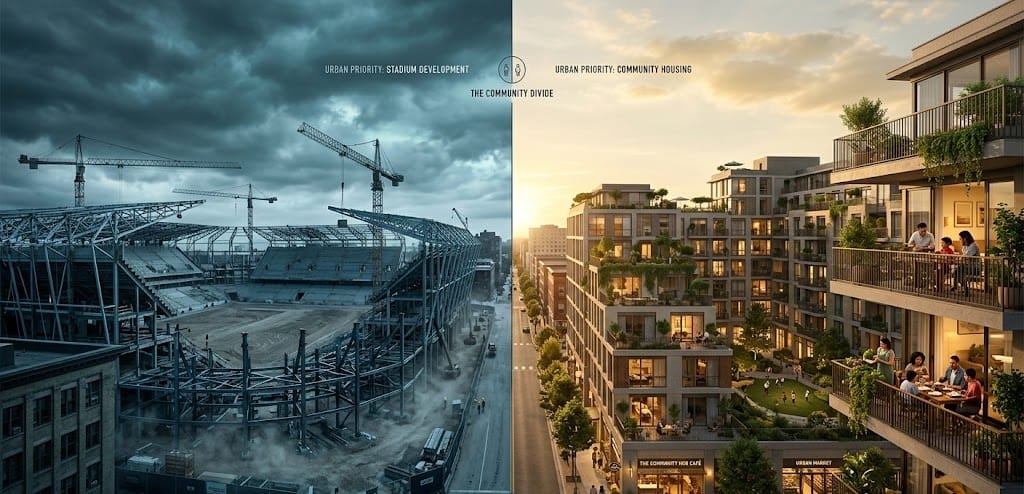
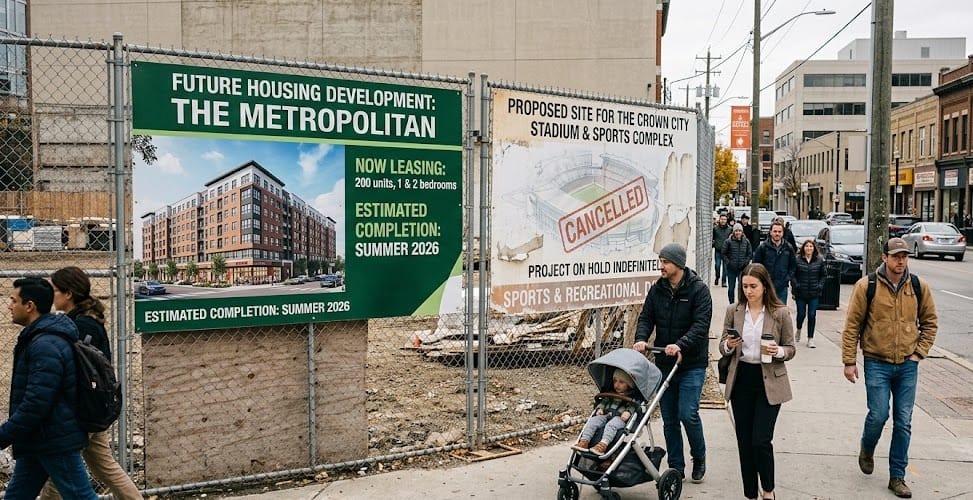
In early 2026, a proposed downtown soccer stadium in Albany, New York quietly disappeared from one of the city’s most ambitious redevelopment plans. What began as a vision for a multi-use sports venue tied to economic revitalization ultimately gave way to a different priority: housing. The decision, reported by regional outlets such as the Times Union, reflects a deeper shift in how cities evaluate sports infrastructure—not as automatic catalysts for growth, but as competing assets within a constrained urban system.
Albany’s case is not an isolated failure. It is a signal that the rules of urban investment are changing, and that sports facilities must now justify their place alongside urgent demands like housing, transportation, and long-term fiscal stability.
The Albany Proposal And Its Strategic Context
The original proposal centered on integrating a soccer stadium into a broader downtown redevelopment initiative led by developer Columbia Development. The site, located near the city’s warehouse district, was envisioned as a mixed-use project combining residential units, commercial space, and public amenities.
The stadium itself was intended to anchor the development, attracting events, visitors, and regional attention. However, by 2026, the project’s direction had shifted. The stadium component was removed, with developers and city stakeholders prioritizing housing density and mixed-use flexibility.
This pivot underscores a key reality: urban land is finite, and every major project must compete for space based on measurable long-term value.
Housing Versus Stadiums: A Zero-Sum Equation
At the core of Albany’s decision was a trade-off between two fundamentally different types of infrastructure. On one side, a stadium promising episodic economic activity; on the other, housing addressing a persistent structural need.
| Infrastructure Type | Economic Profile | Social Impact | Risk Level |
|---|---|---|---|
| Sports Stadium | Event-driven, variable revenue | Community identity, entertainment | High |
| Residential Housing | Stable, long-term economic contribution | Addresses housing shortage | Moderate |
This comparison reveals why housing often prevails in contemporary planning decisions. Unlike stadiums, which depend on attendance and programming, housing generates continuous economic and social returns.
Albany’s shift reflects a broader national trend: cities are increasingly prioritizing predictable, long-term value over speculative economic catalysts.
The Changing Economics Of Sports Infrastructure
For decades, stadium projects were justified by their potential to stimulate local economies. However, recent research and real-world outcomes have complicated that narrative.
While successful projects exist, many have failed to deliver the promised economic impact, particularly in smaller markets. The uncertainty surrounding return on investment has made policymakers more cautious.
According to the urban development research insights from Brookings Institution, cities must evaluate infrastructure investments based on comprehensive economic impact rather than projected optimism. This shift in evaluation criteria has made it more difficult for stadium proposals to secure approval without clear, data-driven justification.
Land Use As A Strategic Decision
Albany’s case highlights the increasing importance of land-use strategy in urban planning. In dense or developing areas, land represents one of the most valuable resources available to municipalities.
Choosing to allocate that land to a stadium means forgoing alternative uses that may offer greater long-term benefits. In Albany, the decision to prioritize housing reflects:
- A response to regional housing demand
- A desire to increase downtown residency
- A focus on sustainable, continuous economic activity
This approach aligns with broader planning frameworks that emphasize multi-functional urban environments over single-purpose developments.
Community Expectations And Political Realities
Stadium projects often generate public enthusiasm, but they also face growing scrutiny. Residents are increasingly asking whether these investments serve the broader community or primarily benefit private stakeholders.

In Albany, public discourse around the project included concerns about:
- Public subsidies for private development
- Opportunity costs associated with land use
- Long-term maintenance and operational expenses
These concerns are shaping political decision-making. Elected officials must balance economic development goals with public accountability, particularly in cities where budgets are constrained.
Lessons For Mid-Size Cities
Albany’s experience offers valuable insights for other mid-size markets considering sports infrastructure investments. The key lesson is not that stadiums lack value, but that their value must be contextualized within a broader system.
Successful projects increasingly share several characteristics:
- Integration with mixed-use development
- Clear alignment with community needs
- Realistic financial projections
- Flexible design allowing multiple uses
These principles are central to emerging sports infrastructure planning models that treat facilities as components of larger economic ecosystems rather than standalone assets.
The Risk Of Overreliance On Sports-Led Development
The removal of the Albany stadium also reflects a growing skepticism toward sports-led development as a primary growth strategy. While sports can contribute to economic activity, they are rarely sufficient on their own to drive sustained growth.
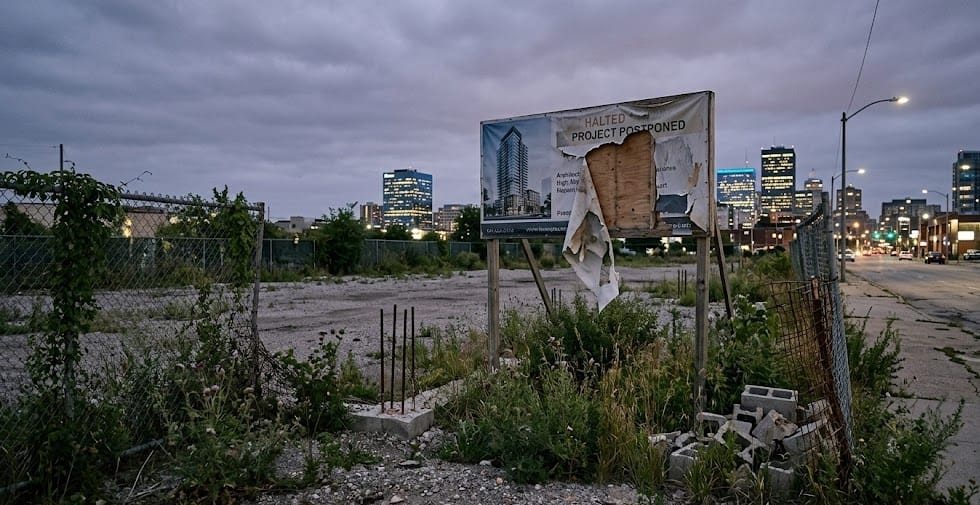
Cities that rely too heavily on stadium projects risk:
- Overestimating demand for events and attendance
- Underutilizing facilities during off-peak periods
- Creating long-term financial liabilities
This realization is prompting a shift toward diversified development strategies that incorporate sports as one element rather than the central focus.
Reframing The Role Of Sports In Urban Systems
Albany’s decision does not signal the end of sports infrastructure investment. Instead, it represents a recalibration of priorities. Stadiums must now compete within a broader framework that includes housing, sustainability, and economic resilience.
This shift is redefining the role of sports in urban systems:
- From primary economic drivers to complementary assets
- From standalone projects to integrated developments
- From speculative investments to carefully evaluated components
In this context, sports infrastructure is still valuable—but only when it aligns with the long-term needs of the city.
A Turning Point In Urban Decision-Making
The collapse of Albany’s stadium plan is not simply a local story. It is part of a national pattern in which cities are reassessing how they allocate resources and prioritize development.
As urban challenges become more complex, the criteria for investment are evolving. Projects must demonstrate not only economic potential, but also social relevance, environmental sustainability, and long-term viability.
Albany’s choice to prioritize housing over a stadium reflects this new reality. It is a decision grounded in pragmatism rather than aspiration—one that may shape how similar proposals are evaluated across the country in the years ahead.