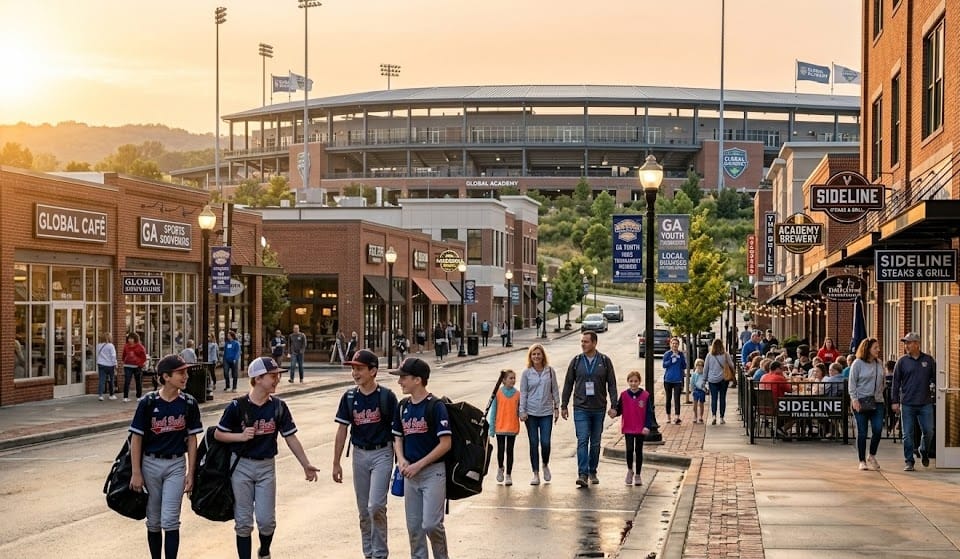
In 2026, a growing number of smaller American cities are making a calculated bet: that sports infrastructure can function not just as recreation, but as a primary engine of economic growth. From Chattanooga, Tennessee to Ontario, California, municipal leaders are investing heavily in stadiums, tournament complexes, and multi-use athletic districts. These projects are no longer framed as amenities—they are positioned as strategic development tools, capable of reshaping local economies, attracting tourism, and redefining regional identity.
The Strategic Shift Toward Sports-Led Development
For decades, large metropolitan areas dominated sports infrastructure investment, leveraging population density and media markets. Today, smaller cities—typically with populations under 500,000—are entering the space with a different value proposition: lower costs, available land, and targeted regional positioning.
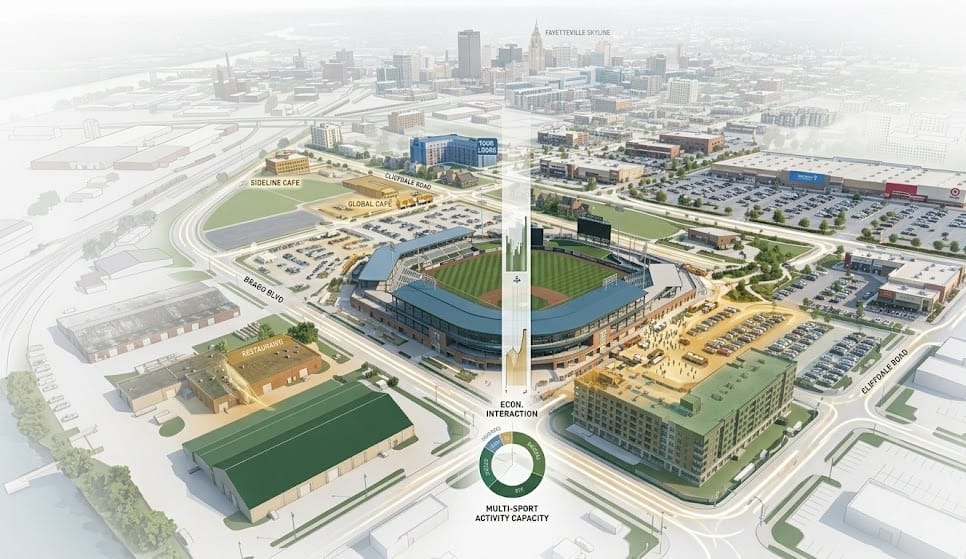
Chattanooga’s redevelopment around Erlanger Park, home of Chattanooga Red Wolves SC, illustrates this shift. The facility was designed not just for professional matches, but as a multi-use space hosting community events, youth tournaments, and concerts. Similarly, Ontario’s planned sports and entertainment district aims to integrate minor league baseball with retail and hospitality, creating a continuous flow of economic activity.
These examples signal a broader recalibration. Smaller cities are no longer competing with major markets on scale—they are competing on efficiency and integration.
Infrastructure As A Regional Economic Engine
Modern sports facilities in smaller markets are designed to maximize utilization and economic output. Rather than relying solely on local attendance, these venues are built to attract regional and national events.
| Economic Driver | Mechanism Of Impact | Long-Term Outcome |
|---|---|---|
| Youth Tournaments | Multi-day visitor influx | Sustained tourism revenue |
| Mixed-Use Development | Retail, dining, residential integration | Diversified local economy |
| Event Programming | Concerts, festivals, exhibitions | Year-round facility utilization |
| Branding & Visibility | Regional sports identity | Increased investment attraction |
The shift toward tournament-driven and multi-use infrastructure reflects a key insight: volume matters more than exclusivity in mid-size markets. Facilities that can host multiple events simultaneously generate more consistent economic activity than single-team venues.
Why Smaller Cities Have A Competitive Advantage
While large cities face constraints related to land costs, congestion, and regulatory complexity, smaller markets operate with greater flexibility. This enables faster project timelines and more cohesive planning.
Key advantages include:
- Lower land acquisition costs, enabling larger-scale complexes
- Less competition for entertainment spending
- Stronger alignment between municipal leadership and local stakeholders
These conditions allow smaller cities to execute projects that would be prohibitively expensive or logistically complex in larger urban centers.
Recent insights from the sports tourism economic outlook published by the U.S. Travel Association highlight how regional markets are capturing a growing share of domestic travel tied to youth and amateur sports events.
The Role Of Public-Private Partnerships
The expansion of sports infrastructure in smaller cities is heavily dependent on public-private partnerships. Municipalities provide land, tax incentives, and infrastructure support, while private developers contribute capital and operational expertise.

This model allows cities to undertake ambitious projects while distributing financial risk. However, it also introduces challenges related to accountability and long-term planning.
| Stakeholder | Contribution | Primary Objective |
|---|---|---|
| Local Government | Land, zoning, financial incentives | Economic growth |
| Private Developers | Capital investment, mixed-use planning | Return on investment |
| Sports Organizations | Branding, programming, operations | Market expansion |
| Community Groups | Local engagement and access | Social impact |
The effectiveness of these partnerships depends on clear governance structures and alignment between economic and community goals.
Community Identity And Social Impact
Beyond economics, sports infrastructure plays a critical role in shaping community identity. In smaller cities, teams and facilities often become central gathering points, reinforcing civic pride and social cohesion.
Facilities that integrate public access—such as open training fields, youth programs, and community events—extend their impact beyond professional sports. This approach aligns with broader sports infrastructure as community asset strategies, where venues are designed to serve both economic and social functions.
However, this balance is not automatic. Projects that prioritize commercial returns over public access risk alienating local communities, undermining long-term support.
The Risk Of Overextension
While the potential benefits are significant, the strategy is not without risk. As more cities pursue similar investments, competition for tournaments, teams, and events intensifies.
Potential challenges include:
- Overestimation of demand for regional tournaments
- Underutilization of facilities during off-peak periods
- Long-term financial obligations tied to public funding
These risks are particularly pronounced in markets with limited population growth or economic diversification.
Lessons from minor league infrastructure investment trends suggest that success depends on aligning facility scale with realistic demand projections and regional positioning.
Sustainability And Long-Term Viability
Sustainability is becoming a central consideration in new projects. Energy-efficient design, water management systems, and climate-resilient construction are increasingly standard features.
Organizations such as the U.S. Green Building Council emphasize that sustainable infrastructure reduces operational costs while enhancing long-term resilience. For smaller cities with constrained budgets, these efficiencies are critical.
At the same time, sustainability extends beyond environmental considerations. Financial sustainability—ensuring that facilities generate consistent revenue over time—is equally important.
Integration With Broader Urban Planning
The most successful projects are those that integrate sports infrastructure into broader urban development strategies. Rather than standalone venues, these facilities are embedded within mixed-use districts that include housing, retail, and public space.

This integration creates:
- Continuous economic activity
- Increased property values in surrounding areas
- Stronger connections between infrastructure and community life
Cities that treat sports infrastructure as part of a larger planning framework are better positioned to achieve long-term success.
A New Model For Growth In Smaller Markets
The rise of sports infrastructure as a growth strategy reflects a broader transformation in how smaller cities approach economic development. Rather than competing directly with major metropolitan areas, these markets are leveraging targeted investments to create unique value propositions.
By focusing on:
- Regional accessibility
- Multi-use infrastructure
- Community integration
smaller cities are redefining their role within the national sports ecosystem.
The outcome is not just new facilities, but new economic systems built around sports, tourism, and community engagement.