
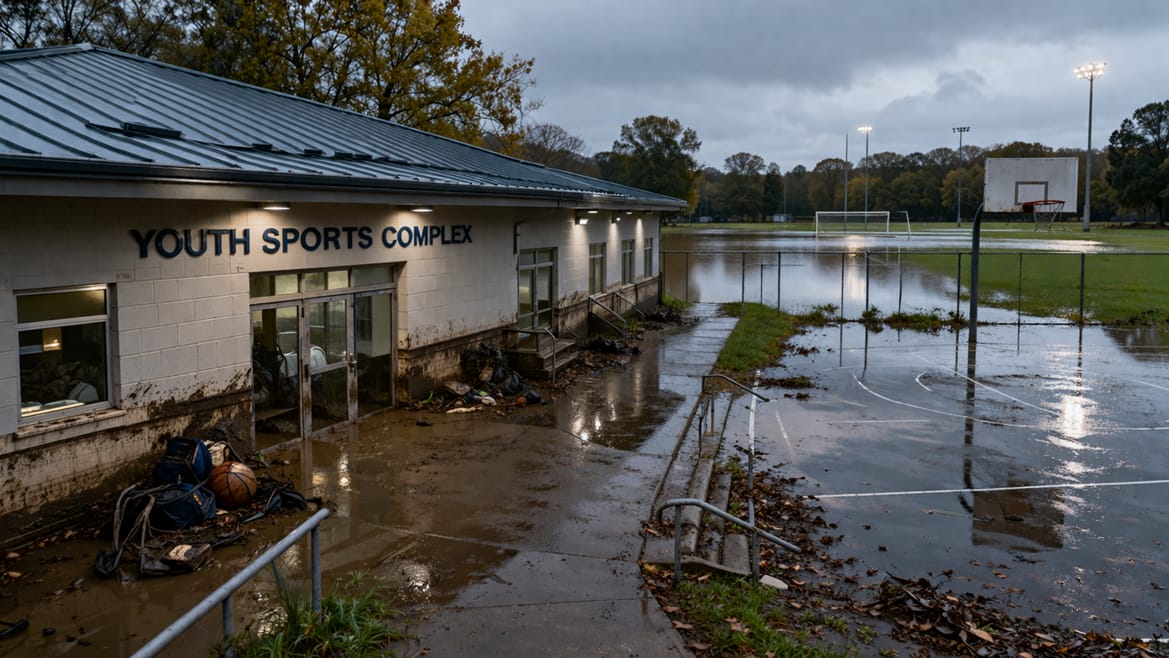
In early 2026, severe flooding in Queensland left entire community sports facilities unusable, forcing local organizations to rebuild from scratch while youth programs stalled indefinitely. These disruptions are no longer isolated incidents—they are becoming structural threats. As climate volatility intensifies, youth sports infrastructure is being tested in ways it was never originally designed to withstand, exposing a critical gap between environmental risk and facility planning.
The Growing Vulnerability Of Youth Sports Infrastructure
Youth sports facilities—often built decades ago—were rarely engineered with climate resilience in mind. Fields, courts, and community centers are typically located in low-cost, open areas, many of which overlap with flood-prone zones or aging drainage systems. As a result, even moderate weather events can render facilities unusable for extended periods.
Flood damage extends beyond visible destruction. Turf degradation, electrical system failures, and mold contamination can take months to address, creating prolonged disruptions in youth participation. In communities where sports infrastructure serves as a primary social outlet, these closures have cascading effects on physical health, mental well-being, and local engagement.
The economic consequences are equally significant. Repair costs often exceed initial construction budgets, especially when facilities must be rebuilt to meet updated environmental standards.
Climate Events As A Systemic Risk To Participation
What was once considered a rare disaster is now part of a recurring cycle. Climate-related disruptions are increasingly influencing participation patterns in youth sports, particularly in regions experiencing frequent flooding, extreme heat, or severe storms.
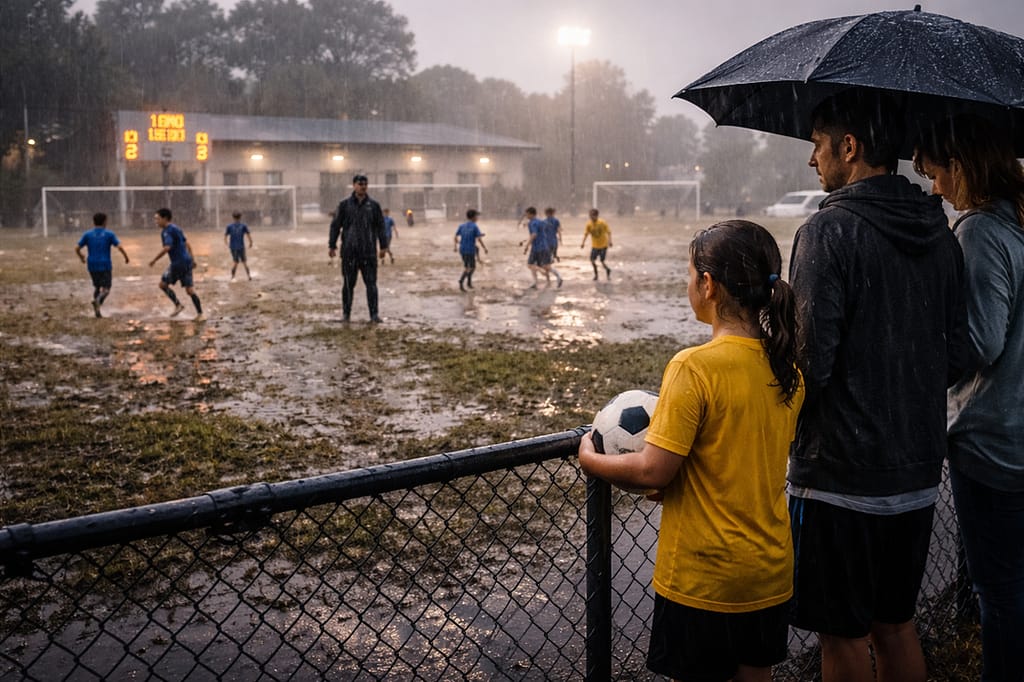
When facilities become unreliable, participation declines. Families shift to alternative activities, leagues struggle to maintain schedules, and volunteer networks weaken. Over time, this leads to a structural erosion of local sports ecosystems.
This dynamic is forcing planners and policymakers to reconsider a fundamental assumption: that access to sports infrastructure is stable. In reality, access is becoming conditional—dependent on environmental resilience.
Rethinking Facility Design For Flood Resilience
The shift toward climate-adaptive infrastructure requires a redesign of both physical facilities and planning frameworks. Flood-proofing is no longer an optional upgrade—it is becoming a baseline requirement for long-term viability.
Key design adaptations include:
- Elevated playing surfaces and structures
- Permeable materials that improve water absorption
- Integrated drainage and water diversion systems
- Modular construction for faster recovery and repair
These features are not simply protective—they are strategic investments that reduce long-term operational risk. According to guidance from climate resilience frameworks provided by organizations like FEMA, incorporating hazard mitigation into infrastructure design significantly lowers lifecycle costs and improves recovery timelines.
The Economics Of Building Versus Rebuilding
One of the most overlooked aspects of climate resilience is its economic efficiency. While resilient infrastructure requires higher upfront investment, the long-term cost savings are substantial when compared to repeated repairs and downtime.
| Infrastructure Approach | Initial Cost | Long-Term Maintenance | Downtime Risk | Community Impact |
|---|---|---|---|---|
| Traditional Facility Design | Lower | High | High | Disruptive |
| Climate-Resilient Design | Higher | Lower | Reduced | Stable |
Communities affected by repeated flooding are increasingly recognizing that rebuilding the same infrastructure in the same way is financially unsustainable. Instead, investment is shifting toward systems that can absorb, adapt, and recover from environmental stress.
Policy Gaps And The Need For Integrated Planning
Despite growing awareness, many youth sports projects still lack integration with broader climate and urban planning policies. Infrastructure decisions are often made in isolation, without sufficient consideration of watershed management, zoning regulations, or long-term environmental projections.
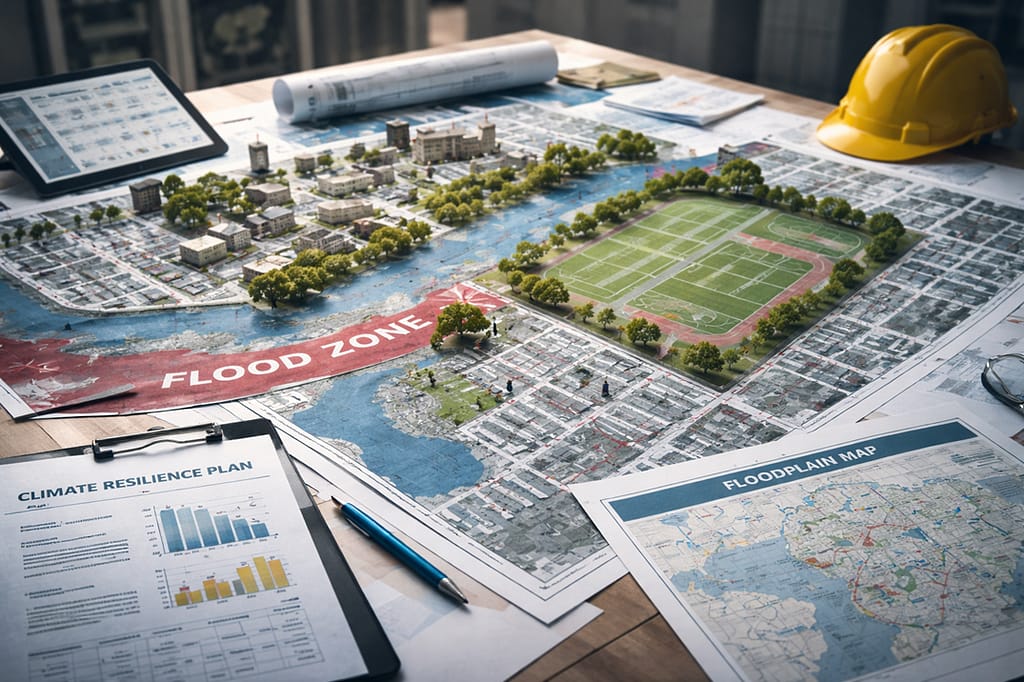
This fragmentation creates vulnerabilities. Facilities may meet current standards but fail under future conditions.
A more effective approach involves aligning youth sports infrastructure with:
- Municipal climate adaptation strategies
- Regional floodplain management plans
- Sustainable land-use policies
This integration ensures that facilities are not only resilient individually, but also supported by resilient systems at the community level.
Equity Challenges In Climate-Resilient Development
The transition toward flood-proof infrastructure introduces a new equity challenge. Communities with greater financial resources are better positioned to invest in resilient design, while underserved areas remain exposed to higher risk.
This disparity can deepen participation gaps. Youth in vulnerable regions may experience more frequent disruptions, fewer program opportunities, and declining access to safe recreational spaces.
Addressing this requires targeted funding mechanisms, including:
- Public subsidies for high-risk areas
- Incentives for resilient construction in underserved communities
- Partnerships with nonprofits and private investors
Lessons from recent multi-sport community hub developments demonstrate that equitable infrastructure planning must prioritize both resilience and accessibility to avoid reinforcing existing inequalities.
From Reactive Recovery To Proactive Resilience
Historically, the response to climate-related damage has been reactive—focused on rebuilding after disaster strikes. This model is no longer viable in an era of increasing environmental volatility.
The emerging paradigm is proactive resilience: designing infrastructure that anticipates disruption and minimizes its impact. This approach transforms youth sports facilities from vulnerable assets into adaptive systems capable of sustaining community activity under changing conditions.
The shift requires a redefinition of value. Infrastructure is no longer judged solely by its capacity or aesthetics, but by its ability to endure.
Building A Resilient Future For Youth Sports
Flood-proof facilities represent more than a technical upgrade—they are a necessary evolution in how communities approach youth sports infrastructure. As climate risks intensify, resilience will determine not only the survival of facilities, but the continuity of the social and developmental systems they support.
The path forward demands coordinated action across sectors. Governments, planners, and community organizations must align investment, policy, and design strategies to ensure that youth sports infrastructure remains functional, inclusive, and sustainable.
In this new reality, resilience is not an added feature—it is the foundation.