The enforcement of Major League Baseball’s (MLB) Professional Development League (PDL) facility mandates has catalyzed an unprecedented capital restructuring across minor league sports. By mid-2026, the traditional landscape of fragmented, localized family ownership has largely been consolidated. Private equity platforms, most notably Diamond Baseball Holdings (DBH), have acquired dozens of clubs to achieve corporate economies of scale capable of absorbing multi-million dollar stadium renovation requirements. Yet, as private capital accelerates its control over minor league assets, a contrasting governance framework—the community-owned and non-profit operational model—presents a compelling alternative for municipal planners.
Long considered historical anomalies, community-backed franchises are proving that localized public governance can successfully navigate modern regulatory shocks while retaining regional wealth. At a time when the minor leagues face intense economic pressures, evaluating whether non-profit and community-centric ownership models offer a more resilient blueprint for sports infrastructure sustainability is crucial for civic leaders.
The Financial Friction of PDL Facility Mandates
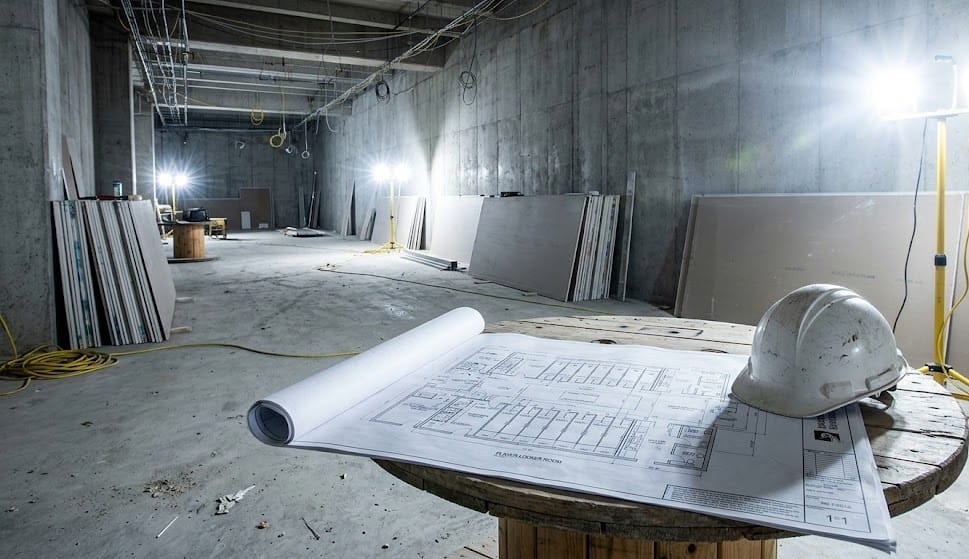
The primary threat to minor league team retention is no longer just ticket sales or market size; it is facility compliance. The PDL standards established strict, non-negotiable facility specifications designed to elevate player development environments. These regulations require extensive physical overhauls, including expanded home and visitor clubhouses, dedicated locker rooms for female coaching staff, advanced specialized training spaces, and upgraded batting tunnels.
Failing to meet these audits carries the immediate risk of an affiliation rewrite or outright franchise contraction. Industry estimates indicate that this regulatory cycle has forced over $2.3 billion in spent or committed ballpark investments nationwide. For a privately owned team, this debt burden is frequently offset by demanding aggressive public subsidies or selling to national corporate roll-ups that prioritize consolidated real estate plays.
| Ownership Model | Primary Sourcing | Risk Mitigation | Long-Term Alignment |
| Corporate / Private Equity Roll-Up | Institutional funds, private equity, taxable corporate debt | Franchise relocation threat, asset liquidation, premium pricing | Extraction of tournament revenues to out-of-market shareholders |
| Community-Owned / Non-Profit | Municipal grants, state performance funds, local public bonds | Public-private master development plans, localized philanthropy | Complete reinvestment of operational surplus into local infrastructure |
For community-owned clubs, the capital equation functions differently. Because these organizations lack a private owner seeking a traditional return on equity, operational surpluses are continuously escrowed for facility maintenance and stadium preservation. This financial structure changes the conversation around public investment from a speculative corporate handout into a direct investment in a permanent community asset.
Case Studies in Civic Resilience: Rochester and Toledo
Two prominent examples of this public-value framework are Rochester Community Baseball, Inc. and the Toledo Mud Hens Baseball Club. Both organizations operate under structures that insulate their municipalities from the threat of sudden franchise relocation while driving major urban redevelopment initiatives.
In New York, the Rochester Red Wings operate out of the newly renamed ESL Ballpark. To meet the rigorous MLB player development deadlines, the franchise collaborated with Monroe County and New York State to execute a comprehensive $26 million facility upgrade, completed ahead of recent competitive seasons. Rather than pausing at basic compliance, the community-centric operator pushed further. In early 2026, local leadership launched a $65.7 million transformation initiative aimed at building a permanent, year-round events arena, converting historical on-site structures into mixed-use public spaces, and developing a comprehensive “Stadium District.” Examining how these entities secure long-term public alignment reveals distinct minor league infrastructure investment trends that favor asset stabilization over speculative growth.
Similarly, the Toledo Mud Hens in Ohio operate under a unique non-profit corporate structure that serves as a primary engine for downtown revitalization. In January 2026, the Mud Hens organization submitted a targeted development plan for the Ohio Sports Facility Performance Grant to advance a multi-phase modernization of Fifth Third Field. Because the franchise is legally anchored to its urban core, independent economic impact assessments show that a single sold-out game generates more than $1.8 million in localized business transactions. The team’s operational profits do not leave the region; instead, they fund neighborhood initiatives and anchor the Hensville entertainment district, demonstrating the power of a self-sustaining civic loop.
The Civic Return on Investment vs. Capital Extraction

The fundamental divergence between community-owned models and private equity platforms lies in the destination of the generated revenue. When a private equity fund acquires a minor league franchise, its primary mandate is to maximize the asset’s valuation over a fixed investment horizon. This pressure often manifests as aggressive ticket price increases, highly commercialized stadium programming, and demands for municipal tax abatements.
- Reinvestment of Capital: Non-profit and community models channel stadium revenues, naming rights proceeds, and concession profits back into facility upkeep and surrounding public parks.
- Insulation from Relocation: Because ownership shares are distributed among thousands of local stakeholders or held by a non-profit board, the franchise cannot be leveraged as a relocation threat to force cities into building redundant stadiums.
- Zoning and Planning Harmony: Community-governed clubs align stadium operations with broader municipal transit, environmental sustainability, and public space goals, rather than treating the venue as an isolated real estate silo.
This structural alignment changes how cities evaluate stadium lifecycles. A municipal venue managed by a community-backed operator becomes a stable anchor for long-term urban planning, rather than a volatile public financial liability vulnerable to changing corporate priorities.
Scaling the Non-Profit Sports Model in Mid-Size Markets
Despite the clear public benefits, replicating the success of Rochester or Toledo in other mid-size markets presents notable structural hurdles. Establishing a community-owned framework requires immense local political willpower, a supportive regional corporate base, and state-level legislative environments that accommodate public-private operating grants. Furthermore, according to MLB minor league development updates, the league imposes tight regulatory oversights on franchise transfers, making the transition from a failing private team to a community-owned entity a complex bureaucratic process.
However, as mid-size markets face increasing pressure from rising infrastructure costs, the non-profit model offers an attractive path forward. Municipalities can leverage this strategy by forming local public authorities to acquire stadium real estate, while leasing operations to regional non-profit entities. This split-structure approach ensures that while the team complies with professional standards, the underlying economic engine remains focused on maximizing local social equity and community health.
Building Sports Infrastructure That Outlasts the Ownership Group
The rapid corporate consolidation of the minor leagues highlights a critical vulnerability in modern sports planning: the reliance on private ownership groups whose long-term financial interests may diverge from the cities that host them. When stadium development plans are built entirely around the profit motives of out-of-town investment funds, communities take on substantial long-term financial risks.
The community-owned and non-profit models challenge this paradigm by proving that minor league sports can thrive as true public utilities. By prioritizing long-term regional stability over short-term capital appreciation, these clubs demonstrate that sports infrastructure can serve as a sustainable driver of civic pride and urban resilience. For cities looking to invest in their urban cores, the lesson is clear: building infrastructure that outlasts the ownership group requires anchoring the team firmly within the community itself.