
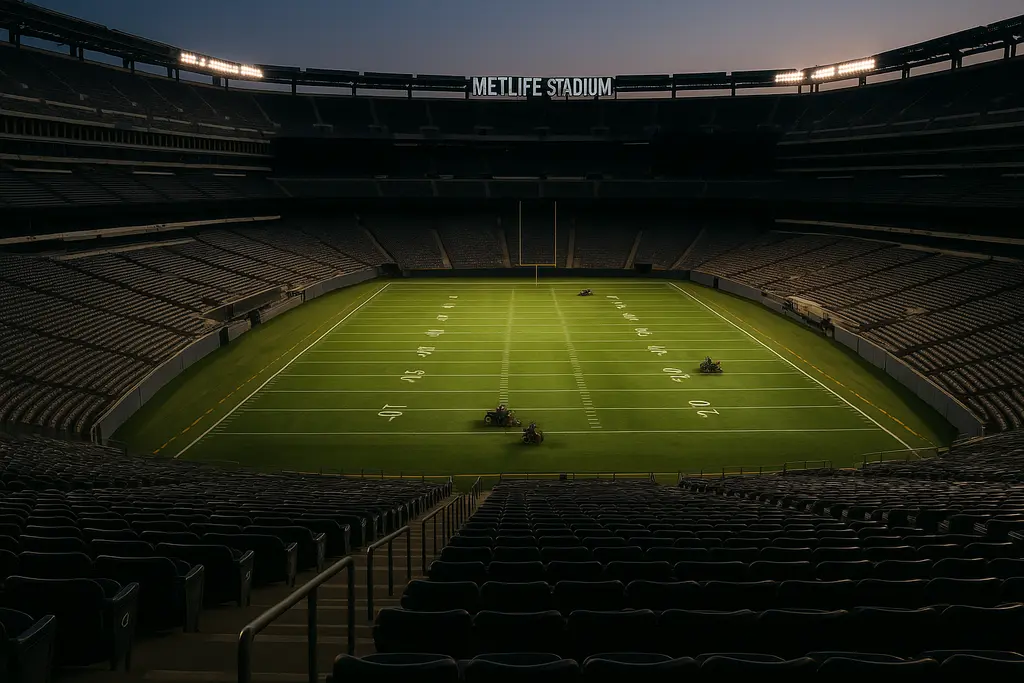
Flag football facilities have a clear planning milestone ahead: the sport’s Olympic debut at Los Angeles 2028. LA28 lists separate six-team men’s and women’s tournaments at Exposition Park Stadium. For community clubs and facility operators, the Olympic flag football format creates a useful reference point, but Olympic visibility is not a substitute for somewhere to train every week.
The practical task is to connect interest with usable field time. Aplevante’s coverage of community sports access examines the same problem through soccer: participation needs a dependable local setting. For flag football, a credible facility plan should explain the playing format, the booking schedule, the people delivering sessions and the costs that continue after equipment arrives.
Reuse Facilities Without Copying an Olympic Budget
LA28’s venue plan offers a concrete example of adapting an existing sports setting. Exposition Park Stadium, completed in 2018, is home to Los Angeles Football Club and Angel City Football Club. The Olympic plan assigns flag football and lacrosse to the venue rather than treating each sport as a reason to build a separate stadium.
The local lesson is to examine existing capacity before proposing construction. A school field, recreation complex or club ground might be a candidate for shared use, subject to the owner’s approval and the requirements of the competition. That assessment should begin with a measured site plan and the actual booking calendar.
Reuse still requires an operating agreement. Decide who installs and removes markings, where equipment is stored, who checks the surface and what happens when another sport needs the same space. An empty rectangle on a map is not an available venue until those responsibilities and access times are settled.
Set the Rules Before Marking the Field
NFL FLAG’s published playing rules describe five-on-five competition on a field 70 yards long and 30 yards wide, including two 10-yard end zones. Those dimensions cover 2,100 square yards. They describe the playing rectangle, not the complete site needed to operate a league.
These are NFL FLAG specifications, not a universal layout for every version of flag football. The organization’s guidance acknowledges different formats and rulebooks. Confirm the competition’s current requirements before ordering permanent markings or assuming an existing layout will qualify.
The field boundary is not the facility boundary. A site review should account for required clearance, team areas, spectators, warmups and access routes. The facility owner and competition organizer should agree on those arrangements before registration opens.
Test the plan at ground level. Where would a waiting team prepare? Can spectators reach their viewing area without crossing active play? Is equipment kept outside the usable space? Resolve those questions on the site plan rather than discovering the conflicts during the first tournament.
Schedule Bookable Hours, Not Just Games
LA28 describes games with two 20-minute halves. That is a competition format, not a promise that every match fits into a 40-minute facility booking. A local league must use its own rules and account for the activities surrounding play.
Consider a hypothetical program with two approved fields available from 9 a.m. to 1 p.m. If organizers choose 60-minute booking blocks, the calendar contains eight match slots: four on each field. The 60-minute block is a planning assumption, not an official game duration or a guarantee that eight matches can be delivered.
Test the assumption through a trial event. Record how long teams need to leave the field, how officials move between assignments and whether the next group has somewhere to warm up. Build a margin for interruptions rather than selling every minute as competitive capacity.
Keep practice access visible in the same calendar. A weekend tournament plan should not silently remove the weekday sessions that participating teams need. Publish which hours are confirmed, which are provisional and how cancellations will be communicated.
Fund Operations Alongside Equipment
USA Football’s flag equipment grant focuses on flag belts and footballs. That support addresses a defined equipment need; it should not be treated as confirmation that a program’s field rental, staffing or maintenance costs are covered.
Separate the budget into startup purchases and recurring commitments. Markers, storage and initial equipment belong in one part of the plan. Field access, officials, cleaning, maintenance and replacement items belong in the season’s operating calculation. Obtain local quotes instead of borrowing a cost estimate from an unrelated facility.
Keep prospective grants outside committed income until an award is confirmed. The same discipline applies to proposed sponsorship: an encouraging conversation does not pay an invoice.
Before approving a season, test whether the program remains workable at a lower registration level. Identify which costs fall when fewer teams enter and which remain fixed. That exercise can reveal whether the immediate need is another field, a different booking arrangement or a smaller opening schedule.
Build Coaching and Officiating Into Capacity
USA Football’s 2026 training resources describe an officials course covering five-on-five and seven-on-seven rules, mechanics, game management and communication. Its advanced flag coaching course addresses tactics, schemes and play design. These resources illustrate the different jobs involved in delivering organized competition.
A facility plan should name the people responsible for those jobs. Two marked fields do not create two staffed matches. Check whether enough officials are available, whether coaches know the selected rules and who handles scheduling disputes away from the playing area.
Provide distinct entry points for beginners and experienced teams. A first-time group needs time to learn procedures; a competitive team needs sessions that match its preparation. Reserve those blocks explicitly rather than advertising an open program and leaving the details to volunteers on arrival.
Staffing deserves the same review as space. Track uncovered assignments, late starts and repeated requests for help. Those records can identify a delivery problem that additional turf would not solve.
Measure Repeat Use Before Adding Another Field
Start with a short pilot season and a clear attendance record. Compare registrations with actual appearances, note which time slots fill and ask departing participants what prevented them from returning. A waiting list for Saturday morning does not establish demand for every available evening.
Separate participation evidence from online sports attention. Adult readers researching BetOnline odds compaired to regulated sportsbooks are considering a different commercial subject. A facility proposal should rest on demand for playing time, not interest in wagering information.
The next investment should answer a documented constraint. Full sessions and unmet booking requests might support more capacity. Empty sessions paired with complaints about timing suggest a scheduling question. Strong enrollment followed by poor attendance calls for a closer look at access, expectations and delivery before adding space.
Before adding capacity, operators should be able to identify who will use the next field, when they will use it and who will run those sessions. For flag football facilities preparing for LA28, the useful target is a program that can publish and deliver the following season’s calendar after the Olympic attention has moved on.