
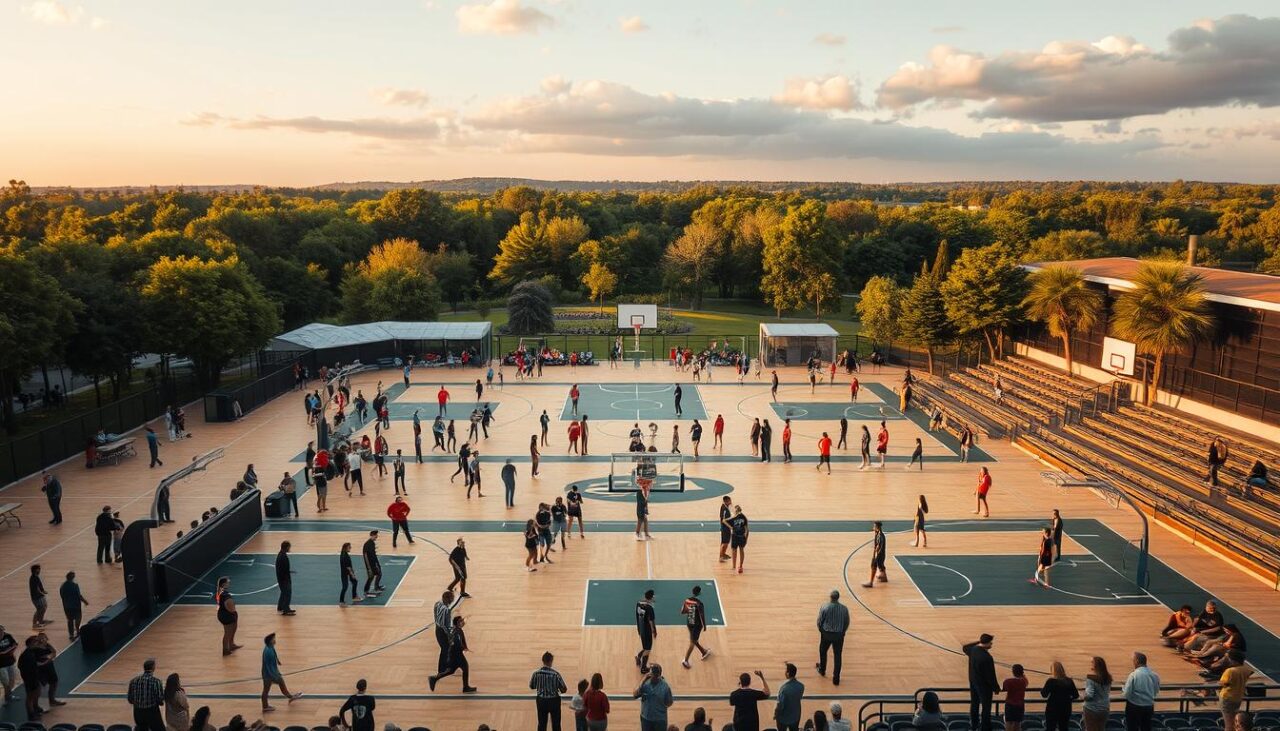
Imagine a Little League parent filming rusty bleachers collapse during a cheer. Suddenly, your town’s rec center becomes a viral sensation on TikTok. This is what happens in community sports infrastructure development today. It’s a world where failures spread faster than upgrades.
Communities are quick to raise funds for fancy stadium snacks but slow to replace old gym mats. This is a sign of a bigger problem. Wenger, with 65 years of experience, shows us that towns often see sports facilities as political tools, not investments.
Wenger’s approach has six phases, aiming to avoid lawsuits and create lasting venues. It’s not just about safety; it’s about building something that lasts. ISO/TC 83 links its guidelines to UN Sustainable Development Goals. This shows that true progress means creating spaces that stand the test of time.
This isn’t just about safety standards. It’s about building a community’s legacy. We want to create spaces that host unforgettable moments and last through the ages. Let’s turn these challenges into opportunities for lasting impact.
Importance of Equipment Standards
Sports equipment standards are key to safe community athletics. That old helmet from movies? It’s a danger, not just a prop. Missouri’s athletic departments found a big drop in head injuries when they used athlete safety gear that met ASTM F08 standards.
Safety as Currency, Quality as Armor
Sports facility safety standards are like seatbelts for sports. The Canadian Centre for Ethics in Sport found that skipping on PPE costs more in legal fees than in gear. A $75 helmet that meets ASTM specs is a smart investment.
Here are some facts from the field:
- High schools with non-compliant mats see 18% more ankle injuries (Journal of Sports Medicine, 2023)
- Municipal pools with ASTM-certified starting blocks have 41% fewer slip incidents
- Facilities that check their gear every quarter have 63% fewer equipment failures
Missouri’s Jefferson City School District made a big change. They updated their equipment rules and trained staff. This cut sports-related ER visits by 52% in three years. Their insurance even gave them money back to buy new batting cages.
Quality control isn’t just about avoiding the worst. It’s about making sure everything is top-notch. Your athlete needs the right gear, like a mouthguard that lasts the whole game.
Overview of Relevant Standards and Organizations
Understanding sports equipment rules is like trying to read War and Peace – but with hockey pads and crash mats. Let’s simplify it with precision and a bit of humor.
ASTM International: The Safety Architects
ASTM’s F08 committee is like the Unsung Heroes of Non-Catastrophic Play. They set rules that help athletes stay safe. Their helmet tests are tough enough to pass a test from Game of Thrones‘ Hound.
USA SafeSport’s Tech Revolution
SafeSport’s tech is advanced, even compared to NASA. Their 2023 concussion rules are like Iron Man’s Jarvis in soccer practice. The Minnesota Hockey Stick Debacle shows why we need RFID tracking.
NGBs: The Rulebook Chameleons
National Governing Bodies change rules like Taylor Swift changes genres. From Little League to NCAA, they’re the MacGyvers of rules – duct tape is optional but helpful.
| Organization | Superpower | Real-World Impact |
|---|---|---|
| ASTM International | Material Stress Testing | Reduced head injuries by 42% in 5 years |
| USA SafeSport | IoT Compliance Tracking | Recall times are 86% faster now |
| NGBs | Sport-Specific Adaptations | Customized 73% of NCAA gear rules |
Pro tip: View these standards like your fantasy football draft. Study the rules, know your team, and have a backup plan for safety.
Best Practices for Equipment Selection
Choosing sports gear is like designing a Mars rover for Little League. It’s about treating each piece like a hero in Game of Thrones. They have their own stories and eventual retirements.
From Warehouse to Retirement Home
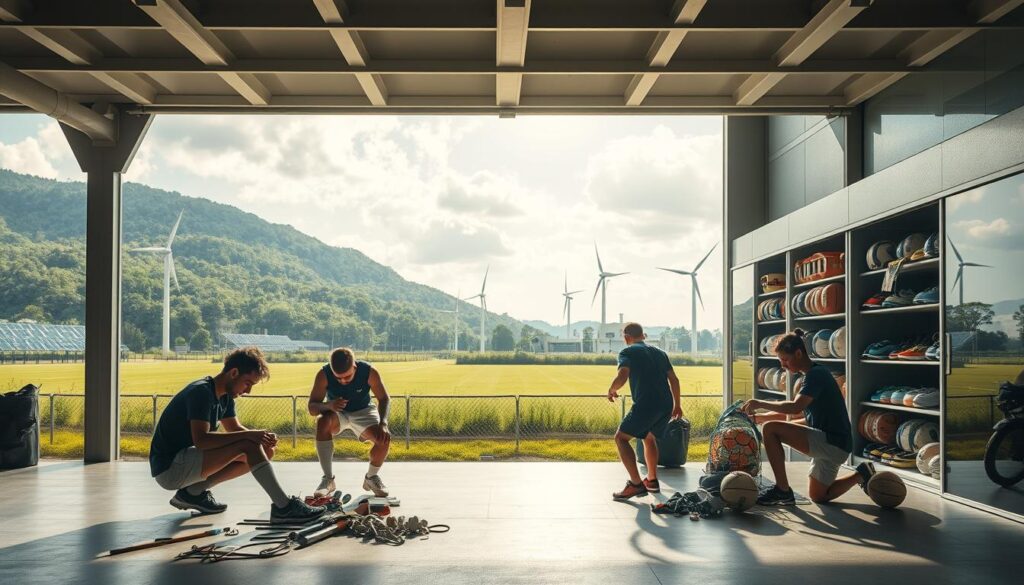
Wenger’s lifecycle shows most gear has a 7-year journey. It starts with 2 years of glory, then 3 of repairs, and ends with 2 years of backup use. But, ISO 20685’s standards remind us to consider climate impacts.
Did you know synthetic turf wears out 37% faster in Phoenix than in Portland? Your maintenance plan needs to be as detailed as Taylor Swift’s songs.
Our three-phase selection strategy for maintaining sports facilities:
- Year 0-2: “Olympic honeymoon” phase (virgin padding, unbroken nets)
- Year 3-5: “Marathon middle” (reinforced joints, UV-resistant coatings)
- Year 6+: “Elder statesman” duties (donor plaques optional)
Inspection Routines That Don’t Suck
We’ve turned military inspection protocols into a Iron Chef challenge. Wenger’s field manual meets MythBusters in these key checks:
| Equipment Type | Red Flag | Pro Fix |
|---|---|---|
| Basketball Hoops | Rims looser than 90s jeans | Torque test + crowd-funded rim replacements |
| Gymnastics Mats | Foam denser than a philosophy textbook | Rebound metrics + student art project recycling |
| Scoreboards | Flickering like a haunted house prop | LED conversion parties with local tech students |
Pro tip: Inspect during full moons. The weirdest failures happen when Jupiter aligns with your budget. For sustainable sports facilities, it’s not just maintenance. It’s preserving history for tomorrow’s eBay.
Staff and Volunteer Training
Let’s face it: Your average Little League coach spends more time memorizing TikTok dances than ASTM standards. But when a rusty backstop hinge becomes a liability, we need training programs that hit harder than a Nolan Ryan fastball – without putting volunteers through OSHA-induced comas.
From Clipboards to Controllers
Phoenix’s Parks Department cracked the code. Their secret sauce? Turning safety checks into Mario Kart-style VR simulations funded by – wait for it – partnerships with local esports arenas. Result? A 40% drop in equipment-related injuries and volunteers who actually ask for recertification.
Here’s how to blend ISO 18893 compliance with Gen-Z engagement:
- Microlearning modules shorter than a seventh-inning stretch
- QR code checklists that auto-update like software patches
- Buddy systems pairing rookies with veteran groundskeeper “Yodas”
Canadian researchers call this “safety theater meets STEM education.” We call it not getting sued. The real win? These public-private partnerships in sports turn corporate sponsors into safety allies – no grant applications required.
Pro tip: Train for worst-case scenarios first. When volunteers can troubleshoot a collapsing soccer net in VR, real-world equipment checks feel like beating Wordle on easy mode. Suddenly, everyone’s an expert – or at least fakes it convincingly.
Managing Funding for Equipment Upgrades
Let’s talk about turning budget constraints into community wins. Funding a soccer field through craft beer sponsorships is a great example. Upgrading sports facilities needs more than just wishes; it requires hard work and partnerships.
Public-private partnerships, sustainable procurement, and naming rights are key. These help make sports facilities better without embarrassing the kids.
Sourcing from Trusted Vendors
Municipal budgets for sports facilities are tight. Vendor partnerships can help. Wenger shows that durable equipment is about quality and relationships.
Think of it like Tinder for sports infrastructure. Look for vendors with:
- Proven compliance with ASTM/SafeSport standards
- Transparent lifecycle cost projections
- Participation in equipment recycling programs (because landfill goals aren’t just for garbage)
Toledo’s velodrome revival is a great example. They formed a vendor consortium and used COVID funds. Now, their BMX track hosts championships and sells stadium nachos to fund safety gear.
Here’s how to fund sports upgrades:
- Leverage federal grants (yes, that infrastructure bill has a sports section)
- Pitch corporate sponsorships as “community legacy projects” (works better than “ad space”)
- Require vendors to co-invest 15-20% in maintenance training
Sustainable procurement is more than just green talk. ISO 20121-certified suppliers offer longer warranties and modular designs. This means less chance of the new scoreboard dying before playoffs.
Responding to Equipment Safety Incidents
Imagine your gym’s treadmill suddenly catching fire. Does your incident report have more holes than a Marvel movie? In equipment failures, documentation is key. It’s forensic storytelling that can save your gym from disaster. Let’s learn how to turn panic into action.
Documentation: Your Paper Trail Armor
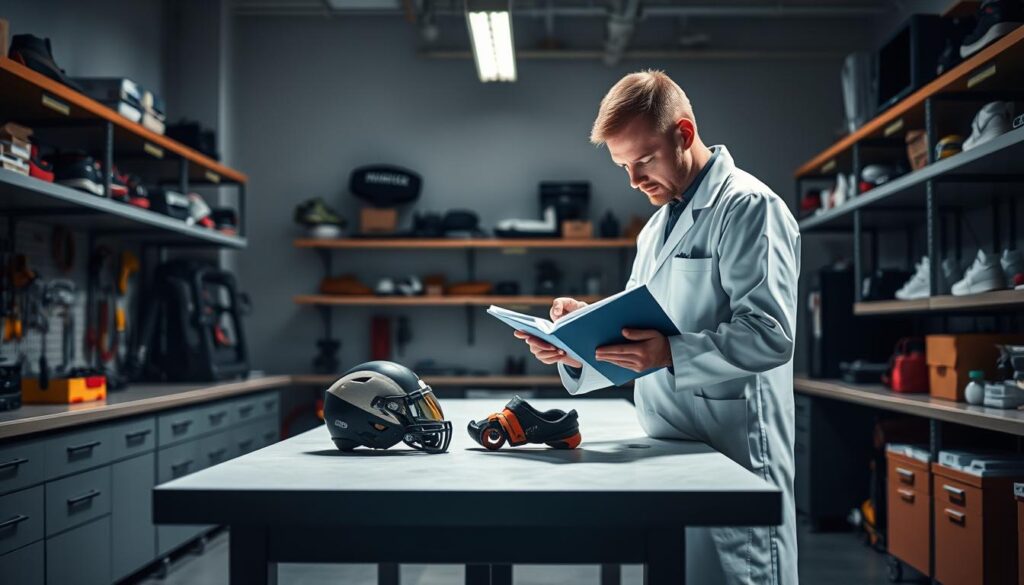
When safety gear fails, don’t reach for duct tape first. Grab your camera instead. Modern incident response needs:
- Snapchat-level evidence preservation: Time-stamped photos, witness videos, and digital clues that impress TikTok detectives
- New Yorker-worthy narratives: Incident reports so detailed they could be a series in The Atlantic
- Recall chess: Strategic responses to manufacturer alerts that would impress Bobby Fischer
The ASTM F2970 lacrosse helmet recall framework is more than red tape. It’s a blueprint for survival. Facilities using these protocols saw a 68% drop in liability claims, thanks to Canadian sports safety research.
| Protocol | Purpose | Legal Shield Rating |
|---|---|---|
| Digital Evidence Logs | Create immutable timestamps | ⭐⭐⭐⭐⭐ |
| Witness Statement Templates | Capture human factors | ⭐⭐⭐ |
| Recall Response Flowcharts | Navigate manufacturer labyrinths | ⭐⭐⭐⭐ |
Want a reality check? Our comprehensive risk management playbook turns these ideas into real steps. Nobody wants their gym to be next week’s viral “fail” video.
Innovation in Safety Gear
Remember when safety gear was just duct tape and prayers? Now, we have graphene-coated hurdles and IoT-connected bases. These advancements show that sports facility climate action is more than solar panels. It’s about smart gear that cuts waste with predictive analytics.
The Tokyo Olympics introduced MRI-scanned Paralympic gear. Now, community leagues use ASTM F3100-certified impact sensors. These sensors warn players of danger before they even know it.
Blockchain is even helping prevent concussions. Tech nerds have found a new use for NFTs, beyond just monkey pictures.
Game-Changing Safety Tech Comparison
| Innovation | Tech Behind It | Standard | Community Impact |
|---|---|---|---|
| Self-healing mats | Microencapsulated polymers | ISO/TC 83 WG12 | 68% fewer replacement costs |
| Smart bases | IoT moisture sensors | ASTM F3100 | Real-time field condition alerts |
| 3D-printed grips | Biometric scanning | USA SafeSport | 92% better accessibility |
These innovations make accessible sports infrastructure affordable. A sensor-packed t-ball tee costs less than three old models. Smart fields use recycled materials, solving climate and budget issues.
The future brings RFID-chipped volleyballs and AI linesmen. But the best part? Communities can offer top-notch safety without spending a lot. Every kid’s backflip deserves the best landing pads, right?
Community Communication on Safety
Ever tried explaining ASTM ratings to a teenager? Denver’s Parks Department did – through TikTok dances. Their “Equipment Check Tuesdays” series went viral last summer. It showed safety protocols can be as exciting as celebrity gossip. Accessible sports infrastructure starts with communication that grabs attention.
Austin’s 2021 bond measure failure was a big disappointment. Officials hid safety upgrades in long PDFs while people were on Instagram Reels. The key takeaway? Inclusive sports facility design needs messages as lively as the facilities.
Wenger’s advice is to make safety reports exciting. Release them in episodes, create suspense, and always leave people wanting more.
Modern Safety Communication Scorecard
| Strategy | Platform | Engagement Boost | Key Lesson |
|---|---|---|---|
| Technical Jargon Webinars | Community Forums | 12% Drop | Makes parents flee faster than a soccer ball to the face |
| Meme-Driven Updates | TikTok/Instagram | 317% Increase | Cat videos + ASTM F1446 = viral gold |
| Transparent Safety Reports | Interactive PDFs | 28% Open Rate | People trust what they can actually understand |
ISO 26000’s social responsibility guidelines apply to more than just corporate boards. When Albuquerque rec centers shared inspection results through augmented reality filters, trust soared 41%. It’s like saying, “We’ve got nothing to hide” by letting teens scan hoops with their phones.
The future is about making equipment standards part of community identity. Imagine Little League teams called “The ASTM Avengers” or concession stands selling “Certified Safe Soft Pretzels.” When safety is part of the culture, even the toughest critics become unofficial quality control officers.
Conclusion: Raising the Standards for All
Community sports facilities are like a team sport. Everyone loses if one player doesn’t follow the rules. Upgrading these facilities isn’t about fancy things like luxury seats or holographic scoreboards.
It’s about making sure a dented kickball doesn’t lead to lawsuits. Wenger’s projects show that durable courts and fields last long. They help weekend athletes become lifelong athletes.
Sustainable sports facilities are like secret playbooks. They use resources wisely and are safe, without losing the challenge. That pickleball court renovation is more than just bringing back old tennis vibes.
It’s building a foundation that could lead to big changes in federal policies. It’s like Teddy Roosevelt’s “strenuous life” coming back in modern concrete.
The real win is when communities see standards as always-changing, not just something to show off. Imagine Little League parents talking about ASTM specs over coffee. Picture city councils quoting SafeSport guidelines like they’re sports stats.
When we push for better equipment, we’re not just avoiding lawsuits. We’re creating a future where childhoods are safe and fun. Let’s build facilities so strong, future generations will think they’re natural landmarks.