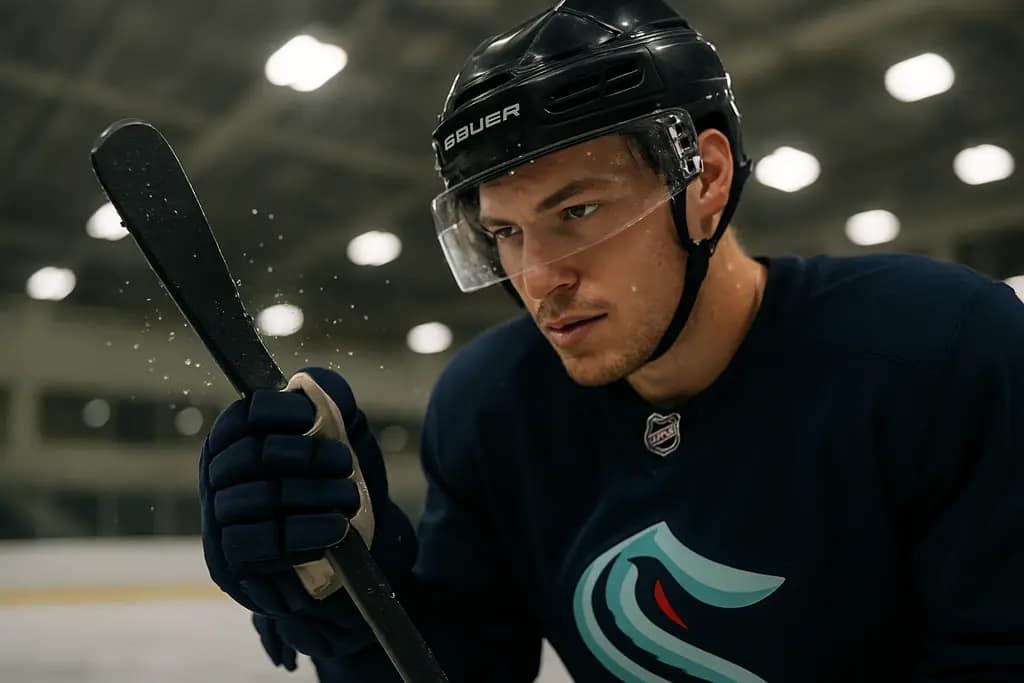
Kraken Player Development entered a new phase before the 2026-27 NHL season, not because one hire can fix a pipeline, but because Seattle changed several parts of the athlete-support system at once. The most useful way to read these moves is through player wellness: coaching clarity, physical preparation, nutrition, mental performance, recovery continuity, and the daily habits that help young players absorb NHL demands without being pushed beyond sensible limits.
On June 11, 2026, the Seattle Kraken hired Patrik Allvin as vice president and assistant general manager, added Pascal Vincent to the assistant coaching staff, brought former NHL defenseman Justin Schultz into the player development group, and appointed Matt Brown as director of mental performance, according to the club’s own staffing report from Seattle Kraken news. On September 22, 2026, the club promoted Nate Brookreson to director of sports performance, promoted Justin Jensen to head strength and conditioning coach, added Brandon Wickett as assistant strength and conditioning coach, and hired full-time dietitian Madison Yerigan, as detailed by the team’s sports performance group update.
The caution is simple: staffing changes are inputs, not outcomes. The Kraken still need evidence in the form of prospect readiness, durable training availability, clearer role progression, and better movement between development settings. Still, the pattern is meaningful. Seattle did not add only another bench voice. It added people across management, coaching, strength, nutrition, psychology, and development. That broader design is where the player-wellness angle becomes more than a slogan.
What Changed In Kraken Player Development
The June 11, 2026 hires pointed to two connected needs: better front-office alignment and closer teaching for young players. Allvin’s role as vice president and assistant general manager gives Seattle another senior hockey operations voice with development experience. Vincent’s move to the assistant coaching staff adds a coach tied in the club’s report to young-player growth in winning settings. Schultz gives young defense prospects a direct model from a former NHL defenseman with 12 NHL seasons and two Stanley Cups.
Front Office And Coaching Alignment
A development system can stall when the front office, NHL coaching staff, and player development staff send different signals. A prospect may hear one message about risk, another about usage, and a third about what the organization values. Seattle’s staff changes appear designed to reduce that friction. Allvin can help connect roster planning with prospect timelines. Vincent can translate organizational priorities into practice habits. Schultz can work with defensemen on details that are hard to learn from video alone: reads under pressure, positioning habits, and how to manage mistakes without losing confidence.
That does not mean every prospect will move faster. Development is not a straight line, and the official information does not prove that these hires will produce more NHL-ready players by a certain date. A fair assessment is narrower: the Kraken have added more specialized adults around the player, and that can improve feedback quality if roles are clear.
Kraken Player Development And Athlete Readiness
For Kraken Player Development, the September 22, 2026 performance changes may be just as important as the coaching additions. Brookreson’s promotion, Jensen’s new head strength role, Wickett’s support position, and Yerigan’s full-time dietitian role suggest a shift toward daily athlete management. The club also stated that Wickett would remain in Seattle to support injured players and prospects who are not traveling with the team. That detail matters because development often breaks down in the quiet periods: after a setback, during a roster wait, or when a player is away from the main group.
From a wellness standpoint, continuity is the key word. A player who is not on a road trip still needs supervised training, nutrition planning, recovery work, and a clear return-to-practice pathway. The public report does not give injury counts or training outcomes, so no one should overstate the impact. Yet the staffing model reduces one common risk in elite sport: leaving non-traveling players with less structure than active roster players.
Wellness Signals In The Staffing Model
The addition of Brown as director of mental performance is a notable part of the same pattern. Mental performance work should not be treated as a late-stage rescue tool after confidence drops. In a player development setting, it can support preparation routines, attention control, communication with coaches, and coping after mistakes. The official club report points to Brown’s long experience at elite levels, but it does not publish his program details. That means the responsible reading is cautious: Seattle has created a role that can support psychological readiness, while the results will depend on how deeply the work is woven into daily practice.
Nutrition, Recovery, And Sustainable Training
Hiring a full-time dietitian is also a sustainability signal. Young players are asked to gain strength, tolerate travel, adapt to higher pace, and stay available for training. Nutrition does not replace coaching or talent, but it supports adaptation. In community sport, this lesson scales down well: players do not need elite facilities to benefit from consistent fueling education, hydration habits, sleep routines, and adults who avoid panic-based workload spikes.
The Kraken’s model also links to a broader hockey community. Grassroots clubs and regional programs can watch how professional teams separate duties instead of asking one coach to handle everything. For those interested in the wider conversation about hockey, especially through connected platforms, visiting Dashers Hockey provides insights on the sport’s community dialogue and complements the NHL stories with a broader perspective.
What Should Be Measured
A staff chart can look impressive and still fail if no one measures progress. Seattle’s next test should be evidence, not optimism. For prospects, reasonable indicators include role growth, practice consistency, special-teams trust where applicable, strength and conditioning adherence, nutrition education uptake, and the quality of communication between NHL staff and development staff. None of those measures should be reduced to a single number, but they can help separate real progress from hopeful language.
Translating Staff Moves Into Community Sport Tools
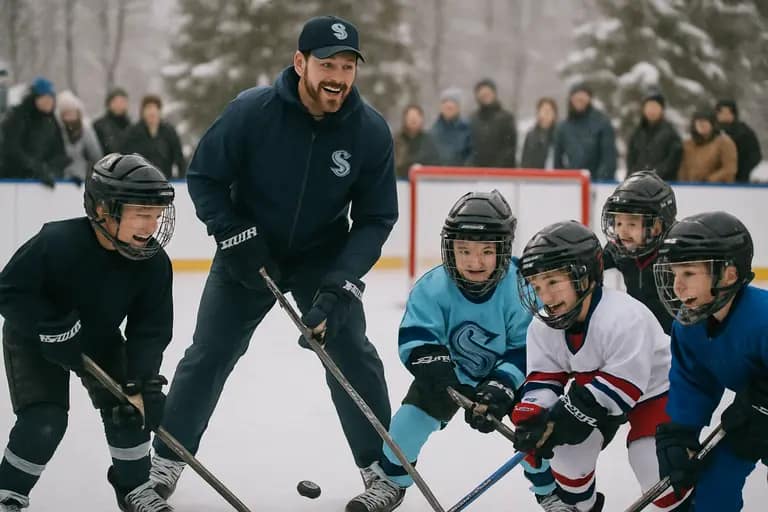
Community sports leaders cannot copy an NHL staffing budget, and they should not pretend they can. They can copy the structure of thinking. The Kraken’s 2026 staff changes show a useful development map: one person clarifies hockey direction, one teaches position-specific habits, one manages physical preparation, one supports nutrition, and one helps with mental skills. In a local club, those roles may be volunteers, partner clinics, school staff, or shared regional resources.
- Map each athlete-support role: identify who handles coaching feedback, fitness, food education, mental skills, and family communication.
- Set a return-to-activity contact: assign one adult to check on athletes who miss sessions, are injured, or are not selected for travel.
- Use monthly development notes: track role, attendance, training load concerns, and one technical goal for each player.
- Build referral partnerships: connect with qualified dietitians, mental performance professionals, and strength coaches when needs exceed club expertise.
This is also where sustainability and community engagement meet. A development plan that depends on one overloaded coach is fragile. A shared model, even a modest one, is more sustainable because it protects volunteers from burnout and gives athletes more than one trusted adult. It also keeps families informed about what progress means beyond goals, assists, or roster status.
Guardrails For Smaller Programs
The biggest guardrail is scope. A youth club should not use NHL language to sell services it cannot safely provide. Mental performance support is not clinical care unless delivered by qualified health professionals. Nutrition education should not become body surveillance. Strength work should match age, training history, and available supervision. The Kraken’s example is valuable not because every program needs the same staff, but because it shows the benefit of naming responsibilities before problems become emergencies.
Kraken Player Development Before 2026-27
Kraken Player Development has more infrastructure on September 24, 2026 than it had before the June and September staffing moves. That is the supported claim. The stronger claim—that Seattle will see faster NHL breakthroughs because of these hires—remains unproven until players show sustained progress in games, practices, health availability, and role growth.
The balanced view is still positive. Seattle added hockey operations experience, assistant coaching support, defense mentorship, mental performance leadership, strength and conditioning depth, and full-time nutrition support. For a young player, that can mean fewer mixed messages and more consistent daily care. For community sport leaders, it offers a practical model: development is not just talent identification. It is the patient design of healthy systems around athletes, with clear roles, shared standards, and enough humility to measure what actually changes.