
In the competitive landscape of Spanish professional football, few institutions embody resilience and community identity quite like Levante Unión Deportiva. Based in the heart of Valencia, the Granotas have navigated significant structural transitions across recent seasons, balancing fiscal recalibration with the unrelenting demand to compete at the sharp end of the table. Following the complex realities of modern sports governance—where strict economic controls dictate wage ceilings and squad registration under LaLiga financial frameworks—Levante UD has intentionally moved away from short-term veteran acquisitions in favor of athletic dynamism, tactical sustainability, and youth development.
The focal point of this transformation remains the historic Estadi Ciutat de València. While top-tier European football has increasingly gravitated toward hyper-commercialized balance sheets and corporate branding, the sporting culture fostered around AP Levante continues to anchor itself in authentic fan passion and community pride. The club’s sporting management recognized that regaining and solidifying top-flight status cannot rely on high-risk, debt-fueled roster construction. Instead, the current organizational blueprint focuses on assembling an athletic, versatile core capable of handling rigorous tactical systems while preserving wage discipline across multi-year sporting cycles.
Central to this operational pivot is an intentional philosophical alignment between the sporting directorate and the technical coaching staff. Historical analyses of Spanish football demonstrate that clubs caught in strategic indecision—alternating haphazardly between possession-heavy ideologies and low-block direct counters without consistent recruitment profiling—frequently suffer extended stagnation. For Levante, establishing an unshakeable tactical identity has become the baseline prerequisite for sustainable sporting success on the pitch.
The Structural Rebuilding at the Ciutat de València
Rebuilding a football squad under Spanish financial constraints demands patience and precision. Levante’s technical hierarchy has restructured its scouting apparatus to target undervalued profiles across domestic and continental markets. Rather than chasing established names with inflated wage demands, recruitment now prioritizes specific physiological and tactical metrics: progressive passing range, duel-winning efficiency, positional versatility, and aerobic endurance suited to sustained high-intensity pressing.
This operational shift has also redefined squad hierarchy. Senior leaders are expected to mentor emerging talents while maintaining exacting training standards. The atmosphere within the dressing room at the Ciutat de València has consequently shifted from an environment driven by individual career milestones to one defined by collective defensive commitment and shared tactical responsibility. The club understands that tactical cohesion consistently outlasts individual star power over a forty-two-match domestic league campaign.
Buñol as the Engine: Youth Integration and Athletic Modernization
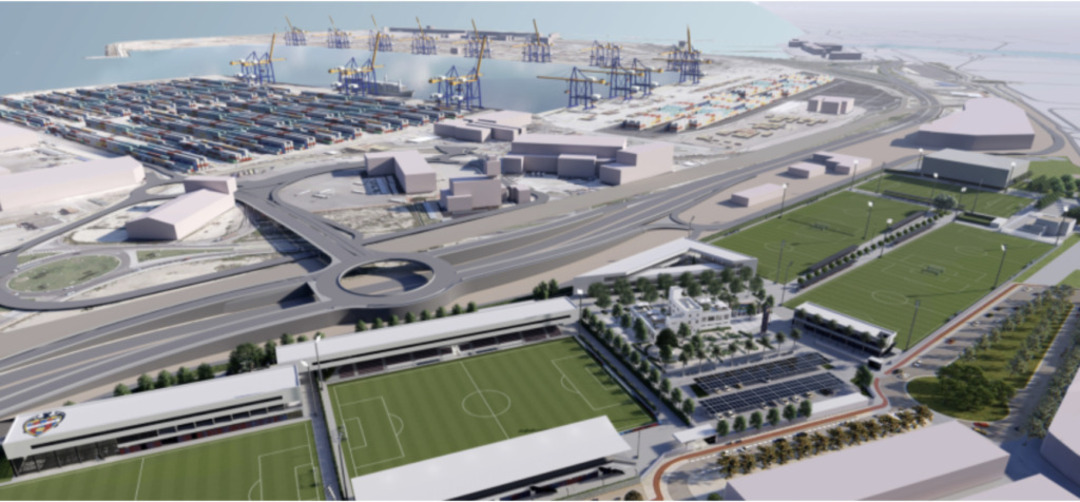
No single facility defines the club’s contemporary pathway more profoundly than the Ciudad Deportiva de Buñol, Levante’s sprawling training and development complex situated west of Valencia. For years, Atlético Levante (the reserve squad) and the juvenile ranks operated as supplementary contributors rather than core squad pillars. Today, that hierarchy has fundamentally inverted out of both financial necessity and sporting conviction. Modern football demands relentless pressing, rapid transition recovery, and positional flexibility—attributes that can be instilled systematically from the academy level far more effectively than bought piecemeal in the transfer market.
The integration of homegrown academy graduates into the first-team dynamic provides tactical continuity that external signings often require months to assimilate. By standardizing positional principles, counter-pressing triggers, and spatial occupation models across all youth tiers, the technical staff ensures that when an academy prospect steps into the senior squad, the cognitive burden of adaptation is minimized. Players developed at Buñol possess an intrinsic understanding of spatial occupation in intermediate zones and immediate defensive restructuring upon ball turnover.
Furthermore, this deliberate reliance on academy progression creates a vital economic flywheel. Developing young talent under the guidance of the club’s development coaches allows Levante to build squad equity. When premier clubs inevitably circle standout performers, the club operates from a position of relative strength, generating capital gains that can be reinvested into facility modernization, data analytics platforms, and scouting infrastructure across regional football hotbeds in the Valencian Community and beyond.
Tactical Architecture: Transition Mechanics and Positional Discipline
On the pitch, Levante’s tactical evolution is marked by a pragmatic yet assertive approach across all game phases. Moving away from passive low-block structures that invite sustained pressure inside the defensive third, the coaching setup has implemented a dynamic mid-block designed to compress central channels while aggressively triggering wide traps. The primary tactical objective is to deny opponents clean progression through the half-spaces, funneling possession toward lateral boundaries where the touchline acts as an additional defender.
When defending, the team maintains compact vertical lines, rarely exceeding thirty-five meters between the forward pressing line and the central defensive pairing. This vertical compactness forces opposition playmakers into rushed decision-making, increasing unforced turnovers and enabling Levante’s central midfielders to initiate explosive transition sequences. Rather than holding possession merely for nominal control, Levante’s ball-progression philosophy prioritizes verticality, finding diagonal passing lanes into attacking midfielders who turn and attack retreating defensive lines.
In offensive phases, structural flexibility is paramount. The full-backs are tasked with asymmetrical duties: one consistently overlaps to deliver high-volume crosses and maintain natural width, while the opposite defender tucks centrally to form a three-man rest-defense structure alongside the center-backs. This asymmetrical safeguarding prevents counter-attacks, which historically proved to be Levante’s recurring vulnerability during previous campaigns against direct, transitional opposition.
Squad Composition and Tactical Profile Breakdown
A rigorous examination of Levante’s contemporary squad architecture reveals how specific positional roles have been recalibrated to support modern high-tempo demands. The squad composition emphasizes balanced age profiles, pairing battle-hardened veterans who manage match rhythm with high-ceiling young athletes who provide energetic pressing metrics.
| Positional Department | Primary Tactical Mandate | Key Performance Indicators | Strategic Squad Role |
| Central Defense | Vertical line containment & line-breaking distribution | Aerial win % (>65%), forward passing accuracy | Anchoring defensive compactness & initiation |
| Full-Backs / Wing-Backs | Asymmetrical overlapping & defensive balance | Progressive carries, recoveries in transition | Wide crossing outlet & rest-defense stability |
| Central Midfield Pivot | Spatial coverage, second-ball recovery, tempo regulation | Tackles + interceptions (P90), passing efficiency | Engine room transitions & press resistance |
| Wingers & Attacking Midfield | Half-space occupation, 1v1 isolation, central cutbacks | Key passes, expected assists (xA), high regains | Creative incisiveness & primary chance creation |
| Center-Forwards | Channel stretching, back-to-goal link-up, first-line pressing | Pressing pressures (P90), box shot conversion % | Goal output & defensive disruption from front |
Managing the Competitive Realities of Spanish Football
Navigating the grueling calendar of Spanish domestic football requires more than tactical sophistication; it demands exhaustive physical conditioning and squad depth management. The forty-two-match regular season in Spain’s second tier, combined with the knockout format of the Copa del Rey governed by the RFEF, presents an unforgiving physical test where fatigue and muscular injuries can easily derail promotion ambitions. Levante’s sports science department has responded by embedding advanced biometric monitoring, load management protocols, and localized recovery methodologies directly into daily training regimens.
Moreover, the psychological resilience demanded during critical fixtures cannot be overstated. Momentum in Spanish football swings violently across four-game stretches, where tactical discipline often supersedes raw individual talent. Levante’s technical leadership has deliberately cultivated internal leadership groups within the dressing room, ensuring that during high-pressure moments—such as protecting narrow leads away from home or breaking down resolute defensive blocks at the Ciutat de València—the team maintains tactical composure rather than succumbing to erratic decision-making.
Tactical adaptability remains the ultimate differentiator in this competitive environment. Throughout the season, opposition analysts routinely decipher starting tactical configurations. Teams that rigidly adhere to a singular tactical approach inevitably encounter performance plateaus. Levante’s tactical framework includes secondary and tertiary setups, allowing the coaching staff to seamlessly shift from a 4-2-3-1 base into a compact 3-5-2 or 4-4-2 diamond depending on match state, venue conditions, and opposition pressing tendencies.
Key Performance Pillars in Levante’s Competitive Blueprint
To sustain high-level performance across an entire campaign, Levante’s technical structure emphasizes several core execution principles on the pitch. These core operational pillars dictate training priorities and in-game performance evaluations:
- High-Efficiency Rest Defense: Ensuring at least three defensive players remain strictly disciplined behind the ball during offensive phases to eliminate dangerous transitional counters.
- Accelerated Vertical Ball Progression: Prioritizing forward line-breaking passes within two touches of ball recovery rather than unnecessary lateral circulation.
- Aggressive Touchline Pressing Triggers: Using lateral passes by the opposition as the collective cue to swarm ball-carriers and force hurried clearances.
- Specialized Set-Piece Routines: Maximizing dead-ball opportunities through choreographed near-post flick-ons and targeted second-ball collections.
The Long-Term Horizon for the Granota Project
As Levante continues its pursuit of sustained competitive excellence, the strategic foundations established across the sporting department provide genuine optimism. Building a resilient football institution requires enduring commitment to core values: fiscal responsibility, authentic connection with supporters, elite academy cultivation, and tactical clarity on matchdays. The days of erratic tactical identities and unsustainable spending have given way to a coherent, modern sporting project.
The journey back to establishing Levante as an immovable fixture in the upper tiers of European football is neither swift nor guaranteed, given the fierce competition and financial parity across modern leagues. Yet, with the Estadi Ciutat de València roaring behind an energetic squad that represents the club’s authentic roots, Levante UD is proving that systematic planning and strategic execution remain football’s most reliable currency. The ongoing evolution of this squad is not merely a bid for immediate promotion; it is an enduring investment in the sustainable future of Granota football.