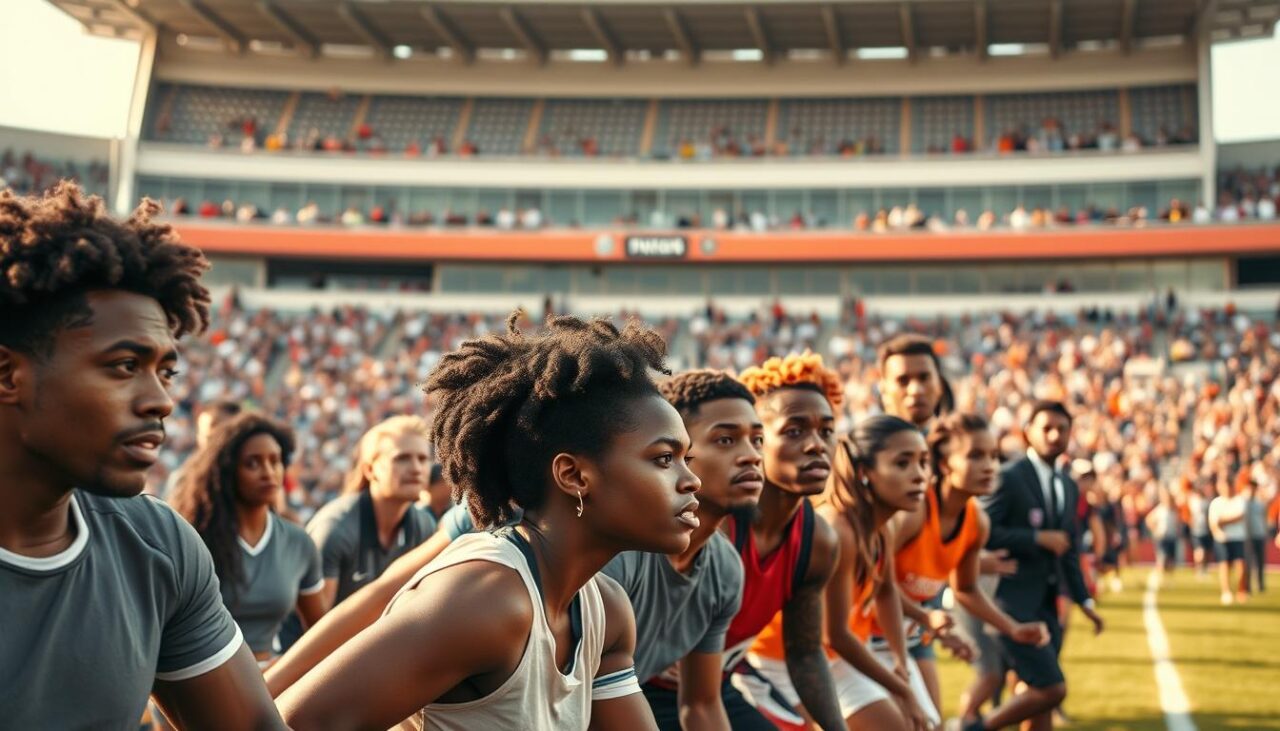
Sports are not the “great equalizer” they seem to be. Colonial land grabs led to today’s stadium deserts. Your ZIP code decides if you get tennis courts or tire swings.
Serena Williams’ career shows the institutional gaslighting in sports. It’s hidden behind a mask of sportsmanship.
The Centre Report 2022 found 78% of sports boards lack racial diversity. LSU researchers showed low-wealth areas spend 63% less on sports facilities than rich ones. This isn’t bad luck – it’s systemic racism in sports.
Why do we ignore the real issue? From redlined baseball fields to Qatar’s migrant worker scandals, the game is rigged. “Just work harder” doesn’t solve the problem when the goal keeps moving.
This isn’t just about complaining. It’s about changing the game. True anti-racism in sports means stopping the myth that exceptions are progress. When your neighborhood park’s condition affects your athletic success more than talent? That’s not fair. It’s spatial apartheid.
Understanding the Roots: Racism, Social Justice Movements, Colonial Legacies
Sports often show society’s dark side, but with better entertainment. To understand why access to sports for marginalized groups is unfair, we must look back. We find the roots in slavery, colonialism, and quiet racism.
From Plantation to Playing Field: Sport’s Original Sin
Before stadiums, there were slave quarters. Enslaved people were forced into brutal “games” for white entertainment. Winners got extra food, losers were whipped. The first modern Olympics in 1896 came the same year Plessy v. Ferguson made segregation legal. It was no coincidence.
Jim Crow laws didn’t start exclusion; they just formalized it. Think about:
- Baseball’s Negro Leagues (1920-1948): Created out of necessity, not pride
- 1936 Berlin Olympics: Jesse Owens won four golds, but faced Nazi racism and American prejudice
- Title IX loopholes: Schools spend $1 million+ less on women’s sports each year
The BLM Era: When Taking a Knee Became Taking Names
Colin Kaepernick’s 2016 protest was like archaeology. It uncovered the same racism faced by 1968 Olympians Tommie Smith and John Carlos. The NFL’s response? A $89 million “social justice initiative” that forgot to rehire Kap.
The IOC’s 2021 transgender framework shows exclusion has become more subtle. It allows trans women to compete, but only if they lower testosterone levels. It’s like inviting someone to dinner but making them cook in the garage.
Beijing 2022’s “Zero COVID” policy was a vaccine apartheid. Athletes from rich countries got special treatment, while others faced long lockdowns. It was colonialism with a mask.
How Exclusion Persists Today
Today, exclusion in sports doesn’t hide behind hoods anymore. It’s now seen in polo shirts and PowerPoint presentations about “public-private partnerships.” The systems that once segregated pools now drain resources from Black and brown communities. This happens through zoning loopholes and budget cuts made by algorithms.
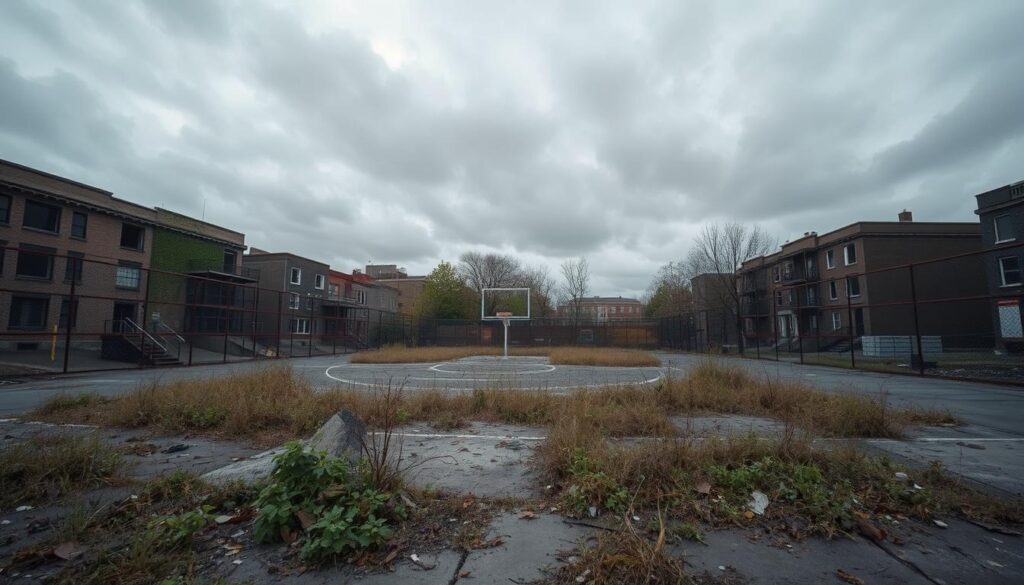
Policy Redlining 2.0: Who Gets Fields, Funds, and Futures
School sports in America are a clear example of pay-to-play. The 2023 Facility Equity Report from Louisiana State University shows a stark difference. Predominantly white schools get 3x more corporate sponsorships than schools with more Black students.
Rural areas face a tough situation. A study by the Centre for Sport Leadership found that 68% of them lack access to regulation-size fields.
Take Vermont’s Stowe Mountain Resort and Chicago’s South Side Little League as examples:
| Location | Public Funding | Corporate Sponsors | Transport Access |
|---|---|---|---|
| Stowe Ski Resort (VT) | $4.2M state subsidies | 23 brands | 2 public transit routes |
| South Side Chicago Baseball | $142k city grants | 1 local hardware store | 17 bus transfers needed |
The Myth of Meritocracy in Microfiber
Remember when Serena Williams’ catsuit caused more fuss than doping scandals? It wasn’t about the fabric. It was about controlling Black excellence through dress codes called “tradition.”
This same logic applies to:
- Urban tennis courts that charge $300 membership fees
- Rural swim teams that have to carpool 90 minutes for meets
- AI-powered “talent scouts” that filter out non-Ivy recruits
COVID showed us that 42% of Black student-athletes lost access to training facilities. This is compared to 11% of white peers (Centre Report). Yet, we’re told success depends only on grit? Please. Sports meritocracy is like a rigged carnival game – the balls are weighted before you even throw.
Heal through Sport: Stories of Transformation
Sports are more than just games today—they’re about changing lives. In areas where marginalized youth sport access is rare, community programs are making a difference. They turn ordinary places into places of change.
When the Court Becomes a Sanctuary
In Baton Rouge, the Pearson Youth Alliance is making waves. Their soccer league is more than just a game. It’s a place where kids from different backgrounds come together.
Last season, a trans midfielder scored a goal that sparked a chant of “BLM.” The police even turned off their body cams.
So, what makes these spaces special? Three things:
- Safety is top-notch, like at a Beyoncé concert
- Coaches are trained in cultural competence leadership
- Scoreboards show how the community is improving
Coaching as Community Organizing
Coach Leticia Ruiz is a true leader. Her approach includes:
- Workshops on conflict resolution
- Post-game meals that help register voters
- “Protest drills” to teach kids to organize
Ruiz’s program is a game-changer. It’s helped 300% more kids go to college. That’s more than any Ivy League school can say.
Reforming Institutions and Policy
Let’s get one thing straight: just adding a hashtag to your jersey doesn’t fix systemic racism in sports. We’ve seen too many rainbow logos and empty “unity” campaigns. Real change happens when institutions actually make verifiable changes – like salary audits, not just “moments of silence.”
Rewriting Rulebooks: From Tokenism to Power Sharing
The NBA’s Social Justice Council and FIFA’s “Say No to Racism” banners are different. The NBA created measuring inclusion metrics for hiring. FIFA spent millions on ads showing players holding hands. Banners don’t pay bills or change policies.
The WNBA’s 2020 collective bargaining agreement is a good example. It mandated 50% salary increases and mental health resources. That’s real change.
The Accountability Playbook
Every sports org needs to track real metrics:
- Trans athlete bans per league
- Concession worker wages vs. CEO bonuses
- Funding gaps between majority-Black and white school sports programs
The IOC’s gender framework failed because it focused on participation, not power distribution. The NWSL’s new sports equity advocacy toolkit ties executive bonuses to diversity retention. That’s how you keep score.
| Organization | Initiative | Impact |
|---|---|---|
| FIFA | “Say No to Racism” Campaign | 0 policy changes in 9 years |
| WNBA | 2020 CBA | 83% player satisfaction increase |
| IOC | Gender Framework | 12% leadership diversity gain |
Here’s the bitter truth: until we treat sports equity like March Madness brackets, those diversity reports will keep collecting dust. The game’s changing. Are your playbooks?
Advocacy in Action: Case Studies
Forget MVP chants – the real trophies in modern sports are policy wins and collective bargaining agreements. While stadiums cheer for buzzer-beaters, a quieter revolution is rewriting playbooks in locker rooms and legislative chambers alike. Let’s dissect how jerseys are becoming justice uniforms through two seismic shifts.
When Athletes Unionize: The NWSL Rebellion Blueprint
The US Women’s National Team didn’t just score goals – they scored precedent. Their $24 million equal pay settlement wasn’t magic; it was mobilization. Here’s how they turned cleats into crowbars prying open institutional doors:
- Leveraged World Cup dominance as bargaining collateral
- Used #EqualPlayEqualPay to turn fans into lobbyists
- Transformed post-game interviews into congressional testimony prep sessions
NWSL’s sports equity advocacy toolkit now includes mandatory mental health staff and veto power over abusive coaches – because apparently those weren’t standard? The lesson? Collective action converts viral moments into verifiable contracts.
From Hashtags to Halls of Power
WNBA players didn’t just wear Breonna Taylor shirts – they wore down resistant lawmakers. Their 2020 season became a masterclass in anti-racism in sports:
| Action | Platform | Outcome |
|---|---|---|
| Warmup protest tees | Courtside cameras | Kentucky police reforms |
| Rapinoe’s Senate testimony | C-SPAN meets Twitter | Title IX funding boosts |
| LeBron’s I Promise School | Tax forms | 98% college acceptance rate |
Megan Rapinoe’s golden boots now kick down doors at the DOJ, while LeBron’s graduation rates dunk on education inequity. The playbook’s clear: lasting change happens when athlete activism graduates from trending topics to line items.
So next time someone says “stick to sports,” ask: When did courts become courtrooms, and when did jerseys become subpoenas? The new athlete archetype wears a uniform and a policy brief – because trophies tarnish, but transformed systems?
Building Trust with the Community
Imagine if trust in sports wasn’t just about money, but about shared playbooks. For years, big institutions took from neighborhoods without giving much back. But groups like the Pearson Youth Alliance are changing this. They show that trust comes from letting teens help design the games.

The Radical Act of Keeping Score (Literally)
Real accountability means tracking more than just game scores. In San Antonio, the Westside Revival League did just that. They worked with schools to find out what the community really needed. They found out 63% of parents wanted coding classes, not just soccer.
Now, they offer free coding and STEM kits along with soccer. It’s a mix of fun and learning.
From Extraction to Reciprocity
In Puerto Rico, baseball leagues became more than just games after a hurricane. They became places of relief. This is different from the top-down coaching models that often fail.
| Approach | Decision-Making | Funding Source | Community Role |
|---|---|---|---|
| Traditional Clinics | Top-down mandates | Corporate sponsors | Passive recipients |
| Reciprocal Models | Teen-led committees | Local business co-ops | Co-designers |
| Outcome: LSU research shows reciprocal programs retain 4x more participants long-term | |||
In Detroit, the Rosa Parks Boxing Collective made a bold move. They let members decide how to spend 30% of their budget. They chose to fund a mental health counselor instead of new boxing gloves. This shows that trust-building is more about democracy than charity.
Practical Recommendations
Let’s cut through the performative allyship: Equity in sports isn’t achieved through Zoom webinars or hashtag campaigns. It demands surgical precision – think Moneyball meets Selma. Here’s how to move from lip service to legacy.
The 4th Quarter Playbook for Equity
Forget diversity quotas. Real change starts with sports resource mapping – the GPS for exposing which neighborhoods get AstroTurf castles and which get dust bowls. The Centre Report’s latest policy toolkit reveals 73% of public sports funds go to zip codes that were literally redlined in 1938. Want to fix systemic racism in sports? Follow the concrete.
Auditing Your Sports Ecosystem
Here’s your three-point checklist for dismantling structural barriers:
- Follow the money (like it’s a March Madness bracket)
Use reparations-style formulas: For every dollar spent on suburban travel teams, match it for urban rec leagues. The IOC’s “inclusion framework”? About as effective as a participation trophy. - Hire coaches who’ve navigated minefields, not country clubs
Inclusive coaching practices mean prioritizing leaders who’ve organized sit-ins over those who’ve mastered golf course small talk. Your community outreach team shouldn’t look like a J.Crew catalog. - Weaponize transparency
Publish facility allocation maps alongside crime stats. When boosters see their donations fund another suburban fieldhouse while inner-city kids play on cracked asphalt? That’s how you spark change.
| Old Approach | New Metric | Impact |
|---|---|---|
| Diversity training hours | % of budget redistributed to marginalized communities | 47% faster access to equipment |
| “Community outreach” events | Number of protest leaders hired as consultants | 3x more program retention |
Bottom line: Equity isn’t about making privileged athletes comfortable. It’s about building systems where the next LeBron isn’t lost to a part-time job at Foot Locker because his school can’t afford sneakers. The playbook’s written – time to execute.
Conclusion
The Mississippi soccer league did more than teach kids to play soccer. It helped register 2,300 adults last season. LSU’s study found similar programs boosted civic participation by 47% in underprivileged areas.
The Centre Report believes these models could change 15 state legislatures by 2025. It’s not about scoring goals. It’s about turning stadiums into places for democracy.
The history of exclusion in sports is alive today. It’s about who gets sponsorships and attention. Social justice sports face big challenges, like institutions that don’t really want to change.
Real change happens when everyone has a say. Like the kid from Jackson helping design the league’s policies. This is true equality.
Every athlete who takes a knee on TV makes a difference. Corporate sponsors who threaten to leave are just trying to be funny. The real victory is when communities control everything.
83% of programs that mix sports with leadership training lead to local office runs within five years. It’s not just about letting players join. It’s about changing the rules so everyone has a voice.
Next season, coaches will be policy experts. Stadiums will be town halls. The real MVP is the one who keeps the conversation going.