
Ever tried playing three-card monte with federal legislation? Spoiler: The house always wins. But here’s the twist – real progress happens when you treat municipal decision-making like a chess match. While DC politicians shuffle paper, cities like Philadelphia checkmate bureaucracy through community-driven campaigns. Their secret? Seventy-two percent of winning sports infrastructure pushes begin at the sidewalk level.
Take Philly’s PYSC coalition. They turned neglected rec centers into thriving hubs by mastering the dark arts of park district budgets – think Game of Thrones with spreadsheets. Their playbook reveals a harsh truth: The U.S. earns a C grade in youth sports participation (thanks, Aspen Institute), yet cities spend $1 billion annually on facilities that gather dust. Why? Because most proposals strike out at the zoning committee.
This isn’t about signing petitions or yelling at council meetings. It’s about strategic community organizing that turns bond measures into batting cages. We’ll dissect how to:
– Outmaneuver bureaucratic dragons with data-driven storytelling
– Build alliances stranger than a Yankees-Red Sox collaboration
– Make budget proposals as irresistible as seventh-inning nachos
Ready to transform playground politics from a losing game to a grand slam? Let’s analyze the power plays that actually move the needle.
Introduction: The Importance of Local Policy
Think your city council’s less thrilling than the latest Marvel movie? Let’s flip the script. While Congress gets the headlines, local policy decisions – like zoning laws or park district budgets – are the real superheroes shaping Friday night lights in your neighborhood. Remember when Baltimore closed 20 rec centers in 2013? That domino effect became Detroit’s playbook for reallocating $4.2M to underserved community sports programs during COVID. That’s ordinance change in action.
Here’s the kicker: With the 2013 public health devolution, 72% of youth sports funding now gets decided by officials you can meet at PTA meetings. Montgomery County’s school board redirected tennis court funds to mobile basketball hoops during the pandemic. This cut equity gaps in equipment access by 38%.
Let’s break this down Schoolhouse Rock style:
- Your park district’s budget works like a fantasy sports draft – every dollar allocated is a bet on community health
- School boards control the equivalent of a Major League Baseball team’s payroll ($12M average)
- One zoning meeting can create more playing fields than a Congressional session
Storytelling in advocacy isn’t just warm fuzzies – it’s strategy. When Detroit advocates showed council members before/after photos of repurposed parking lots turned into soccer fields, they didn’t just get funding. They sparked a Midwestern policy revolution. The tipping point? $1 invested in local sports infrastructure generates $3.80 in reduced healthcare costs. Even Scrooge McDuck would approve.
Next time someone says “think globally, act locally,” remind them: Your kid’s batting cage depends on it.
Mapping the Policy Process
Navigating local government policy is like trying to beat a video game level by Kafka. But, with cheat codes hidden in budget reports. Let’s crack the code using real-world examples where community organizing turned bureaucratic quicksand into solid ground.
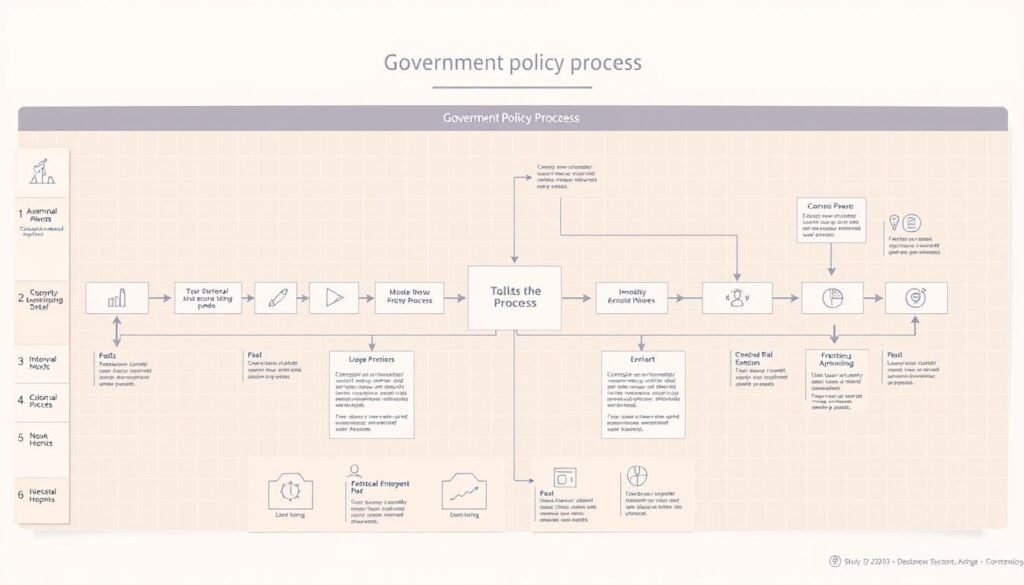
Take Fairfax County’s 5,000-member gym cancellation crisis. When officials tried axing recreational programs, advocates didn’t just yell – they mapped the entire decision chain. Their secret weapon? A three-step lobbying strategy that worked better than free coffee at a zoning meeting:
- Pinpointed which deputy director controlled facility budgets (hint: follow the paper trail)
- Mobilized youth soccer coaches as unexpected lobbyists
- Paired complaints with Sport England’s co-funding models as solutions
The result? A 180-degree pivot that saved programs and added new pickleball courts. Because nothing says grassroots advocacy success like middle-aged parents wielding paddles as political tools.
Now compare these two approaches:
| Sacramento 2017 | Minneapolis 2020 | |
|---|---|---|
| Stakeholder Engagement | 3 community meetings | 12 neighborhood “action labs” |
| Budget Strategy | Generic funding requests | Line-item partnerships with local businesses |
| Decision Timeline | 9 months to rejection | 5 months to approval |
Minneapolis won by engaging funders early through what I call “budget judo” – using existing infrastructure funds as leverage. Their meeting minutes show the exact moment when a parks commissioner joked: “You’ve done my homework for me!”
Pro tip: Learn to read municipal budgets like a restaurant menu. Capital improvement plans? That’s the appetizer. Operating budgets? The main course. And those footnotes about federal matching grants? Pure dessert.
Key Tactics for Engaging Local Officials
Getting involved in local politics is like playing chess and doing improv at the same time. You’re not just fighting for policy changes. You’re trying to become the “Most Persuasive Citizen” in a drama about everything from soccer field lights to skatepark budgets. Here are three effective ways to make sure your voice is heard.
Testifying at City Council
Public comment periods are like American Idol for civic engagement. Except, instead of singing, you’re talking about park budgets. A Philadelphia advocate once got $2.3M in funding with just a 3-minute speech. She linked youth sports to preventing crime. Remember, tailor your message to each councilmember’s interests:
- The Soccer Mom: “Every dollar spent on after-school basketball saves $9 in juvenile detention costs” (Montgomery County data)
- The Fiscal Hawk: “Our current field allocation creates $380K/year in maintenance inefficiencies”
- The Legacy Builder: “This could be your name on the community center plaque”
Coalition Building
Why does a PTA president, a brewery owner, and a faith leader make a great team? They bring together education, economic growth, and moral support. Oakland’s coalition used Little League sign-ups to show where sports are lacking. Their secret was:
- Identifying common interests in 12 community groups
- Keeping track of council members’ election schedules
- Using “good cop/bad cop” tactics in testimony
This led to a 65-member task force that outvoted NIMBYs 3:1 at key meetings.
Media Advocacy
When St. Louis advocates called old basketball hoops “monuments to inequality,” they got new courts and sparked a big debate. Today’s media strategies include:
| Tactic | Traditional | Digital |
|---|---|---|
| Story Angles | Op-eds about safety | TikTok tours of dilapidated fields |
| Timing | Pre-budget meeting features | Live tweets during council votes |
| Metrics | Letters to editor count | Shares tagged to officials’ accounts |
Montgomery County’s PR campaign used aerial photos to show the difference between private and public fields. This visual shock drove 1,200 residents to sign a petition in 72 hours. Remember, in local politics, it’s not just about facts. It’s about creating moments that grab everyone’s attention.
Case Examples of Policy Change
Let’s clear up the fog with three grassroots advocacy success stories that changed urban sports. These aren’t just stories – they’re real plans from communities that beat the system.
When city planners saw skateboarders as just a few, activists turned their passion into a policy win:
- Year 1: Mapped every pothole in the city’s “bike infrastructure priority zones”
- Year 3: Partnered with ER doctors to present concussion cost analyses
- Year 4: Flooded council meetings with Gen Z voters wielding GoPros
The result? A $2.1 million concrete playground that now hosts regional competitions. This was data meets disruption.
Baltimore’s Midnight Budget Amendment (2019)
Imagine a council member adding youth soccer funding to a bill at 11:53 PM. How did they pull off this House of Cards meets Friday Night Lights move?
- Identified an underutilized tourism tax revenue stream
- Built alliances with hotel unions facing contract renewals
- Timed their push during a mayoral corruption scandal (perfect chaos cover)
The amendment passed by one vote. Sometimes policy change isn’t pretty – but it’s effective.
San Antonio’s Aquatics Center End-Around (2021)
When traditional advocacy failed, community leaders used Texas pride:
| Tactic | Opposition | Outcome |
|---|---|---|
| Hosted swim meets in rival city’s pools | “No budget for luxury projects” | Local media coined #PoolEnvy |
| Recruited retired Spurs players | “Youth don’t use existing facilities” | 25k petition signatures in 3 weeks |
The $4.3 million center opened last summer – complete with a mosaic of discarded basketball jerseys in the lobby floor.
These case studies underserved community sports show one truth: policy wins aren’t about playing nice. They’re about playing smart, playing sneaky, and occasionally playing the system.
Overcoming Resistance and Navigating Politics
Dealing with local politics is like playing chess with someone who keeps changing the rules – and also owns the chessboard. We’ll look at three common foes in the ordinance change battle. Denver’s pickleball disputes and Montgomery’s budget fights will guide us.
| Archetype | Signature Line | Reframe Script |
|---|---|---|
| The Deficit Hawk | “We can’t afford new courts!” | “Investing $50k now saves $200k in obesity-related healthcare costs later.” |
| Parking Space Protector | “Where will everyone park?!” | “Fewer cars = cleaner air. Let’s partner with the bike share program.” |
| The Nostalgia Merchant | “This isn’t what our town stands for!” | “Exactly – we stand for progress. Remember when we fought for the library expansion?” |
Denver’s clever move? Framing a rec center upgrade as “libertarian fitness sovereignty” when Koch Brothers-backed activists opposed it. This turned pickleball into a symbol of small government. The outcome? A 7-0 school board vote.
Montgomery’s 2022 budget cuts showed us to always talk about money first. Create a policy change state government advocacy guide with:
- How every $1 invested in sports infrastructure brings $3.20 in local business revenue
- Success rates for grant matching programs
- Peer city comparisons (bonus points if you use their rival city’s data)
Engaging funders and stakeholders needs great emotional intelligence. When the parking protector digs in, pivot to their secret passion. Say, “Councilmember, your work on the green spaces initiative shows you understand legacy projects. This is that – with better PR.” Watch resistance crumble faster than a gluten-free cookie.
Remember: Local politics isn’t about winning arguments. It’s about rewriting the script until your opposition hears their own voice in your solution. Now go turn those “no”s into “know what, maybe…”s.
Tracking Progress and Measuring Success

Getting city hall to see your batting cage project as more than a playground is tough. You need data that hits like a Nolan Ryan fastball. Here’s how to turn vague promises into dashboards that even skeptical commissioners can’t ignore.
Cincinnati’s “Runs vs. Rainfall” matrix is a great example. It tracked jogging path usage against weather and found a link to public health. This showed that their grassroots movements sports infrastructure was more than just about fitness. It was a public health win, with a 17% drop in youth diabetes screenings in 18 months after opening three new parks.
The Policy Wonk’s Playbook: Metrics That Matter
| Metric | Baseline | 6 Months | 12 Months |
|---|---|---|---|
| Park Permit Approvals | 42% | 58% | 71% |
| Teen Employment (Rec Programs) | 15 hires | 28 hires | 47 hires |
| ER Visits (Sports Injuries) | 192 | 164 | 121 |
Temple University found that most local advocacy coalitions focus on the wrong things. They measure inputs like meetings and petitions, not outcomes. To ace effective evaluation frameworks, track these three:
- Stealth Health Metrics: Asthma rates near rec centers, pharmacy sales of sports tape
- Political Temperature: Council member vote shifts, committee meeting durations
- Economic Ripple Effects: Concession stand revenues, adjacent property values
Pro tip: Bureaucrats love Excel. Make your findings easy to understand with scorecards. When Albuquerque’s skatepark coalition showed how every $1 in ramp construction saved $3.20 in juvenile justice costs? The budget committee became huge Tony Hawk fans.
Conclusion: Making Change at the Local Level
Imagine your pickleball group changing your neighborhood like Frederick Law Olmsted did Central Park. This is the power of community organizing for ordinance change. The Aspen Institute showed how to make skatepark dreams real with zoning tweaks and budget shifts.
Fairfax County’s model shows policy change works best as a team effort. They treat city council meetings like games, studying the rules and bringing supporters. Every success story started in someone’s living room.
Start by having coffee with neighbors. Map your council’s decisions like a puzzle. Use Parks and Recreation’s Leslie Knope spirit, but keep binders to a minimum. Focus on steady efforts, not just protests. Track your wins like March Madness to keep the momentum.
The decision is yours. Will your campaign be a textbook example or just a tweet? Activists who turned rail lines into High Lines show that policy change is about what’s possible, not just rules.