The Iberian Mediterranean basin stands at a decisive strategic crossroads for its economic and environmental future. Historically recognized for its productive agriculture, thriving manufacturing industry, and internationally prominent tourism sector, the Levante region faces an operational overhaul driven by structural water stress, EU climate regulations, and the urgent imperative of industrial decarbonization. Establishing resilient, sustainable production models requires connecting territorial governance, technical innovation, and civic participation—principles central to the ongoing work and perspectives featured at AP Levante.
Achieving carbon neutrality is not merely an administrative requirement imposed by European Directives, but an indispensable safeguard for long-term regional competitiveness. The geographic layout, intense solar irradiance, and coastal vulnerability of the Levante create an ideal testing ground for circular economy practices and energy self-reliance. Examining each core sector highlights both the operational strengths and structural challenges that define this transition across eastern Spain.
Renewable Energy Deployment and Land Conservation
The Valencian Community and the Region of Murcia possess exceptional solar resources, recording over 2,800 hours of direct sunlight each year. This climate profile has spurred large-scale photovoltaic projects designed to satisfy the rising electricity demand from industrial plants and electric transportation. However, unchecked solar site development on prime agricultural land has generated friction with local communities, highlighting the need for land-use zoning that balances clean power generation with countryside conservation and rural heritage.
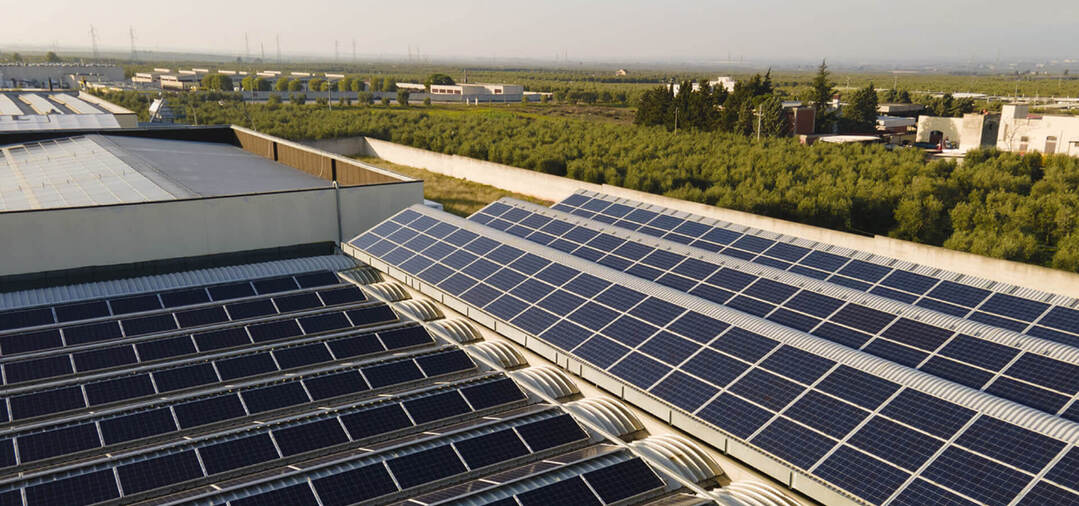
Rather than relying entirely on remote utility-scale solar farms, expanding shared rooftop systems and municipal energy communities provides a direct way to decentralize renewable generation. Installing solar panels on factory rooftops, municipal facilities, and logistics centers generates clean power while avoiding the loss of fertile arable land. Based on guidelines and frameworks from the Ministry for the Ecological Transition and the Demographic Challenge, prioritizing built surfaces and disturbed brownfield sites maximizes clean energy yields without compromising local food production or natural ecosystems.
| Renewable Generation Model | Land Footprint | Impact on Local Ecosystems | Social Acceptance & Local Economic Return |
| Utility-Scale Solar Farms | High (Substantial rural acreage) | Risk of habitat fragmentation without active mitigation | Moderate to low; frequently meets farming and local opposition |
| Commercial Rooftop Installations | Zero (Utilizes existing building roofs) | Negligible direct ecological disturbance | Very high; fast cost amortization for SMEs and industrial parks |
| Local Energy Communities | Minimal (Urban and peri-urban spaces) | Comprehensive preservation of surrounding habitats | Excellent; direct citizen ownership and lower energy poverty |
Circular Water Stewardship and Agronomic Resilience
Structural water scarcity throughout southeastern Spain remains the primary operational risk to regional agriculture and municipal supply. The Levante’s agri-food sector, which exports substantial volumes of fresh fruits and vegetables across European markets, relies on exact water management. With persistent drought cycles and reduced allocations from inter-basin river transfers, building modern seawater desalination capacity and tertiary municipal wastewater recycling infrastructure forms the baseline of the region’s productive resilience.
Upgrades such as subsurface drip irrigation, automated soil-moisture sensors, and variable-rate fertigation have turned the Levante into an international benchmark for water-use efficiency per cubic meter. However, the high power demand of desalination plants and pressurized water pumps requires direct integration with dedicated local renewable energy sources. Research and operational benchmarks from the European Environment Agency emphasize that long-term climate resilience across the western Mediterranean depends on closed-loop water cycles, where recycled industrial and municipal effluents supply irrigation needs while preserving natural river flows.
- Advanced Tertiary Water Reuse: Treatment of municipal wastewater using ultrafiltration membranes and ultraviolet disinfection for food-grade crop irrigation.
- Solar-Powered Desalination: Direct coupling of coastal desalination plants with dedicated solar arrays to reduce operational expenses and carbon footprints.
- Precision Agricultural Sensing: IoT field sensors that measure real-time soil conditions to match water application with crop evapotranspiration rates.
Decarbonizing Industrial Corridors and Commercial Seaports
The industrial and logistics hubs across the Levante, led by the deep-water ports of Valencia, Castellón, and Cartagena, process a major share of Spain’s foreign trade. The cargo operations at these facilities, alongside energy-intensive regional manufacturing clusters like Castellón’s ceramic tile factories and Cartagena’s Escombreras chemical complex, consume large amounts of thermal energy and grid electricity. Modernizing these supply chains involves switching from conventional fossil fuels to cleaner energy carriers, with clean electrolytic hydrogen and biomethane playing central roles in industrial planning.
At maritime terminals, installing onshore power supply (OPS) systems enables berthed cargo vessels to shut down auxiliary diesel engines and run on landside electrical power, eliminating localized nitrogen oxide emissions and particulate matter near coastal cities. Simultaneously, turning agricultural waste and sewage sludge into biomethane offers an immediate method to feed renewable fuel into established natural gas pipelines, reducing reliance on fossil fuels without requiring the immediate replacement of industrial kilns and high-temperature furnaces.
Sustainable Tourism Models and Coastal Ecosystem Restoration
Coastal tourism, a major economic engine throughout the Mediterranean coast, faces the dual challenge of reducing its environmental footprint and spreading visitor traffic across inland areas. High seasonal demand on municipal water grids, heavy waste generation, and coastal erosion require proactive policies focused on year-round travel and restoring marine sanctuaries, particularly underwater meadows of Posidonia oceanica, which act as vital carbon sinks and natural breakwaters against wave damage.
Hotels that implement green building standards, cut food waste, supply shared electric vehicle rentals, and promote ecotourism into mountainous interior districts help attract environmentally conscious travelers. Moving toward sustainable tourism is not an operational barrier to business growth; rather, it represents a necessary investment in preserving the beaches, coastlines, and climate that make the region a top global destination.
Regional Governance and Long-Term Strategic Outlook
Building an environmentally sound and economically competitive Mediterranean Levante requires close collaboration across government bodies, industrial federations, and civic organizations. Solving long-term challenges in renewable energy integration and water security cannot rely on fragmented measures; it calls for sound engineering, transparent allocation of European recovery funds, and steady accountability to local communities. Maintaining this coordinated approach will help keep the Levante at the forefront of clean innovation, job creation, and sustainable development