
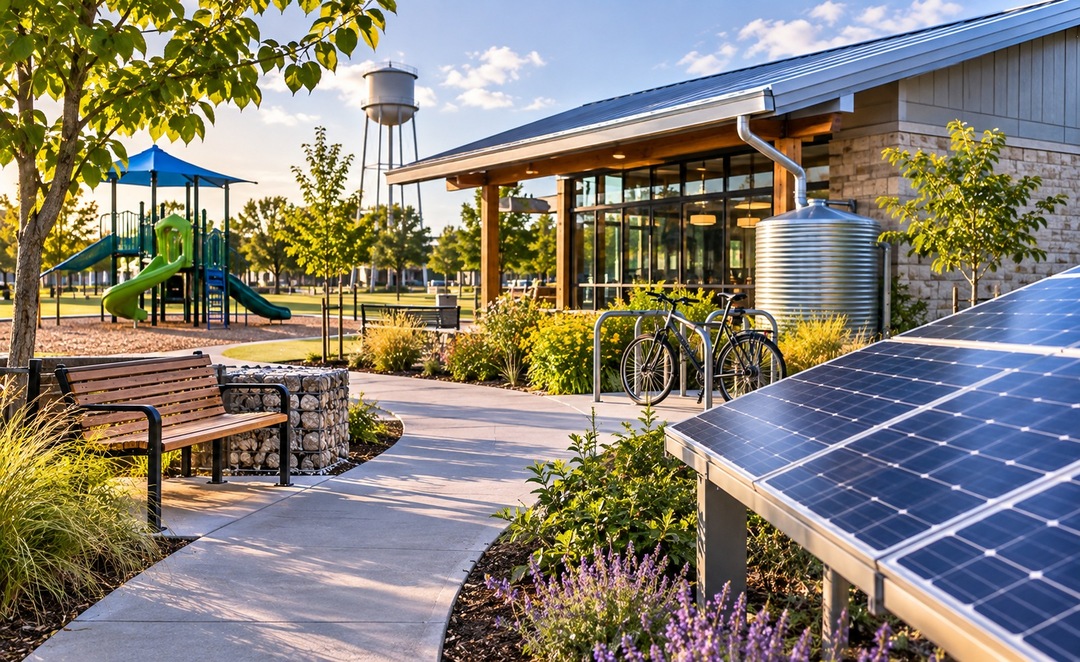
Modern civic planning stands at a decisive generational turning point. Decades of deferred maintenance, accelerated urban expansion, and an increasing frequency of severe meteorological events have exposed structural vulnerabilities across foundational public assets. Transportation corridors, regional stormwater networks, power grids, and municipal community facilities originally engineered for predictable twentieth-century baselines now face operating conditions far beyond their original design tolerances. In response to these compounding stressors, forward-thinking organizational leaders are shifting away from reactive asset maintenance toward comprehensive, resilience-first capital improvement frameworks.
Transforming civic architecture into durable, future-ready infrastructure requires visionary governance that bridges engineering rigor, environmental stewardship, and community wellness. Cross-disciplinary organizations and thought leaders featured through AP Levante emphasize that modern leadership must treat sustainability not as a peripheral compliance checklist, but as the core architectural blueprint governing regional development. By aligning capital allocation with long-term climate adaptation, organizational executives create resilient public environments that safeguard community well-being for generations.
The Economic and Structural Cost of Deferred Modernization
Historically, municipal budgeting cycles have incentivized short-term cost minimization over holistic life-cycle asset management. Public authorities frequently prioritized initial procurement expenses while discounting ongoing operational degradation, carbon emissions, and maintenance overhead. However, empirical assessments conducted across both civil engineering and macroeconomic sectors reveal that deferred asset renewal carries compounding fiscal penalties. Emergency repairs executed after catastrophic weather failures cost up to four times more than proactive, resilience-focused structural retrofits.
Comprehensive evaluations published by the American Society of Civil Engineers consistently highlight that aging public works systems lose functional efficiency long before overt structural collapse occurs. Chronic micro-failures—such as sub-surface water leakage, electrical grid transmission losses, and thermal envelope inefficiency in public facilities—silently drain municipal budgets. Transitioning toward modern sustainable infrastructure requires organizational executives to adopt total-cost-of-ownership models that weigh carbon pricing, insurance volatility, and environmental preservation alongside standard engineering expenses.
| Infrastructure Asset Class | Primary Climate Vulnerability | Conventional Maintenance Posture | Resilience-Driven Modernization Strategy |
| Municipal Facilities & Hubs | Thermal heat stress, power grid failure, high energy use | Reactive component replacement; code-minimum HVAC | Passive solar design, microgrid integration, low-carbon timber |
| Stormwater & Drainage | Flash flooding, urban runoff volume, pipe surcharge | Rigid concrete conduits and enlarged culverts | Bioswales, permeable pavements, distributed retention wetlands |
| Transit & Mobility Corridors | Pavement buckling, thermal expansion, subsidence | Repaving with standard bitumen mixtures | Reflective cool pavements, integrated multimodal greenways |
By quantifying the true long-term savings of resilient materials and decentralized systems, executive leadership can build compelling, data-backed business cases that attract public bond financing, federal infrastructure grants, and private impact capital.
Integrating Nature-Based Solutions into the Built Environment
Traditional civil engineering models historically treated natural hydrological and ecological systems as obstacles to be controlled through rigid concrete barriers. While gray infrastructure remains necessary for high-density flood control and foundational stability, contemporary engineering increasingly favors hybrid designs that combine structural concrete with Nature-Based Solutions (NBS). Integrating natural vegetation, living shorelines, and permeable soils into urban master plans creates flexible buffer zones that expand and contract during acute ecological stresses.
Technical guidance formulated by the United States Environmental Protection Agency underscores that distributed green infrastructure captures, filters, and infiltrates stormwater at the source, preventing municipal treatment networks from becoming overwhelmed during atmospheric river events. Beyond hydrological management, urban forestry, living roofs, and daylighted stream corridors mitigate the urban heat island effect, dropping local ambient temperatures by several degrees during summer heat waves and dramatically reducing baseline building cooling loads.
- Distributed Urban Bioswales: Engineered vegetated channels planted along arterial thoroughfares to capture roadway runoff and filter heavy metals before recharging local aquifers.
- Living Architectural Envelopes: Intensive green roof systems that provide structural insulation, attenuate sound pollution, and extend membrane life by shielding materials from ultraviolet degradation.
- Permeable Hardscapes: Porous asphalt and interlocking grid pavers installed across public plazas and parking facilities to eliminate standing water and restore natural percolation.
- Riparian Buffer Restoration: Re-establishing native wetland plant communities along inland drainage channels to stabilize embankments and create contiguous wildlife corridors.
When public assets incorporate living ecosystems, infrastructure transitions from a passive capital expense into an active community asset that enhances air quality, sequesters carbon, and fosters civic pride.
Advocacy, Equity, and Wellness in Public Capital Planning
Infrastructure is fundamentally an instrument of social equity. Historically, industrial facilities, major freight corridors, and flood-prone drainage basins were disproportionately routed through economically disadvantaged neighborhoods, saddling underserved populations with elevated rates of asthma, cardiovascular distress, and heat vulnerability. Modern leadership mandates that capital allocation frameworks evaluate public health outcomes and environmental justice metrics with the same scrutiny applied to mechanical feasibility.
Strategic frameworks maintained by the World Health Organization show that access to shaded pedestrian greenways, well-ventilated public spaces, and clean transit corridors directly determines long-term public health resilience. Engaging grassroots neighborhood organizations through inclusive public participatory design ensures that capital improvements address actual community priorities rather than top-down political assumptions. When local residents contribute directly to project scoping, municipal infrastructure achieves higher adoption, reduces vandalism, and strengthens communal social cohesion.
| Civic Dimension | Traditional Capital Evaluation | Holistic Equity & Wellness Metric |
| Public Health | Standard building safety compliance | Indoor air quality benchmarks, biophilic design, active transit access |
| Community Accessibility | Minimum ADA ramp placement | Universal multi-generational design, inclusive community gathering nodes |
| Environmental Justice | Standard statutory environmental assessments | Disproportionate heat exposure reduction, neighborhood air filter equity |
Executive leaders who embed civic engagement into the earliest phases of project development cultivate institutional credibility and ensure that public investments deliver equitable dividends across every socioeconomic demographic.
The Executive Toolkit for Cross-Sector Governance and Execution
Deploying complex, multi-million-dollar sustainable infrastructure initiatives requires sophisticated managerial execution that transcends conventional departmental silos. Public works engineers, municipal financial officers, environmental planners, and community advocates often operate with competing priorities and specialized vocabularies. Visionary leaders serve as integrative translators who align disparate stakeholders around a cohesive, long-range institutional vision.
Governance standards published by the Organisation for Economic Co-operation and Development emphasize that successful infrastructure modernization depends on rigorous project lifecycle transparency, robust digital twin modeling, and clear accountability structures. Implementing Building Information Modeling (BIM) paired with predictive IoT sensor arrays allows facility managers to monitor structural stress, HVAC thermal efficiency, and water flow dynamics in real time, shifting operations from reactive maintenance to automated predictive intervention.
- Digital Twin Simulations: Virtual engineering replicas that model hydraulic surges, seismic stresses, and energy load fluctuations before groundbreaking occurs.
- Cross-Departmental Working Groups: Breaking operational silos between municipal parks, civil engineering, health departments, and treasury offices to streamline approvals.
- Performance-Based Contracting: Structuring procurement agreements where vendor compensation is tied directly to verified energy efficiency metrics and durable lifecycle benchmarks.
- Continuous Public Reporting: Accessible digital dashboards displaying real-time carbon abatement, water conservation volumes, and community utilization metrics.
By modernizing organizational governance alongside physical assets, civic directors ensure that capital investments remain fiscally viable, operationally durable, and resilient against future administrative turnover.
Architecting a Resilient Blueprint for Next-Generation Communities
The modernization of community infrastructure is not merely a technical challenge; it represents a moral commitment to the future. Communities that procrastinate on climate adaptation will inevitably face escalating economic damage, systemic resource disruption, and civic decline. Conversely, organizations and municipal authorities that take decisive, forward-looking action today unlock substantial economic prosperity, public health gains, and environmental restoration. By championing sustainability, embracing nature-based systems, and placing human wellness at the center of capital planning, modern infrastructure leaders are forging durable foundations that will anchor vibrant, flourishing communities for centuries to come.