
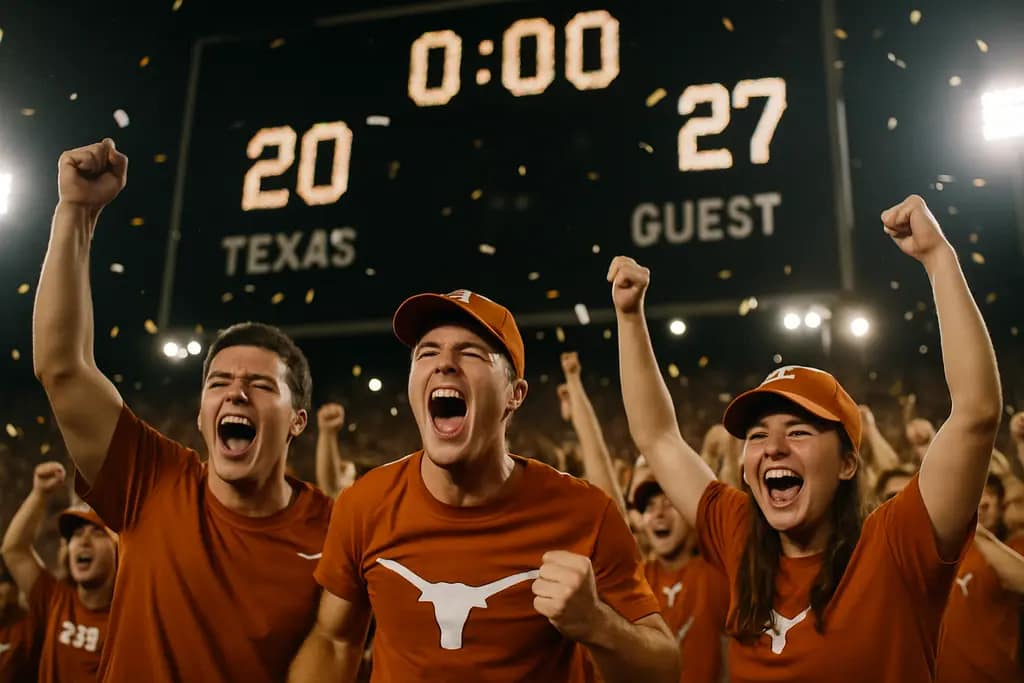
Texas No. 1 became the central AP poll story on September 13, 2026, one day after No. 4 Texas defeated then-No. 1 Ohio State 24-23 in Austin on September 12. The result was not a routine top-five win: Texas erased a 20-point fourth-quarter deficit, a comeback documented in the AP game report. For coaches, administrators, and community sports leaders, the game offers more than a headline. It provides a compact case study in late-game management, player resilience, historical framing, and the care needed when one result starts to reshape public expectations.
The cautious reading is the useful one. Texas earned the ranking jump through a result against the No. 1 team, but one September weekend did not answer every roster, coaching, or postseason question. The available research supports a clear retrospective: Texas won a rare comeback, moved to the top of the AP Top 25 regular-season poll released on September 13, and changed the early-season conversation around the College Football Playoff race and quarterback Arch Manning. It does not support certainty about later standings, future awards, or playoff selection.
The Game Result And Ranking Shift
Fourth-Quarter Drive Pattern
Texas trailed by 20 points entering the decisive late stretch and then produced three long touchdown drives in the fourth quarter. The reported drive lengths were 91, 72, and 73 yards. That matters because the comeback was not built only on short fields, a single turnover return, or one broken play. The sequence required repeated offensive execution over distance, which is one reason the result carried such weight with voters and analysts.
According to the research notes, Sportradar identified the comeback as the largest fourth-quarter rally ever for a win against an AP No. 1 team. That record framing should be used carefully: it speaks to the specific category of wins against AP No. 1 teams, not to every comeback in college football history. Even with that boundary, the achievement is substantial. It connects the game to the poll era’s memory of No. 1 teams being challenged, protected, and sometimes overtaken in dramatic fashion.
Texas No. 1 In The First Poll After
The AP Top 25 released on September 13 moved Texas up three spots, from No. 4 to No. 1, while Ohio State dropped from No. 1 to No. 6, according to the CBS Sports poll report. The size of the movements reflected both the quality of the opponent and the way the game changed late.
Poll movement after a September game can be noisy, but this case had a stronger evidence base than many early-season shifts. Texas beat the top-ranked team directly, did it at home, and did it after facing a large fourth-quarter gap. Ohio State’s fall to No. 6 was notable because powerhouse programs often receive some benefit of the doubt early in a season. Still, a one-point loss after holding a 20-point fourth-quarter lead gave voters reason to adjust the top tier quickly.
Why Texas No. 1 Carries Historical Weight
Earliest AP Peak Since 1965
The phrase Texas No. 1 carried extra meaning because the September 13 poll marked the earliest point in a season that Texas had reached No. 1 in an AP regular-season poll since 1965. That does not mean the 2026 team matched any later achievement by earlier Texas teams. It means the timing of the ranking was historically uncommon for the program.
That distinction matters for responsible sports analysis. Rankings are snapshots, not trophies. They shape perception, media coverage, recruiting conversations, and the pressure placed on players, but they are not the same as conference titles or national championships. For community sports settings, that is a useful teaching point: celebrate rare achievements without turning a poll number into the full measure of a team’s season.
Home Win Context Against No. 1
The research also states that the victory marked the first time Texas beat a No. 1 team at home since 1950. A gap of that size helps explain why the reaction extended beyond a normal September upset. Home environments often become part of how college football remembers a game, especially when a late comeback changes both the result and the national ranking order.
There was also a direct recent storyline. The win avenged a season-opening loss to Ohio State from the prior season, a result that had knocked Texas out of the No. 1 position. That does not prove a lasting shift between the programs, but it does add context to the stakes. Texas answered a previous setback against the same opponent with a late rally that reversed the poll conversation one season later.
Poll Consequences For Texas And Ohio State
Texas Resume Value
The win likely strengthened Texas’ College Football Playoff resume because victories over top-ranked opponents are rare and highly visible. The safer wording is “likely” because the research does not include later committee rankings, full strength-of-schedule data, or end-of-season results. A September win can become a major asset, but its value can change as both teams play more games.
For Arch Manning, the same caution applies. The research says the win elevated Heisman Trophy expectations. That is a statement about the award conversation after September 12 and September 13, not a prediction that he would win. Quarterback visibility rises sharply when a team beats No. 1, especially in a comeback, but awards depend on sustained production, team results, and the rest of the national field.
Ohio State Damage Control
Ohio State’s drop from No. 1 to No. 6 created a different analytical question: how much should voters punish a one-point road loss to a top-four opponent? The answer, based on the September 13 poll, was “enough to remove Ohio State from the top five, but not enough to push it out of the national contender tier.” That is a meaningful distinction.
The loss was damaging because of the fourth-quarter lead that disappeared. It was not treated as a collapse that erased Ohio State’s broader reputation, but it did reset the early poll order. For teams with national title expectations, the margin between a controlled road win and a one-point defeat can change media tone, locker-room pressure, and the urgency around corrections.
Community Sports Lessons From The Comeback

Use The Game As A Coaching Case Study
Community coaches can use this game without copying college-level tactics. The practical lesson is process-based: break the fourth quarter into teachable segments. What does a team do after falling behind? How does it manage time, communication, and belief without skipping basic execution? A long comeback built through three extended drives can help young athletes understand that late-game pressure is not solved by emotion alone.
For inclusive programs, the discussion should be accessible to players with different experience levels. Instead of assuming every athlete understands AP rankings or playoff stakes, coaches can start with the score, the deficit, and the sequence of drives. Then they can ask players to identify moments where teamwork, role clarity, and patience mattered. That format keeps the lesson open to athletes who may be new to football or who participate in multisport community settings.
Build Better Fan And Player Conversations
High-profile college football stories can create entry points for broader sports participation. Local clubs, school programs, and recreation departments can host film discussions, rules sessions, or leadership workshops built around late-game scenarios. For readers who follow basketball as well as football, more insights can be found on related topics at NBA Playbook.
The key is to avoid treating elite college outcomes as pressure templates for youth athletes. A historic comeback can inspire players, but community programs should frame it as an example of preparation and group response, not as a demand that children reproduce adult performance standards. That difference supports participation, especially for newer athletes, athletes with disabilities, and families who may feel excluded by highly technical sports talk.
Texas No. 1 Implications After The Comeback
For Texas No. 1, the September 13 ranking confirmed that voters treated the 24-23 comeback as the defining early result of the AP poll cycle. The historical markers were clear: earliest AP regular-season No. 1 appearance for Texas since 1965, first home win over a No. 1 team since 1950, and a comeback category that Sportradar identified as unmatched against an AP No. 1 team.
The implications should remain measured. Texas improved its national position and strengthened its playoff argument, while Arch Manning’s award profile rose because of the setting and result. Ohio State, despite falling to No. 6, stayed close enough in the poll to remain part of the national conversation. The most useful reading is not that September 12 settled the season. It is that Texas created a historically rare data point that will shape every later evaluation of its 2026 team.