
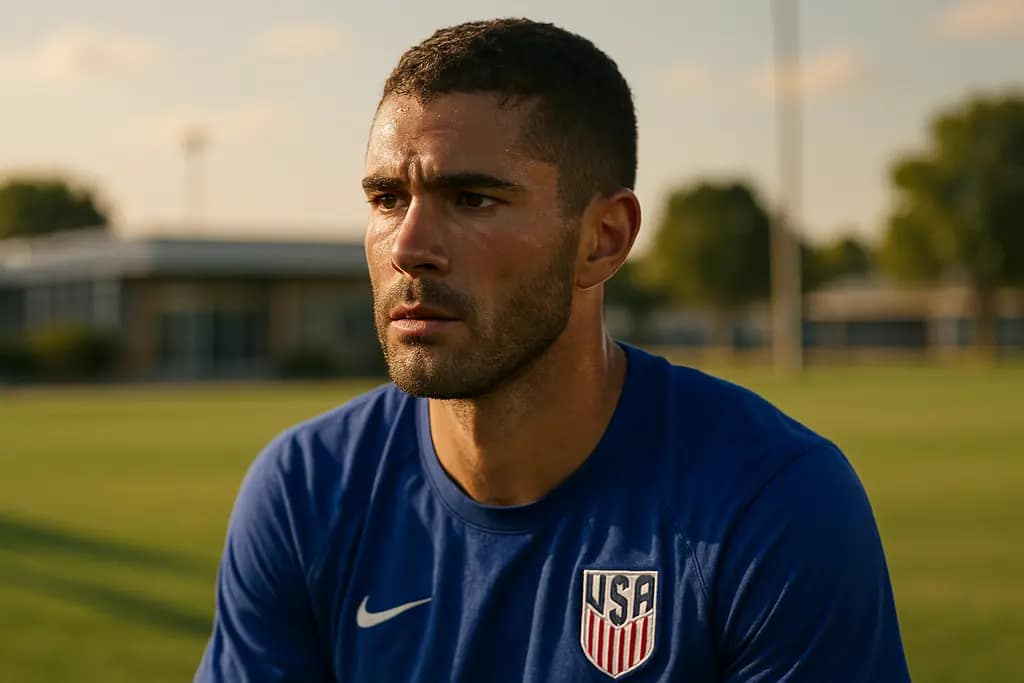
USMNT summer transfers became a useful test case for how national-team depth is built after a tournament window: not through headlines alone, but through club minutes, role clarity, and the pressure each player faces week after week. As of August 27, 2026, the key moves had already happened, so the better question is not whether they created excitement. The better question is whether they gave the U.S. staff cleaner evidence for selection, rotation, and long-term player development.
The summer market linked several U.S. players to new environments. Gio Reyna moved from Borussia Mönchengladbach to RC Strasbourg on August 5, 2026. Sebastian Berhalter left Vancouver Whitecaps for Middlesbrough on July 29, 2026. Max Arfsten moved from Columbus Crew to Middlesbrough on August 4, 2026. Those transfers sat beside a broader national-team picture: U.S. Soccer data in the research showed the USMNT had played nine matches in 2026 as of July 9, with four wins, five losses, 17 goals scored, and 19 conceded.
Why USMNT summer transfers Matter Now
The timing matters because the 2026 World Cup cycle had already exposed both promise and stress points. The squad named on May 26, 2026, included 13 players who had returned from 2022 World Cup squads, while players such as Alex Zendejas, Max Arfsten, Alex Freeman, Sebastian Berhalter, and Chris Brady stepped into more visible roles. For a coaching staff, that mix can be useful, but it can also make role definition harder if club situations are unstable.
USMNT summer transfers: Club Minutes Test
Reyna’s move was the clearest minutes-related case. On August 5, 2026, he completed a move to Strasbourg in France for a reported fee of roughly $4 million and signed through summer 2031. His 2025-26 club season had been limited: 520 minutes, 19 matches, four starts, one goal, and one assist, according to the Goal report. That profile does not prove what will happen at Strasbourg, but it does identify the development need with some precision: regular usage, clearer responsibilities, and enough match rhythm to make his national-team role easier to judge.
These USMNT summer transfers also shifted the evaluation from reputation toward repeatable club evidence. A player who trains well but rarely starts gives a national-team coach partial information. A player who starts regularly in a demanding club setting gives the staff more material: pressing choices, defensive recovery habits, passing under pressure, and responses to fatigue. That is especially relevant for a U.S. group that conceded 19 goals in its first nine matches of 2026, based on the research data.
Roster Balance After A Young World Cup Group
The age profile adds another layer. Alex Freeman, at 21, was the youngest U.S. player on the 2026 World Cup roster, while Tim Ream, at 38, was the oldest. For the opening match against Paraguay on June 12, 2026, the 26-player roster had an average age of 26 years and 332 days, making it the fifth-youngest U.S. squad in World Cup history, according to the research notes. A roster like that can still be mature, but it needs stable club environments to reduce guesswork around selection.
Club Moves And Role Competition
Berhalter’s transfer gave the midfield picture a different kind of signal. On July 29, 2026, Vancouver Whitecaps transferred him to Middlesbrough in the English Championship for a reported $2 million fee, with Vancouver retaining a sell-on clause. He had produced six goals and seven assists in 14 matches earlier in 2026, according to the Hindustan Times report. That production made the move understandable, but the development question is narrower: can those attacking contributions carry into a more demanding weekly context?
Midfield Evidence, Not Just Midfield Options
For the USMNT, having more midfield options is not automatically the same as having better midfield structure. Berhalter’s move gave the staff a chance to compare his decisions in a new league against other U.S. midfielders working abroad. The useful indicators are not just goals and assists. They include whether he receives under pressure, whether he protects central spaces after turnovers, and whether he can keep his influence when the match becomes more physical.
Arfsten’s move to Middlesbrough on August 4, 2026, for up to $7.5 million with add-ons and bonuses, created another practical angle. He joined a club setting that also included U.S. teammates Sebastian Berhalter and Aidan Morris, with all three connected to Columbus development pathways in the research. That does not guarantee chemistry for the national team, but shared club work can reduce communication costs. It can also make small habits visible: the timing of overlaps, the first pass after a regain, and the spacing behind the ball.
Forward Line Lessons From Balogun
Folarin Balogun’s World Cup case showed why discipline and availability still sit inside player development. By July 5, 2026, he was the USMNT’s leading scorer at the tournament with three goals. He had been suspended for a red card from the Round of 32, but FIFA suspended the one-match penalty under probation, which made him available for the Round of 16 match against Belgium. The lesson for younger players is direct: finishing matters, but so does staying selectable.
Development Signals For Local Programs

Transfers at senior level can feel distant from community sport, but they can still offer practical teaching points. Local clubs and academies should not copy the transfer market. They can copy the habit of matching players with environments that fit their next learning need. A player who needs more touches may need a different role. A player who needs defensive testing may need a higher-tempo league or age group. A player who is productive in one setting may need evidence against stronger pressure before a staff changes his long-term projection.
A Practical Review Tool For Coaches
Community programs can use a simple review model after every season or tournament block. The goal is to make movement decisions safer for the athlete and more sustainable for the club. The same idea applies from a neighborhood field to a professional pathway: if a change is made without a clear development reason, the player carries the risk while the adults enjoy the announcement.
- Minutes: Did the player start, finish, and repeat performances, or only appear in short spells?
- Role: Was the player learning a defined position, or filling gaps without a plan?
- Pressure: Did the environment test speed of thought, defensive habits, and recovery after mistakes?
- Support: Were coaching, wellness, travel, and school or family needs part of the decision?
- Community Return: Can the sending club use the move to improve coaching, scholarships, or facilities for the next group?
This is where sustainability belongs in roster analysis. If only the highest-profile player benefits, the pathway is fragile. If the club studies why the move worked, shares coaching lessons, and protects younger players from rushed decisions, the pathway becomes healthier. Readers looking to explore regional sports development can find more coverage related to this topic at Texas Sportsmen.
USMNT summer transfers In Player Development
The value of USMNT summer transfers should be judged over time, but the early development questions were already clear by August 27, 2026. Reyna needed regular club rhythm after a season of limited minutes. Berhalter needed to show that his production from early 2026 could survive a tougher weekly test. Arfsten needed to convert a larger move into tactical growth and defensive reliability. None of those outcomes should be assumed.
For the national team, the main benefit is sharper evidence. The coaching staff can compare players in different leagues, roles, and pressure points rather than leaning too heavily on past tournament status. For players, the challenge is also plain: a transfer is not development by itself. It only helps if minutes, role clarity, health management, and coaching demands line up. That is the caution community programs should carry as well. Movement can open doors, but the daily environment still does the teaching.