
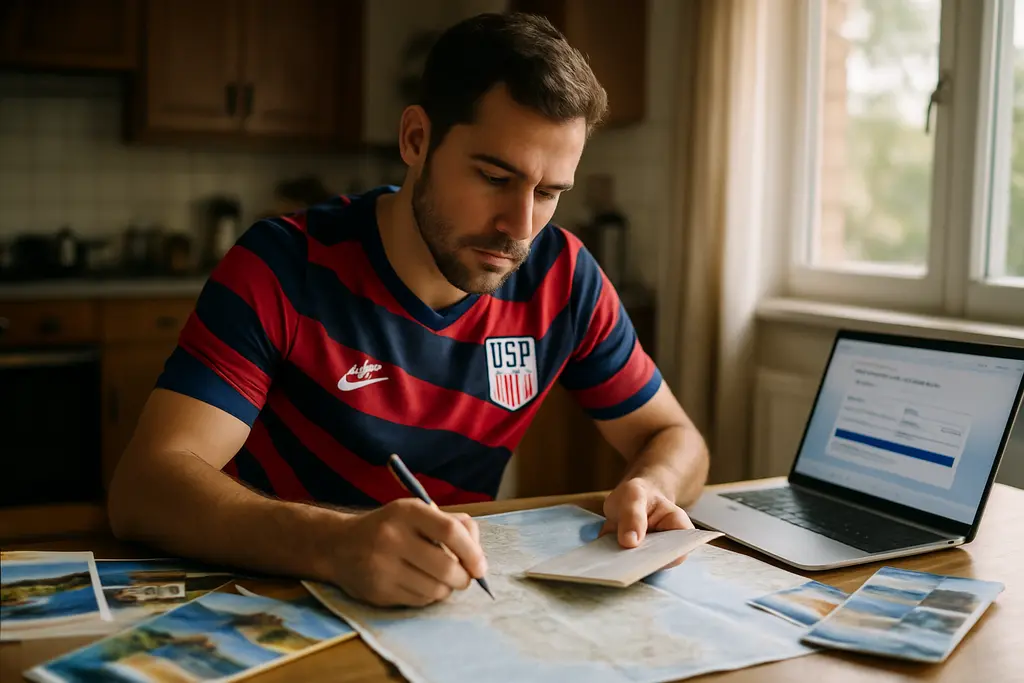
As of October 9, 2026, USMNT travel planning for the October window is a review task, not a preview. The U.S. Men’s National Team match against Mexico in Glendale, Arizona, on October 3, 2026, and the match against Canada in St. Paul, Minnesota, on October 6, 2026, have both passed. U.S. Soccer listed the Canada match at Allianz Field for October 6, 2026, with a 7 p.m. CT kickoff, according to its Canada match notice. The useful question now is what fans, supporter groups, families, and accessibility coordinators can learn before the next confirmed trip appears.
The practical record is clear enough to support better habits. In Glendale on October 3, parking opened at 3 p.m., gates opened at 5 p.m., and pre-match activity on stadium grounds also began at 3 p.m. The clear-bag standard in that match guide allowed clear plastic, vinyl, or PVC bags no larger than 12 inches by 6 inches by 12 inches, while non-clear bags larger than 4.5 inches by 6.5 inches were not allowed. Those details matter because a missed bag rule or late arrival can create the biggest barriers for fans who travel with children, older adults, disabled companions, or medical supplies.
USMNT Travel Planning Lessons From October
USMNT Travel Planning Timeline
Good USMNT travel planning starts with the clock, not the airline search box. The October 2026 window showed why. A 7 p.m. CT kickoff in St. Paul created a different travel day than an evening stadium event in Glendale with parking and fan activity beginning at 3 p.m. Fans who arrived in the host city on match day had less room for flight delays, hotel check-in problems, accessible rideshare gaps, or meal planning near the venue.
A practical planning sequence should separate confirmed facts from assumptions. The confirmed facts are the date, venue, kickoff time, parking opening, gate opening, and bag policy when published. The assumptions are the hotel check-in time, road congestion, transit wait, weather comfort, and post-match departure time. For families and mixed-ability groups, the assumptions often decide whether the trip feels manageable.
| Planning Point | Why It Matters | Practical Action |
|---|---|---|
| Kickoff Time | Sets meal, transit, and rest windows. | Build the day backward from kickoff. |
| Parking And Gates | Controls arrival pressure. | Use the earlier stadium time, not kickoff, as the target. |
| Bag Rules | Affects families and fans with supplies. | Pack to the strictest published standard. |
| Hotel Location | Changes cost and accessibility. | Compare room price with total travel time. |
What The October Dates Confirmed
The October matches confirmed that fans should not treat all national-team fixtures as interchangeable. Glendale required attention to a stadium campus schedule, with parking and pre-match activity beginning hours before kickoff. St. Paul required attention to a central time kickoff and the logistics around Allianz Field. For a fan group, that means one shared spreadsheet should include time zone, gate time, parking time, bag standard, lodging address, accessible transit option, and an emergency meeting point.
For more date-by-date thinking from the same fall period, our related USMNT travel logistics analysis used venue timing, gate procedures, mobile ticketing, and access checks as planning categories. The lesson is not that every match has the same rule set. The lesson is that every match needs the same verification routine.
Accommodation Choices And Cost Pressure
Hotel Timing And Refundable Rates
Accommodation is usually the least flexible part of a soccer trip once demand builds. Hotels.com data released through Expedia identified several 2026 soccer host cities where rates were a major planning issue, with Seattle, New York, and Boston among higher-cost U.S. markets during match periods, according to Hotels.com host-city data. That does not prove every U.S. national-team friendly will produce the same price pressure, but it supports a cautious rule: compare hotels early, and preserve cancellation flexibility where budgets allow.
Fans should be careful with averages. A citywide hotel figure may not reflect the cost near one stadium, and a cheaper room can become expensive if it requires multiple rideshares, long walks, or late-night transfers. This is especially relevant for disabled fans, parents pushing strollers, and supporters traveling with older relatives. The room rate is only one part of the cost. The real cost includes ground transport, time, fatigue, food access, and the risk of being stranded after a night match.
Suburban Savings Need A Transit Test
Remote or suburban lodging can work, but only after a transit test. Before booking, fans should map the trip from hotel door to stadium entrance at the same time of day the match requires. If the route depends on a limited shuttle, a long walk, or a rideshare pickup zone that may surge after the match, the cheaper room may not be the better choice.
This is where inclusion and budget planning overlap. A supporter group can reduce barriers by selecting a hotel cluster with step-free routes where possible, nearby food options, and enough lobby or common space for regrouping. Fans comparing general sports travel tools and trip basics can also review sports planning resources, but match-specific decisions should still be checked against the official venue guide once it is available.
Venue Rules That Shape The Match Day
Clear Bag Rules Are Access Rules
Clear-bag policies are often discussed as security rules, but they also function as access rules. The Glendale example from October 3 allowed clear bags up to 12 inches by 6 inches by 12 inches and barred larger non-clear bags. For many fans, that is a packing preference. For others, it affects medication, sensory aids, diapers, mobility accessories, or weather gear. The safest approach is to pack smaller than the maximum and contact the venue in advance if a medical or accessibility exception may be needed.
Fans should also assume that prohibited-item storage may not be available. If a venue does not provide storage, a disallowed bag can force a fan to return to a vehicle or hotel. That can end the match-day experience before it starts, especially for someone using paratransit, public transit, or a group bus.
Gate Time Is Not Arrival Time
Gate time is the time entry begins, not the ideal time to reach the area. The October Glendale schedule, with parking and activity beginning at 3 p.m. and gates at 5 p.m., showed why earlier arrival can reduce pressure. Fans arriving near gate opening had more time to solve mobile-ticket issues, pass screening, locate accessible seating routes, and find restrooms before concourse traffic increased.
For future matches, groups should choose an arrival target that fits the slowest necessary process. That may be parking, wheelchair drop-off, public transit, security screening, or child care needs. The fastest fan in the group should not set the schedule. The person with the highest access need should.
Accessible Travel Checks For Mixed Groups
Build The Plan Around The Group
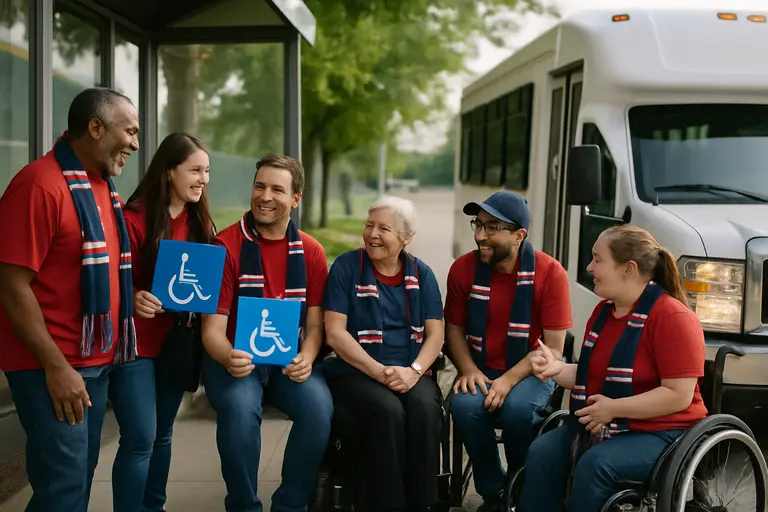
Community sports inclusion starts with the assumption that fans have different needs. A trip plan that works for one adult traveling light may not work for a family of four, a supporter using a mobility device, or a fan who needs low-sensory breaks. For USMNT travel planning, the group lead should ask practical questions before anyone books: Who needs step-free routes? Who needs a seat during waits? Who needs a quieter arrival window? Who needs medication storage or extra time at screening?
Those answers should shape hotel choice, travel time, and stadium arrival. The plan should identify the nearest accessible entrance if published, the preferred rideshare or drop-off point, the food plan, and the backup contact if the group separates. None of this requires private medical details. It requires respect, shared expectations, and clear communication.
Use A Two-Budget Method
A single budget often hides access costs. A two-budget method is clearer. The first budget covers the basic trip: room, transport, food, and local movement. The second budget covers risk: earlier arrival, refundable lodging, accessible transport, weather supplies, and a backup ride. Some fans will not need the second budget. Some cannot travel safely without it.
Supporter groups can make participation easier by sharing verified public information in plain language. That includes kickoff time, time zone, bag dimensions, gate opening, parking opening, hotel walking distance, transit duration, and phone numbers for venue accessibility services when published. The goal is not to promise a perfect trip. The goal is to reduce avoidable problems.
USMNT Travel Planning Checklist For Future Fixtures
Verification Before Booking
The October 2026 matches are over, but they left a useful checklist for the next trip. Fans should wait for official confirmation before buying nonrefundable travel. Once the match is confirmed, save the date, venue, kickoff time, and time zone in one shared document. After that, check hotel policies, transit options, and stadium rules in that order.
- Confirm the match date, venue, kickoff time, and time zone from official match information.
- Book lodging with cancellation flexibility when prices and supply allow it.
- Compare hotel savings against total ground-transport time and accessibility.
- Pack to the published clear-bag rule, and plan medical or family items early.
- Use parking and gate times to set arrival, not kickoff alone.
- Share the plan with every traveler, including backup meeting points and ride options.
After The Match
The final step in USMNT travel planning is review. After a match, note what worked and what failed: hotel distance, gate timing, bag preparation, food availability, accessible routes, transit wait, and post-match exit. A short record helps the same group travel better next time, and it helps new fans join without guessing. That is how fan planning becomes more inclusive: not by assuming every supporter has the same trip, but by designing the plan around real constraints and verified information.