Miami’s World Cup role is easy to describe through Hard Rock Stadium. Seven matches, global teams, sold-out crowds, international broadcasters, and one of the most recognizable event venues in American sports create the obvious headline. But the more important leadership story is happening beyond the stadium gates.
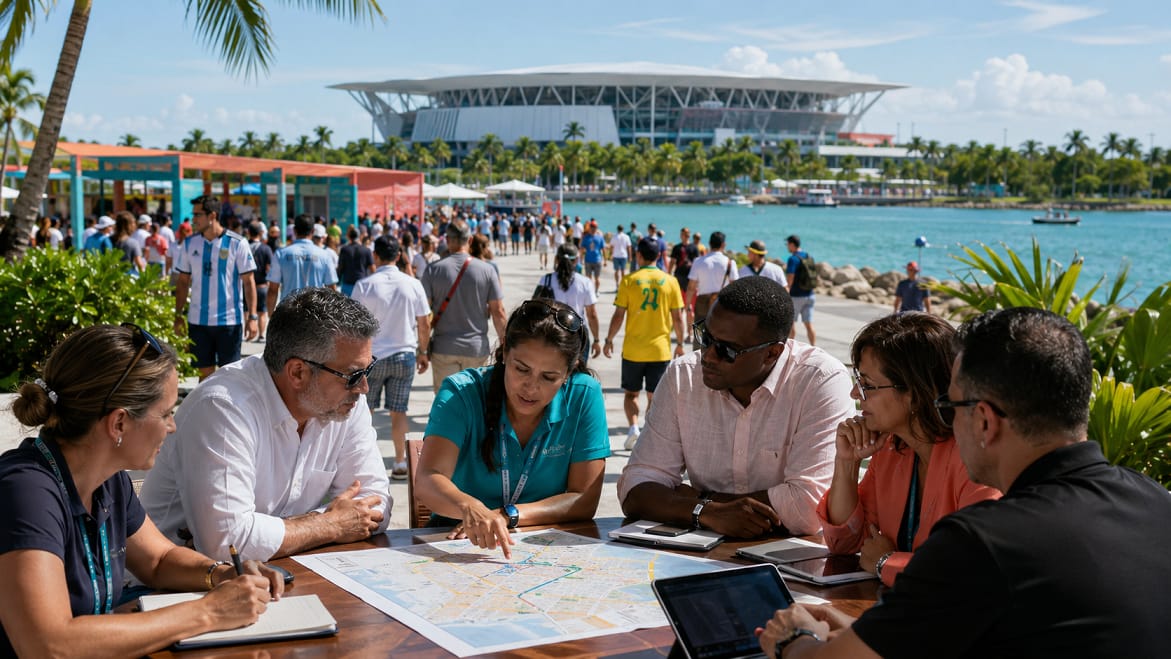
The FIFA World Cup 2026 Miami Host Committee has become a useful example of why modern host-city leadership is bigger than stadium operations. Its work connects funding, regional promotion, fan experience, community engagement, transportation, public safety, hospitality, youth soccer, local culture, and long-term legacy planning. That makes Miami more than a match venue. It makes South Florida a test case for how a global sporting event can be managed as a regional civic project.
For aplevante.org’s Leadership category, the lesson is direct: a host city does not lead by opening the stadium on time. It leads by preparing the city around the stadium. That same idea connects to broader World Cup 2026 infrastructure planning, where the pressure of a global tournament exposes the systems that support sport long after the final whistle.
Why Miami’s Leadership Test Goes Beyond Hard Rock Stadium
Hard Rock Stadium gives Miami a powerful starting point. FIFA’s official schedule confirms that Miami Stadium, the tournament name for Hard Rock Stadium, hosts seven World Cup 2026 matches as part of the expanded 48-team tournament. The stadium already has deep experience with the NFL, college football, tennis, Formula 1, concerts, and international soccer. But a World Cup host city is not judged only by its venue résumé.
A global tournament changes the scale of responsibility. Fans arrive from multiple countries, speak multiple languages, use unfamiliar transportation systems, look for public viewing options, and expect the city to feel like part of the event. That is why the Miami World Cup Host Committee defines its role around more than match delivery. The committee is responsible for securing funding, regional promotion, fan experience, community engagement, transportation networks, public safety measures, and hospitality provisions.
That list is the real leadership story. It shows that Miami’s World Cup project is not a stadium-only assignment. It is a coordination challenge across Miami Gardens, Downtown Miami, Miami-Dade County, tourism agencies, business leaders, youth programs, public-safety agencies, and cultural organizations.
The World Cup makes that coordination visible. A poorly planned host city can have a great stadium and still leave visitors confused, residents frustrated, and businesses disconnected from the opportunity. Miami’s committee has to prevent that by making the tournament feel connected across South Florida.
How The Host Committee Became A Regional Leadership Network
Miami Today reported that the Host Committee assembled leaders from South Florida’s sports, business, government, and tourism sectors to guide funding, regional promotion, fan experience, and community engagement before the seven matches at Hard Rock Stadium. That leadership mix matters because the World Cup does not fit neatly inside one agency or one business sector.

Sports leaders understand the event. Tourism leaders understand visitors. Government leaders understand permits, transportation, public safety, and public space. Business leaders understand sponsorship, hospitality, and economic opportunity. Community leaders understand whether the event is reaching residents or simply passing over them.
That is why the Host Committee’s structure is important. The group is co-chaired by Rodney Barreto, chairman and CEO of The Barreto Group, and Beau Ferrari, a media and entertainment executive with NBCUniversal experience, according to the Hard Rock Stadium host committee announcement. That combination reflects Miami’s broader challenge: the tournament is both a civic event and a global media product.
Leadership in that environment means translating World Cup scale into local execution. It also means keeping the work regional. A match at Hard Rock Stadium affects Miami Gardens directly, but the visitor economy spreads into Downtown Miami, Miami Beach, Fort Lauderdale, Broward County, hotels, restaurants, transportation corridors, and fan gathering spaces.
A committee that thinks only about the stadium misses that wider footprint. Miami’s leadership challenge is to connect it.
Why Bayfront Park Turned Fan Experience Into Civic Infrastructure
The FIFA Fan Festival Miami at Bayfront Park is one of the clearest examples of leadership beyond the stadium. The official FIFA Fan Festival Miami plan places a large-scale fan destination in Downtown Miami along Biscayne Bay, with live match broadcasts, entertainment stages, cultural performances, food and beverage experiences, interactive activations, and family-friendly programming.
That matters because most people who experience the World Cup in a host city will not attend every match. Some may not attend any match. They will experience the tournament through public screens, local events, neighborhood gatherings, restaurants, transit systems, waterfront parks, and citywide celebrations.
Bayfront Park gives Miami a public stage. It also creates an operational test. A fan festival requires crowd flow, security, shade, food service, restrooms, emergency access, weather planning, wayfinding, language support, sanitation, transportation connections, and daily programming. It has to feel celebratory without becoming chaotic.
That is why fan experience is infrastructure. It is not just entertainment added around the tournament. It is the public-facing system that helps residents and visitors participate in a global event without needing a stadium ticket.
Miami’s leadership model becomes stronger when Bayfront Park works as more than a viewing area. It can become a civic gathering space where soccer, music, food, culture, waterfront design, and public safety are coordinated into one temporary urban experience.
How One Game One Future Extends Leadership Into Legacy
The Host Committee’s strongest long-term argument may be One Game One Future, its community and legacy platform. The official One Game One Future initiative is designed to make the World Cup’s impact extend beyond the tournament through investments in youth development, coach education, health and wellness services, and community engagement across Miami-Dade County.
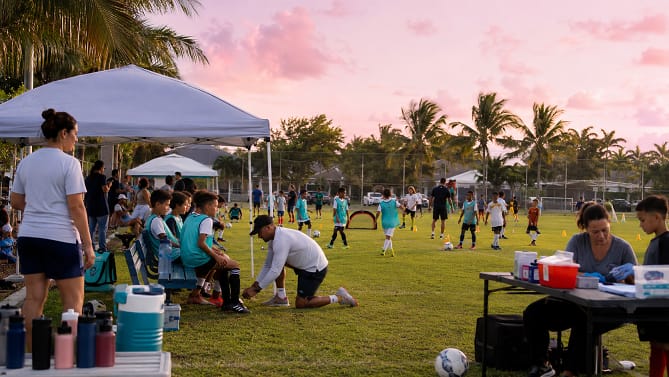
This is where leadership moves from event delivery to legacy planning. A World Cup can create a month of attention, but the harder question is what remains when the cameras leave. Youth clinics, coach development, wellness programming, and community engagement are not as visible as a packed stadium, but they are more relevant to long-term sports infrastructure.
The Host Committee’s community and legacy work frames One Game One Future around a network of operational support, health partners, programmatic partners, and volunteers. That matters because youth sports access in South Florida is not simply a question of passion. It is a question of fields, coaching, transportation, safety, health support, affordability, and program continuity.
A good host city uses the World Cup to strengthen those systems. A weaker host city uses the tournament as a temporary spectacle.
Miami has an opportunity to connect the tournament’s global energy with local youth soccer demand. If One Game One Future creates real program continuity after 2026, it could become one of the most important leadership legacies of the city’s hosting role.
Why Local Mobility And Parking Became Part Of The Story
Miami’s geography creates a different leadership challenge from denser host cities. Hard Rock Stadium sits in Miami Gardens, while the Fan Festival is in Downtown Miami. Visitors may stay in Miami Beach, Brickell, Downtown, Fort Lauderdale, Doral, Aventura, or other parts of South Florida. That means the World Cup experience depends heavily on movement.
Transportation, parking, rideshare access, public transit connections, and road closures become part of the fan experience. They also affect residents. Axios recently reported that some Miami Gardens residents near Hard Rock Stadium were using World Cup matchdays as a parking side hustle, while others faced challenges from street restrictions and traffic controls. That local detail shows why host-city leadership cannot be limited to official operations.
When residents near a stadium turn their driveways into informal event infrastructure, it reveals both opportunity and pressure. Some households can earn money. Others deal with congestion, access problems, noise, and disruption. A strong leadership model recognizes both sides.
This is where Miami’s Host Committee has to balance global hospitality with neighborhood reality. The city wants visitors to experience a smooth tournament. But the tournament also has to respect the people living around the venue and along key transportation routes.
The best host cities do not treat local inconvenience as an unavoidable side effect. They communicate, plan, adjust, and include residents in the event economy where possible.
How Miami’s Cultural Identity Became A Leadership Asset
Miami has one major advantage that many American host cities cannot replicate: soccer already fits the city’s cultural identity. South Florida’s Caribbean, Latin American, European, and global communities understand the sport’s rhythm, passion, and public culture. That makes the World Cup feel less like an imported event and more like a reflection of the region.
The Host Committee’s official materials lean into that identity, presenting Miami as a place where cultures converge and fútbol comes alive. That is not only marketing language. It is a leadership asset.
A city with deep soccer culture can create more authentic public programming, stronger community engagement, better fan interaction, and more natural connections between local businesses and international visitors. But authenticity still needs structure. Cultural energy has to be supported by safe public spaces, accessible programming, transportation plans, and community partners.
This is where Miami’s leadership test is subtle. The city does not need to manufacture soccer passion. It needs to organize it.
That means using the Fan Festival, official viewing parties, youth clinics, cultural performances, and public activations to reflect South Florida rather than flatten it into generic tournament branding. Miami’s value to the World Cup is not only that it can host games. It is that it can host games in a way that feels unmistakably Miami.
Why Official Viewing Parties Matter After The Fan Festival
The Host Committee’s event calendar also shows that leadership continues as the tournament changes stages. The official Miami events schedule notes that after the Fan Festival at Bayfront Park, celebrations continue across South Florida through official viewing parties in local parks and public spaces as the tournament reaches its final matches.
That matters because the World Cup does not end for a host city when its last stadium match is over. Fans remain. Residents continue watching. Businesses continue serving. Public spaces continue absorbing tournament energy. A strong host city plans for that entire arc.
Viewing parties across South Florida can spread the tournament beyond Downtown Miami and Miami Gardens. They can bring public soccer experiences closer to neighborhoods, families, and residents who may not travel to Bayfront Park or Hard Rock Stadium. They also help prevent the tournament from feeling exclusive to tourists and ticket holders.
That is a leadership decision. It treats the World Cup as a shared civic moment, not only a premium event product.
The challenge is consistency. Official viewing parties need safety planning, reliable screens, weather contingencies, restrooms, food options, community partners, and transportation access. Done well, they can extend the tournament’s reach. Done poorly, they can feel like afterthoughts.
Miami’s approach shows that the host committee understands the tournament as a multi-site civic experience.
What Other Host Cities Can Learn From Miami
Miami’s Host Committee offers several leadership lessons for future global sports events in the United States.
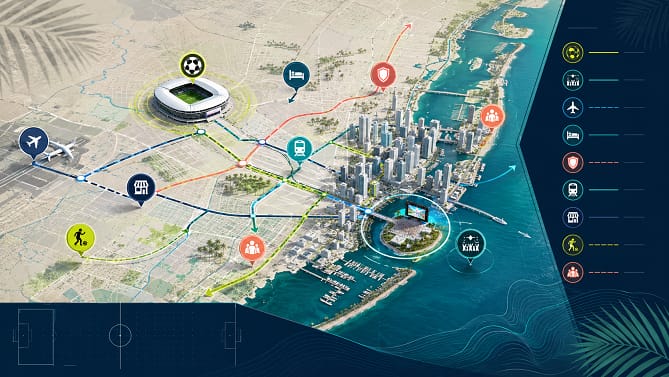
First, a host committee must be cross-sector by design. Sports leadership alone is not enough. Business, tourism, government, transportation, public safety, culture, youth development, and neighborhood partners all need a seat at the table.
Second, the fan experience should not depend only on the stadium. Bayfront Park, official viewing parties, cultural events, and neighborhood programming are part of the infrastructure that makes the World Cup feel accessible.
Third, legacy has to be planned before the tournament, not invented afterward. One Game One Future gives Miami a framework for youth development and community impact while the World Cup spotlight is still active.
Fourth, local residents must be treated as part of the event footprint. Parking, traffic, road restrictions, business access, and neighborhood disruption all shape whether the tournament is remembered as an opportunity or a burden.
Finally, Miami shows that cultural identity can be a strategic advantage. A host city should not hide what makes it distinctive. It should build operations around it.
Why Miami’s Leadership Model Matters After 2026
The real test of Miami’s Host Committee will come after the last match, the last viewing party, and the last tourist flight home. If the tournament leaves behind stronger youth programs, better event coordination, improved public-space playbooks, deeper sports-business partnerships, and a more confident civic approach to global events, then Miami’s leadership model will have worked.
That is why this story belongs in a Leadership category rather than only a World Cup category. Miami’s role shows that leadership in modern sports infrastructure is not measured only by what happens inside the venue. It is measured by how well a city connects the venue to the region around it.
Hard Rock Stadium gives Miami the stage. The Host Committee’s broader work determines whether the World Cup becomes a regional sports infrastructure lesson.
The best host cities do not simply operate matches. They organize opportunity. Miami’s World Cup leadership model is built around that idea: connect the stadium, the waterfront, the neighborhoods, the businesses, the youth programs, and the culture into one civic system.
That is bigger than stadium operations. It is the work that makes a global tournament matter locally.